Best Places for Grocery Shopping in Seoul are determined not just by price, but by the ritual of the person seeking the ingredients. As a Korean man standing 180cm and weighing 100kg, my physical presence and appetite demand a grocery strategy that is both high-volume and high-quality. Living right next to the iconic Garak Market (가락시장)—the massive, beating heart of Seoul’s food distribution—I consider myself among the “privileged few” who can access the freshest produce before the rest of the city even wakes up.
For me, grocery shopping is a family responsibility. As the eldest son, I often walk through the early morning mist of Garak Market to pick out the crispest vegetables for my mother, who turns them into the soulful banquets that anchor our home. Sometimes, I bring back wholesale-priced, premium sashimi or thick cuts of Korean beef to enjoy a luxury feast at home for a fraction of the cost in Gangnam. If you want to master the art of living in this city, you must understand that your “best” grocery store depends entirely on your lifestyle and current situation.
1. The Raw Energy: Why You Must Visit Traditional Markets (The Insider’s Choice)
Best Places for Grocery Shopping in Seoul cannot be fully discussed without immersing yourself in the raw, unpolished vitality of a traditional market. While supermarkets offer convenience, they cannot replicate the “sensory ritual” that a place like Garak Market (가락시장) provides. For a man of my stature—180cm and 100kg—the cramped aisles of a local mart can feel restrictive, but the vast, open expanse of Garak Market feels like a true arena of abundance.
The primary reason to choose a traditional market over a digital app is tactile verification. As the eldest son, I take pride in hand-selecting the ingredients that will nourish my family. At Garak Market, I can look into the gills of a fish to ensure its freshness, press a thumb against a seasonal pear to check its firmness, and negotiate directly with wholesalers who have spent decades mastering their craft. This is where I find premium Hanwoo (Korean beef) with marbling that you’ll never see in a pre-packaged tray, and sashimi sliced straight from the tank—all at a price point that rewards those who show up in person.
Furthermore, these markets are the last bastions of “Jeong” (communal affection). In a city of high-rises and automated kiosks, the act of a vendor throwing in an extra handful of sprouts or a few cloves of garlic for a “regular” is a human connection that algorithms cannot simulate. For the expat or the foodie, visiting these hubs isn’t just shopping; it’s a cinematic exploration of Seoul’s culinary soul.
Expanded Guide to Seoul’s Representative Markets
To help you navigate, I have expanded the list of essential markets, focusing on their unique characteristics and, crucially, their accessibility via Seoul’s world-class subway system.
| District (Gu) | Market Name | Key Features & Rituals | Subway Accessibility |
| Songpa-gu | Garak Market (가락시장) | The nation’s largest wholesale hub. Best for bulk meat, seafood, and seasonal greens. | Garak Market Station (Line 3 & 8), Exit 1, 2 |
| Jongno-gu | Gwangjang Market (광장시장) | Iconic for street food, but also a hidden gem for high-quality dried fish and traditional side dishes. | Jongno 5-ga Station (Line 1), Exit 7, 8 |
| Mapo-gu | Mangwon Market (망원시장) | Trendy and compact. Famous for affordable handmade snacks and fresh local produce popular with young residents. | Mangwon Station (Line 6), Exit 2 |
| Dongdaemun-gu | Gyeongdong Market (경동시장) | The epicenter of herbal medicine. A must-visit for high-quality grains, nuts, and authentic Korean ginseng. | Jegi-dong Station (Line 1), Exit 2 |
| Jung-gu | Namdaemun Market (남대문시장) | A massive historical hub where you can find specialized kitchenware alongside fresh imported goods. | Hoehyeon Station (Line 4), Exit 5 |
| Gangnam-gu | Yeongdong Market (영동시장) | A rare traditional gem in the heart of Gangnam, perfect for high-quality meat and evening “Anju” (drinking snacks). | Nonhyeon Station (Line 7 & Shinbundang), Exit 3 |
| Gwangjin-gu | Jayang Market (자양시장) | A local favorite known for its cleanliness and excellent variety of pre-made “Banchan” (side dishes). | Guui Station (Line 2), Exit 1 |
| Yeongdeungpo-gu | Yeongdeungpo Market (영등포시장) | A rugged, authentic wholesale market that offers incredible value for bulk vegetable and fruit purchases. | Yeongdeungpo Market Station (Line 5), Exit 3 |
2. The Structured Comfort: Hypermarkets and Convenience Stores
When life requires predictability and air-conditioned comfort, the sophisticated order of hypermarkets like Emart, Lotte Mart, and Homeplus becomes the standard. The aisles are wide enough for a person of my stature to navigate without stress, and the selection of global goods is unmatched.
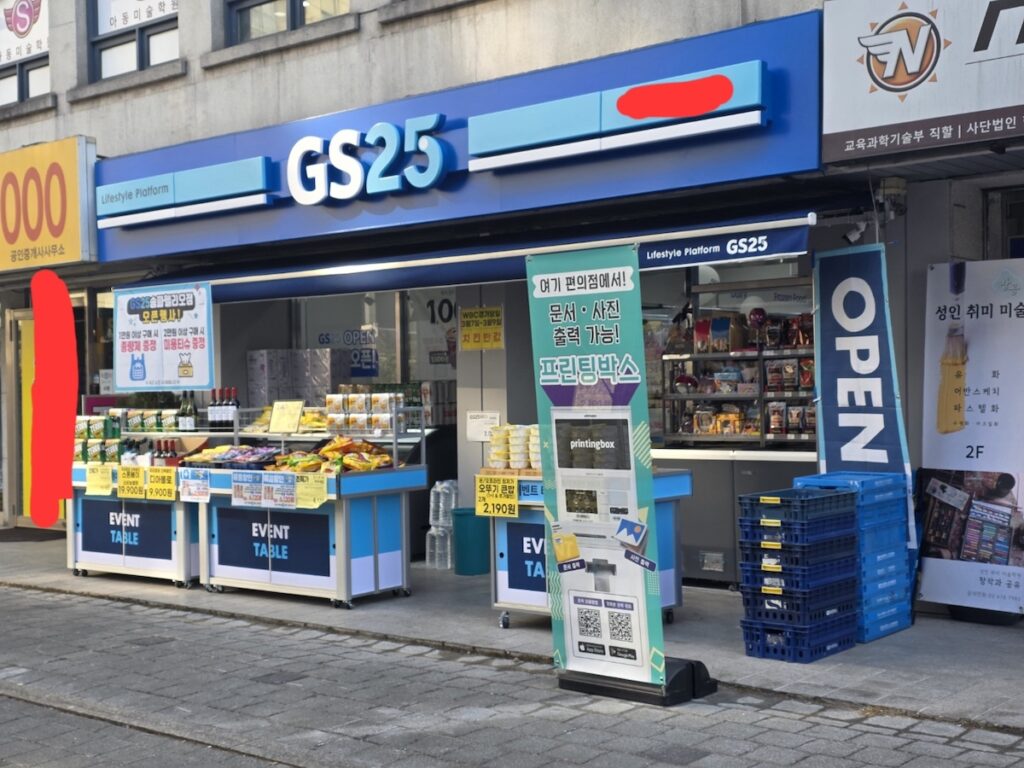
If you buy in bulk, these marts offer free delivery (typically for orders over 40,000 KRW), bringing the heavy lifting right to your doorstep. And for those midnight emergencies? The miracle of Korean convenience stores (CU, GS25) means you can find everything from fresh eggs to small jars of Kimchi at 3:00 AM.
3. Digital Salvation: The Magic of Online Shopping and Dawn Delivery
For the exhausted office worker in Seoul, the best places for grocery shopping in Seoul are often found within the palm of their hand. I see it every day: in the dimly lit office corners or during a fleeting subway commute, professionals are discreetly scrolling through their smartphones. They are filling digital carts on Coupang or Market Kurly, often under the watchful eye of a supervisor, performing a “Digital Ritual” of survival to ensure their families have fresh milk and fruit by 7:00 AM.
This isn’t just shopping; it’s a high-speed logistical marvel that defines modern Korean life. If you want to master this, you need to know the specific “Playbooks” for each service.
The Big Three: Strategic Selection
- Coupang (The Amazon of Korea): For a man like me—180cm and 100kg—Coupang is the ultimate reliable heavy-lifter. Their Rocket Wow membership (approx. 7,890 KRW/month in 2026) is mandatory. It grants you “Rocket Fresh” access, where ordering before 12:00 AM (Midnight) ensures your groceries are at your doorstep by dawn.
- Pro Tip: Look for the “Rocket Overseas” (Jikgu) tag for international snacks or supplements that are hard to find in local marts. As a Wow member, you also get Coupang Eats free delivery, making it the most cost-effective ecosystem for expats.
- Market Kurly (The Premium Gourmet): If Garak Market is the raw heart of Seoul, Market Kurly is its sophisticated kitchen. They specialize in high-end, organic, and artisanal ingredients. Their “All-Night Delivery” cutoff is 11:00 PM for the Seoul Metropolitan area.
- Pro Tip: Use Kurly for “Kurly-only” (Kurly Only) items—curated meal kits and bakery items from famous Seoul cafes that you can’t get anywhere else. In 2026, they have expanded “Same-Day Midnight Delivery” for orders placed by 3:00 PM, perfect for dinner prep.
- B-Mart by Baemin (The Instant Savior): When you realize you’ve run out of eggs or beer mid-cook, B-Mart is your salvation. It operates from small urban fulfillment centers and delivers within 30 to 60 minutes.
- Pro Tip: In 2026, Baemin launched “Reservation Delivery Tomorrow,” allowing you to pick a specific 1-hour slot for the next morning. It’s perfect if you want your groceries to arrive exactly when you wake up, rather than sitting in the hallway all night.
Master the System: Practical Action Plan for Expats
Navigating these apps can be daunting if you aren’t fluent in Korean, but the 2026 versions are more accessible than ever.
- Identity Verification (The First Hurdle): Most apps require a Korean phone number linked to your ARC (Alien Registration Card). Ensure your name on the phone contract matches your ARC exactly (all caps, no spaces, etc.) to pass the “Self-Verification” (Bonin-Injeung) step.
- Payment Setup: While some apps now accept international cards (like 11Street or Gmarket), Coupang and Kurly primarily rely on domestic cards or “Direct Bank Transfer” (Gye-jwa-iche). Setting up Coupang Pay or Kakao Pay linked to your Korean bank account will save you from failing at the checkout screen.
- Delivery Instructions: Use the “Photo Delivery” option. The rider will leave the box at your door, take a photo, and send it to you via the app. You don’t even need to be home.
- The ” 상사 눈치” (Boss-Watch) Strategy: If you’re ordering during work hours, use the “Dark Mode” on your phone and keep your cart updated throughout the day. A quick “Buy Now” at 11:55 PM is all it takes for a fresh start the next morning.
| Service | Best For | Order Deadline | Delivery Window |
| Coupang Fresh | Bulk, Household, Variety | Midnight (12:00 AM) | Before 7:00 AM |
| Market Kurly | Organic, Gourmet, Meal Kits | 11:00 PM | Before 7:00 AM |
| B-Mart | Instant/Urgent Needs | 24/7 (Mostly) | 30–60 Minutes |
| Emart (SSG) | Standard Grocery Haul | Varies by Slot | User-Selected Slot |
Related Guides
- Korea Pharmacy Guide 2026: The 3-Tier Survival System for Travelers If your grocery ritual at the traditional market leads to an adventurous overindulgence in street food, this survival guide will help you navigate Korea’s unique pharmacy system for immediate relief.
- Beyond the Pump: Mastering South Korea Highway Gas Station Prices 2026 Before you drive out to explore regional traditional markets beyond Seoul, master the art of fuel pricing to ensure your culinary road trip remains as efficient as it is delicious.
- Best Large Grocery Stores in Korea for Families 2026: 5 Tips For those moments when the raw energy of Garak Market is too much, dive deep into this strategic guide to hypermarkets like Emart and Lotte Mart to manage your large family hauls with professional precision.
Conclusion: Finding Your Personal Grocery Ritual in Seoul
The Best Places for Grocery Shopping in Seoul are not defined by a single store or a specific brand, but by how well they integrate into your unique life in this fast-paced city. Whether you find your peace in the raw, energetic aisles of Garak Market as I do—embracing the physical ritual of selecting the finest cuts of beef for your family—or find your salvation in the silent magic of a Coupang delivery at dawn, Seoul offers a solution for every situation.
Mastering the grocery scene here is a rite of passage for any resident. It requires balancing the tradition of the 209 traditional markets with the futuristic speed of Digital Salvation. If you seek quality and a human connection, go to the markets. If you seek comfort and scale, go to the hypermarkets. And if you seek time itself, master the online apps. Once you find your rhythm among these three pillars, you will no longer just be living in Seoul; you will be thriving in it, one fresh meal at a time.