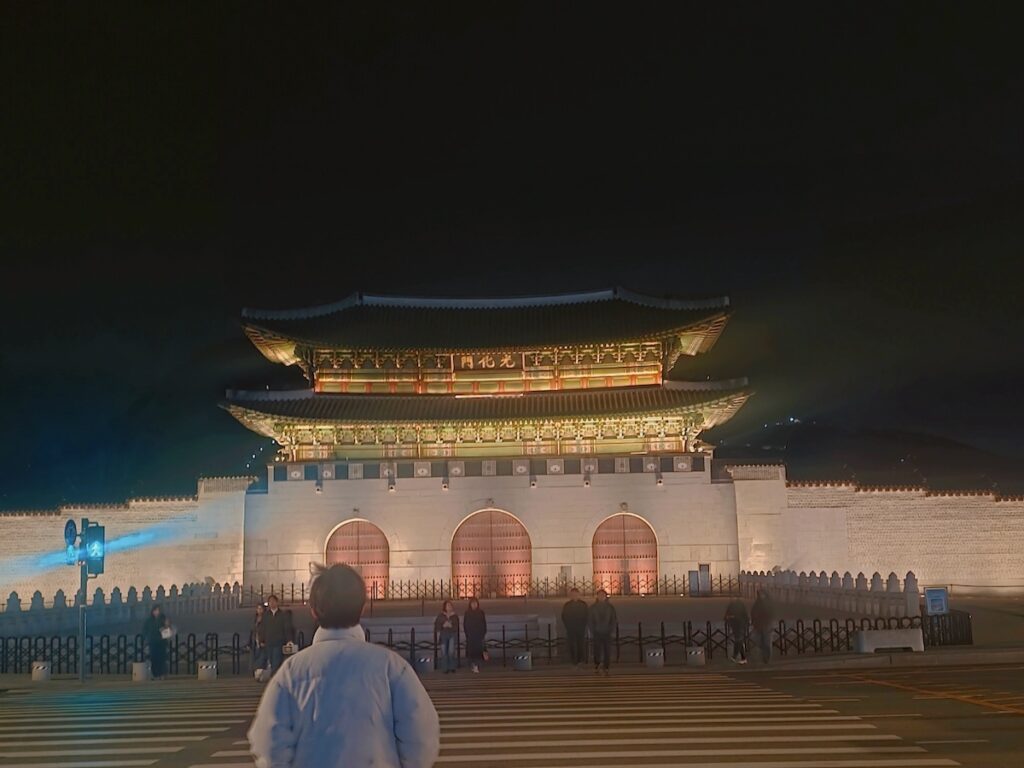
The Seoul digital survival guide 2026 is the most critical asset for any global professional standing in the heart of Gwanghwamun Square on March 21. As 260,000 fans gather for the historic BTS comeback concert, the city’s 5G infrastructure is being pushed to a literal breaking point, creating an invisible wall of digital isolation.
While the “Big Three” carriers—SKT, KT, and LGU+—are deploying autonomous AI traffic control systems like “A-One” and “W-SDN” as reported by Hankyung and Yonhap News, the sheer density of 4K video uploads means that a standard connection is no longer guaranteed. This Seoul digital survival guide 2026 is designed to ensure you maintain your poise and connectivity when the world’s most advanced network faces its ultimate test.
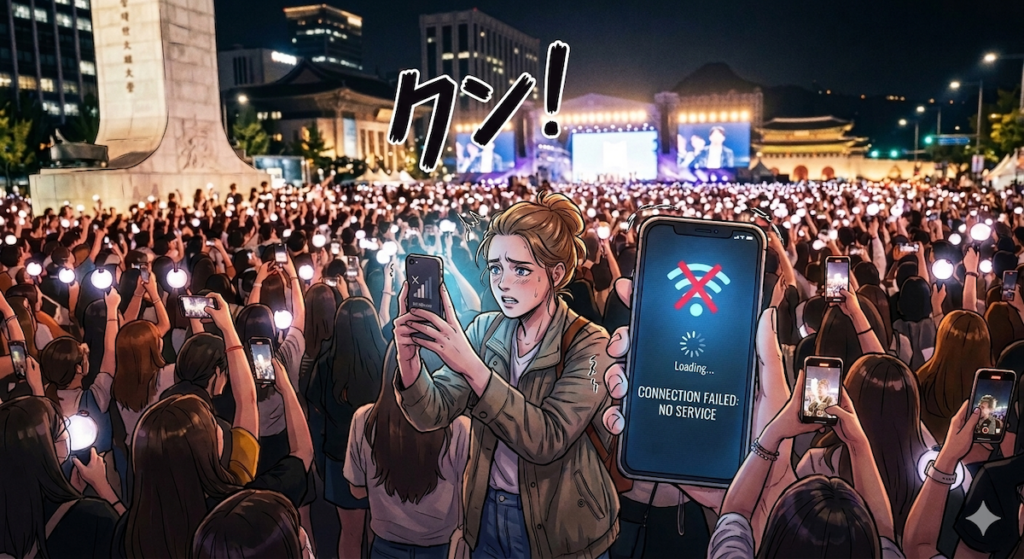
Imagine raising your phone to capture a cinematic moment, only to see the dreaded “No Service” icon while surrounded by a sea of light sticks. In this hyper-congested environment, staying connected isn’t just about social media; it is a vital survival ritual for safety and logistics. By following this Seoul digital survival guide 2026, you will learn how to bypass the Sejong-daero “Red Zones” and utilize the hidden infrastructure of the city to remain a high-value, connected resident amidst the chaos.
Your Action Plan for Digital Survival: 3 Steps to Stay Connected
Before the main performance begins and the 260,000-person surge peaks, perform these three specific rituals to ensure your digital footprint remains intact. In 2026, survival is defined by those who prepare their “offline shields” before the network blackout hits.
- Step 1: The Offline Shield (Immediate Action) Open Google Maps or Kakao Maps and download the “Offline Map” for the entire Jongno-gu and Jung-gu areas. Do not rely on real-time rendering; once the 5G node is congested, map data is the first to fail. Ensure your Seoul digital survival guide 2026 is saved as a PDF or offline document so you can access these instructions without a signal.
- Step 2: The Secondary eSIM Ritual If your primary roaming or local USIM fails, do not wait for it to recover. Switch to a secondary eSIM that utilizes a different carrier’s network (e.g., if using an SKT-based line, have a KT-based backup ready). Pre-load the QR code in your photo gallery, as you will not be able to download it once the “No Service” icon appears.
- Step 3: Tactical Movement to “Node Zones” If you lose signal entirely, do not stay in the “Red Zone” of Sejong-daero. Move 300 meters away from the stage perimeter towards Jonggak Station or the underground levels of Kyobo Book Centre. These areas use dedicated fiber-optic relays that bypass the surface-level 5G congestion managed by AI traffic control.
The Science of the Jam: Why AI is Managing Your Signal
To manage this unprecedented surge, the “Big Three” carriers have divided Gwanghwamun into three tactical zones. They are using autonomous networks to predict and shift traffic in real-time. For a foreigner, understanding this “Tiered System” is the first step toward digital survival.
| System Name | Carrier | Core Technology | Benefit to You |
| A-One (Access All-in-One) | SK Telecom | AI Predictive Analysis | Predicts crowd movement to prevent sudden signal drops. |
| W-SDN Solution | KT | AI Frequency Distribution | Re-routes frequencies in 60 seconds to clear congested nodes. |
| Autonomous Network | LG U+ | Self-Adjusting Parameters | Automatically shifts traffic from overloaded cells to nearby towers. |
Despite these marvels, local reports confirm that the Sejong-daero area (Zone 1) remains high-risk for packet loss. If you find yourself in the “Red Zone,” you need a tactical alternative.
Finding the Secret Nodes: Free Wi-Fi and Public Infrastructure
When the 5G signal fails, the seasoned professional looks for “Hidden Infrastructure.” While public Wi-Fi is ubiquitous in Seoul, it often crashes under the weight of an ARMY of fans. Here are the 2026 “Secret Nodes” near Gwanghwamun that often remain stable:
- The Kyobo Book Centre Underground: As a subterranean structure, Kyobo has its own dedicated fiber-optic relays that are less affected by the surface crowd density.
- Public Museum Networks: The Museum of Korean Contemporary History (directly facing the stage) offers high-bandwidth Wi-Fi that is managed separately from the outdoor public networks.
- Government Office Periphery: The networks near the US Embassy and the Seoul City Hall Annex often maintain higher priority routing for security reasons.
The ARC-Free Ritual: Securing Your Data Without Residency
For many international fans visiting Seoul without an Alien Registration Card (ARC), staying connected is a complex ritual. If your roaming fails during the BTS surge, you cannot simply walk into a store and buy a contract.
In 2026, the eSIM Revolution is your primary shield. Digital-only providers now offer “Instant Activation” that bypasses the need for physical store visits. However, ensure you have your passport scan ready digitally. If your primary data shuts down, having a pre-loaded “Back-up eSIM” from a secondary carrier (e.g., if you use an SKT-based roaming, buy a KT-based eSIM) is the ultimate mark of a sophisticated traveler.
Beyond the Signal: Navigating the Physical Rhythm of the BTS Surge
While the Seoul digital survival guide 2026 ensures your data remains intact, the physical movement of 260,000 people creates its own set of logistical challenges. To truly master the Gwanghwamun experience, you must look beyond your smartphone screen and understand the massive infrastructure shifts happening around you. From sudden road closures to the elite residential fortresses where the city’s icons reside, these curated guides provide the deep context needed for a high-value residency in Seoul.
BTS Gwanghwamun Traffic Guide 2026: Avoid Subway Skip-Stops & Road Closures When the crowd density hits its peak, the Seoul Metro often initiates “Skip-Stops” (Mujeongcha) at Gwanghwamun and City Hall stations for safety. This guide provides the real-time alternative routes and the specific bus detour maps you need when the digital navigation apps fail during a 5G blackout. Learn how to navigate the “Pedestrian-Only Zones” of Sejong-daero with the poise of a local.
BTS Gwanghwamun Locations 2026: 7 Rituals to Find Your Spring Day Gwanghwamun is more than just a concert stage; it is a landscape filled with symbolic meaning for the BTS “Spring Day” narrative. This article explores seven specific rituals—from the hidden floral installations to the historical markers—that allow global fans to connect with the deeper artistic soul of the 2026 comeback. Discover the quiet corners of the square where the spirit of the music remains, even amidst the roar of 260,000 voices.
BTS Gwanghwamun Comeback 2026: The Ultimate Survival Guide for ARMY A successful night at a 260,000-person event requires more than just a light stick. This ultimate survival guide covers everything from the “Convenience Store Rush” (where the best korean hangover cures 2026 become essential stamina boosters) to the psychological preparation for the massive human surge. If you want to experience the cinematic energy of the comeback without the stress, this is your definitive tactical manual.
Seoul Expensive Apartments: Top 3 Iconic Fortresses Loved by BTS and K-Drama Stars As you stand in the heart of the city, looking up at the glittering skyline, you might wonder where the icons themselves find peace. This guide takes you inside the top three most expensive apartment complexes in Seoul—the “fortresses” of UN Village, Hannam The Hill, and Acro Seoul Forest. Learn why these ultra-luxury enclaves are the preferred sanctuaries for BTS members and K-Drama legends, offering a glimpse into the pinnacle of the Seoul high-life.
Conclusion: Poise Amidst a Nation-Level Infrastructure Test
Mastering the Seoul digital survival guide 2026 is about more than just checking your social media feeds; it is about maintaining your composure during one of the most significant infrastructure challenges South Korea has faced in recent years. This BTS Gwanghwamun concert is not just a musical event—it is a full-scale test of the city’s resilience. As you stand in the shadow of the Sejong Statue, remember that you are part of a 260,000-person ecosystem that the entire nation is working to protect.
To ensure your safety and connectivity, the South Korean government and major telecommunications providers have transformed Gwanghwamun into a high-tech fortress. Beyond the AI-driven W-SDN frequency distribution managed by KT and SKT, the National Police Agency has elevated the Terror Alert Level to a preemptive “Caution” (Gyeong-bo) due to the sheer density of the global crowd.
Thousands of specialized crowd-control officers are utilizing real-time AI CCTV heatmaps to prevent “bottleneck” surges in the narrow alleys near Jongno. When you follow the protocols in this Seoul digital survival guide 2026, you are aligning yourself with a massive, coordinated effort to ensure that Seoul remains the world’s safest and most hyper-connected metropolis, even under the weight of a global phenomenon.
Final Action Plan: Your Social and Digital Responsibility
In 2026, being a high-value global resident means being prepared. Before you head to Gwanghwamun tomorrow, finalize your digital ritual: sync your secondary eSIM, download your offline maps, and identify your nearest Secret Node Zone like the Kyobo underground. If the 5G signal fails entirely, do not panic.
The enhanced security measures and the autonomous network nodes are designed to prioritize emergency communication and essential data routing. By maintaining your poise and following these specific steps, you ensure that your focus remains exactly where it should be—on the historic performance of BTS and the cinematic energy of a city that refuses to go offline.
Culinary Anchors: Finding Comfort Amidst the Gwanghwamun Surge
When the Seoul digital survival guide 2026 has secured your connectivity, it is time to nourish your physical self. Gwanghwamun is not just a digital battlefield; it is the epicenter of Korea’s street food evolution. As you navigate the crowded Sejong-daero, let the scent of spicy gochujang and toasted buns be your guide. From inclusive vegan options to the daring “Bravery Test” of traditional snacks, these culinary rituals are the true secret to surviving a 260,000-person night with your spirit intact.
Vegan Tteokbokki Ritual 2026: The Inclusive Soul of Korean Gastronomy In the heart of the 2026 BTS surge, Seoul’s most iconic street food has gone inclusive. This guide reveals the hidden stalls near Gwanghwamun that serve high-quality, plant-based tteokbokki. Experience the same fiery, chewy ritual without the fish cakes, proving that the soul of Korean gastronomy is open to every global citizen, regardless of dietary preference.
Korea Street Food Guide 2026: The Secret Ritual of Friday Night Comfort Friday night in Seoul has a specific rhythm, and it always involves a paper cup of comfort. As the BTS concert reaches its crescendo, discover the “Secret Ritual” of pairing hot oden broth with golden bungeoppang. This is the ultimate guide to the classic street food stations that keep the city’s energy high when the temperature drops and the 5G signal fails.
10 Trendy NBB Burger Rituals in Seoul 2026: Why Burgers Are Korea’s New Street Food Looking for a familiar ritual with a local twist? No Brand Burger (NBB) has transformed the American classic into a Seoul street food staple. This guide explores the 10 trendiest burger rituals at the Gwanghwamun NBB branch, where “Why Pay More?” becomes a mantra for hungry fans looking for a high-value, high-speed meal between BTS sets.
The Bravery Test: Why Korean Street Food Beondegi is a Must-Try Success Ritual For the truly adventurous global resident, Gwanghwamun offers the ultimate “Bravery Test.” Beondegi (steamed silkworm pupae) is more than just a snack; it is a ritual of courage and success. Learn why trying this earthy, protein-rich delicacy is considered a rite of passage for those who wish to truly understand the raw, nostalgic layers of Korean street culture.