Korean drinking culture can feel surprising at first because the question is often not “What do you want to drink?” but “What should we drink together?”
That small difference says a lot.
In many Western countries, drinking begins with individual choice. One person orders a beer. Someone else gets a glass of wine. Another person wants a cocktail, maybe a gin and tonic or a whiskey soda. Everyone has their own drink, their own glass, and their own pace.
In Korea, especially at a casual dinner, barbecue restaurant, or work gathering, the first few minutes can feel a little different.
Someone may look around the table and ask:
“Should we get soju?”
“Beer?”
“Should we start with somaek?”
“Which soju?”
“Cass or Terra?”
“What ratio do you like?”
If you are visiting Korea for the first time, this moment can feel oddly complicated. You may have expected to simply order your own bottle or glass. Instead, the table is having a small negotiation about the mood of the night.
And that is the interesting part. In Korea, alcohol is often not just a personal order. It can become part of the shared rhythm of the meal.
Korean Drinking Culture Starts Before the First Glass
The Question Is Often “What Are We Drinking?”
One of the most noticeable things about Korean drinking culture is that the decision often begins as a group conversation.
At a Korean barbecue restaurant, for example, people may sit down, order pork belly, beef, or stew, and then almost immediately talk about drinks. But instead of each person choosing separately, the conversation may sound more collective.
“Should we drink soju today?”
“Maybe beer first?”
“Somaek?”
“Let’s get one bottle of soju and two beers.”
This does not happen in every group, of course. Some people do order individually, especially in wine bars, craft beer pubs, cocktail bars, or more Western-style restaurants. Younger Koreans can also be much more casual and flexible.
But in many ordinary Korean dining situations, especially when the food is shared, the alcohol is often shared too.
That is why the first drink can feel like a table decision rather than a private choice.
The Drink Sets the Mood of the Meal
In Korea, the choice between soju, beer, and somaek is not only about taste. It can also signal the mood.
Beer feels lighter and easier. Soju feels more direct and traditional. Somaek, a mix of soju and beer, often feels like the middle ground: lively, social, and easy to share.
That is why the conversation matters.
If someone says, “Let’s just have beer,” the night may feel casual and relaxed. If someone says, “Should we get soju?” the table may feel a little more committed to drinking. If someone says, “Let’s start with somaek,” there is often a sense that the group is warming up together.
For a foreign visitor, this can be interesting because the drink is not just a beverage. It becomes part of the social atmosphere.
Why People Share Bottles Instead of Ordering Separately
Soju Is Usually Ordered by the Bottle
Soju is one of the most common alcoholic drinks in Korea, and it is usually ordered by the bottle. At many restaurants, especially places serving Korean barbecue, fried chicken, spicy stews, or seafood, soju is not treated like a single-person drink.
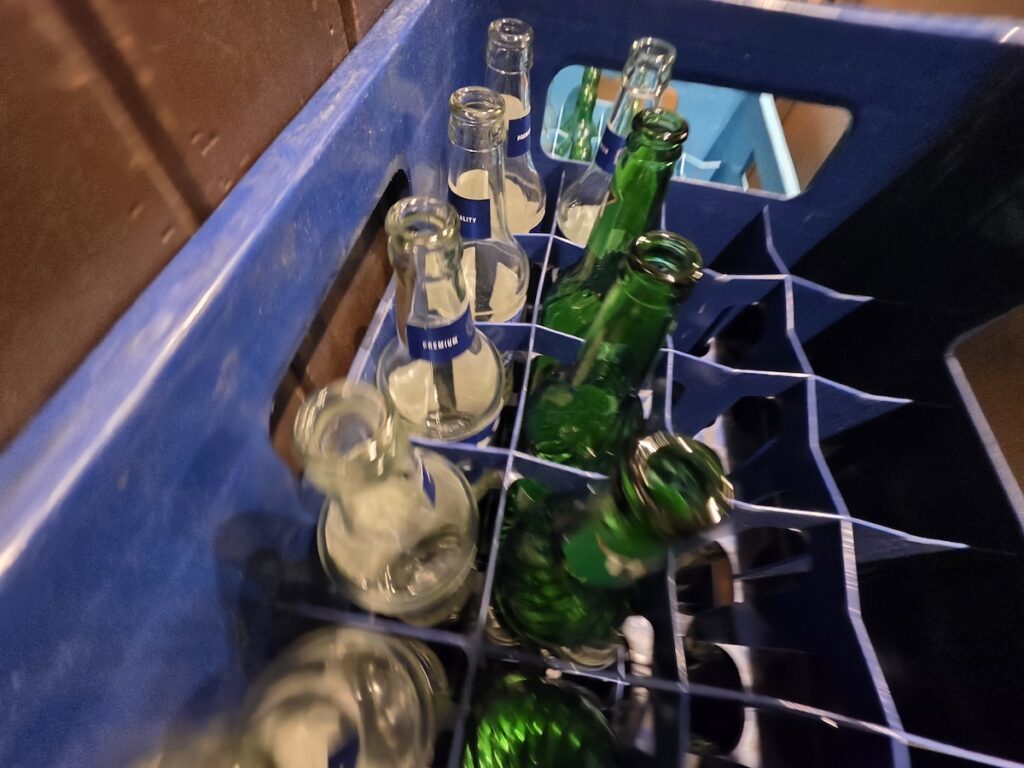
A bottle comes to the table. Small glasses are placed in front of people. Then someone pours.
This may feel different if you are used to ordering your own pint of beer or your own glass of wine. In Korea, one bottle can move around the table. The bottle may be held by one person, then another. Glasses are filled, emptied, and filled again.
The bottle itself becomes shared.
This is one reason Korean drinking can feel more collective than individual. The alcohol is physically placed in the center of the table, just like the food.
Pouring for Each Other Changes the Feeling
Another important detail is that people often pour drinks for each other.
In many Western settings, you manage your own drink. You order it, hold it, finish it, and decide when to get another one. In Korea, especially with soju, someone may notice your empty glass and pour for you.
At first, this can feel very attentive. It may also feel a little confusing.
A visitor might think:
“Am I supposed to drink this now?”
“Should I pour back?”
“Is my glass being filled because I finished it too fast?”
“Can I leave some in the glass?”
In many cases, it is not meant to be pressure. It is simply part of the social habit of sharing drinks. Pouring for someone can be a small gesture of care, respect, or friendliness.
But the feeling depends on the group. With close friends, it may be casual. With older people or a work dinner, it may feel more formal. With younger Koreans, it may be very relaxed.
The safest approach is simple: observe the table, move slowly, and do not feel that you must drink every time someone pours.
Soju, Beer, or Somaek: The Small Debate at the Table
Why the Conversation Can Feel So Korean
One of the most interesting parts of drinking in Korea is the small debate before ordering.
It can sound like this:
“Soju?”
“Maybe beer first.”
“Somaek?”
“What ratio?”
“Not too strong.”
“Then one soju, two beers?”
This kind of conversation may feel funny to foreigners because it is not just about selecting a drink. It is almost like the group is deciding the personality of the evening.
Will this be a light dinner? A proper drinking night? A quick meal? A long conversation? A work dinner where everyone is trying to relax after a stressful week?
The alcohol choice helps define that.
In some groups, people start with somaek because it feels easy to drink with food. Later, if the mood continues, they may move to straight soju. In other groups, people may drink only beer. Some may avoid alcohol entirely.
The point is not that every Korean group drinks the same way. The point is that the discussion itself is part of the culture.
Somaek Is More Than Just a Mix
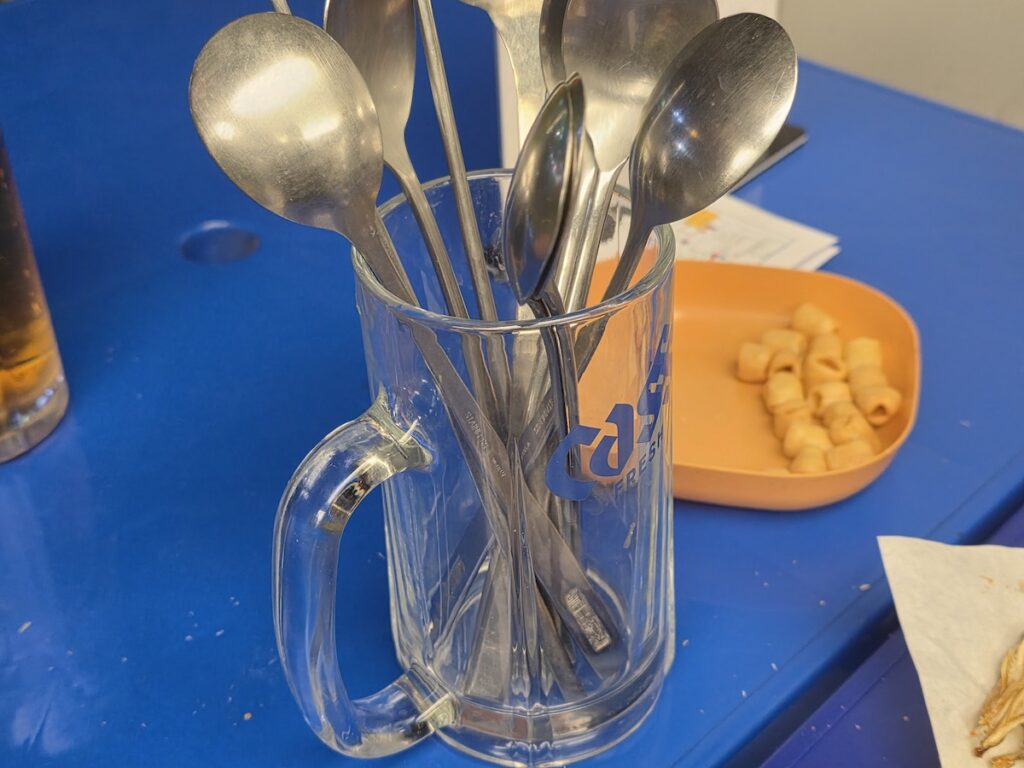
Somaek is a mix of soju and beer. The name combines “soju” and “maekju,” the Korean word for beer.
For first-time visitors, somaek can seem simple: just pour some soju into beer. But at the table, people may talk about the ratio.
Some prefer it light, with just a little soju. Some like it stronger. Some people care about the order of pouring. Others do not care at all.
You may hear someone say:
“Make it weak.”
“No, that’s too much soju.”
“This ratio is perfect.”
“Who made this?”
There is a playful quality to it. Someone may become the unofficial somaek maker at the table. Another person may joke that the mix is too strong. Someone else may insist that their ratio is better.
Again, it is not just the drink. It is the interaction around the drink.
Brand Choice Can Become Part of the Talk
Even the brand can become a small topic.
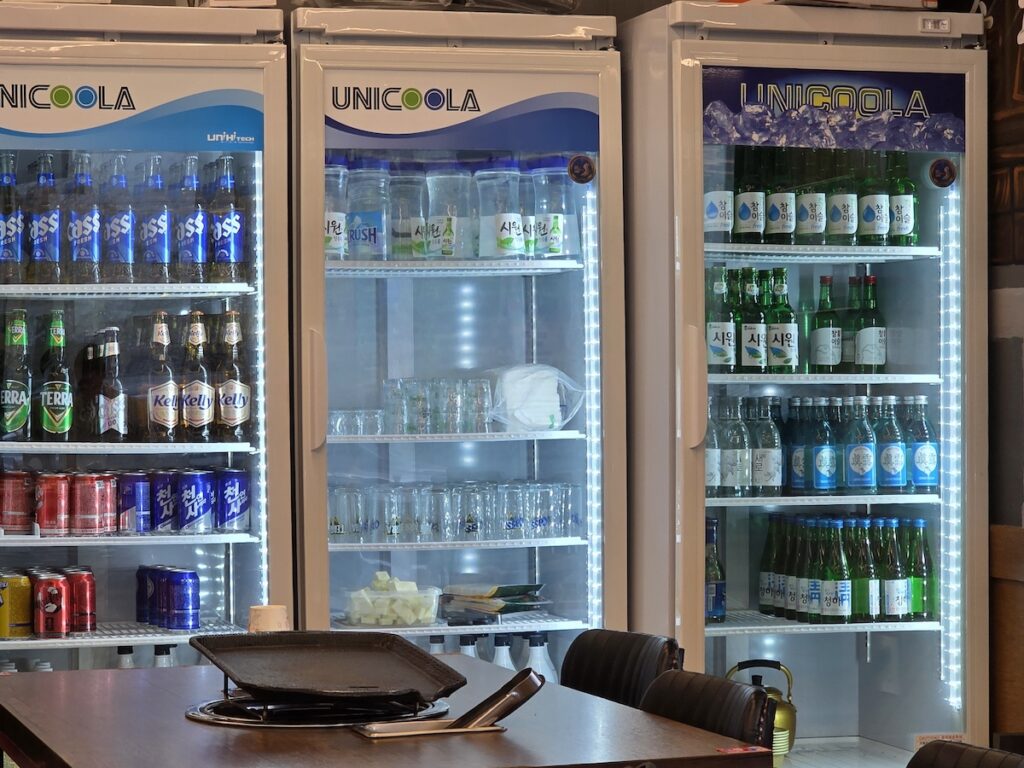
For soju, people may talk about familiar brands like Chamisul, Chum Churum, Jinro, or regional soju brands depending on where they are. For beer, common choices at regular restaurants may include Cass, Terra, Kelly, or Kloud, while bars may offer more variety.
This does not mean everyone is deeply serious about the brand. Often, the conversation is casual.
“Which soju do you want?”
“Anything is fine.”
“Jinro?”
“Let’s get Chamisul.”
For a visitor, it may feel like a lot of discussion for a simple drink order. But in Korea, these small choices often become part of the shared dining experience.
Korea vs Western Drinking Habits
The Main Difference Is Individual Choice vs Shared Rhythm
The biggest difference is not that Koreans drink more or that Westerners drink less. That would be too simple and often inaccurate.
The more useful difference is this: in many Western settings, drinking is centered on individual preference. In many Korean group settings, drinking is often shaped by the table’s shared rhythm.
Here is a simple comparison.
| Drinking Moment | Korea | Many Western Countries |
|---|---|---|
| First drink decision | Often discussed as a table | Often chosen individually |
| Common format | Shared bottles of soju or beer | Individual glasses, pints, or bottles |
| Pouring style | People may pour for each other | People usually manage their own drink |
| Drink choice | Group mood often matters | Personal preference often matters more |
| Mixing drinks | Somaek may be mixed at the table | Mixed drinks are usually ordered from the bar |
| Social meaning | Drinking can support group bonding | Drinking is often more personally paced |
Of course, this comparison is not absolute. Western groups also share wine bottles, pitchers of beer, or cocktails. Korean people also order individually in many places. But for many foreign visitors, the Korean habit of discussing and sharing alcohol at the table can feel noticeably different.
The Food Also Matters
Korean meals are often shared. Grilled meat, stews, side dishes, pancakes, fried chicken, and seafood dishes are placed in the center. People eat from the same general spread, even if they use individual bowls and plates.
The drinking style fits this food culture.
A bottle of soju next to grilled pork belly does not feel separate from the meal. It belongs to the table. Beer with fried chicken, soju with spicy stew, somaek with barbecue: these combinations are part of the atmosphere.
This is why drinking in Korea can feel less like “I ordered my drink” and more like “we are sharing this meal and this mood together.”
What Foreigners May Find Confusing
“Am I Choosing for Myself or the Group?”
One confusing moment is when someone asks what you want to drink.
In English, “What do you want to drink?” may sound like a personal question. You might answer, “I’ll have a beer.”
But in a Korean group setting, the question may be more flexible. It might mean:
“What should we order for the table?”
“Are you okay with soju?”
“Should we get beer too?”
“Do you want to join the group drink, or would you prefer something else?”
That is why a visitor may feel unsure. Are you supposed to choose your own drink? Agree with the group? Suggest a brand? Say you do not drink?
Usually, it is fine to be honest and simple.
You can say:
“I’m okay with beer.”
“I’ll just drink a little.”
“I don’t drink much, but I’m happy to join.”
“Can I have soda instead?”
Most people will understand, especially in casual settings.
“Why Is Someone Filling My Glass?”
Another confusing moment is the refill.
If your glass is empty, someone may fill it. If you are not used to this, it can feel like your drinking speed is being watched. But often, the person is simply being polite.
In some Korean settings, an empty glass invites attention. Someone may pour for you because that is how they show friendliness. In return, you may pour for them.
If you do not want more, one practical trick is to leave a little drink in your glass. An empty glass is more likely to be refilled. A glass with some drink left in it quietly says, “I’m still working on this.”
You do not need to overthink it. But knowing this small detail can make the night feel less confusing.
Drinking Etiquette Without Making It Too Complicated
Older Manners Still Exist, But Not Everywhere
Many articles about Korean drinking focus heavily on etiquette: receive a glass with two hands, pour for others, turn your head slightly when drinking in front of older people, wait for the senior person to drink first.
These customs can still appear, especially with older people, formal dinners, family gatherings, or traditional work settings.
But it is also important not to exaggerate. Korea is not one fixed drinking scene. A group of university students, a startup team in Seoul, a family dinner, and a formal company dinner can all feel different.
Younger groups are often more relaxed. Foreigners are also usually not expected to know every detail perfectly. If you show basic respect, observe the mood, and avoid acting careless, you will usually be fine.
The Best Rule Is to Follow the Table
If you are not sure what to do, the best rule is simple: follow the table.
If everyone is pouring for each other, you can pour for someone nearby. If people are relaxed and pouring their own drinks, you can do the same. If someone uses two hands when receiving a glass from an older person, you can copy that gesture.
You do not need to perform Korean etiquette perfectly. In most real situations, trying to be considerate matters more than memorizing every rule.
What If You Do Not Want to Drink?
It Is Okay to Drink Less or Not Drink
This part matters.
Korean drinking culture is real, but not every Korean drinks. Not every dinner becomes a drinking night. Not every company forces alcohol. Many people in Korea drink very little, avoid alcohol for health reasons, or simply prefer coffee, soda, or water.
The old stereotype of intense Korean work drinking still exists in some people’s minds, and some workplaces or older groups may still have pressure. But many social settings today are more flexible than foreigners may expect.
If you do not drink, you can say so.
Simple phrases work well:
“I don’t drink much.”
“I’ll just have one glass.”
“I’m okay with soda.”
“I have to wake up early tomorrow.”
You do not need a dramatic explanation.
You Can Still Join the Atmosphere
One of the nice things about Korean dining is that the atmosphere is not only about alcohol. Food carries a lot of the experience.
You can still enjoy grilled meat, banchan, stew, fried chicken, or late-night noodles without drinking much. You can still join the conversation, pour for others if it feels appropriate, and take part in the group mood.
In many cases, the important thing is not how much you drink. It is whether you are present at the table.
Where You Might Notice This in Korea
Korean Barbecue Restaurants
Korean barbecue is one of the easiest places to notice shared drinking culture.
At places serving samgyeopsal, galbi, or beef barbecue, the table already feels communal. Meat is grilled in the center. Side dishes are shared. Lettuce wraps are made one by one. Someone may cut the meat with scissors. Someone else may manage the grill.
In that setting, shared soju or somaek feels natural.
A bottle appears. Glasses are filled. Someone says, “Cheers.” The drink moves with the rhythm of the food.
For a visitor, this may be one of the clearest examples of how Korean drinking is connected to the meal rather than separated from it.
Fried Chicken and Beer
Chicken and beer, often called “chimaek,” is another familiar setting.
This can feel more casual than soju at a barbecue restaurant. People may order pitchers, bottles, or individual beers depending on the place. But even here, the feeling is often social and shared.
Korean fried chicken restaurants, especially in busy areas of Seoul, can feel lively late into the evening. Groups talk loudly, share chicken, pour beer, and sometimes move on to another place afterward.
If you have seen K-dramas where friends gather over fried chicken and beer after work, the scene is not completely imaginary. It reflects a real part of casual Korean social life, even if dramas make everything look cleaner and more emotional.
Work Dinners
Work dinners, or hoesik, are another place where foreigners may notice the group aspect of drinking.
A company dinner may begin with food, then drinks, then toasts. People may discuss whether to order soju, beer, or somaek. A senior person may suggest the first drink. Someone may pour for a colleague.
However, hoesik culture has changed. Many younger workers prefer shorter, lighter dinners. Some companies are more careful about alcohol pressure. Some teams avoid heavy drinking completely.
So it is better to understand work drinking as a spectrum. It can be formal and hierarchical in some settings, but casual and optional in others.
Why This Shared Drinking Style Exists
It Reflects a Broader Table Culture
The shared drinking style makes more sense when you look at Korean dining as a whole.
Korean meals often emphasize the table. Food is placed in the middle. Side dishes are shared. People cook, wrap, pour, cut, and serve things around the table.
Drinking follows the same logic.
The bottle is not just yours. The rhythm is not only yours. The table moves together.
This does not mean individual preference disappears. People still have preferences. Some like beer, some like soju, some like somaek, and some do not drink at all. But the first instinct in many Korean group settings is to ask what fits the table.
That is the cultural detail foreigners often notice, even if they cannot explain it at first.
It Can Feel Warm, But Also Unfamiliar
This shared style can feel warm because people pay attention to each other. Someone notices your glass. Someone asks what you want. Someone mixes a drink and hands it to you. The table feels connected.
But it can also feel unfamiliar. You may wonder whether you are allowed to choose differently. You may feel unsure about refusing. You may not know whether a refill is a friendly gesture or a signal to keep drinking.
Both feelings are understandable.
That is why understanding the culture helps. Once you know that the drink is often part of the group rhythm, the situation becomes easier to read.
Final Thoughts on Korean Drinking Culture
Korean drinking culture is not only about soju, beer, or somaek. It is also about the small conversation that happens before the first bottle is opened.
“Should we drink soju?”
“Beer?”
“Somaek?”
“What ratio?”
“Which brand?”
For many foreigners, this can be the most surprising part. Drinking in Korea often begins not with a personal order, but with a shared decision. A bottle is placed on the table, people pour for each other, and the drink becomes part of the meal’s social rhythm.
Of course, not every Korean drinks this way. Some people drink individually, some do not drink at all, and many younger groups are much more relaxed than old stereotypes suggest. But if you sit down at a Korean barbecue restaurant, a chicken place, or a casual work dinner, you may notice that alcohol often belongs to the table before it belongs to one person.
And that is what makes it worth understanding.
If you visit Korea, you do not have to drink a lot to experience this culture. You only need to notice the conversation, the shared bottle, the small glass, and the way people ask not just “What do I want?” but “What should we drink together?”