Mastering the BTS Gwanghwamun Traffic Guide 2026 is the only way to ensure you don’t miss a second of the “Arirang” live event. I walked through Gwanghwamun Square yesterday, and the reality on the ground is far more intense than any official press release suggests. The square has been fortified into a massive, stadium-level sanctuary. I saw the black steel barricades being bolted into the pavement and the Netflix 4K lighting towers claiming their territory near the Admiral Yi Sun-sin statue.
If you plan to attend this historic comeback, you are facing a total logistical lockdown. From 2:00 PM on March 21st, the subway stations you rely on will become “Ghost Stations,” and the roads will be erased from the map. This BTS Gwanghwamun Traffic Guide 2026 is not just a collection of facts; it is a tactical field report based on direct observation to help you navigate the “Red Line” and reach the stage safely.
1. The Subway Skip-Stop Ritual: Your Survival Map
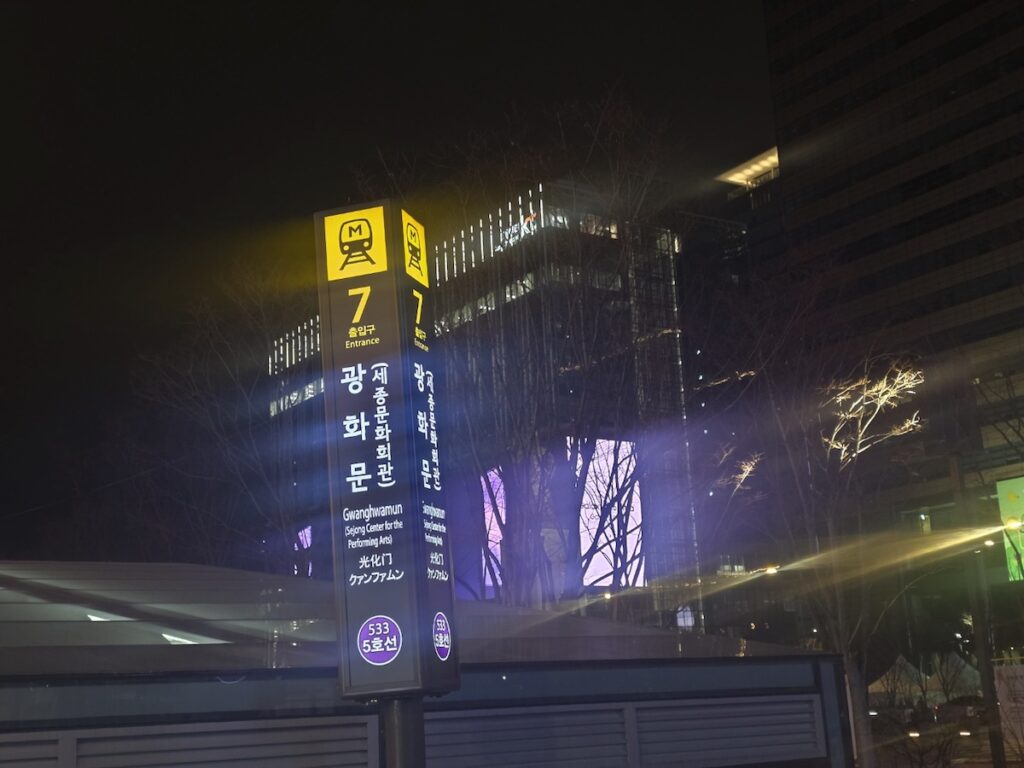
To manage the unprecedented crowds expected for the BTS Gwanghwamun Comeback 2026, Seoul Metro will implement a strict “Skip-Stop” system. This means trains will pass through the heart of the action without opening their doors.
| Station | Line | Skip-Stop Time (March 21) | Strategic Status |
| Gwanghwamun | Line 5 | 2:00 PM – 10:00 PM | STATION CLOSED |
| Gyeongbokgung | Line 3 | 3:00 PM – 10:00 PM | STATION CLOSED |
| City Hall | Line 1, 2 | Flexible / Congestion Based | USE WITH CAUTION |
The Pro-Tip: Do not board a train heading directly to Gwanghwamun Station during these hours. You will be a helpless observer behind the glass. Instead, exit at Jonggak Station (Line 1) or Euljiro 1-ga (Line 2). These stations offer the most reliable walking paths to the square’s rear security gates.
Related Guides for the Global ARMY
The BTS Gwanghwamun Comeback 2026 is more than a single event; it is a multi-layered experience that spans the entire city of Seoul. To deepen your connection with the “Arirang” era and ensure your journey is as seamless as a cinematic ritual, explore our curated field reports below:
- BTS Gwanghwamun Locations 2026: 7 Rituals to Find Your Spring Day Before the crowds arrive, trace the silent footprints of the members. We uncover the 7 hidden spots near Gwanghwamun where the “Arirang” documentary was filmed, offering you a private moment of reflection amidst the city’s roar.
- BTS Gwanghwamun Comeback 2026: The Ultimate Survival Guide for ARMY While this guide masters the traffic, our Ultimate Survival Guide masters the soul. From hidden rest zones and charging stations to the best-vantage points for the 4K Netflix towers, this is your comprehensive tactical manual for the historic night.
- Korea Night Air: 5 Reasons Why Seoul’s Shared Breath Ritual is the Safest in the World (2026) Standing in a crowd of tens of thousands can be daunting. Understand the unique “Shared Breath” ritual of Seoul’s safety infrastructure. Discover why Gwanghwamun is the safest stadium-level stage on the planet and how to embrace the night air with peace of mind.
2. Deciphering the “Red Line”: Road Closures & Bus Detours
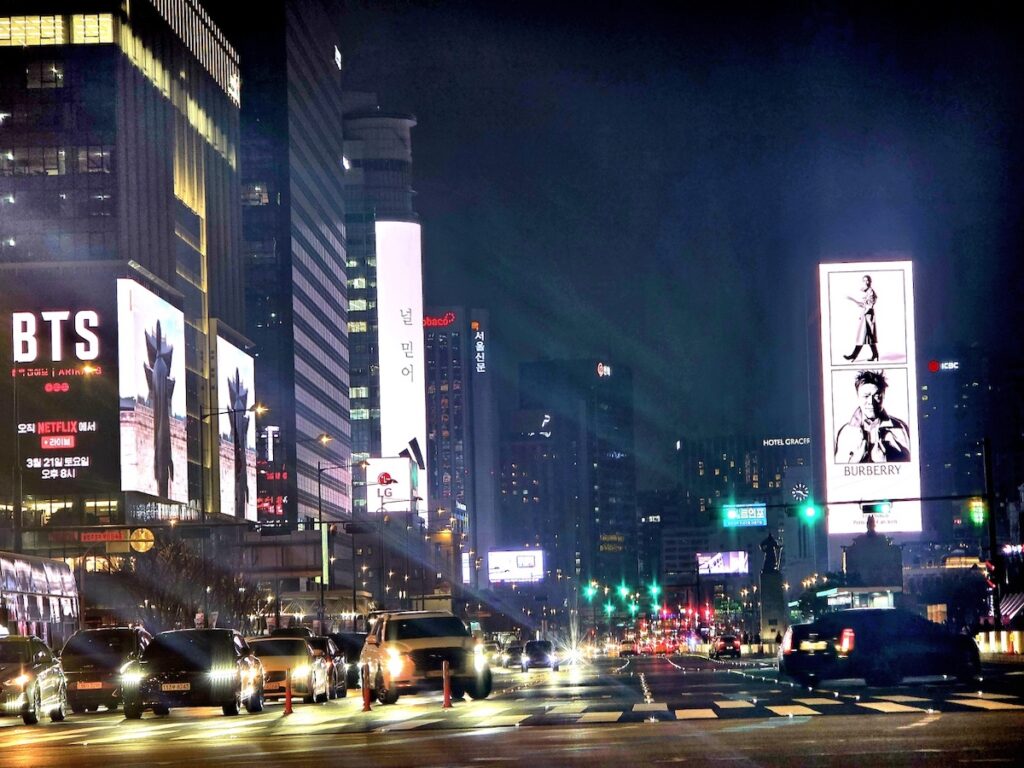
Based on the barricades I observed on-site yesterday, the Red Line—the total vehicle exclusion zone—is larger than any previous Hallyu event.
- Sejong-daero Lockdown: From 9:00 PM on March 20th to 6:00 AM on March 22nd, all vehicles are banned from Gwanghwamun to City Hall.
- The Bus Labyrinth: Every city bus and Airport Limousine passing through Gwanghwamun will be detoured to Anguk-dong or Seodaemun. If you are arriving from Incheon Airport, do not expect to be dropped off near the square.
- The Barricade Secret: Gate 31 (near the KT Building) appeared to be the primary logistics hub in yesterday’s setup. Expect heavy security and metal detector checks at this entrance.
[Field Tactical Note: Deciphering the Map]
Notice: Since the Google Map above displays standard traffic conditions, please apply the following “Red Line” overlays based on our March 21st field report:
- The No-Go Zone (Red Line): On the map, the entire stretch of Sejong-daero (from the Gwanghwamun Gate to City Hall) is effectively erased for vehicles. Do not attempt to take a taxi or bus into this blue-lined road on your screen.
- The Ghost Entrance: Gwanghwamun Station (Line 5) and Gyeongbokgung Station (Line 3) are marked as active on the map, but they will function as “Ghost Stations” (No-stops) from 2:00 PM.
- Tactical Entry Point: Look for the KT Building and Kyobo Bookstore on the map. The pedestrian corridor between these two landmarks is your primary ritual path to reach Gate 31.
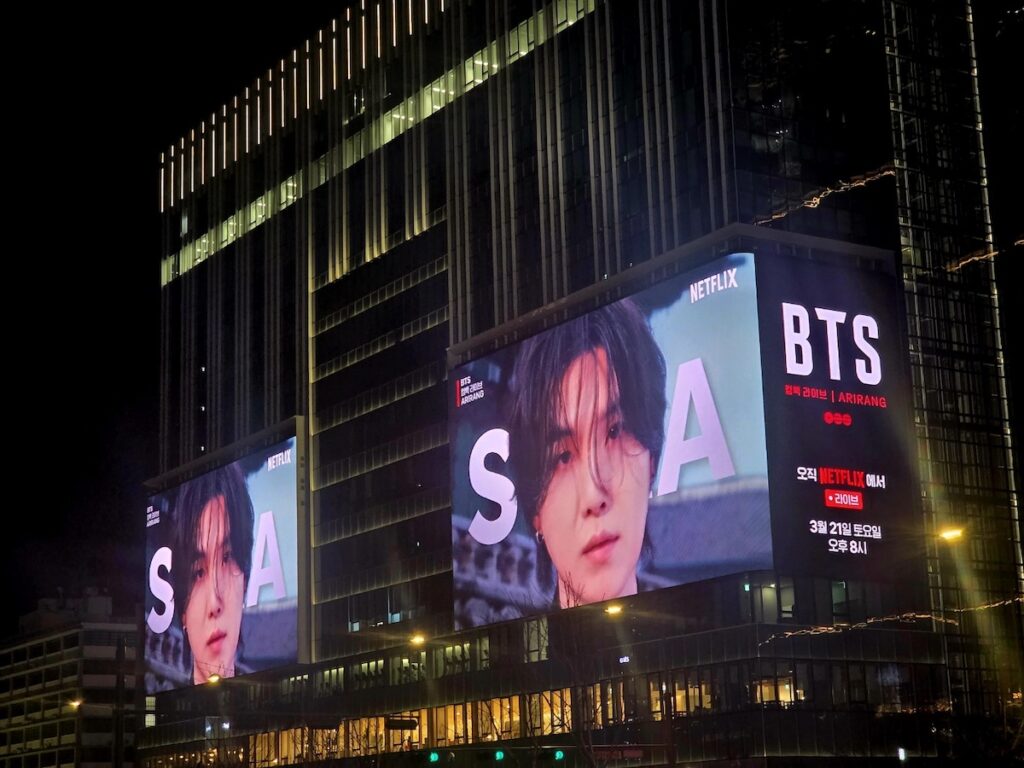
- Visual Anchor: Refer to my on-site photo of the Jung Kook billboard below; that location marks the exact boundary where the security perimeter begins.
3. On-Site Survival: The Infrastructure of Pop
The BTS Gwanghwamun Traffic Guide 2026 is about managing your own energy as much as the city’s gridlock.
- Connectivity Surge: With 15 million concurrent Netflix viewers and a massive on-site crowd, mobile data will fail. Screenshot this guide and your digital tickets now.
- The Walking Ritual: Walking 20-30 minutes from peripheral stations is the fastest way to travel. Follow the designated fan paths to avoid the “Dead Zones” where police have blocked pedestrian flow.
- Health Recovery: The intense “Arirang” bass and massive crowds can lead to metabolic fatigue. Refer to our [Korea Pharmacy Guide 2026] for herbal tonics that provide the stamina needed for a 10-hour standing ritual.
4. Conclusion: The Ritual of Preparation for Arirang 2026
The BTS Gwanghwamun Comeback 2026 is not merely a concert; it is a monumental cultural ritual that tests both the city’s infrastructure and your personal endurance. As I witnessed during my field inspection yesterday, the “Stadium-level” lockdown of Gwanghwamun is absolute. The black barricades and the “Red Line” vehicle exclusion zones are now the new boundaries of this urban sanctuary.
Success on March 21st depends entirely on your tactical movement. By following this BTS Gwanghwamun Traffic Guide 2026, you are choosing the path of the “Sophisticated Traveler”—one who avoids the “Ghost Station” traps of Line 5 and embraces the 30-minute walking ritual from Jonggak or Euljiro.
Remember, the square will be loud, crowded, and emotionally overwhelming. Arrive four hours early, respect the security gates, and trust the field data over your digital navigation. We will see you under the light of the 4K towers, where history and the “Arirang” spirit meet.
Action Plan: Your Tactical Survival Ritual for March 21
To navigate the BTS Gwanghwamun Traffic Guide 2026 successfully, you must treat your journey as a calculated ritual. Do not leave your movement to chance. Follow these five definitive steps to ensure you reach the “Arirang” stage without being trapped behind the Red Line.
1. The 4-Hour Buffer (Time Management)
The “Stadium” lockdown protocol begins in earnest at 2:00 PM. To avoid the peak of the subway skip-stops, aim to be within the Jongno or Euljiro perimeter no later than 3:00 PM. This gives you a 4-hour window before the main event to secure your position and navigate the security gates without panic.
2. The Offline Strategy (Digital Survival)
As I observed with the massive 4K towers and lighting rigs yesterday, the electromagnetic load in the square will be immense. Mobile data (5G/LTE) is expected to drop by 80% once the crowd hits 50,000.
- Action: Take a high-resolution screenshot of the Subway Skip-Stop Table and the Tactical Walking Map provided in this guide.
- Action: Save your digital tickets to your Apple/Google Wallet before you leave your hotel or home.
3. The Peripheral Approach (Arrival)
Do not attempt to enter the city via Line 5 or Line 3 after 2:00 PM.
- Optimal Route: Take Line 1 to Jonggak Station (Exit 1) or Line 2 to Euljiro 1-ga Station (Exit 1 or 8).
- The Ritual Walk: From these exits, follow the landmarks I captured in my field photos. Head toward the Kyobo Building or the KT Building. This 20-30 minute “Walking Ritual” is the only guaranteed way to reach the pedestrian-only entry at Gate 31.
4. Physical Stamina & Recovery
Standing in a high-security perimeter for 6+ hours requires metabolic preparation.
- Action: Hydrate early, but limit intake 2 hours before the event, as portable restroom access within the “Red Line” will be highly restricted.
- The Countermeasure: Pack a small survival kit with “Hwan” (herbal tonics) from our [Korea Pharmacy Guide 2026] to manage adrenaline crashes and physical fatigue during the “Arirang” performance.
5. The Post-Event “Flow” (Exit Strategy)
The greatest danger of the BTS Gwanghwamun Comeback 2026 is the post-event surge.
- Action: Do not rush toward the nearest subway station immediately. Instead, walk east toward Cheonggyecheon Stream or south toward Sungnyemun. These areas are outside the primary traffic lockdown and will offer a much higher chance of finding an operational taxi or an unobstructed bus route.