The soft beep of the digital door lock echoes in the quiet hallway of a high-rise apartment in Seoul. As I step inside, I notice a neighbor carefully carrying a tray of meticulously cleaned plastics and glass toward the elevator. This scene—a nightly discipline of precision—is the true essence of Recycling in South Korea Apartment life. For those living in these cinematic glass towers, waste management is not a chore; it is a sophisticated urban ritual that defines the collective efficiency of the city.
In 2026, the art of Recycling in South Korea Apartment complexes has reached its peak. It is a system where high-tech infrastructure meets individual discipline, ensuring that a city with the density of Seoul remains impeccably clean. Whether you are a new resident or a curious traveler, understanding this “Midnight Sorting Ritual” is the ultimate key to mastering the sophisticated lifestyle of a modern Korean metropolis.
1. The Role of the Management Office and Contractor Fees
The primary reason Recycling in South Korea Apartment living feels more convenient than other housing types is the “Management Fee” (Gwanri-bi). Every month, residents pay a sum that includes the wages for specialized cleaning staff and the contract fees for private waste disposal firms. Because the apartment complex acts as a single large-scale business entity, they hire professional firms to haul away recyclables in bulk. This means the “group” has already pre-paid for the service, allowing residents to focus purely on the “art” of sorting.
2. The “Dan-ji” Rhythm: Why Your Calendar Dictates Your Trash
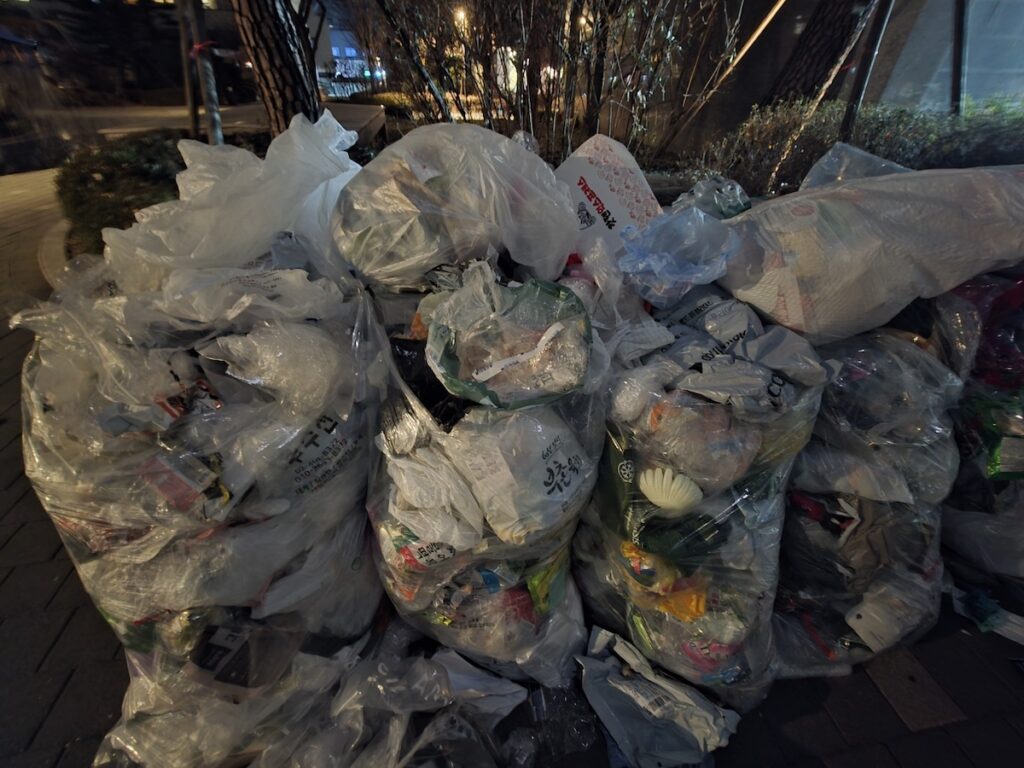
In South Korea, living in a large apartment complex (Dan-ji) means your life follows a communal heartbeat. My complex, consisting of five massive blocks, operates like a well-oiled machine. Block 1 takes Monday, Block 2 takes Tuesday, and so on. If you live in Block 5 and miss Friday’s window, you are stuck with a week’s worth of empty boxes in your living room.
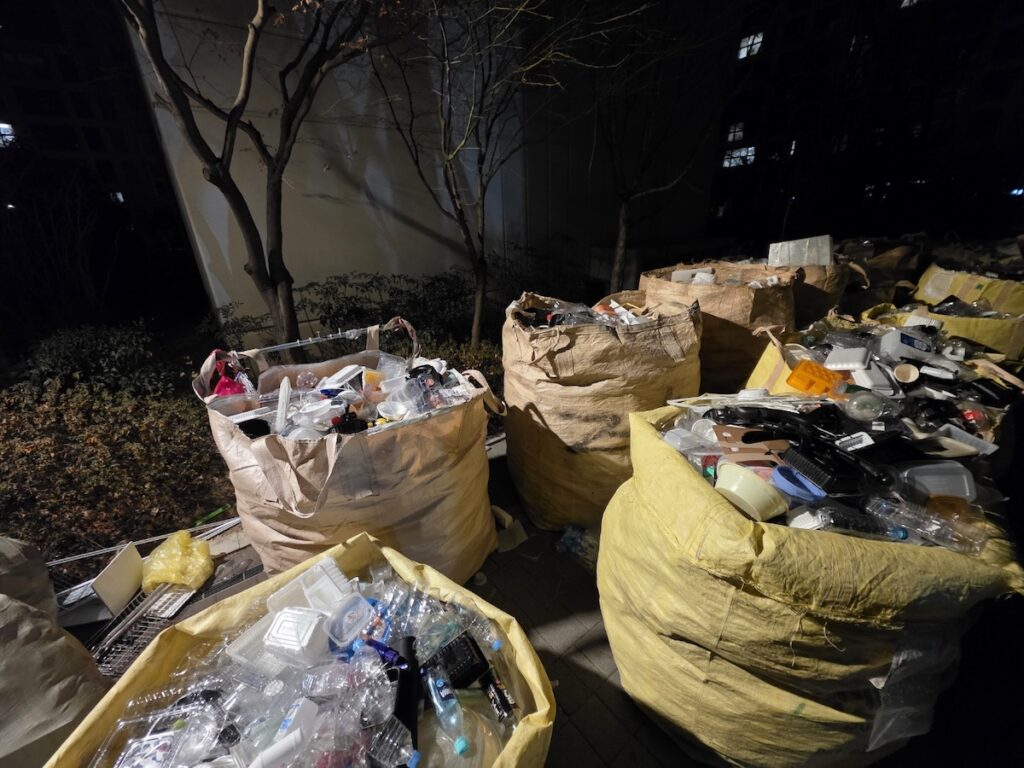
It’s not just about throwing things away; it’s a synchronized social event. On your designated day, usually starting from late afternoon until the next morning, a massive infrastructure of bins and sorting stations appears as if by magic in the parking lot. You’ll see your neighbors—from businessmen in suits to grandmothers in aprons—all heading down with heavy bags. It is the one time a week the entire community meets face-to-face, performing the same ritual under the watchful eye of the security guard (Gyeong-bi-won).
3. The Dark Side of Convenience: Delivery Culture and the Plastic Tsunami
Korea is the world champion of delivery. Whether it’s “Rocket Delivery” from Coupang or late-night “Baedal” fried chicken, everything arrives at your door in record time. But the aftermath is a mountain of waste that every resident must confront.
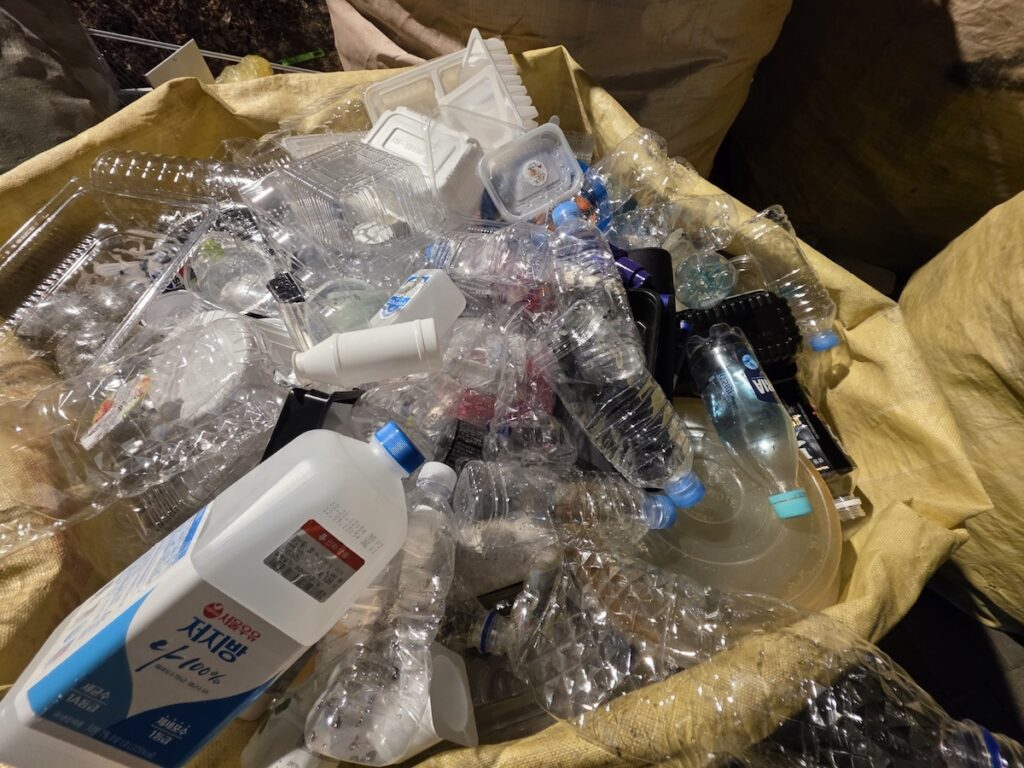
Think about your last fried chicken order: the cardboard box, the plastic pickled radish container, the plastic soda bottle, and the individual sauce packets. In a typical Korean household, a single dinner can produce five different types of waste.
- The Plastic Challenge: You cannot just toss these. You must wash them. If a single drop of red spicy sauce (Gochujang) remains on a plastic container, it’s no longer recyclable. I’ve spent countless nights at my kitchen sink scrubbing plastic bowls just to ensure they pass the “neighbor test” at the sorting station. This is the reality of the high-speed, high-convenience life in Seoul.
4. Eco-Innovation: The “Label-Free” Revolution You’ll Love
Despite the high volume of waste, Korea is a pioneer in eco-friendly design. You’ll notice something strange about the water bottles in your local convenience store—many have no labels at all. This is the “Label-free” movement.
Previously, removing the stubborn plastic film from every PET bottle was the most tedious part of the sorting ritual. Now, the government and corporations have partnered to make products that are “Recycling-Ready.” For products that still have labels, they are designed with “easy-peel” technology. This isn’t just a gimmick; it’s a standard of life. As a resident, you feel a small sense of victory when you can strip a label off in one smooth motion. It shows how deeply the culture of sustainability is woven into the products we buy every day.
5. The “Recycling Wars”: Social Etiquette and Avoiding the Gyeong-bi-won’s Gaze
Let’s talk about the unspoken social pressure. In a Korean apartment, how you recycle defines your reputation. Improper sorting is the number one cause of disputes between neighbors.
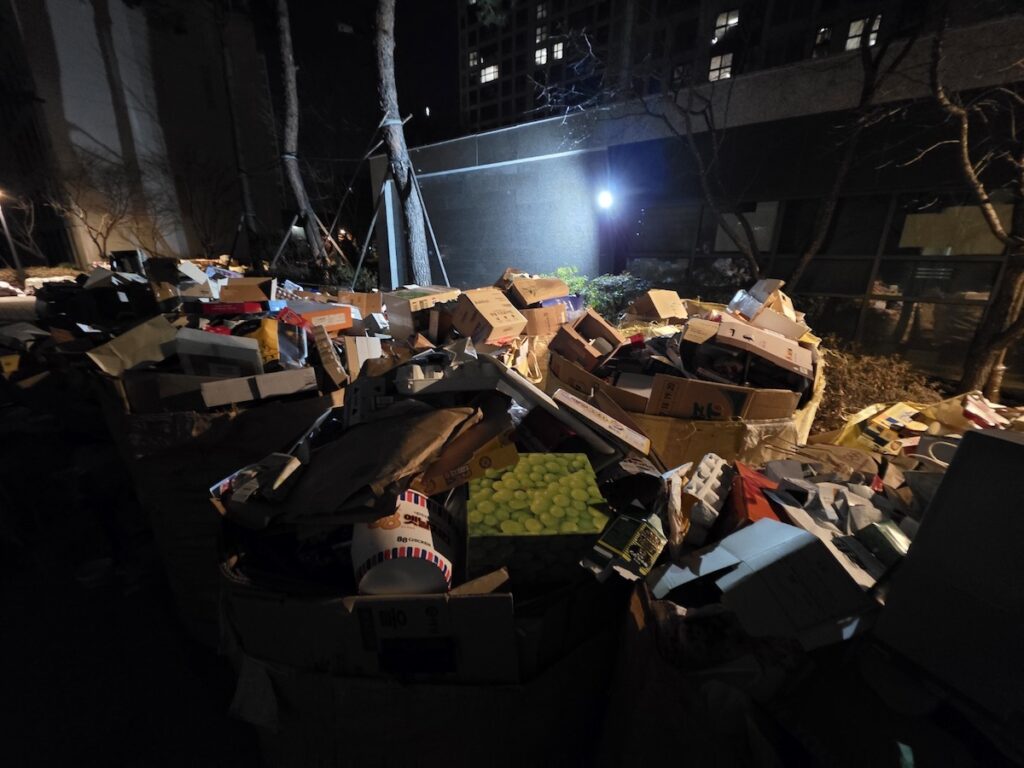
Imagine it’s 11 PM on a Friday. You’re trying to sneak a cardboard box with the tape still attached into the pile. Suddenly, you feel a presence. It’s the apartment security guard or a senior neighbor. They might not say anything, but the “look” tells you everything. Or worse, a notice might be posted in the elevator about “improper waste disposal in Block 3.” To avoid these “Recycling Wars,” you must follow the unwritten rules: flatten every box, remove every piece of adhesive tape, and separate clear PET bottles from colored plastic. It may seem intense, but this collective discipline is what keeps a 5,000-resident complex clean and odor-free. It’s a shared responsibility that fosters a unique, albeit sometimes stressful, sense of community.
Understanding the Dual Architecture of Waste
While the midnight sorting ritual in a high-rise apartment is a masterclass in collective efficiency, the rules shift dramatically once you step into the traditional villa districts. To avoid heavy fines and master the full spectrum of the city’s waste management, it is essential to understand how your residential type dictates your daily responsibility.
Seoul Recycling System: The 2026 Guide to Apartments vs. Houses
Mastering the Art of Urban Harmony
Recycling in South Korea Apartment living is ultimately a profound social contract. It is a system built on the philosophy that while the city provides the high-tech infrastructure—from RFID smart bins to centralized management—the citizens provide the unwavering discipline. By participating in the “Midnight Sorting Ritual,” residents contribute to a cinematic, clean metropolis that values collective efficiency over individual convenience. Whether you are navigating the 10-liter bag requirements of a local villa or the sophisticated recycling centers of a Gangnam high-rise, mastering these rules is a true badge of honor for any Seoulite. It is through this shared commitment that South Korea continues to set the global gold standard for sustainable urban living in 2026.
Understanding the Dual Architecture of Waste
While the midnight sorting ritual in a high-rise apartment is a masterclass in collective efficiency, the rules shift dramatically once you step into the traditional villa districts. To avoid heavy fines and master the full spectrum of the city’s waste management, it is essential to understand how your residential type dictates your daily responsibility.