That awkward moment at a Korean restaurant
What do you call a waiter in Korea was something I didn’t think about—until I saw a small argument unfold right next to me.
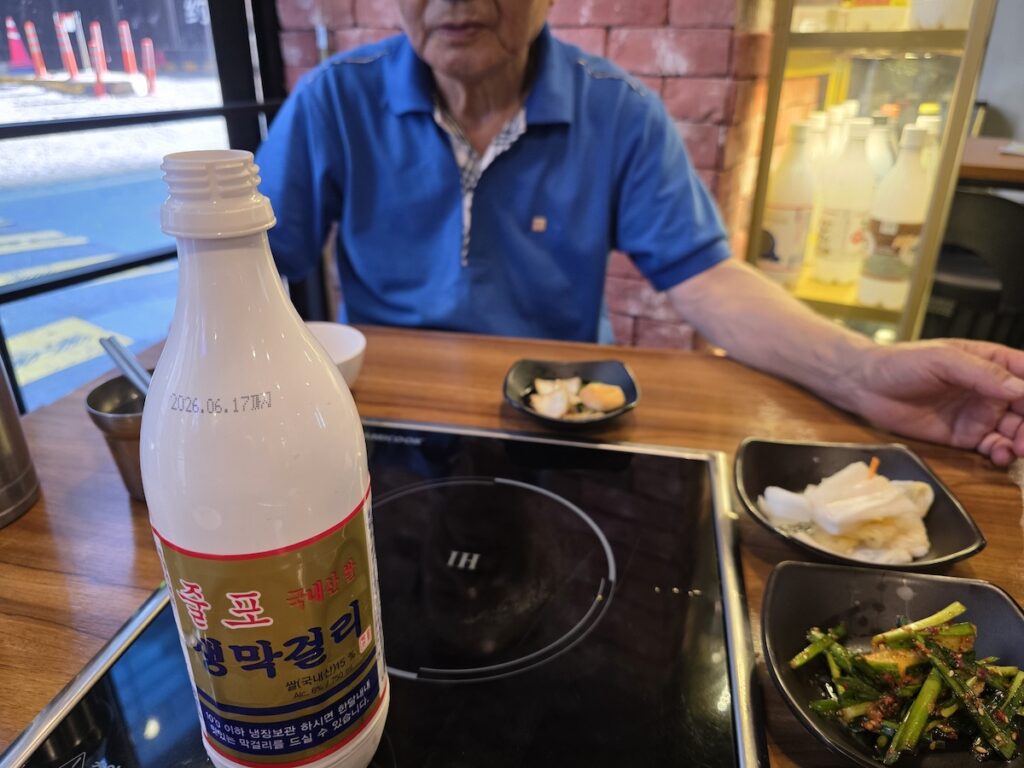
I was sitting in a casual restaurant in Seoul, the kind with metal tables and a steady flow of people coming in and out. Two men at the table next to me were trying to get the attention of a female server. Instead of raising their hand or making eye contact, one of them called out loudly:
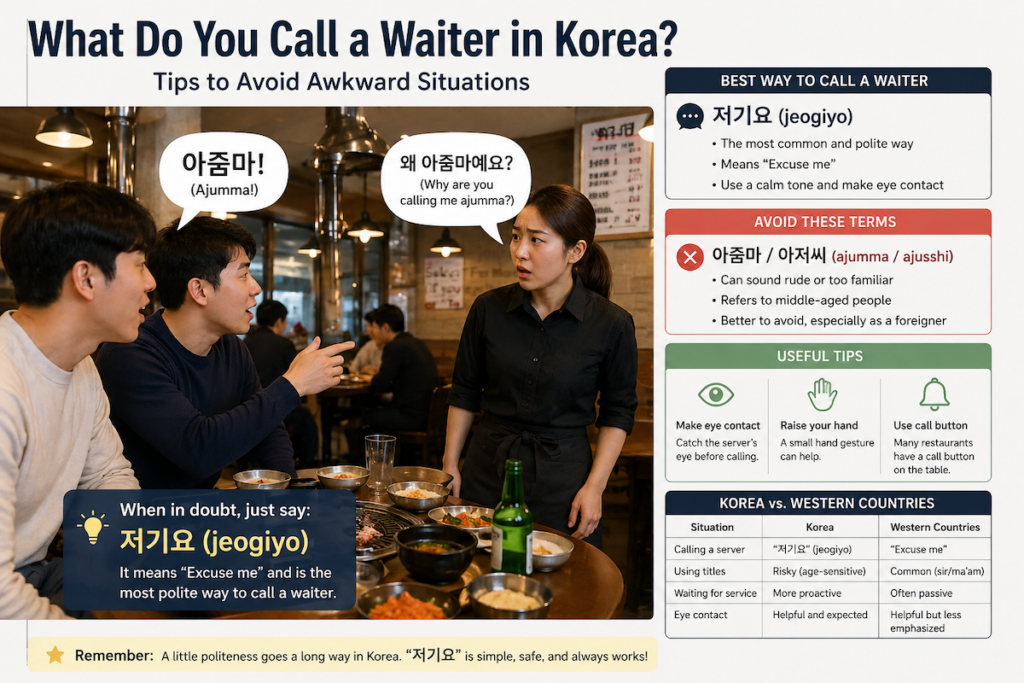
“아줌마!”(Ajumma)
The reaction was immediate. The server turned, clearly irritated, and walked over. You could feel the tension. She responded, visibly annoyed, asking why she was being called “아줌마.” It wasn’t a loud fight, but it was enough to make everyone nearby a little uncomfortable.
That was the moment I realized something simple but important: calling a waiter in Korea is not as straightforward as it seems.
So, what do you call a waiter in Korea?
The most common and safest option
If you remember just one phrase, make it this:
“저기요 (jeogiyo)”
It loosely translates to “Excuse me,” but in Korea, it’s the standard way to call a server without sounding rude.
You don’t need to shout it. In fact, it’s usually said in a slightly raised but polite tone, often combined with a small hand gesture or eye contact.
Why names and titles can be tricky
In many Western countries, you might say:
- “Excuse me”
- “Sir”
- “Ma’am”
Or sometimes just wave your hand slightly.
In Korea, using specific titles like “아줌마 (ajumma)” or “아저씨 (ajusshi)” can be risky. These words refer to middle-aged people, but they carry strong social and emotional connotations.
What happened at the restaurant I mentioned earlier is a perfect example. The server likely felt disrespected or mischaracterized, even if the customer didn’t intend harm.
What not to say in Korean restaurants
Avoid using “아줌마” or “아저씨”
Even though locals sometimes use these terms casually, as a foreigner, it’s better to avoid them completely.
They can sound:
- Too familiar
- Slightly disrespectful
- Or just plain awkward
Don’t rely only on gestures
Snapping fingers, waving aggressively, or just staring at the staff without saying anything can feel uncomfortable in Korea.
Most restaurants expect a simple verbal cue.
How Korea compares to Western dining culture
Here’s a simple comparison to help you understand the difference:
| Situation | Korea | Western Countries |
|---|---|---|
| Calling a server | “저기요” (jeogiyo) | “Excuse me” |
| Using titles | Risky (age-sensitive) | Common (sir/ma’am) |
| Waiting for service | More proactive | Often passive |
| Eye contact | Helpful and expected | Helpful but less emphasized |
In Korea, you’re expected to take a slightly more active role in getting attention. Servers don’t always check in frequently, especially in busy places.
Small habits that make a big difference
Make eye contact first
Before calling out, try to catch the server’s eye. Often, that alone is enough.
Use a calm tone
Even when it’s busy, avoid shouting. A polite but clear “저기요” works much better.
Look for call buttons
In many Korean restaurants, especially BBQ places or casual diners, there’s a small button on the table to call staff.
If you see one, use it. It’s actually the most efficient method.
Does It Change Depending on the Place?
If you’re wondering what do you call a waiter in Korea in different situations, the short answer is: not really—but the way you call them can feel slightly different depending on where you are.
Restaurants
In most Korean restaurants, the standard way is still “저기요 (jeogiyo)”.
It doesn’t matter if it’s a small local place or a busy BBQ restaurant—this works almost everywhere.
In fact, many places also have a call button on the table, which is often the easiest option. Locals use it without hesitation, so don’t feel awkward pressing it.
Cafés
Cafés are a bit different.
In most cases, you don’t need to call a server at all. You usually:
- Order at the counter
- Pick up your drink when it’s ready
If you do need help, a simple “저기요” or even “Excuse me” is perfectly fine, especially in more modern or tourist-friendly cafés.
Hotels
Hotels are one of the few places where things feel more familiar to Western visitors.
Staff usually speak some English, and using “Excuse me” is completely acceptable.
In more formal settings, you’ll also notice that interactions feel slightly more structured and polite, but you still don’t need to use any specific Korean title.
Bars and Pubs
In casual bars or pubs, the atmosphere is more relaxed.
People often:
- Make eye contact
- Raise their hand slightly
- Say “저기요” if needed
It’s less about what you say and more about timing and tone.
The Real Difference
The biggest difference isn’t the word you use—it’s how you use it.
In Korea, calling a server is more direct than in many Western countries, but it’s still expected to be polite and natural. Once you get used to saying “저기요” with the right tone, it works almost everywhere.
Why this matters more than you think
That small argument I witnessed wasn’t about a single word. It was about tone, context, and cultural nuance.
In Korea, respect is often communicated subtly. A single word choice can change the entire interaction.
For first-time visitors, this can feel confusing. But once you understand the rhythm of how people interact in restaurants, it becomes second nature.
Final thoughts
Learning what do you call a waiter in Korea isn’t just about language—it’s about avoiding unnecessary tension and blending into everyday life a little more smoothly.
If you stick with “저기요,” keep your tone polite, and pay attention to how locals interact, you’ll be just fine.
And maybe, unlike that moment I witnessed, your dining experience will stay exactly how it should be—comfortable, relaxed, and quietly enjoyable.