For someone in a wheelchair, a 10cm curb isn’t just a bump—it’s a wall. When I walk through the busy streets of Teheran-ro in Gangnam, I see those curbs differently now. I see the steep ramps and the heavy doors that many of us push through without a second thought. But here is the good news: Seoul in 2026 is rapidly becoming one of the most accessible cities in Asia.
If you are planning a wheelchair accessible Seoul trip, you don’t need to fear the “city of hills.” With the right strategy and data, you can navigate this metropolis with total independence.
The Data: 99% Elevator Access (Source: Seoul City, Feb 2026)
According to the latest official data from the Seoul Metropolitan Government, the city’s subway system is a miracle of modern engineering for those with limited mobility.
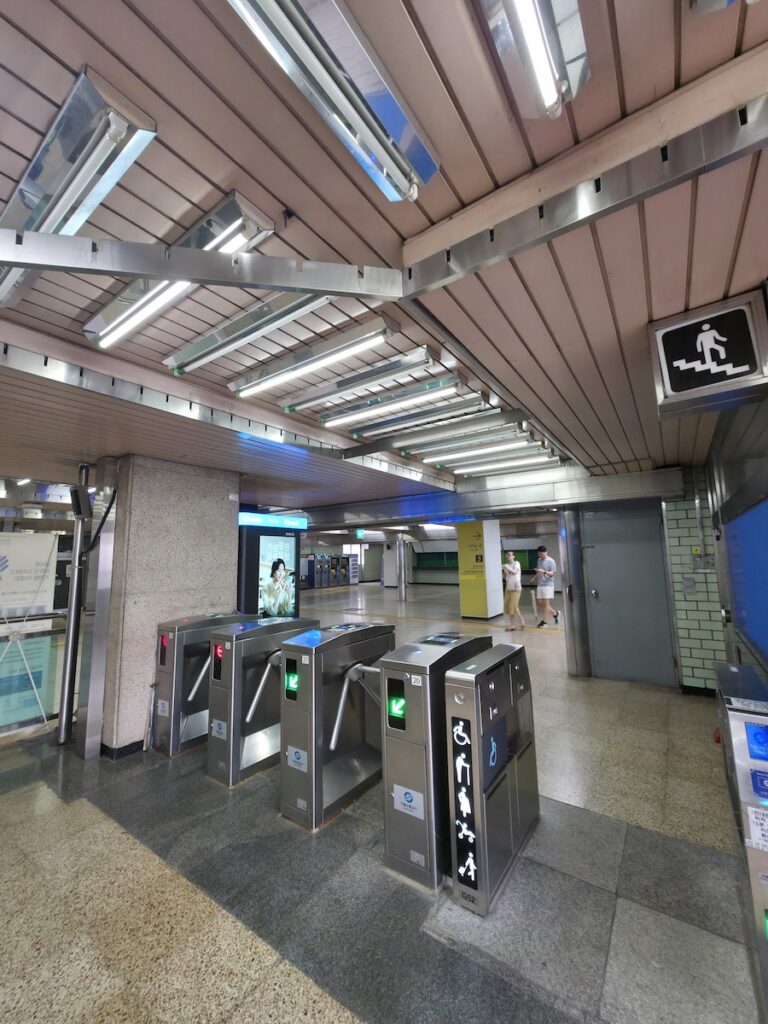
- The Numbers: Out of 274 total stations across the major lines, 273 stations now have full elevator access. This 99% success rate means you can travel almost anywhere in the city without needing to rely on stair-climbing lifts.
- The “Wide Gate” System: Every station is equipped with an extra-wide, automatic sensor gate. Look for the wheelchair icon; these gates stay open longer and provide plenty of room for even large electric wheelchairs.
The Numbers: Why Seoul is a Global Leader in Accessibility
According to the latest 2026 public data from the Seoul Metropolitan Government, the city’s commitment to “Universal Design” has made its subway system one of the most wheelchair-friendly in the world.
| Metric | Current Status (Feb 2026) |
| Total Subway Stations | 274 |
| Stations with Elevator Access | 273 (99.6%) |
| Total Elevators in Operation | 867 |
| Total Escalators | 1,882 |
Station Spotlight: Elevator Counts at Major Tourist Hubs
Don’t worry about being stranded. Major stations near Seoul’s top attractions are equipped with multiple elevators to ensure you can reach the street level independently.
| Station (Line) | Number of Elevators | Why it matters for you |
| Seoul Station (Line 1/4) | 4 | Your main gateway for KTX and Airport Express. |
| Gwanghwamun (Line 5) | 5 | Direct access to Gyeongbokgung Palace & Sejong Center. |
| Jamsil (Line 2/8) | 9 | Essential for Lotte World, Seoul Sky, and luxury malls. |
| DDP (Line 2/4/5) | 10 | Access to Dongdaemun Design Plaza and fashion districts. |
| Itaewon (Line 6) | 4 | Your hub for global cuisine and nightlife. |
What the Data Means for Your Trip
With a 99.6% elevator installation rate, Seoul has virtually eliminated the “unreachable station.” Unlike many older subway systems in Europe or North America where only a fraction of stations are accessible, Seoul allows you to plan your route based on where you want to go, not just where you can go.
Data Source: Seoul Metropolitan Government Open Data Portal (Public Facilities for the Elderly and Disabled Status).
The Real Talk: Why I Recommend the Subway Over the Bus
Seoul has thousands of “Low-Floor” buses equipped with ramps and dedicated wheelchair spaces. However, as a local who sees the city’s pace, I recommend the subway as your primary mode of transport.
Why? It’s about the “Social Pressure.” Seoul is a fast city. While the bus drivers are trained to help, the process of deploying the ramp and securing a wheelchair can take several minutes. In a crowded city where everyone is in a rush, you might feel the weight of a dozen impatient stares. It’s not that people aren’t empathetic—they are just busy. To save yourself the mental “burden” and the pressure of the clock, the subway elevators offer a much more dignified and stress-free experience.
Top 3 Wheelchair-Friendly Hotels in Seoul: Why They are the Best
Choosing a hotel for a wheelchair accessible Seoul trip isn’t just about finding a room with a wide door. It’s about the entire ecosystem—how you get from your bed to the subway, the height of the light switches, and the flatness of the surrounding sidewalks. Here are the top three hotels that excel in “Universal Design.”
1. Conrad Seoul (Yeouido): The Gold Standard for Independent Travel
Conrad Seoul is widely considered the best choice for travelers with mobility needs, primarily due to its “Underground City” connection.
- Why it’s perfect: The hotel is part of the IFC Seoul complex. You can take a dedicated elevator from the hotel lobby directly into the IFC Mall and the The Hyundai Seoul (the city’s largest department store). From there, flat, air-conditioned underground walkways lead you straight to Yeouido Station (Line 5 & 9).
- The Mobility Edge: You can spend an entire rainy day shopping, dining, and traveling across the city without ever encountering a single outdoor curb or uneven pavement.
- Room Features: Their accessible rooms feature motorized curtains, lower-level vanity counters, and roll-in showers with sturdy grab bars. The spacious layout allows for a 360-degree turn of an electric wheelchair easily.
2. Four Seasons Hotel Seoul (Gwanghwamun): The Gateway to History
If your goal is to immerse yourself in Korea’s royal history, this is your best base.
- Why it’s perfect: It is located exactly at the intersection of Seoul’s history and modernity. The sidewalks around Gwanghwamun are among the widest and flattest in the city. You are less than 10 minutes away from Gyeongbokgung Palace and the Seoul Museum of Art via smooth, barrier-free paths.
- Surrounding Infrastructure: The hotel sits right above Gwanghwamun Station (Line 5), which, according to our data, is a high-accessibility hub with 5 dedicated elevators. The nearby Gwanghwamun Square was recently renovated (2022) to be completely flat, making it a perfect spot for an evening stroll.
- The Mobility Edge: The Four Seasons is famous for its “No-Threshold” policy in public areas. From the entrance to the Michelin-starred restaurants, every transition is ramped or level.
3. Grand Hyatt Seoul (Namsan): Luxury with a View, Without the Climb
While Namsan Mountain is known for its steep slopes, the Grand Hyatt has mastered the art of making the mountain accessible.
- Why it’s perfect: It offers a “Resort” feel within the city. While you shouldn’t try to roll down the mountain, the hotel’s internal infrastructure is flawless. They offer a dedicated Disabled-Access Shuttle to nearby shopping districts like Myeongdong and Itaewon, which saves you the stress of navigating the Namsan hills.
- Surrounding Infrastructure: The hotel is adjacent to the Namsan Botanical Garden, which features a “Wooden Deck Trail” specifically designed for wheelchairs and strollers. It allows you to enjoy the forest air and city views without any steep inclines.
- Room Features: Their “Accessible River View” rooms are legendary. They feature lowered closet rods, emergency call buttons in both the bedroom and bathroom, and specialized bedding heights for easier wheelchair-to-bed transfers.
Quick Comparison: Which One Should You Pick?
| Hotel | Best For… | Key Infrastructure Perk |
| Conrad Seoul | Independent Shopping & Subway Access | Direct underground elevator to Mall & Subway |
| Four Seasons | Sightseeing & Historical Palaces | Level-access to Gwanghwamun Square |
| Grand Hyatt | Nature, Views & Quiet Relaxation | Barrier-free wooden deck trails in Namsan |
Palaces: The Most Peaceful Barrier-Free Nature
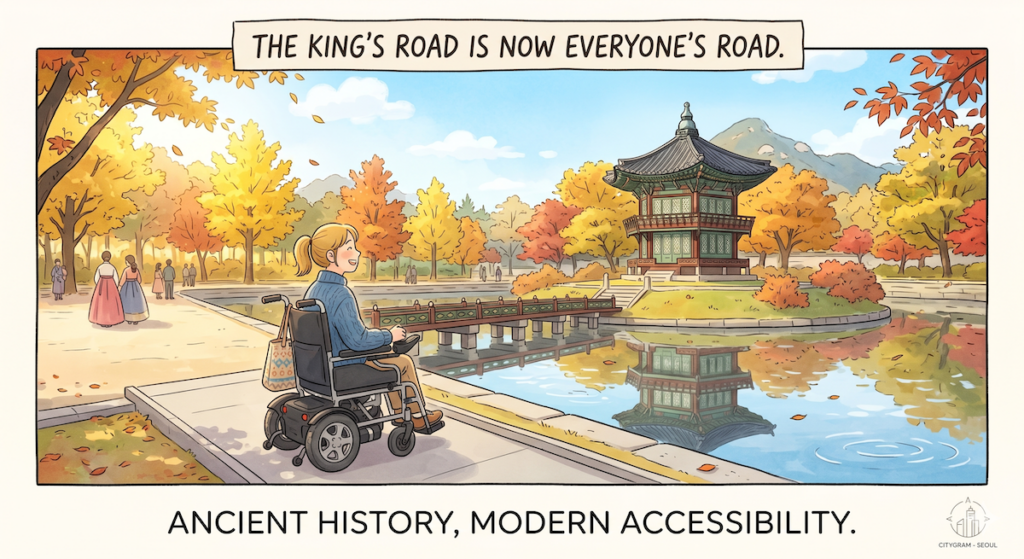
Many visitors assume that ancient palaces, with their stone paths and wooden thresholds, are off-limits for wheelchairs. However, Seoul’s “Big Five” palaces have undergone extensive renovations to ensure that history is accessible to everyone. Here is how you can enjoy these serene spaces without barriers.
1. Gyeongbokgung Palace: The Royal Road to Accessibility
As the main palace of the Joseon Dynasty, Gyeongbokgung is surprisingly wheelchair-friendly due to its vast, flat courtyards.
- Free Wheelchair Rental: You can rent a manual wheelchair for free at the Information Center located near the Heungnyemun Gate (the second gate from the main entrance). No reservation is required; just present your passport.
- The Barrier-Free Route: While the central path (Eodo) is made of uneven stone, the sides of the courtyards are lined with smoother paths. Look for the wooden ramps installed at the entrances of major halls like Geunjeongjeon.
- National Palace Museum: Right next to the palace is the National Palace Museum. It is fully accessible via elevators and features excellent nursing rooms and disabled-access restrooms. It’s a perfect spot to take a break in the AC.
2. Changdeokgung Palace: Navigating the Secret Garden
A UNESCO World Heritage site known for its harmony with nature. While it has more hills than Gyeongbokgung, it is still very manageable with a bit of planning.
- The Main Area: The entryway from Donhwamun Gate is wide and gently inclined. Most of the administrative and residential areas have ramps.
- The Secret Garden (Huwon): This area is famous for its steep hills. However, the palace provides a dedicated accessible route for wheelchair users. While you may not reach every corner of the garden, the palace offers a modified tour path that covers the most beautiful pavilions without steep climbs.
- Assistance: Audio guides and Braille maps are available at the information desk to enhance the experience for visitors with diverse needs.
3. Deoksugung Palace: Modernity Meets Tradition
Located in the heart of City Hall, this palace is the most compact and easiest to navigate for a quick visit.
- Paved & Flat: Deoksugung is unique for its mix of traditional Korean and Western-style architecture (Seokjojeon). The grounds are almost entirely flat and paved, making it the smoothest “roll” of all the palaces.
- MMCA Deoksugung: The National Museum of Modern and Contemporary Art is located inside the palace. It features a dedicated wheelchair lift and elevators, allowing you to enjoy world-class art in a historic setting.
- Evening Charm: It is open until 9:00 PM. The flat paths are beautifully lit, providing a safe and romantic evening nature stroll for wheelchair users.
💡 Practical Pro-Tips for Your Palace Visit
- Free Entry: Admission is 100% free for people with disabilities and one companion. Just show your ID or disability card at the ticket window. (Seniors over 65 also enter for free!).
- Accessible Restrooms: Every major palace now has at least 3-4 spacious, single-user accessible restrooms (usually near the main gates and museums).
- The “Yellow Sand” Warning: On rainy days, some unpaved areas can become slightly muddy. If you are using a manual wheelchair, stick to the stone-paved “official” barrier-free routes marked on the visitor maps available at the entrance.
- Danurim Support: If you need a specialized power wheelchair or a ramp for your stay, the Seoul Danurim Accessible Tourism Center (1670-0880) offers rental services specifically for foreign tourists.
Emergency & Taxi Services
If you need a car, don’t just call a regular taxi.
- Disabled Call Taxi: Seoul operates a dedicated fleet of yellow vans with ramps. You can book them via the “Seoul Disabled Call Taxi” app or by calling 1588-4388. Foreign travelers are eligible to use this service with a simple verification.
Mobility Comparison: Subway vs. Bus in Seoul
| Feature | Seoul Subway (Lines 1-9) | Seoul Public Bus |
| Elevator/Ramp Access | 99.6% (273/274 stations) | High (Low-floor buses) |
| Space | Dedicated cars at ends of trains | 1-2 dedicated spots |
| Wait Time | Very low | Can be high (Waiting for low-floor) |
| Social Comfort | High (Independent entry) | Moderate (Requires driver help) |
Wheelchair accessible Seoul is no longer a dream; it is a reality. By using the subway’s incredible elevator network and choosing “Universal Design” hotels, you can experience the soul of Korea without boundaries.
Conclusion: Why Seoul is Your Next Wheelchair-Friendly Destination
Traveling to Korea with a wheelchair might have seemed like a daunting challenge in the past, but in 2026, the reality on the ground tells a different story. As we’ve explored through the data, Seoul has transformed into a global leader in urban accessibility.
When you see that 99.6% of subway stations are equipped with elevators, and specialized wide gates are the standard, you realize that this is a city that values the independence of every traveler. It’s a place where you don’t have to ask for permission to explore; the infrastructure is already there, waiting for your wheels.
Beyond the Infrastructure: A City of Inclusion
While the physical barriers are disappearing, the heart of the city remains its greatest asset. Yes, the pace of life in Seoul is fast, and the “Pali-pali” culture can be felt on the buses. But by choosing the seamless efficiency of the subway and staying in world-class “Universal Design” hotels like the Conrad or Four Seasons, you bypass the stress and focus on the joy of discovery.
From the flat, majestic courtyards of Gyeongbokgung Palace to the high-tech, barrier-free shopping districts of Jamsil, Seoul offers a unique blend of ancient soul and futuristic convenience. It is a city where a 10cm curb is no longer a wall, but a small detail in a much larger, welcoming landscape.
Take the Leap
If you’ve been hesitating to book that flight because of mobility concerns, let this guide be your assurance. Korea is ready for you. The elevators are waiting, the palace gates are wide open, and the city’s natural beauty is accessible to all.
Seoul is not just a place you can visit in a wheelchair; it is a place you should visit. Pack your bags, trust the data, and get ready to experience a city that truly has no boundaries.