If you are traveling or living in Korea, there is a specific weather condition that triggers a collective craving for a unique cultural experience. When the sky turns misty, gray, or rainy—what locals call “Kkuri-kkuri” (꾸리꾸리)—the destination is almost always a local Jeon-jib (savory pancake house).
Last night, in the midst of a thick fog in Hanam, my colleagues and I headed to Deokpung Traditional Market. Our goal? To immerse ourselves in the authentic Korean Makgeolli Culture that has warmed the hearts of locals for generations.
1. The Misty Day Ritual: Why Koreans Crave Jeon and Makgeolli
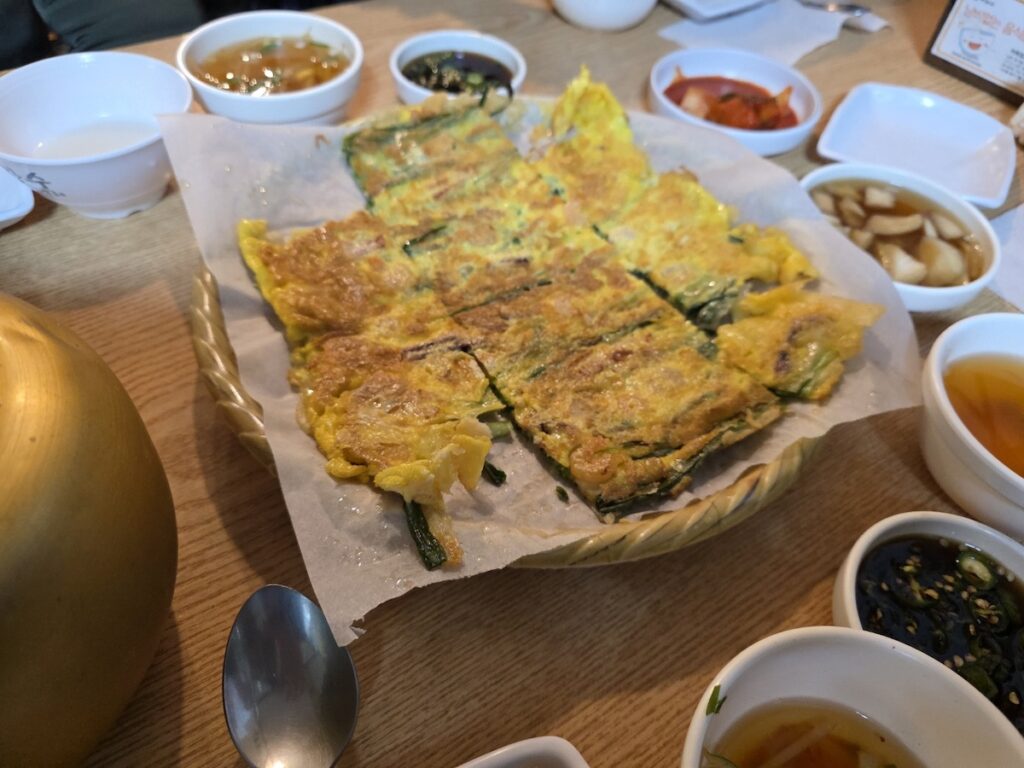
There is a fascinating cultural phenomenon in Korea: as soon as it rains or gets foggy, Jeon-jibs start to overflow. Some say the sound of rain mimics the sizzling sound of pancakes frying on a griddle.
Beyond the sound, it’s about the atmosphere. On a misty day at Deokpung Market, the vibrant lights of the stalls cutting through the fog create a cozy, nostalgic environment. It is the perfect setting to escape the damp chill and find warmth in good company and traditional spirits.
🏛️ 2. The Teapot Tradition: A Sip of History and Cultural Continuity
(막걸리 주전자의 역사와 나눔의 미학)
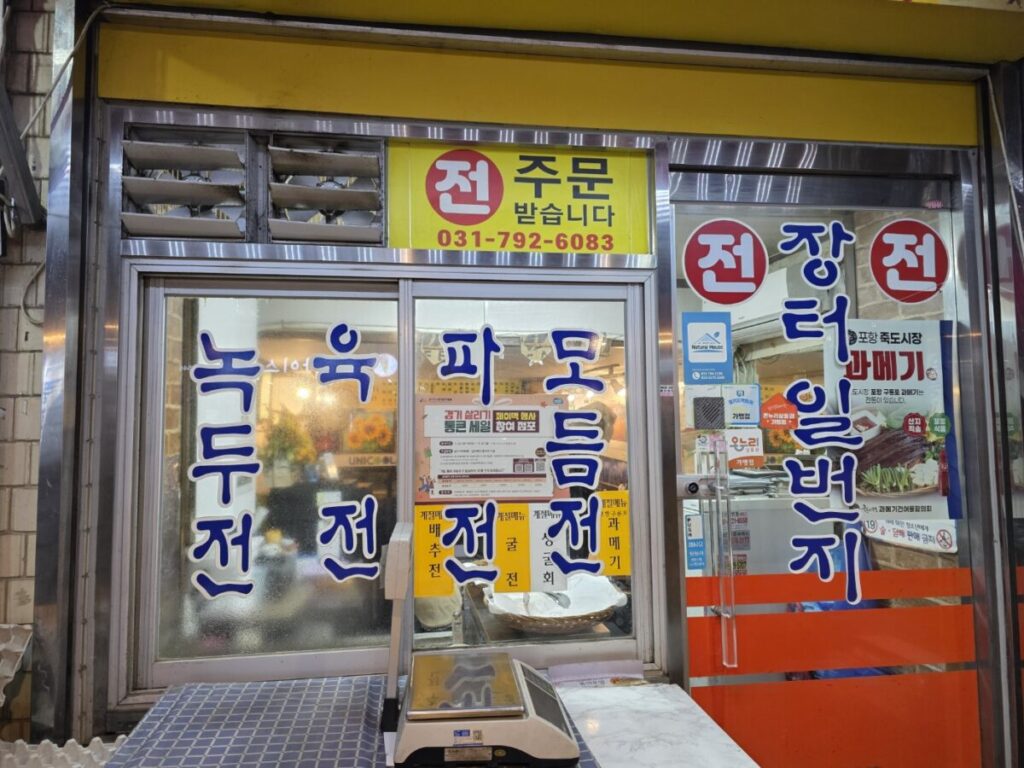
In a world dominated by sleek glass bottles and modern branding, the humble yellow brass kettle (Yang-eun Ju-jeon-ja) remains the undisputed symbol of authentic Korean drinking culture. To understand why we still pour bottled Makgeolli into a kettle, we must look back at the continuity of Korean community life.
- The “Bada-onda” Era (받아온다): Decades ago, before the industrialization of liquor distribution, every neighborhood had its own small brewery. Families didn’t buy pre-packaged bottles; instead, they sent children or went themselves to the brewery with a family kettle to “receive” (Bada-onda) fresh, unfiltered rice wine directly from the vat. This nostalgic act of “fetching the wine” is etched into the Korean subconscious, making the kettle a vessel of nostalgia and warmth.
- A Tool for Social Equality: Historically, Makgeolli was the drink of the “common people”—farmers and laborers who shared it in clay or brass bowls after long hours in the fields. Pouring from a kettle is a communal act that erases hierarchy. As the kettle passes from hand to hand, it signifies a shared responsibility to keep the conversation—and the wine—flowing.
- The Science of the Kettle: Beyond tradition, there is a practical reason for the kettle. Makgeolli is a sediment-rich drink. Gently swirling the liquid inside the kettle ensures that the rice solids are perfectly suspended, providing a consistent, creamy texture in every bowl—something that is harder to achieve when pouring from a narrow plastic bottle.
“The kettle culture is at its peak in Jeonju. For those planning a trip, don’t miss our [Jeonju Makgeolli Street Guide: Kettle Service, Endless Anju, and How to Do It Right] to experience the legendary ‘Endless Anju’ service.”
🏛️ 3. Seasonal Star: Gul-jeon (Winter’s Finest Superfood)
(제철 굴전의 영양과 철판의 퍼포먼스)
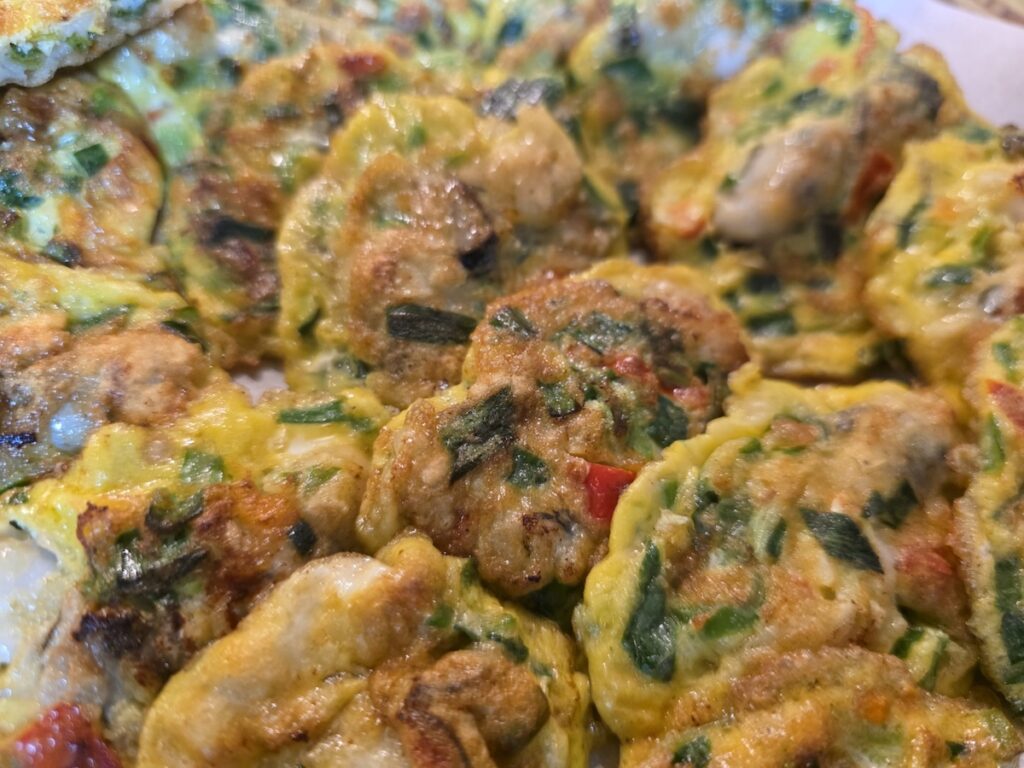
While Haemul Pajeon is a year-round staple, the arrival of winter in Korea signals the debut of the true seasonal protagonist: Gul-jeon (Pan-fried Battered Oysters).
- Peak Season (November to February): Known as the “Milk of the Sea” for their high protein, calcium, and zinc content, Korean oysters are at their absolute peak when the water is coldest. During these months, oysters store glycogen to survive the chill, making them incredibly plump, sweet, and flavorful. Eating Gul-jeon in mid-January is not just a meal; it’s a nutritional ritual to boost immunity and stamina during the harsh Korean winter.
- The Griddle Performance: At Deokpung Market, the preparation is half the fun. Watching the chef dip each individual oyster into a light flour dust and rich egg wash before placing them on a massive, piping-hot iron griddle (Cheol-pan) is a visual feast. The high heat of the griddle sears the exterior instantly, locking in the briny juices of the oyster. The result is a delicate contrast: a soft, savory egg coating on the outside and a burst of fresh, ocean-flavored creaminess on the inside.
- Oyster Capital of Asia: Much of the oysters you enjoy in Seoul or Hanam come from the ria coasts of Tongyeong and Geoje, where the nutrient-rich currents produce world-class shellfish certified for their purity.
“If you want to explore more variety beyond oysters and seafood, check out our [Korean Jeon 2025 Guide: The Holiday Pancake Loved by K-Drama Stars & Families] for a complete breakdown of traditional holiday pancakes.”
🏛️ 4. The Science of the Sidekick: Onion Pickles (Yangpa-jangajji)
(느끼함을 잡아주는 양파장아찌의 미학)
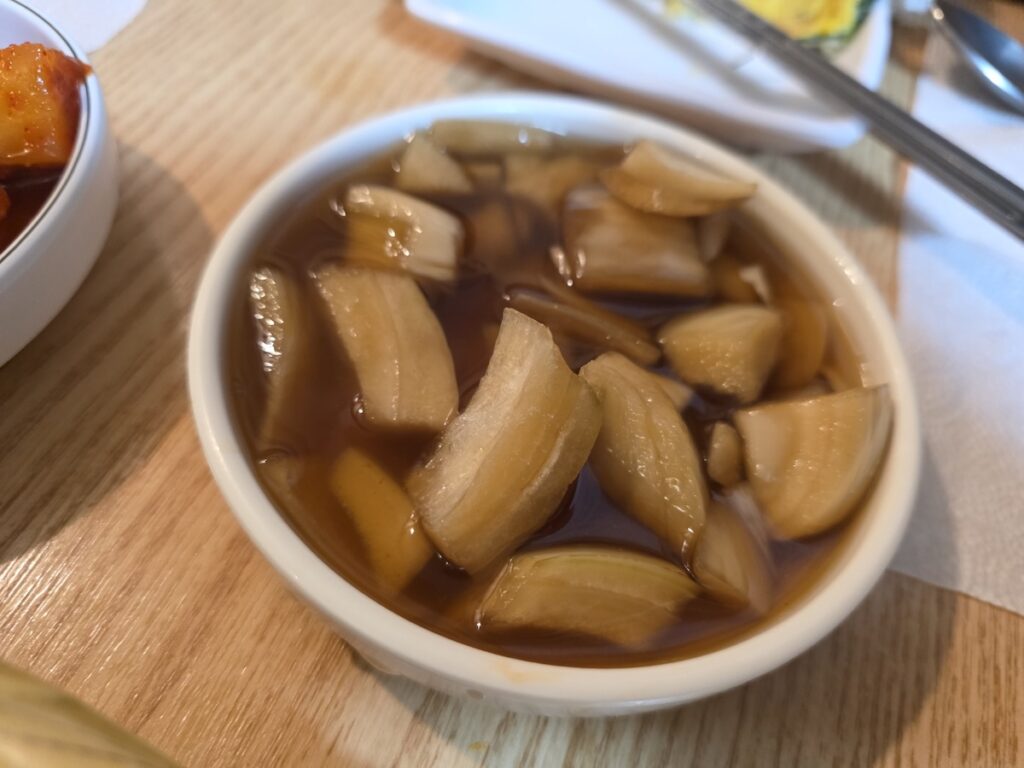
No plate of Jeon is complete without its faithful companion: Yangpa-jangajji (Onion Pickles in Soy Brine). While it might look like a simple side dish, it is actually a culinary masterpiece designed to achieve perfect balance.
- The Neutralizer: Fried foods, by nature, are rich and oil-heavy. The acetic acid in the vinegar used for the pickling brine acts as a biological “palate cleanser,” effectively cutting through the heavy oils of the pancake and preventing “grease fatigue.”
- The Allium Effect: Raw onions have a sharp, pungent bite. However, when steeped in a brine of soy sauce, vinegar, and sugar, that pungency transforms into a mild, refreshing crunch. This crunch provides a vital textural contrast to the soft, chewy texture of the Jeon.
- The Custom Bite: In Korea, we don’t just dip the pancake in the sauce. The pro move is to pick up a single piece of pickled onion (and perhaps a slice of green chili from the brine) and place it directly on top of your piece of Gul-jeon. This creates a “Perfect Bite”—a symphony of salty, sweet, sour, and savory that ensures your tenth bite of pancake tastes just as exciting as your first.
5. The Atmosphere: Loud, Tight, and Unfiltered
To truly understand Korean Makgeolli Culture, you must embrace the environment.
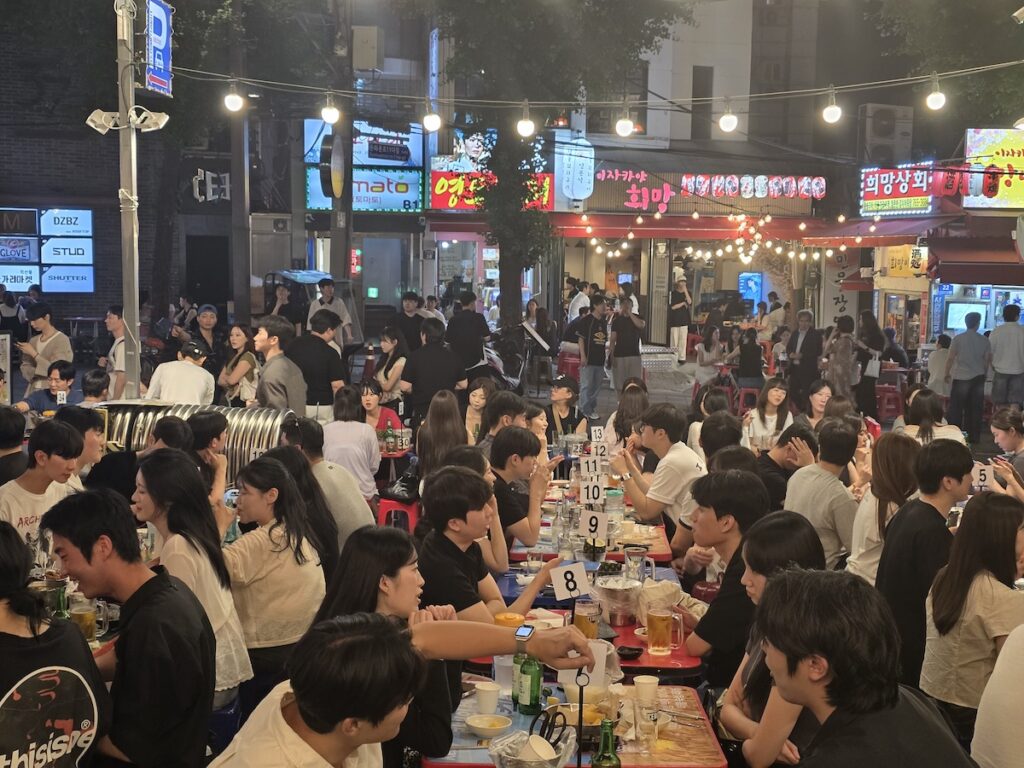
- The “So-um” (Noise): The space is narrow, the chairs are small, and the noise level is high. You might hear the table next to you passionately discussing politics or work stress.
- The Human Connection: While it might seem “uncomfortable” at first, this proximity is what creates the warmth. In this chaotic symphony of voices, you realize that everyone is there for the same reason—to shed the day’s fatigue through shared stories and drinks.
6. Conclusion: More Than Just Alcohol
Korean Makgeolli Culture is not just about getting drunk. It is about the weather, the seasonal food, the history of the teapot, and the raw human connection found in traditional markets.
Whether you are at Hanam’s Deokpung Market or a hidden alley in Seoul, remember to look for the yellow kettle. It is your gateway to understanding the resilient and warm-hearted soul of Korea.