The Journey to the Edge: Why I Drive to Ganghwa Island
“Whenever I need a break, I visit the Ganghwa Island Mudflat.”
Living in a city as fast and neon-bright as Seoul can sometimes feel like running a marathon with no finish line. Whenever my life feels overwhelmingly heavy—when the noise of the city drowns out my own thoughts—I grab my car keys and drive toward the silent, frozen horizon of Ganghwa Island.
Located just 90 minutes west of Seoul, Ganghwa is not your typical tourist resort. It is a place where the air feels different—colder, sharper, and more honest. For me, this isn’t just a trip; it’s a necessary ritual of survival. While most people look for blue and sparkling oceans, I look for the vast, grey Ganghwa Mudflat (Getbol).
In winter, this island becomes my private sanctuary, a place where the world finally stops moving so I can listen to my own soul again.
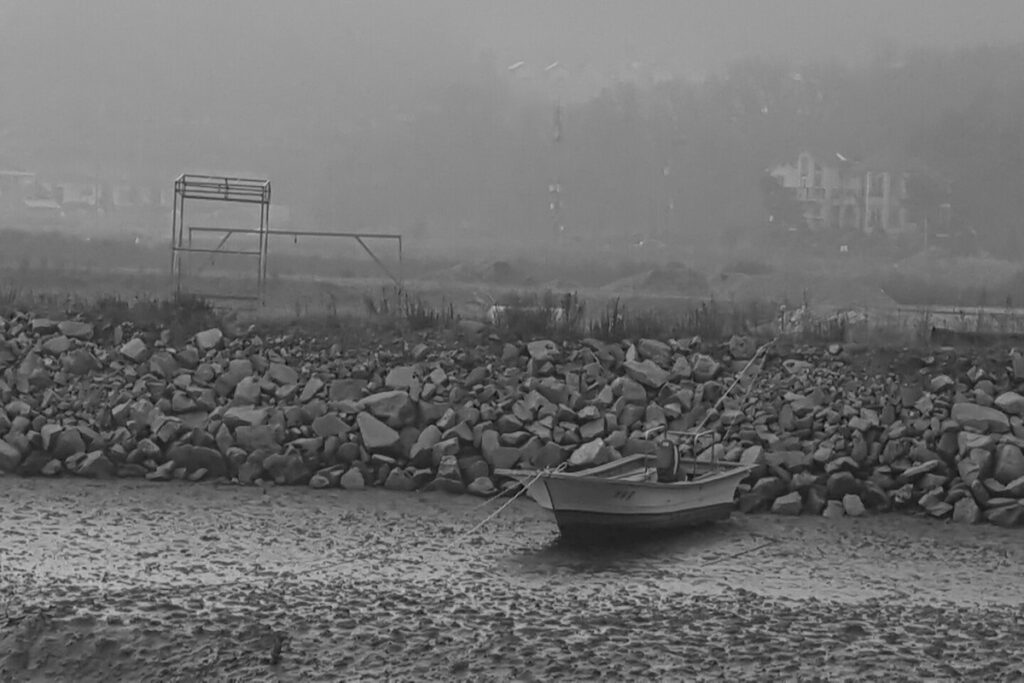
1. The Power of Winter: Owning the UNESCO Silence
If you visit Ganghwa in the spring or summer, you will find families digging for clams and children laughing. Those are happy scenes, but you cannot truly “meet” the mudflat then. It is hidden under the noise. But in the dead of winter, the biting cold acts as a guardian, keeping the crowds away.
This is the only time I feel like I truly “own” this space. As a UNESCO World Heritage site, the Ganghwa mudflat is a living, breathing canvas. In the winter fog, the texture of the frozen mud looks like a giant, monochromatic ink wash painting—a style of Korean art that values empty space.
There are no “activities” here in winter, and that is the point. I stand there and watch the tide slowly, almost imperceptibly, reclaim the vast grey land. It is a profound lesson in patience that no Seoul skyscraper could ever teach.
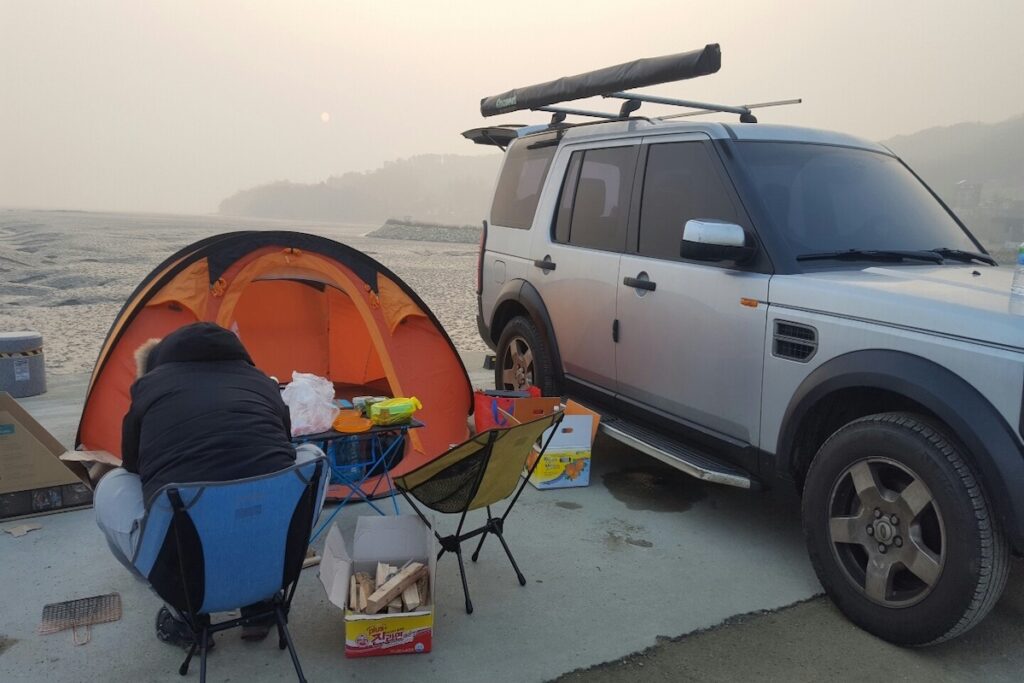
2. Forget Bukhansan: Finding Ultimate Solitude in My SUV
I see many travelers coming to Seoul with their hiking gear, heading straight for Bukhansan. I understand why—the view from the top is great. But on Bukhansan, you are never truly alone; you are surrounded by colorful hiking jackets and the sound of chatter.
If you really want to connect with the raw nature of the Korean peninsula, rent an SUV and drive to the northern edge of Ganghwa. This is where I practice “Chabak” (Korean car camping). There is something incredibly grounding about being inside a warm car while the freezing wind howls over the frozen mudflats just inches away.
I set up my small stove, boil water, and hold a warm cup of tea as I stare into the grey horizon. In that moment, with the car as my shell, I feel a sense of security and clarity that is impossible to find in a hotel room. It is a survival of the soul—a chance to be completely alone with my thoughts in a landscape that is uniquely Korean.
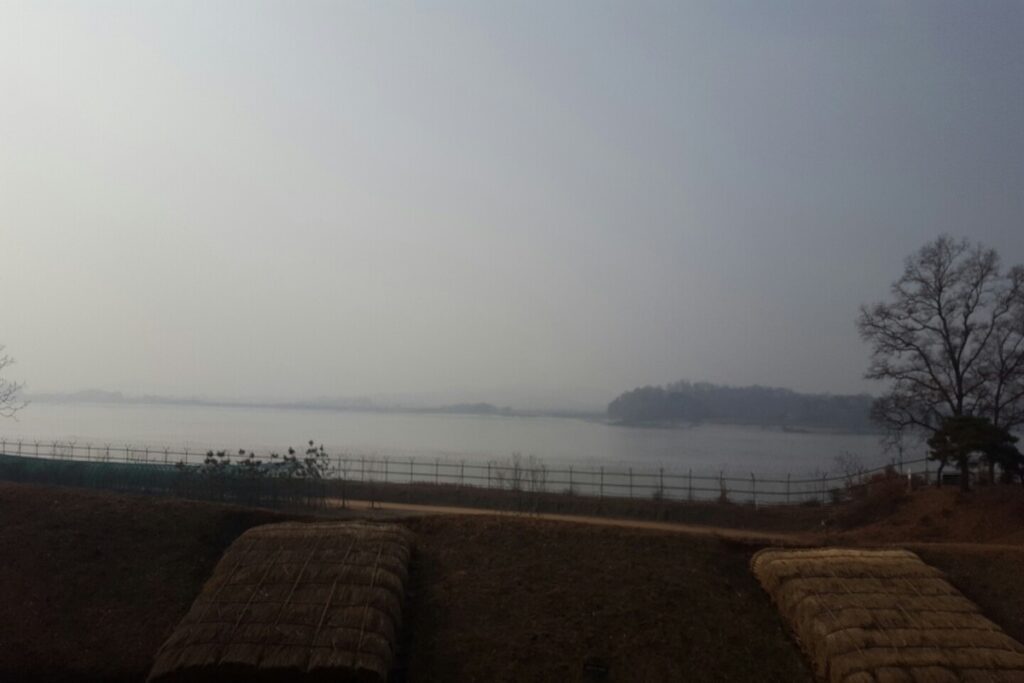
3. The Frontline: A Mirror to My Own Internal Tension
What draws me deeper into Ganghwa is its position as a Frontline Island. As I drive toward the northern coast, I eventually hit the Marine Corps checkpoints (ROKMC).
Every time I show my ID to the young soldiers at the checkpoint, I am jolted back to reality. The barbed-wire fences and the sight of North Korean villages just a few kilometers across the narrow sea create a strange, heavy tension. But strangely, this military tension matches my own internal stress.
Seeing the “Frontline” reminds me that even in a state of division and tension, life continues—quietly and resiliently. Looking across the water at the silent North Korean landscape makes my own time of self-reflection feel even more precious. It’s a thrill, yes, but more than that, it’s a perspective on life that only Ganghwa can provide.
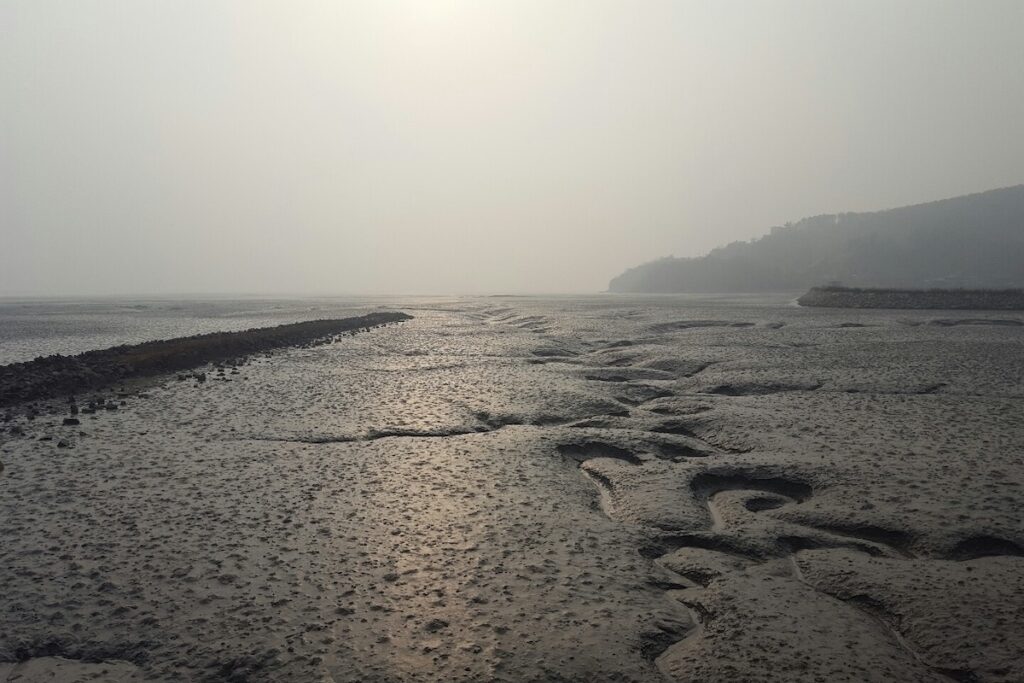
Conclusion: Why You Need the Grey to Find Your Way
We are taught to seek out the bright, the blue, and the exciting. But I have learned that we need the “grey” moments to appreciate the light. The Ganghwa Mudflat in winter doesn’t demand you to be happy or productive. It simply exists, vast and quiet, waiting for you to find your peace within its silence.
If you want to see the real, raw heart of the Korean peninsula—the part that hasn’t been polished for tourists—get a car, drive to Ganghwa, and show your ID at the checkpoint. Let the winter mudflat hold your silence for a night. You will return to Seoul not just with photos of a grey beach, but with a clearer mind and a heart that has finally been heard by the silent ocean.
📍 Discover More Hidden Gems in Korea
If you enjoyed the silent beauty of Ganghwa Island, you might also find these guides helpful for your journey through Korea:
- Best Photo Spots in Seoul: The Ultimate 2025 Photography & Instagram Guide
- Capture the most aesthetic moments of Seoul’s cityscapes, perfect for your next post.
- Best Valleys Near Seoul: Yongmunsan, Yumyeongsan, and Gyeonggi Mountain Streams Travel Guide
- Looking for a different kind of nature? Explore the crystal-clear streams and lush valleys near the capital.
- Gwangan Bridge in Busan: Night View, Fireworks, and Gwangalli Beach Guide
- If you’re heading south, don’t miss the spectacular night lights and coastal vibes of Busan.