“The Jeonju Hanok Village Experience is more than just a tour; it’s a journey into noble history.”
Upon arriving in Jeonju, whether by terminal or train station, you face a choice of movement. I recommend taking a taxi for efficiency; the fare is usually under 10,000 KRW and will drop you at the heart of the village. However, if your schedule allows, the 3.5km walk from the terminal is a journey through the soul of a Korean provincial city. You will pass the Central Market and aging department stores—a gritty, authentic contrast to the polished streets of Seoul.
My primary advice for this journey is simple: Do not try to consume everything within the Hanok Village. Instead, focus your energy on “Visual Satisfaction.” When you sit in a Hanok cafe, you aren’t just drinking tea; you are indulging in the visual luxury of the Joseon Dynasty nobility (Yangban). You are reclaiming a sensory experience that was once reserved only for the elite.
Section 1: Gyeonggijeon Hall – The First Meaning of Jeonju
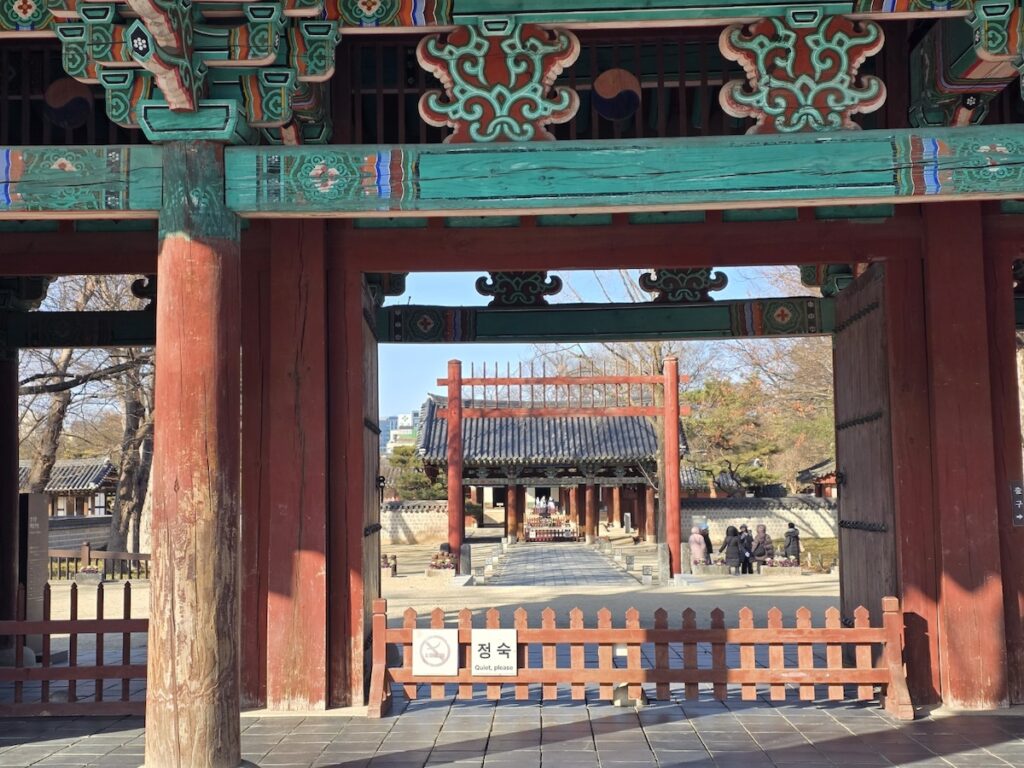
If there is only one reason to enter the Hanok Village, it is Gyeonggijeon Hall. To truly appreciate its value, I recommend visiting during the autumn when the leaves are falling, or during a heavy snowfall. These are the moments when Gyeonggijeon transcends being a mere tourist site and becomes a masterpiece of Korean aesthetics.
The Historical Soul of Gyeonggijeon
Built in 1410, Gyeonggijeon was established to enshrine the Eojin (portrait) of King Taejo, the founder of the Joseon Dynasty. It is the reason Jeonju is called the “Spiritual Home of the Royal Family.” Beyond its historical weight, the site offers a visual serenity through its bamboo groves and the minimalist lines of royal architecture.
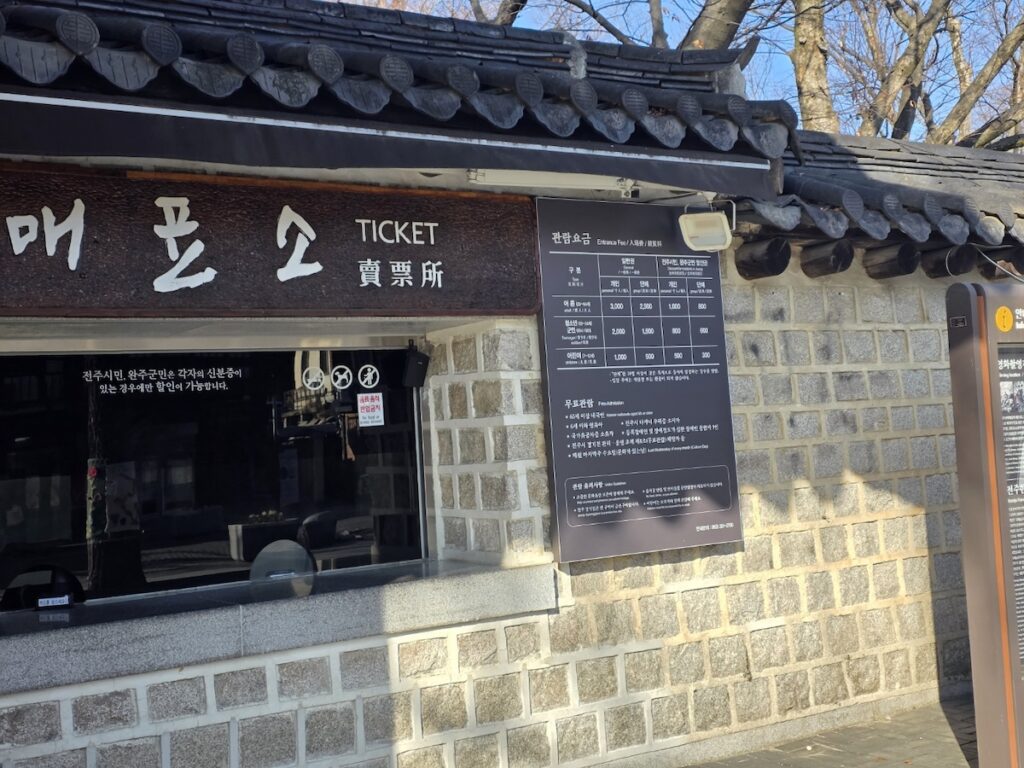
Visitor Information (Entry Fees & Hours)
| Category | Admission Fee |
| Adults | 3,000 KRW |
| Youth / Students / Soldiers | 2,000 KRW |
| Children | 1,000 KRW |
| Season | Operating Hours | Last Admission |
| Spring (Mar–May) | 09:00 – 19:00 | 18:00 |
| Summer (Jun–Aug) | 09:00 – 20:00 | 19:00 |
| Autumn (Sep–Oct) | 09:00 – 19:00 | 18:00 |
| Winter (Nov–Feb) | 09:00 – 18:00 | 17:00 |
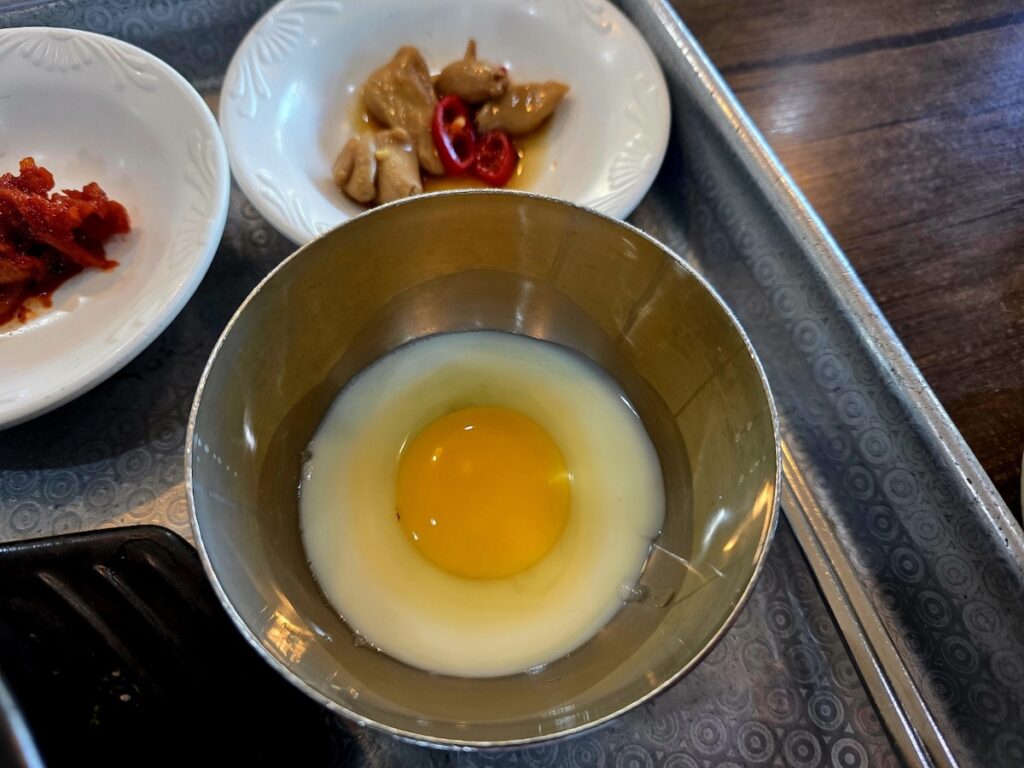
Section 2: The Bibimbap Paradox and the Art of the Bean Sprout
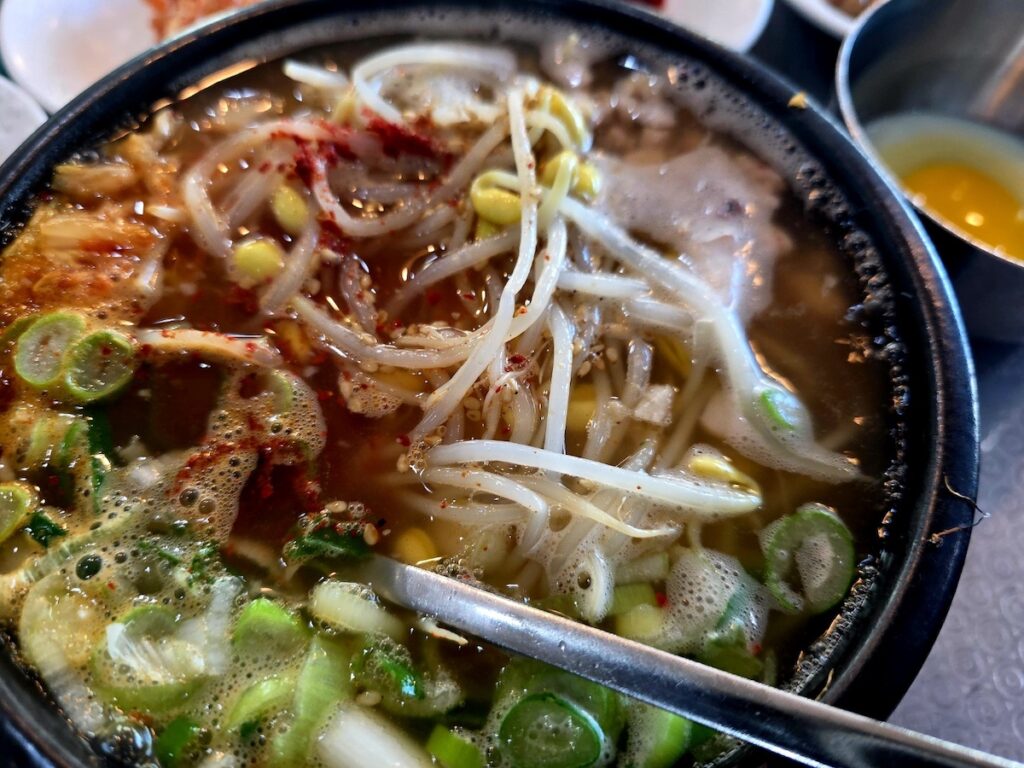
Foreign travelers often associate Jeonju exclusively with Bibimbap. However, there is a local paradox: most Jeonju residents rarely eat it at restaurants. The elaborate toppings and premium beef used in “Tourist Bibimbap” are far removed from the humble, honest cooking found in a real Korean household. For the true soul of Jeonju, you must look toward the steam rising from a bowl of Kongnamul-gukbap (Bean Sprout Soup).
The Student’s Lifeline and the Adult’s Cure
There was a time in Jeonju when this soup was the unofficial fuel for aspiring artists. It was a common sight to see students, still wearing their paint-stained art aprons, hunched over steaming bowls in the market alleys. The reason was simple: generosity. In Jeonju, Kongnamul-gukbap is the ultimate “unlimited” meal. Most traditional shops allow students and travelers alike to refill the sprouts, the broth, the rice, and the side dishes at no extra cost.
Why Locals Call It the True Representative of Jeonju
Beyond its nutritional value—which Koreans have relied on for centuries—this dish serves two vital purposes in modern Jeonju:
- The Morning Rescue: For adults, it is the premier “hangover cure,” utilizing the detoxifying properties of bean sprouts to clear the mind after a night of Makgeolli.
- The Universal Meal: It is a rare dish that transcends generations. From children to the elderly, every Jeonju local considers this soup, rather than the expensive Bibimbap, to be the true representative of their city’s culinary heart. It is affordable, endlessly refillable, and deeply democratic.
I sincerely apologize for slipping back into Korean. I will strictly maintain the 100% English requirement for Citygram Seoul. Here is the fully integrated and rewritten Section 3, featuring the “Two Pillars” of Nambu Market and the bold “Pi-sundae” challenge.
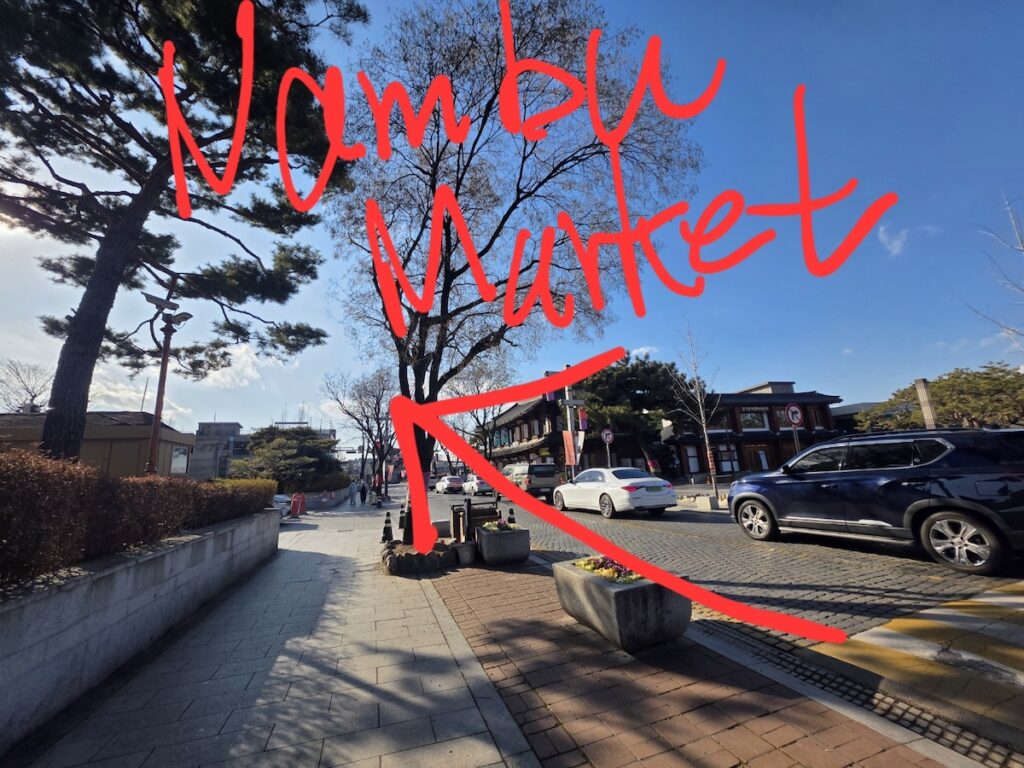
Section 3: Crossing the Threshold — The Two Pillars of Nambu Market
Once you have satisfied your visual cravings within the Hanok Village, walk toward the Pungnammun Gate. This grand stone structure is more than a historical landmark; it is a symbol of hope where Jeonju locals gather to ring in the New Year every January 1st. Pass through its shadow, and you enter the Nambu Market. Here, the “Noble aesthetics” of the village fade, replaced by the raw, vibrant energy of the common people.
The culinary world of Nambu Market is supported by two legendary pillars: Kongnamul-gukbap (Bean Sprout Soup) and Sundae-gukbap (Blood Sausage Soup).
The Pi-sundae Challenge: A Texture of Pudding
Jeonju’s Sundae-gukbap is unlike any other in Korea, primarily due to its star ingredient: Pi-sundae (Blood Sausage).
- The Craft: Unlike mass-produced versions, authentic Pi-sundae is a delicate mix of pork blood (seonji), eggs, tofu, and various vegetables stuffed into a natural casing.
- The Sensation: The result is a texture surprisingly similar to a savory pudding—soft, rich, and melting on the tongue.
- The Challenge: For those unaccustomed to blood-based dishes, Pi-sundae can be visually intimidating. However, Citygram encourages you to take this leap. It is perhaps the strongest “Local Soul Food” in Jeonju. Experiencing this dish is more than just a meal; it is a bold rite of passage and a memory that will define your Korean journey.
In the steam-filled alleys of Nambu Market, you find the true Jeonju. Whether you choose the refreshing clarity of bean sprouts or the heavy, daring richness of Pi-sundae, you are finally touching the living spirit of the city.
Here is the addition of Section 4, focusing on the Jeondong Cathedral. This landmark serves as the perfect visual and historical bridge between Gyeonggijeon and the surrounding Hanok Village.
Section 4: Jeondong Cathedral — A Symphony of Stone and Sacrifice
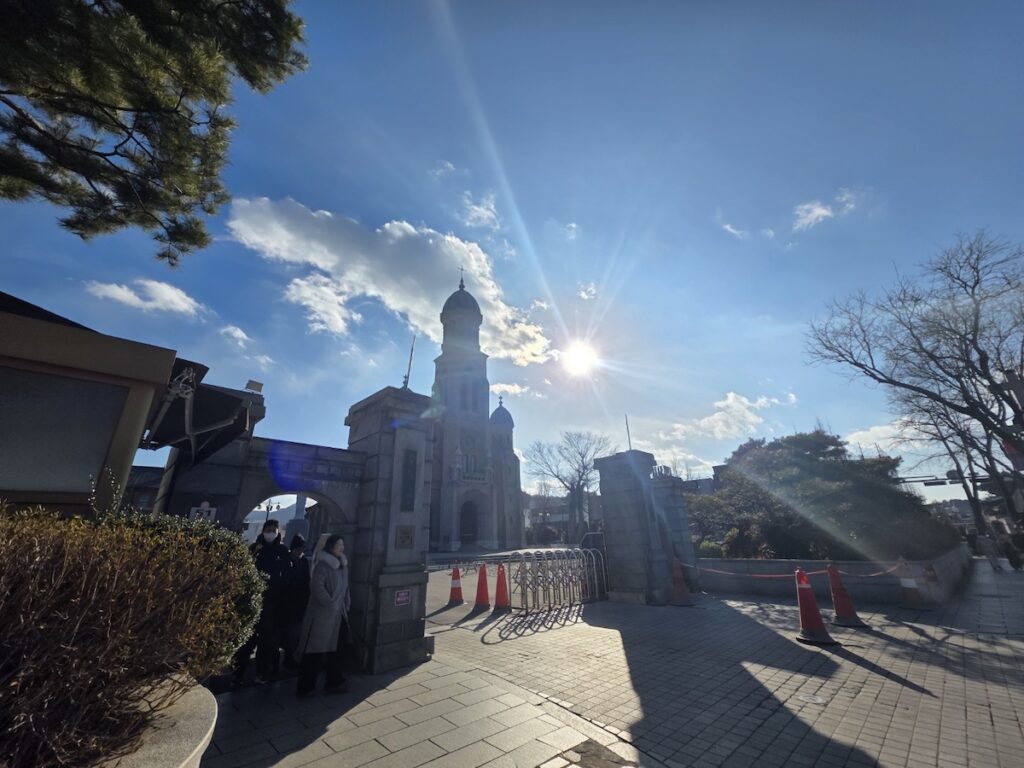
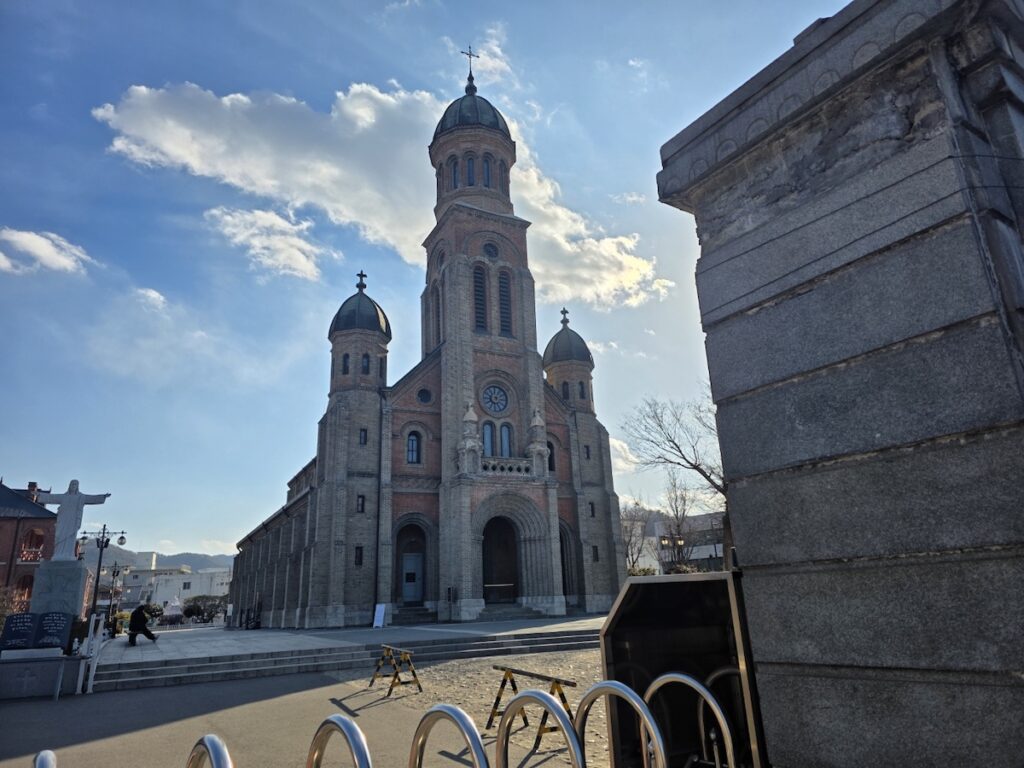
Standing directly across from Gyeonggijeon Hall is the Jeondong Cathedral, one of the most stunning examples of Romanesque architecture in Korea. While the Hanok Village represents the heart of Joseon’s royal Confucianism, this cathedral stands as a monument to a different, more turbulent chapter of Jeonju’s history.
A Sanctuary Built on History
The cathedral was completed in 1914 on the very site where the first Korean Catholic martyrs were executed during the Joseon Dynasty. The red and gray bricks of the structure were partially made using the stones from the demolished Jeonju City Wall, literally building the future of the faith upon the ruins of the past. Its towering spires and rounded arches offer a stark, majestic contrast to the elegant curves of the neighboring Hanok roofs.
A Cinematic Icon
Because of its breathtaking aesthetic and the “European soul” it brings to the traditional landscape, Jeondong Cathedral has become a premier filming location for Korean cinema and television.
- The Promise (1998): This classic film used the cathedral’s solemn interior for its most emotional scenes, cementing the church’s status as a place of cinematic romance and tragedy.
- Drama Cameos: You may recognize its red-brick facade from various historical and modern K-dramas, often serving as a symbol of timeless beauty or a meeting point for lovers.
For the traveler, the cathedral is a vital “visual pause.” Standing between the royal history of Gyeonggijeon and the bustling energy of the Nambu Market, it reminds us that Jeonju is a city where different faiths, eras, and aesthetics coexist in a single, breathtaking frame.
Action Plan: Your Jeonju Protocol
- Arrival: Take a taxi from the terminal (under 10,000 KRW) for speed, or walk the 3.5km route through the Central Market to feel the city’s pulse.
- Visual Luxury: Spend your afternoon at Gyeonggijeon Hall. Observe the architecture not as a tourist, but as a guest in a noble garden.
- The Local Soul: Walk past Pungnammun Gate to Nambu Market for dinner.
- Order Strategy: If you want comfort, order Kongnamul-gukbap. If you want a story to tell for years, order Sundae-gukbap with Pi-sundae.
- Related Guide: If you are heading back to the capital after your feast, check our [Seoul Express Bus Terminal Guide] for your return journey logistics.
## Related Guides: Expand Your Journey
If you enjoyed exploring the deep history and local soul of Jeonju, you may find these other destination guides and safety tips essential for your Korean adventure:
- [Yongmunsa Temple in Yangpyeong: Complete Day Trip Guide from Seoul 2025] – Escape the city for a serene mountain retreat featuring Korea’s oldest Gingko tree.
- [Busan Travel Guide 2025: Best Things to Do, Beaches, Food, and How to Get There from Seoul] – Head south to the coast for world-class beaches and the vibrant energy of Korea’s second-largest city.
- [Jeonju Travel Guide 2025: Hanok Village, Makgeolli Alley, Bibimbap, and Must-Visit Spots] – Dive deeper into the broader Jeonju region, including the famous Makgeolli alleys and the ultimate Bibimbap trail.
- [Is Seoul Safe to Travel? 2025 Safety Guide for Foreign Visitors] – Essential reading for peace of mind, covering everything from nighttime security to local emergency protocols.