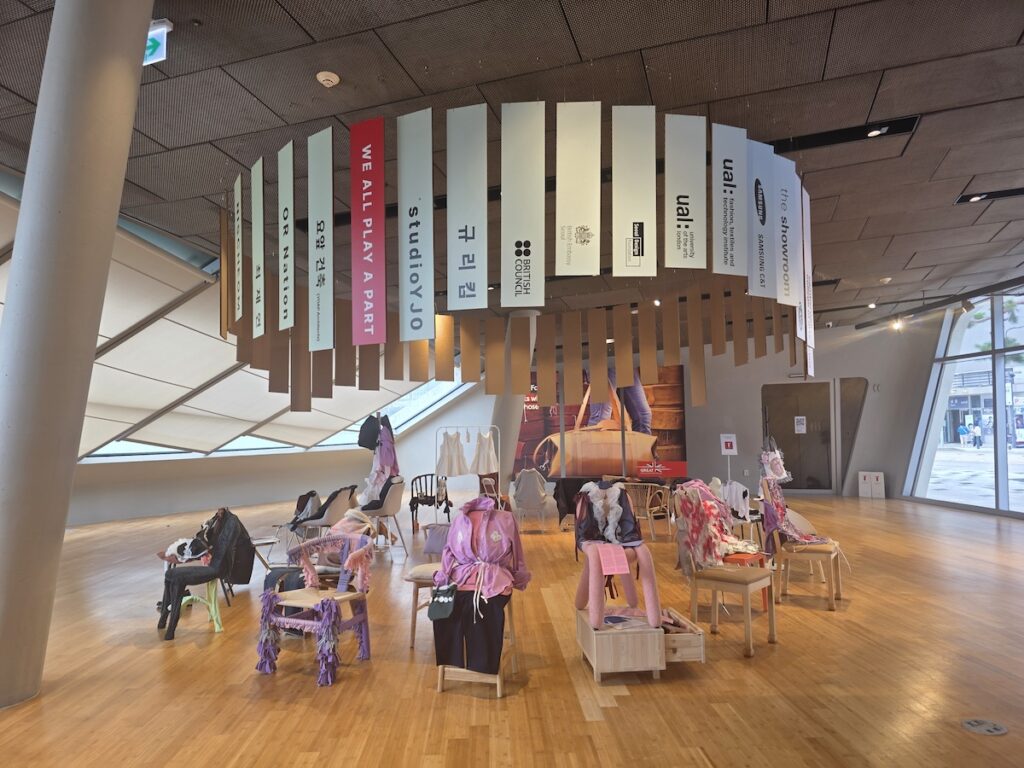
Jeonju night scenes offer much more than the golden glow of the Hanok Village; they serve as a living laboratory of South Korean urban efficiency. As the largest city in Jeollabuk-do and the 17th largest in the nation, Jeonju is a powerhouse of over 660,000 residents. It is a city of youthful energy and academic rigor, hosting prestigious institutions like Jeonbuk National University and Jeonju University. Understanding Jeonju requires looking past the tourism to the systems that manage this dense population—from its strict environmental mandates to its unique nocturnal visual culture.
1. The Social Pressure of Waste: Street-Side Logistics
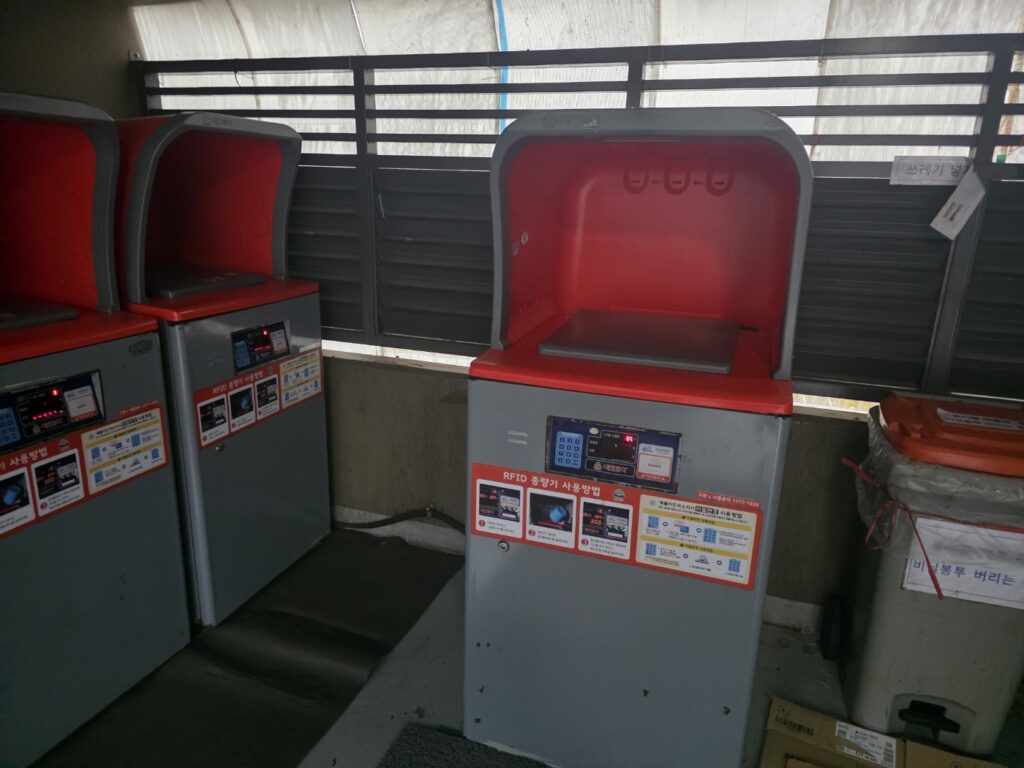
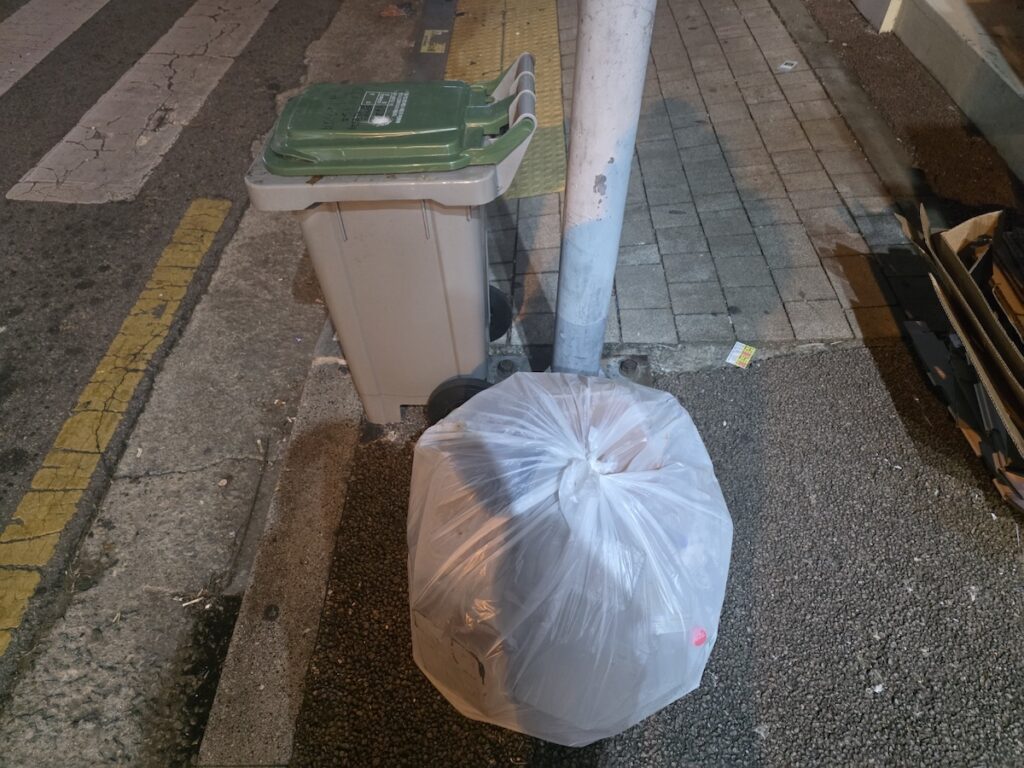
When exploring Jeonju night scenes, the organized chaos of street-side waste is unavoidable. While it may look cluttered to the untrained eye, every bag and bin is placed with strategic intent. This system is governed by the Waste Management Act (Article 14), which mandates that municipalities collect and treat waste according to strict classification. In Jeonju, if you fail to use the designated regional bags or mix food waste with general trash, collection crews will simply leave the waste behind with a “Violation Sticker.” Beyond the law, there is a powerful “Social Eye”—Koreans deeply dislike being singled out by neighbors for improper disposal. This collective vigilance ensures that even without high-rise chutes, the street remains a functional ecosystem.
2. The Visual Desperation of Mid-Sized Cities: Neon Balloons
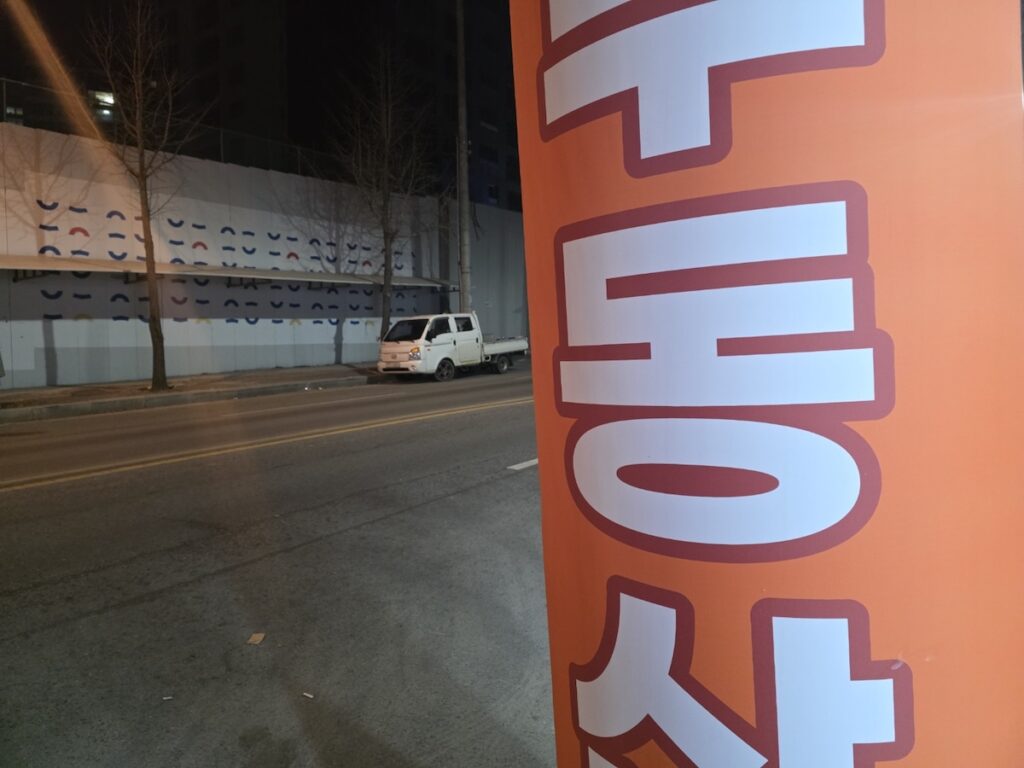
Unlike the sprawling metropolitan centers of Seoul or Busan, mid-sized cities like Jeonju must work harder to capture consumer attention. As you walk through the modern quarters, you will see towering inflatable air-balloons that dominate the sidewalk. These are visual flares designed to compensate for the fact that foot traffic in mid-sized cities thins out much earlier than in the capital. While some 24-hour diners remain, the city “quietens” faster, pushing businesses to use more aggressive, cinematic lighting to signal their presence to the dwindling night-time crowds.
3. The Green Ambition: Municipal EV Infrastructure
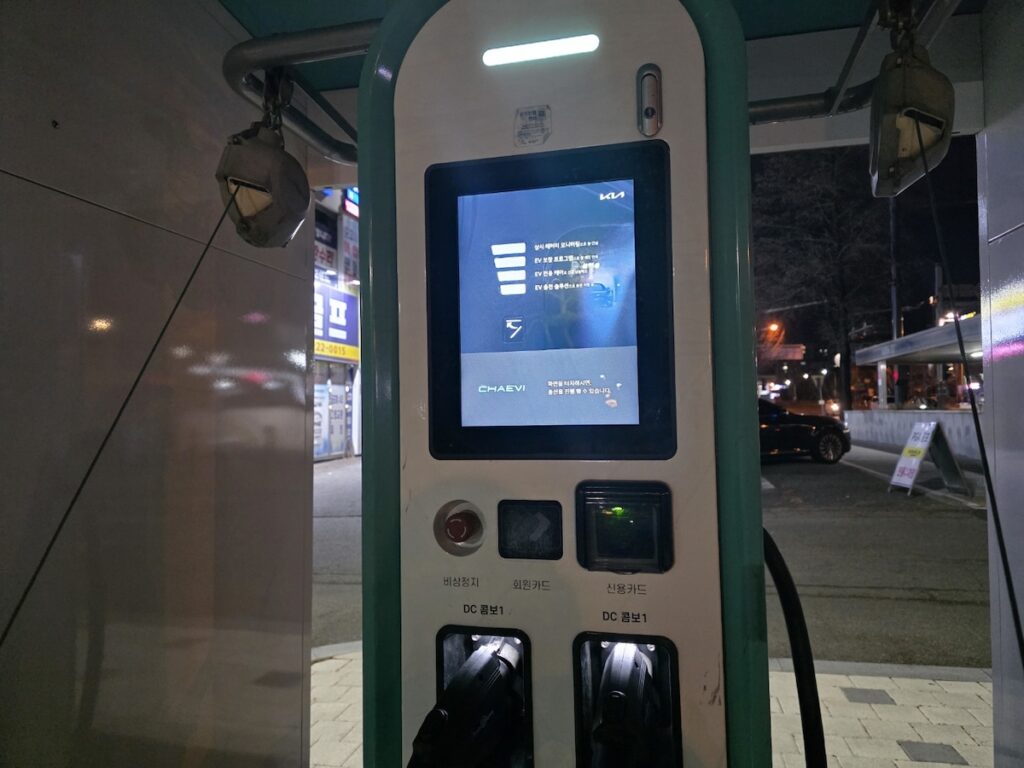
Jeonju is a prime example of how Korean local governments are aggressively leading the eco-friendly revolution. In line with the 2025-2026 Ministry of Environment initiatives, which saw a 43% increase in charging facility budgets (totaling 618.7 billion KRW), Jeonju has rapidly installed on-street EV chargers even in its oldest alleys. This proactive municipal stance isn’t just about technology; it’s a competitive move to brand Jeonju as a “Sustainable Tourism Hub.” Finding a high-speed charger tucked next to a centuries-old wall is a classic Jeonju contrast.
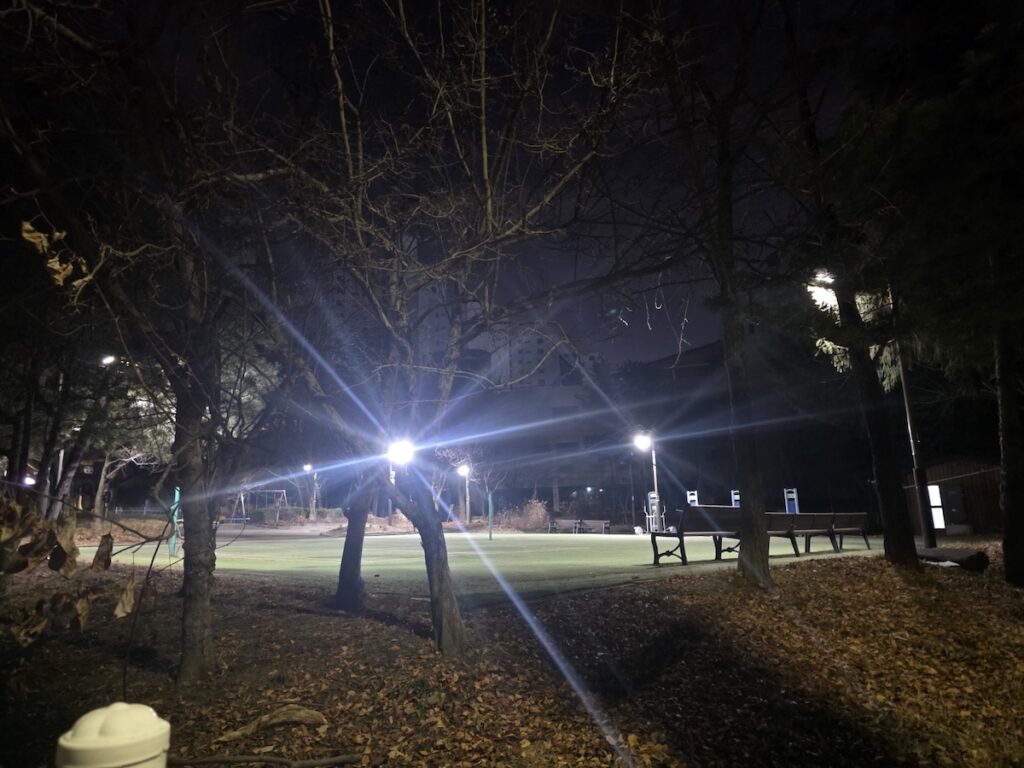
4. The 500-Meter Mandate: The Law of Urban Lungs
One of the most comforting Jeonju night scenes is the sight of locals using exercise equipment in a small, brightly lit park. This is not accidental—it is legal. Under the Act on Urban Parks and Green Areas (Article 15), urban planning must incorporate “Neighborhood Parks” or “Children’s Parks” within a 250m to 500m radius of residential areas. These parks serve as the “Urban Lungs” for the high-density blocks surrounding them. In the silence of the Jeonju night, these parks become vital communal spaces where the law meets local lifestyle, ensuring every citizen has access to health and greenery.
5. Action Plan
- Check the District Code: Ensure your waste bags are specifically for “Jeonju-si” (전주시) to avoid neighbor complaints and fines.
- Plan for Early Closures: Unlike Seoul, many Jeonju shops close by 10 PM; use the neon air-balloons as beacons for the few remaining late-night spots.
- Locate Your Nearest “Lung”: Use Kakao Maps to find your neighborhood park; under the 500m law, there is guaranteed to be one within a 5-minute walk.
- Charge with Ease: Utilize the new municipal chargers; most only require a standard credit card or a roaming charging app.
6. Related Guides: Citygram Seoul Survival Series
If you found this guide helpful, explore our other essential survival manuals for navigating the peninsula:
Seoul Express Bus Terminal: The Ultimate Survival Guide to Central City – Navigate the labyrinth of Korea’s most complex transit hub with ease.
Jeonju Hanok Village Experience: 5 Essential Tips for the Noble Traveler (2026) – Learn how to navigate the “Visual Luxury” of the historic district like a local.
Korean Highway Rest Area: How to Survive the 15-Minute Mission (2026) – Master the high-speed food and “Midnight Run” rituals of the Korean expressway.