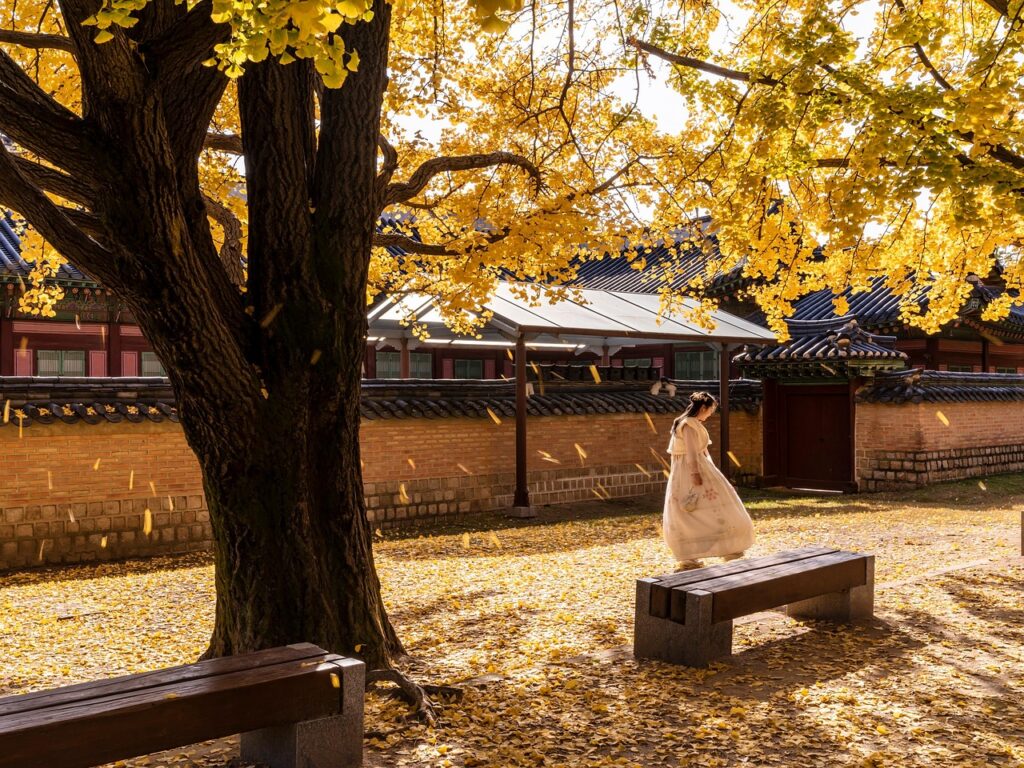
“This Korea Travel: Seoul Snow Season Guide provides the essential data and safety protocols for anyone dreaming of a white winter in the peninsula.”
The South Korea Snow Season Guide is not just about meteorological data; it is about those rare, jackpot moments that define a traveler’s memory of the peninsula. On a quiet Sunday night, while sharing a ritual of Korean fried chicken with a friend, I stepped out into the crisp air of a Seoul alleyway.
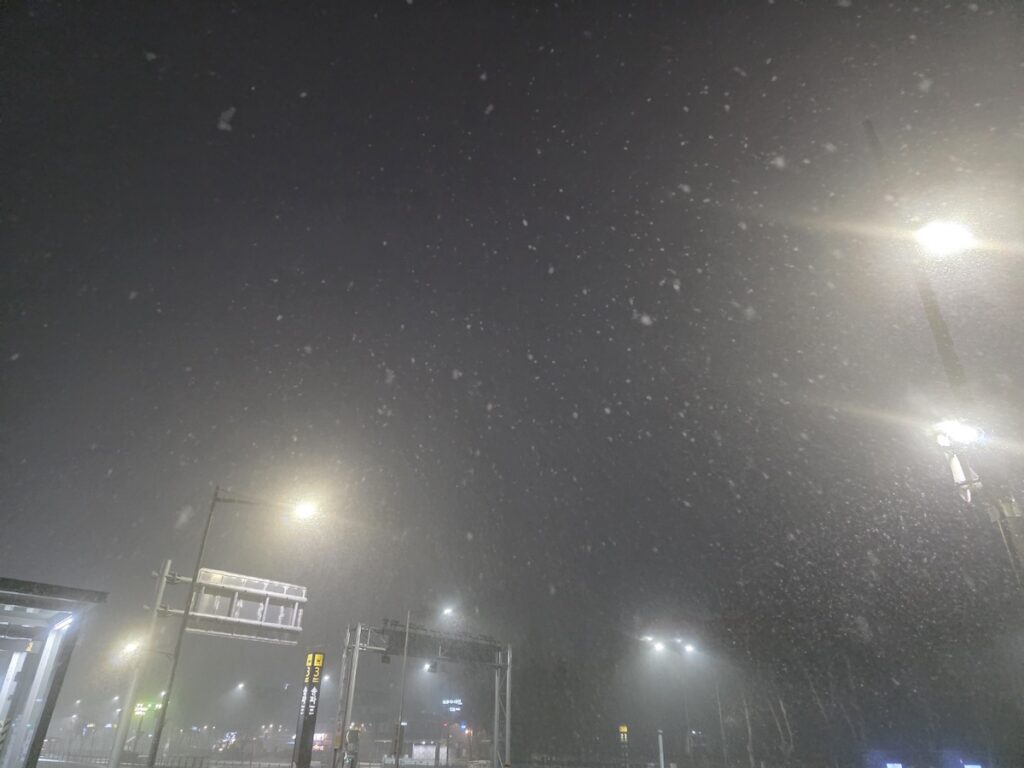
The first flakes of the season began to descend under the orange glow of the streetlights. Nearby, three foreign travelers stopped in their tracks, their faces illuminated by pure joy as they captured the falling snow on their phones. For someone who lives here, it is a seasonal routine, but for them, hitting a snowy night in Seoul is the ultimate travel jackpot. But behind this cinematic beauty lies the rigid infrastructure of the world’s leading IT powerhouse, ensuring that even after the heaviest snowfall, the city’s pulse never skips a beat.
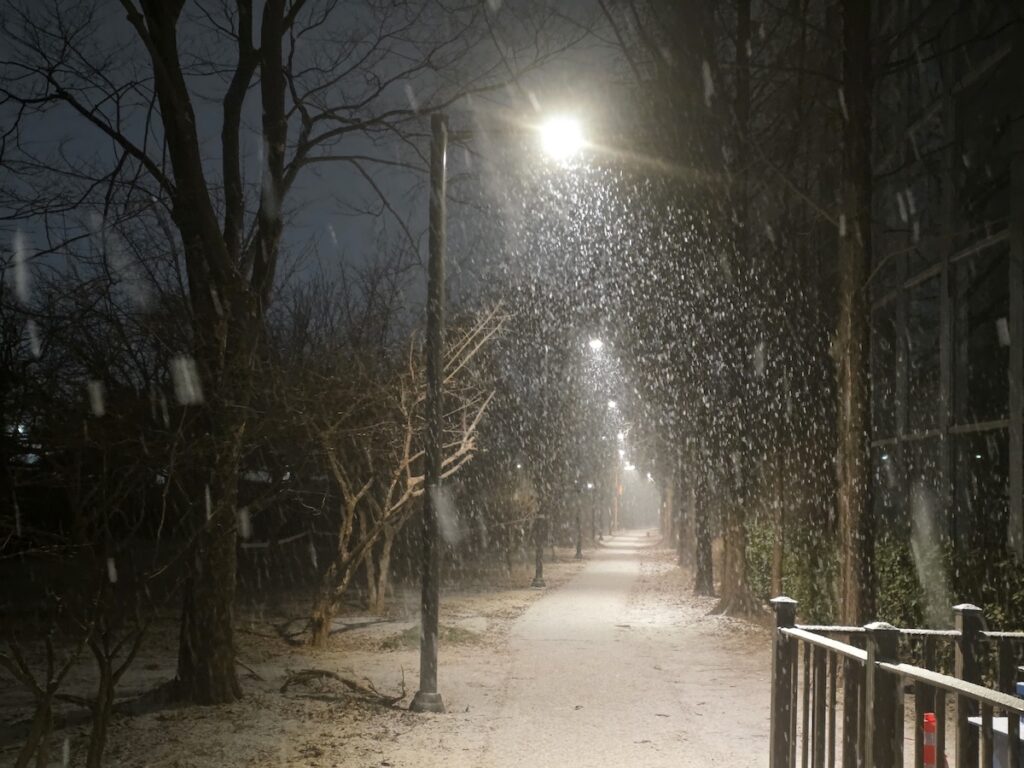
The South Korea Snow Season Guide: Objective Data
To navigate the South Korea Snow Season Guide effectively, one must understand the empirical patterns of the city’s winter. While the sight of snow is poetic, the logistics of travel require precise data. Seoul’s winter typically begins its frozen ritual in late November, with the most significant accumulation occurring during the peak months of January and February.
| Category | Statistical Data (2026 Average) | Tactical Insight for Travelers |
| Snowy Months | Late November to Early March | The “Snow Ritual” peaks in mid-January. |
| Days of Snow | Approx. 20 – 25 days per year | Snow rarely lasts more than 3 consecutive days. |
| Average Depth | 2cm – 5cm (Typical Accumulation) | Heavy snow (>5cm) triggers the “Safety Protocol.” |
| Coldest Ritual | -10°C to -15°C (Wind Chill) | Dry snow is easier to navigate than slush. |
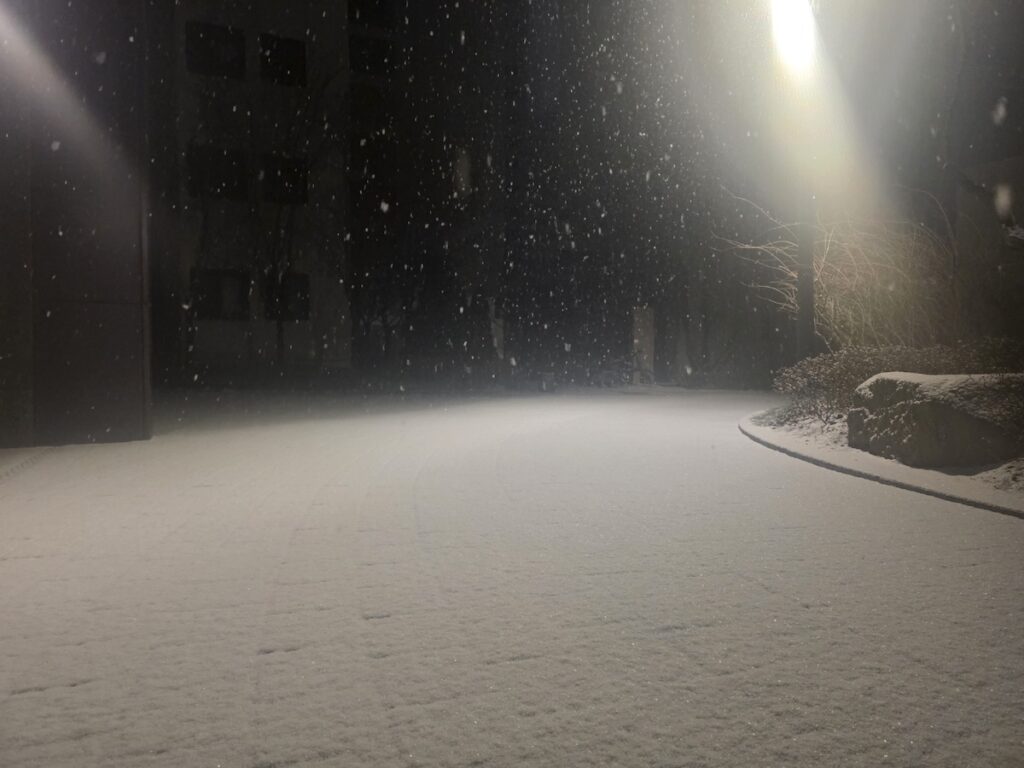
Safety Protocols in the South Korea Snow Season Guide
In the South Korea Snow Season Guide, safety is a collective ritual managed by the metropolitan government. When the skies turn gray and the “Jackpot” begins to fall, the city’s administrative nervous system activates in stages.
Heavy Snow Advisory (대설주의보)
This protocol is activated when 5cm or more of snow is expected to fall within a 24-hour window. At this stage, the city mobilizes thousands of personnel to clear major transit arteries, ensuring that the “Midnight Transit” remains operational.
Heavy Snow Warning (대설경보)
The most serious tier of the South Korea Snow Season Guide safety net. This is issued when 20cm or more (30cm in mountainous areas) is predicted. This triggers a mass mobilization of over 10,000 workers and specialized snow-clearing vehicles.
The Mobilization Ritual is a testament to Korea’s “Electrical Generosity” and administrative speed. Even as the travelers I saw under the streetlight were enjoying the falling flakes, a fleet of GPS-equipped snowplows was already deploying to clear the paths for the morning first trains.
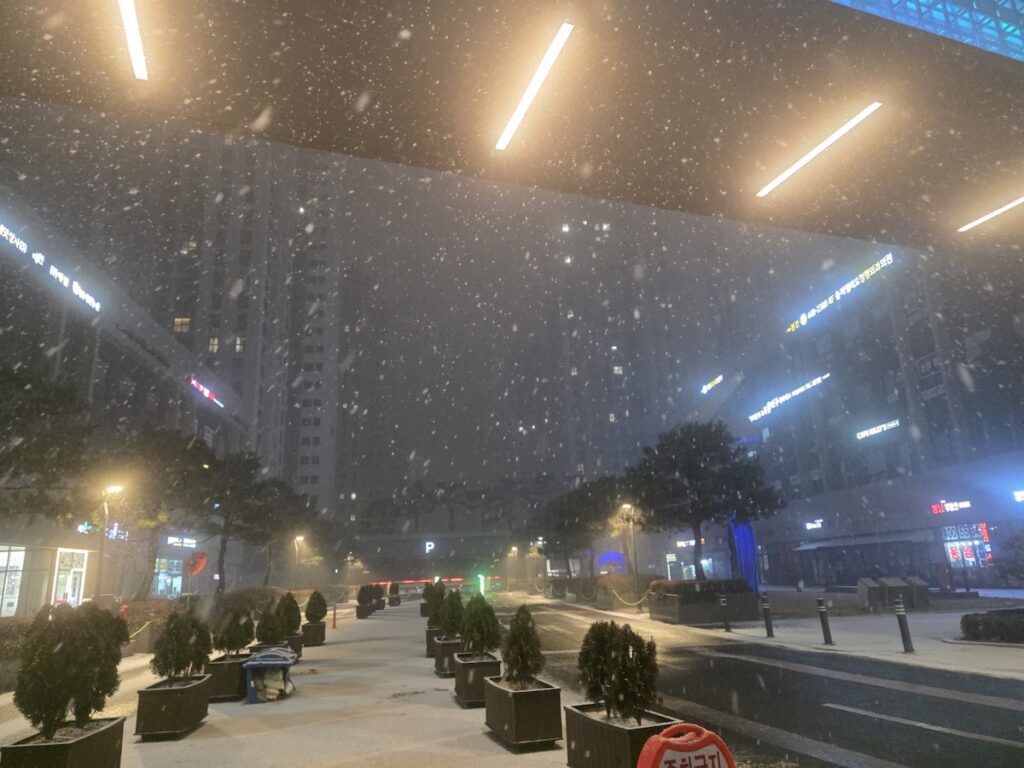
The Midnight Snow Run: Navigating the White Streets
If you find yourself in the middle of a “Snow Jackpot” after the subways have performed their closing ritual, do not panic. The South Korea Snow Season Guide integrates perfectly with our night owl transit protocols.
The N-Bus Survival Ritual
While taxis become scarce and expensive during snowstorms, the N-Bus (Night Owl Bus) remains the guardian of the streets. Routes like the N26 and N62 continue to traverse the city, their tires often fitted with specialized chains to handle the slippery inclines of districts like Hongdae or Itaewon.
The Budget Sanctuary: Jjimjilbang & 24h Cafes
If the snow becomes too heavy to travel, embrace the Jjimjilbang ritual. For 15,000 KRW, you can find shelter from the blizzard, enjoy a heated floor, and watch the snow from a steaming sauna window. Alternatively, the 24-hour cafes in Seoul serve as “Warm Hubs,” where you can charge your equipment and process your snowy photos while waiting for the 5:30 AM first train.
Conclusion: Why a Snowy Seoul is Your Jackpot
Hitting a snowy Sunday in Seoul is a rare intersection of cinematic beauty and high-tech resilience. The foreign travelers I observed were not just taking photos of ice crystals; they were witnessing a city that knows how to protect its magic through rigorous safety protocols. As you follow the South Korea Snow Season Guide, remember that every flake falling under a streetlight is a reminder of the city’s generosity and its silent, mechanical vigil over its guests.
Related Guides: Mastering the Citygram Seoul Ecosystem
Korea Travel: Seoul Midnight Transit Guide: Why Taxis are Not the Only Answer in Hongdae
Master the nocturnal transit ritual during the winter months, ensuring you never miss a beat even when the snow falls.
Korea Travel: Seoul Subway Kiosk Guide: 5 Rules to Save Your Money
Ensure your transit cards are ready for the N-Bus and early morning trains as part of your snow season survival strategy.
Action Plan: Your Snow Jackpot Checklist
- Download “Emergency Ready” App: The primary tool for real-time South Korea Snow Season Guide alerts in English.
- Monitor N-Bus Arrival Times: Use KakaoBus or Naver Map to track the “Night Owl” fleet during heavy snowfall.
- Locate Your Nearest Sanctuary: Pre-identify a 24-hour cafe or Jjimjilbang in hubs like Hongdae or Myeongdong before you start your midnight run.
- Charge Your Gear: Cold weather drains batteries faster; utilize the “IT Powerhouse” outlets at cafes to keep your “Jackpot” memories safe.