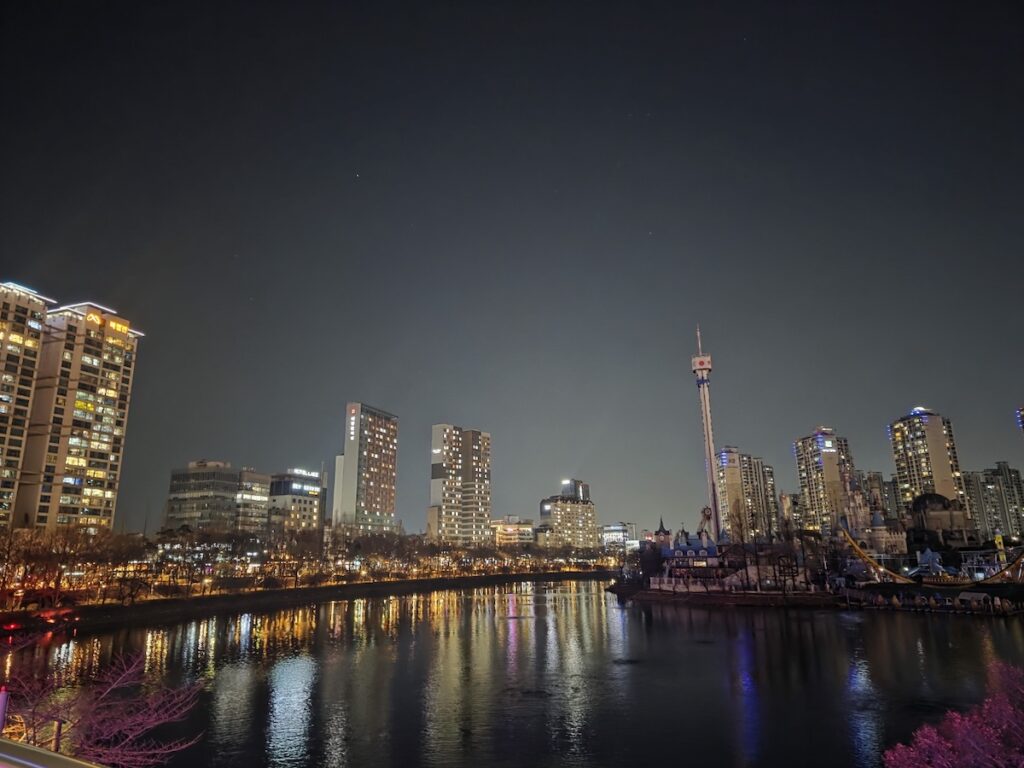
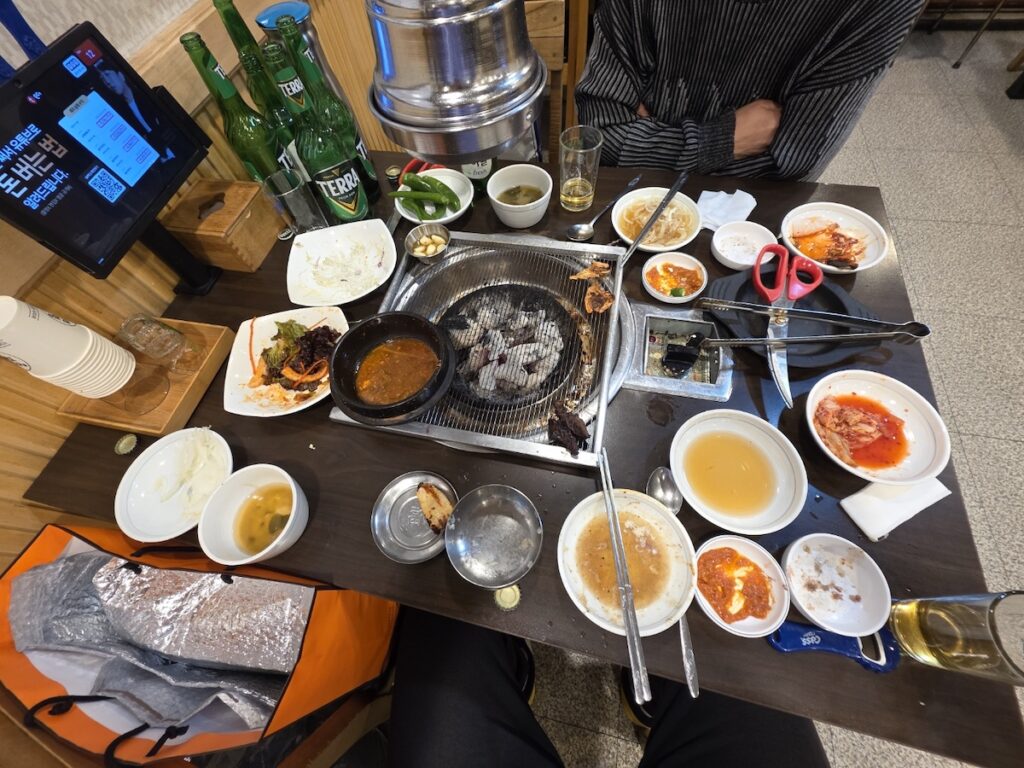
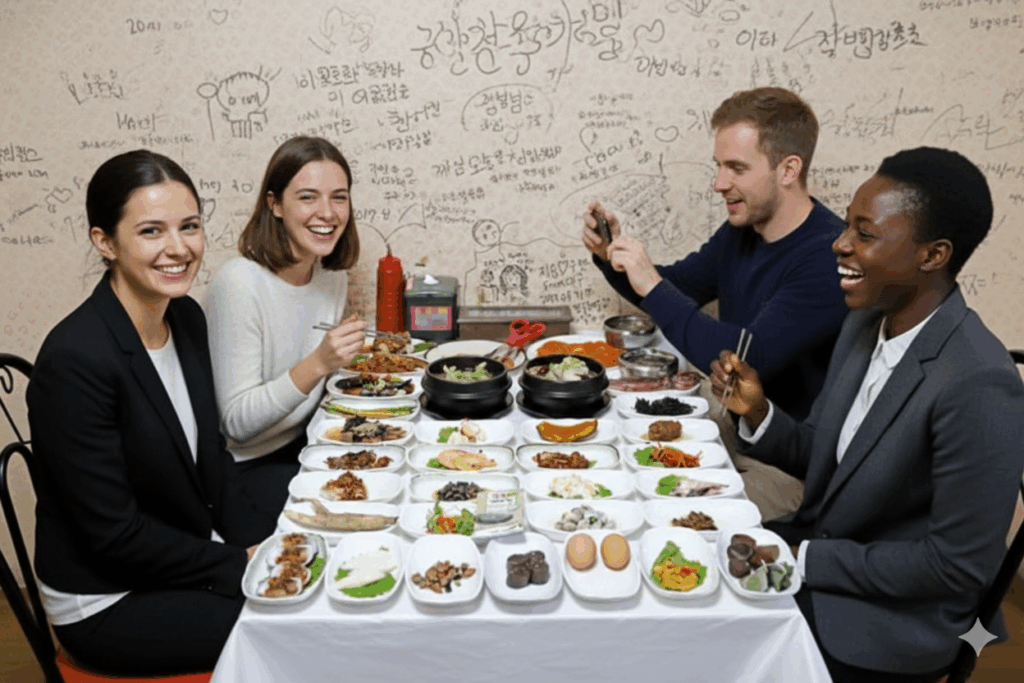
The Korea Night Air is not something you breathe alone; it is a collective pulse that begins exactly when the office lights dim at 6 PM. While the Western world often views the end of the workday as a retreat into the private sanctuary of the home, Seoul transforms into a theater of shared existence. Here, the night is not a void to be feared, but a vibrant, illuminated extension of the community. In the heart of Gangnam, the Korea Night Air is thick with the scent of grilled meat, the hum of the subway, and a sense of security that is practically invisible until you experience it.
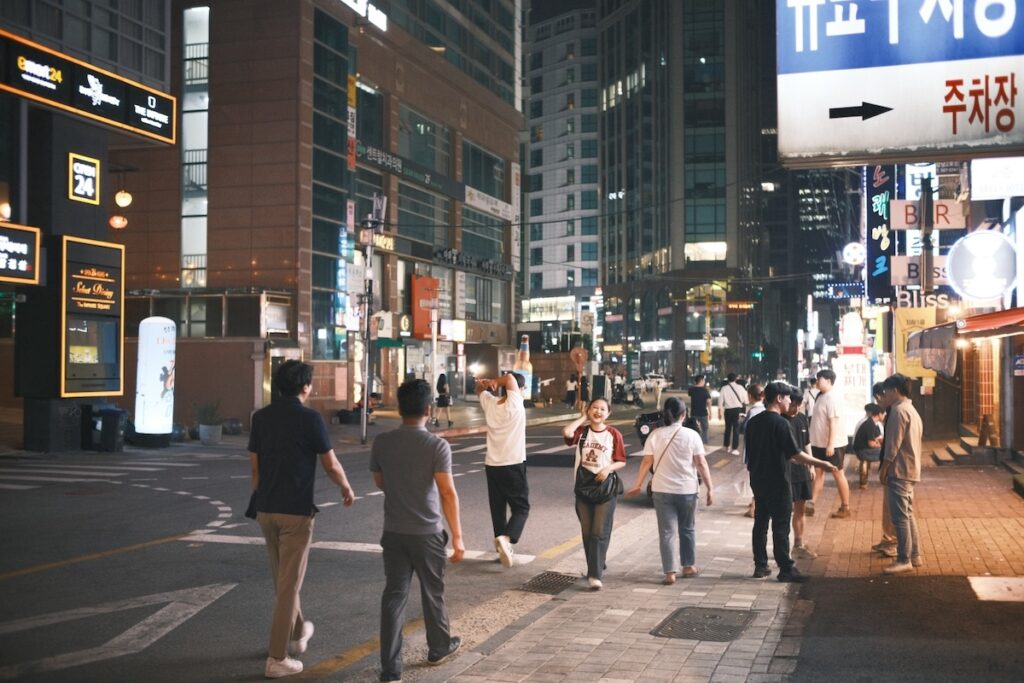
1. The “Hoesik” Ritual: The Shared Pulse of the City
In many global cities, a 6 PM exit means a rush to the suburbs. In Korea, the geography of the city dictates a different ritual. Because major corporations are concentrated in hubs like Gangnam, Samseong, and Garak Market, the transition from professional to personal is blurred.
- Emotional Bonding: The Korean dinner culture, or Hoesik, is where the rigid hierarchy of the day dissolves into the shared breath of the night.
- Geographical Synergy: We gather near subway stations not just for convenience, but because they are the lifelines that allow us to share this communal air without the worry of the commute.
- The Social Engine: Sharing a meal after work is how we process the day’s stress, turning individual exhaustion into collective resilience.
2. Tactical Safety: The Silent Guard of the Korea Night Air
For a traveler from New York or London, the most shocking aspect of the Korea Night Air is the lack of threat. This safety is not accidental; it is a byproduct of strict social protocols and architectural transparency.
- Zero Tolerance: South Korea’s laws regarding DUI (Driving Under the Influence) are exceptionally strict, often resulting in immediate arrest. This makes the public transit system the “Golden Shield” of the night.
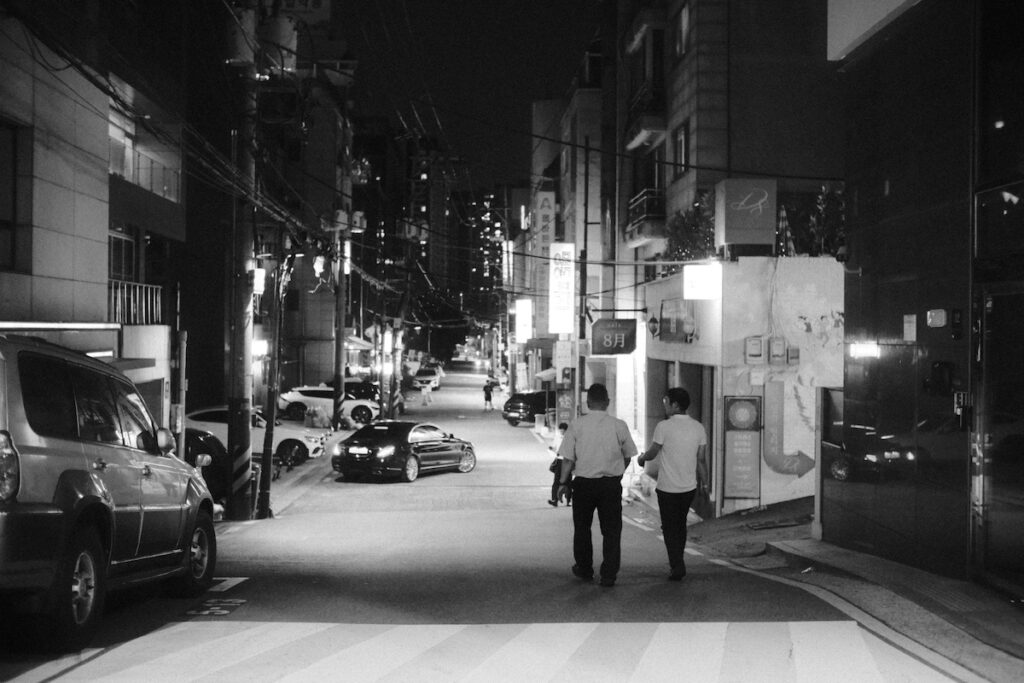
- The Surveillance Ritual: High-density CCTV networks and the sheer number of 24-hour businesses mean that you are never truly alone in the dark.
- Shared Responsibility: There is an unspoken agreement that the night belongs to everyone, which is why you can see a solo traveler walking through an alley at 2 AM without a second thought.
3. The Subway Protocol: The Lungs of the Night
The Korea Night Air remains fresh and accessible because of the Seoul Metro. As we’ve explored in our Subway Lost & Found Guide, the system is built on a foundation of absolute trust.
- Hub Connectivity: Major nightlife districts are centered around stations like Samseong (Line 2) and Sports Complex (Line 9), ensuring that the “Shared Breath” can continue until the very last train.
- Recovery Ritual: Even if you lose a personal item during a late-night dinner, the digital integration with LOST112 ensures that your belongings are as safe as you are.
- Efficiency at Scale: The ability to move millions of people safely through the night is what makes the Korean lifestyle sustainable and cinematic.
4. The Culinary Breath: From Gamjatang to Convenience Stores
If the night had a scent, it would be the steam rising from a 24-hour Gamjatang (Pork Bone Soup) restaurant. These establishments are the “Stations of the Night” where people from all walks of life—from CEOs to taxi drivers—share the same air.
- 24-Hour Ecosystem: The availability of high-quality food at any hour is a cornerstone of the Korea Night Air.
- The Convenience Store Ritual: A late-night stop at a GS25 or CU for a quick drink is a ritual of transition, a moment to inhale the cool night air before finally heading home.
5. Why We Breathe Better Together
Ultimately, the Korea Night Air is about the rejection of loneliness. In the West, “Night” often implies isolation. In Korea, the night is when we are most connected. Whether it’s the neon lights of Gangnam reflecting on the pavement or the quiet chatter of friends walking toward the station, the air is full of human presence.
- Collective Energy: There is a unique vitality in being part of a crowd that is moving toward a shared goal of relaxation and connection.
- Trust as a Metric: The fact that we can leave our phones on a table while going to the restroom in a crowded bar is the ultimate proof of the quality of our shared air.
6. The Payment Ritual: From Confucian Hierarchy to Digital Equality
In the Korea Night Air, the moment the bill arrives is a cinematic climax that reveals the deep-seated cultural shifts of the nation. Understanding who pays—and how—is essential to mastering the Korean lifestyle.
The Confucian Legacy: The Burden of the Elder
Traditionally, the “Payment Ritual” was governed by a strict Confucian hierarchy. In this framework, the eldest person or the highest-ranking professional was expected to pay for the entire group. This wasn’t merely about wealth; it was an Emotional Tax and a sign of “Gwon-wi” (Authority). By paying, the elder demonstrated their responsibility to care for their subordinates, creating a bond of loyalty that fueled the rapid growth of corporate Korea.
The Digital Shift: The Rise of 1/n (Dutch Pay)
However, as the Korea Night Air cools with the pragmatism of a new generation, a new ritual has emerged: 1/n (The N-th Power). Influenced by global trends and economic independence, younger Koreans now prefer to split the bill equally. This shift represents a transition from “Collective Responsibility” to “Individual Fairness.”
Tactical Tech: Kiosks and the Split-Bill Protocol
The most fascinating part of this evolution is how Korean technology has adapted to these cultural nuances.
- Tabletop Kiosks: Many restaurants in Gangnam and Samsung-dong now feature digital kiosks at every table.
- The “Dutch Pay” Button: These kiosks aren’t just for ordering; they feature a sophisticated “1/n Payment” function.
- Seamless Execution: A group can now split the total amount by the number of people, allowing each person to insert their own card and pay their share without the awkwardness of manual calculations or handling cash.
- Privacy & Speed: This digital ritual preserves the “Shared Breath” of the dinner while removing the financial tension that once defined the end of the night.
🛡️ Action Plan: How to Experience the Korea Night Air
- Choose Your Hub: Start your ritual at a major station like Samseong or Gangnam.
- Follow the Scent: Look for restaurants with a high density of locals; the “Shared Breath” is always strongest where the food is authentic.
- Trust the System: Don’t be afraid to stay out late. Use the subway or reliable taxi apps, knowing that the city’s safety protocols are always active.
- Use the Digital Safety Net: Keep the LOST112 portal bookmarked on your phone, just in case your night ritual gets a little too adventurous.
📊 Related Guides: Mastering the Seoul Rituals
Korea Travel: Subway Lost & Found Guide: The Digital Recovery Ritual Learn how to use the LOST112 system to recover items lost during your night out.
Korea Lifestyle: Best Rice Cooker Guide: The Ritual of the Perfect Grain Discover how the same technology and efficiency in our kitchens fuel the energy of our nights.