Gangnam Luxury Hotels represent more than just a place to sleep; they are the ultimate fortresses of reliability in a city that moves at a breakneck pace. My brother recently called me with a dilemma: a high school friend who immigrated to the U.S. decades ago was returning to Korea with his American wife and two children.
He wanted a “local” recommendation, something authentic like Hanwoo or Nakji-bokkeum. However, I hesitated. While I love the gritty charm of a Mapo alleyway, inviting a family of four who are unaccustomed to the heat, the noise, and the language barrier felt like a dangerous gamble. In that moment, I realized that the safest, most sophisticated form of hospitality is found within the “Shared Breath” of global hotel chains. It is a conservative choice, perhaps, but it is the only one that guarantees a flawless experience for those we truly care about.
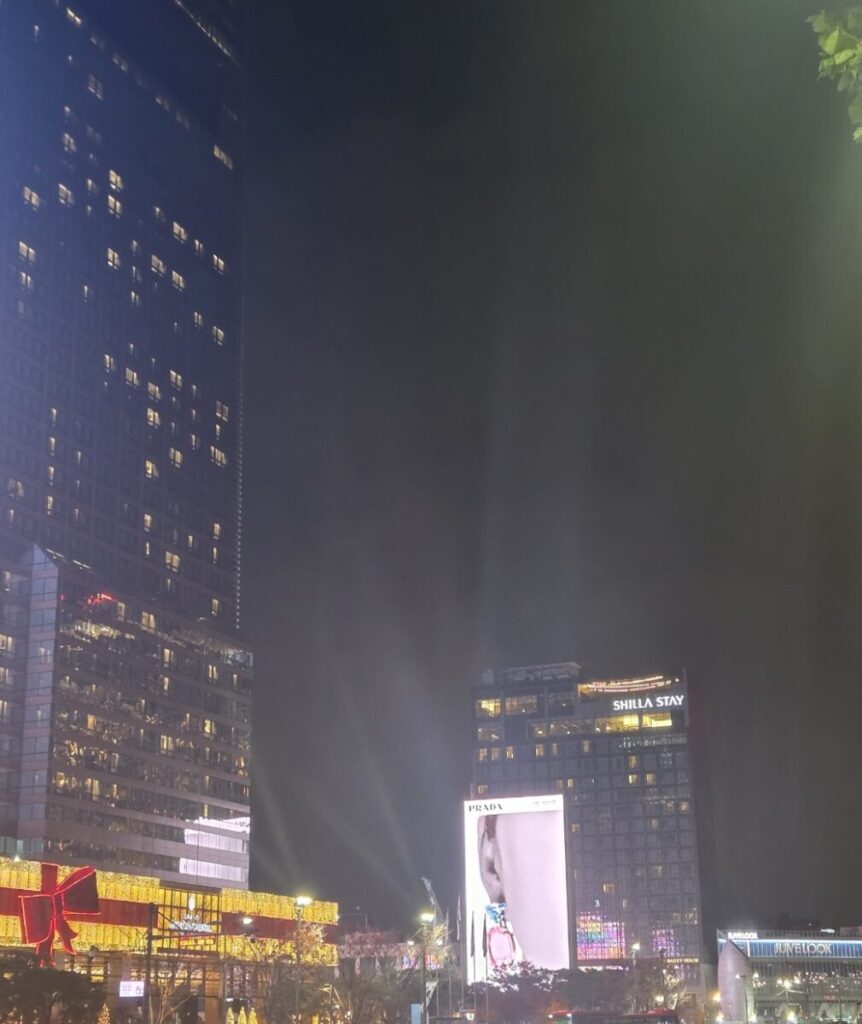
Decoding Culinary Prestige: Michelin vs. Blue Ribbon
To understand why I pointed my brother toward a hotel, one must first decode the silent language of the stickers on the door. For an international guest, the distinction between these two guides is the difference between global perfection and local soul.
- The Michelin Guide (Global Standards): Michelin is the Western lens focused on creative plating and refined service. It is a universal language of excellence that any traveler can understand.
- The Blue Ribbon Survey (Korean Soul): Established in 2005, this is Korea’s original domestic guide. It relies on the evaluations of thousands of local foodies rather than a small group of inspectors.
- The Intersection of Trust: While Michelin honors innovation, Blue Ribbon celebrates a mastery of tradition and local palate. By choosing a 3-Blue Ribbon restaurant inside a luxury hotel, you are bridging the gap—offering the world-class service of a global chain while serving flavors that have been validated by the most discerning Koreans.
The Elite Selection: Gangnam’s 3-Blue Ribbon Destinations
For those who refuse to leave their guests’ satisfaction to chance, these five institutions within Gangnam Luxury Hotels offer the pinnacle of verified excellence.
1. Josun Palace, a Luxury Collection Hotel: Eatanic Garden
Perched high above the city, Eatanic Garden is where modern innovative cuisine meets historical reverence. It holds the elusive 3-Blue Ribbon status for its ability to reinterpret Korean ingredients through a global, cinematic lens. It is the perfect choice for a guest who wants to see the “New Korea” without sacrificing comfort.
2. InterContinental Seoul Parnas: Wei Lou
For a friend who has spent years in the U.S., the bold, refined flavors of Wei Lou’s Shandong and Beijing-style cuisine offer a familiar yet elevated experience. The service here is a testament to the hotel’s decades of experience in handling high-profile international guests.
3. Signiel Seoul: Bicena & STAY
Located in the iconic Lotte World Tower, Signiel offers a dual threat of excellence. Bicena provides contemporary Hansik that is both approachable and deeply rooted in tradition, while STAY offers modern French mastery. Both hold 3-Blue Ribbon seals, making this hotel a culinary pilgrimage site.
4. Grand InterContinental Seoul Parnas: Hakone
Hakone is the gold standard for Japanese Kaiseki in Seoul. Its 3-Blue Ribbon status is a reflection of its relentless consistency and the quiet, observant hospitality that defines the InterContinental brand.
5. Park Hyatt Seoul: Cornerstone
Known for its sophisticated Italian fare, Cornerstone is a masterclass in how a global hotel can integrate local ingredients into a Mediterranean framework. It is the ideal “safe harbor” for children who might find traditional Korean spices a bit too daunting.
Defining Gangnam: The Fortress of Modern Korean Success
To recommend a hotel in Gangnam is to offer a seat at the very center of South Korea’s economic and cultural engine. The name “Gangnam” literally translates to “South of the River,” but in the modern era, it has become a global synonym for luxury, efficiency, and relentless growth.
The Scale of an Empire
Gangnam-gu is home to over 550,000 residents. While it occupies only about 39.5 square kilometers (roughly 6.5% of Seoul’s land), it is an economic titan. This single district produces approximately 25% of Seoul’s Gross Domestic Product (GDP), housing the headquarters of global giants like POSCO and Korea Telecom, alongside the tech-heavy “Teheran Road”—Korea’s answer to Silicon Valley.
A Masterpiece of Connectivity
The reason I trust the “Gangnam System” for international guests is its unparalleled infrastructure. It is the most connected node in the nation:
- The High-Speed Gateway: Suseo Station, located in southern Gangnam, serves as the dedicated terminal for the SRT (Super Rapid Train). As of February 2026, a groundbreaking interchange test has even allowed KTX trains to begin operating from Suseo, making it a unified hub for traveling to Busan or Mokpo in under three hours.
- The Subway Matrix: The district is pierced by Subway Lines 2, 3, 7, and 9, along with the Shinbundang Line, connecting it to every vital corner of the Seoul Metropolitan Area within minutes.
- The Hub of Rituals: From the sprawling COEX Convention Center to the upscale boutiques of Cheongdam-dong, Gangnam is designed to handle the “Rituals of Excellence” that global travelers expect.
Why the “Conservative Choice” Wins
When I told my brother to choose a hotel here, I was choosing a location where the default setting is perfection. In Gangnam, the population density and the concentration of wealth have forced every service—from the valet to the 3-Blue Ribbon chef—to operate at a level where “good” is never enough. It is a district that does not sleep, ensuring that your guests from America will find everything they need, from high-speed internet to 24-hour security, at a world-class standard.
Related Guides
- Korea Banking: A Master Guide to Retail Finance Rituals (2025-2026): Understanding the “Oh My Card” rituals is essential for anyone navigating the financial side of a luxury stay.
- Korea Banking: NH Bank vs Local Nonghyup – A Master Guide to Rural Finance Rituals: Learn the structural differences in finance before you venture beyond the 5-star safety of Gangnam.
- Korea Travel: KTX & SRT Standing Ticket Ritual: 5 Tips to Survive a 400km Journey (2026): If your culinary journey takes you to Busan after your Gangnam stay, master the high-speed rail “Midnight Run”.
Action Plan
- Trust the Ribbon: When booking, prioritize restaurants that carry the 3-Blue Ribbon seal to ensure local validation.
- Utilize the Concierge: For the best tables at Eatanic Garden or Bicena, always have the hotel concierge manage the reservation to leverage their internal priority.
- Cross-Verify: Use the Catch Table app (available in English) to check real-time availability and read recent reviews from other international travelers.
Conclusion: The Conservative Choice as the Ultimate Hospitality
In the end, my recommendation to my brother wasn’t just about food or a bed; it was about protecting a long-awaited reunion from the friction of the unknown. While the allure of a hidden Mapo alleyway is undeniable for a local, the Gangnam Luxury Hotels we’ve explored offer something far more valuable for an international guest: a “Shared Breath” of world-class reliability.
Choosing a venue with a 3-Blue Ribbon seal ensures that your guests experience the authentic soul of Korean taste, validated by thousands of local experts, all within the safe and sophisticated infrastructure of a global 5-star institution. In a district as fast-paced and demanding as Gangnam, this conservative approach is actually the most strategic one. It allows you to step back from the role of a worried guide and instead join your guests in the simple, cinematic joy of a perfect meal.
The “Midnight Run” to a local joint can wait for a solo trip. For the people who matter most, the safest bet is often the most profound gift of all.