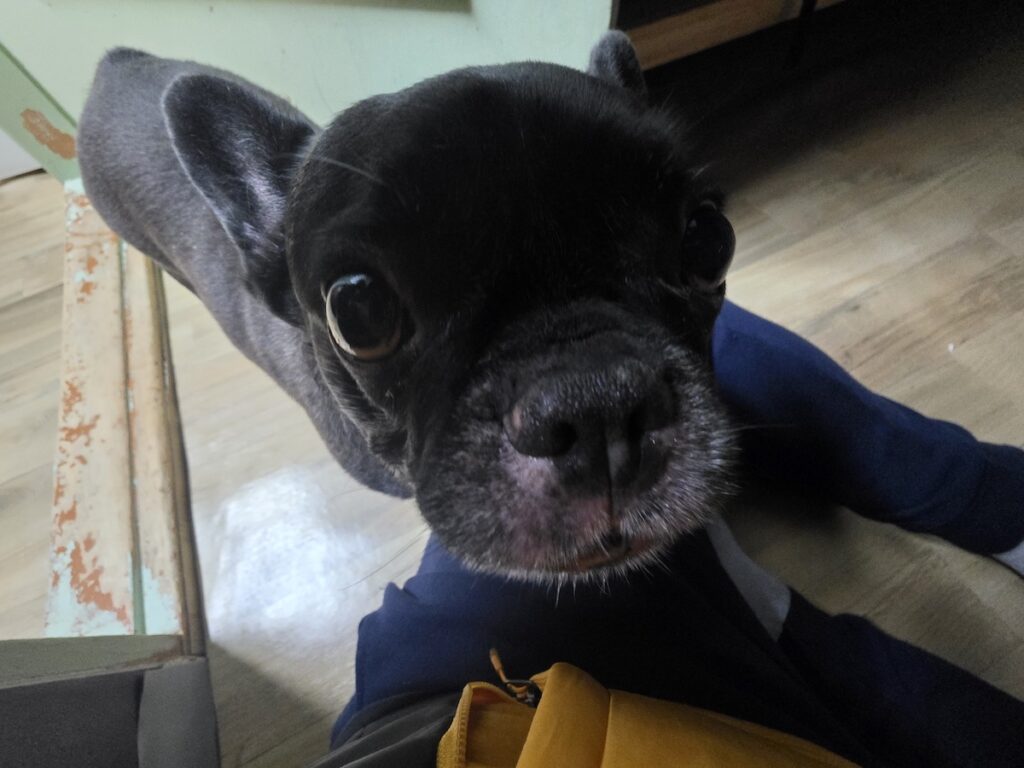
The soft beep of the digital door lock echoes in the quiet hallway of a high-rise apartment in Seoul. As I step inside, I’m not greeted by my friend, but by a snorting, wiggling whirlwind of black fur—his French Bulldog. The dog had been waiting patiently by the door, its bat-like ears perked, its flat snout sniffing the air for a familiar scent.
My friend’s family is currently vacationing in Guam, and I’ve taken on the role of the temporary guardian. I’m here to fill the water bowl, serve a balanced meal, and head out for a long sunset walk. This scene—a friend trusted with a digital passcode to care for a beloved French Bulldog in a luxury residence—is the perfect snapshot of the modern Dog Friendly Korea.
Just a few decades ago, the narrative was different. Dogs in Korea were often perceived as “village dogs” (똥개), roaming rural yards or guarding gates. Today, that image is extinct. In 2026, dogs in Seoul are deeply integrated into the human experience. They are family members, emotional anchors, and silent citizens of a tech-savvy metropolis. This cultural shift has transformed Korea into one of the most sophisticated pet-friendly destinations in Asia, where respect for animals is mirrored in both law and social etiquette.
The Legal Evolution: Animal Protection Act of 2026
To understand why Dog Friendly Korea has become such a prominent trend, one must look at the rigorous legal framework that now protects these four-legged citizens. The transition from “ownership” to “guardianship” is backed by the latest updates to the Animal Protection Act and the Food Sanitation Act, which saw significant amendments in early 2026.
The Standardized Pet-Dining Law (March 2026)
Until recently, bringing a dog into a restaurant in Seoul was a regulatory “sandbox” experiment. However, as of March 2026, a new federal decree has standardized pet-dining. Restaurants and cafes that meet specific hygiene criteria are now legally permitted to host pets in indoor seating areas. This has sparked a surge in “Pet-Gastronomy,” where luxury eateries offer curated menus for both humans and their canine companions, significantly boosting the city’s appeal to international travelers with pets.
Mandatory Insurance and Responsibility
The 2026 legal landscape also emphasizes the “Social Contract.” High-risk breeds now require mandatory liability insurance, and the “2-meter leash rule” is strictly enforced in all public spaces. This balance of rights and responsibilities is why you’ll see such a high level of harmony in Seoul’s crowded parks. It’s a culture where pet owners proactively manage their dogs to ensure that those who don’t own pets feel equally respected.
Dive Deeper into Seoul’s Canine World
Navigating the local pet scene requires a blend of cultural understanding and technical knowledge. Whether you are looking to adopt a new companion or need to understand the mandatory legal requirements for residents, our specialized guides provide the essential roadmap.
Pet Culture in Korea 2025: How Koreans Treat Their Pets, Adoption Tips, and Dog Registration Guide
The Sophisticated Infrastructure: Dog Kindergartens and Beyond
In Seoul, pet care has reached a level of sophistication that rivals human education and wellness. For a global traveler or an expat, the sheer density of high-tech infrastructure is what truly defines Dog Friendly Korea.
The Rise of “Doggy Daycare” and Kindergartens (개유치원)
In districts like Gangnam and Hannam-dong, pet kindergartens are a status symbol and a practical necessity. These facilities offer more than just supervision; they provide behavioral social-conditioning, agility training, and even “shuttle bus” services. With monthly tuition often exceeding $500, these institutions treat dogs as students, sending “report cards” and photos to owners via mobile apps, ensuring that even while the family is at work or traveling, the dog’s social life remains vibrant.
Seoul Dog Patrol: A Community Asset
One of the most unique aspects of Dog Friendly Korea is the Seoul Dog Patrol (서울 반려견 순찰대). This government-led initiative encourages citizens to patrol their neighborhoods while walking their dogs. These teams report broken streetlights, suspicious activities, or safety hazards to the local authorities. It’s a brilliant fusion of pet ownership and civic duty, turning a simple walk into a contribution to the city’s safety.
Navigating the City: Etiquette and Public Spaces
While the infrastructure is world-class, the success of Dog Friendly Korea rests on a foundation of impeccable etiquette. If you are walking a dog in Seoul, you are part of a shared urban experience.
Technical Guidelines for Public Walking
| Requirement | Regulation Detail | Cultural Context |
| Leash Length | Fixed at 2 Meters | Prevents interference with pedestrians in high-density areas. |
| Waste Management | Immediate Disposal | Failure to carry waste bags can result in a fine of 100,000 KRW. |
| Identification | RFID Chip or Tag | All dogs must be registered with the local district office. |
| Public Transport | Carrier/Muzzle | Small dogs are allowed in carriers on subways and buses. |
Pet-Tech and Smart Playgrounds
Across Seoul, the local government has established “Smart Pet Playgrounds.” These are designated off-leash areas where entry is managed by scanning the dog’s registered RFID chip. These parks are equipped with automated water stations, agility equipment, and specialized waste-processing units, making them the ultimate social hub for the modern Korean dog.
The Rise of Sigorjabjong: Embracing the “Village Dog” Brand
Perhaps the most significant and charming cultural shift in Dog Friendly Korea is the creative re-branding of the mixed-breed dog. For generations, these dogs were dismissively labeled as “Ddong-gae” (똥개, literally “poop dog”), implying a lack of value or pedigree. Today, they have been elevated to a beloved, semi-official status known as Sigorjabjong. This humorous, French-sounding term—a playful pun on “Si-gol” (rural village) and “잡종” (mixed breed)—perfectly captures the new Korean perspective on pet ownership.
From Stigma to Sophistication
The Sigorjabjong phenomenon is not just a clever linguistic trick; it is a profound social statement driven by the younger “MZ Generation.” Instead of seeking expensive, inbred purebreds, modern Korean pet owners are embracing the health, unique appearance, and resilience of mixed breeds. Sigorjabjong are now seen as sophisticated, one-of-a-kind companions that represent a conscious rejection of commercial puppy mills. They are a brand in their own right, associated with authenticity, rustic charm, and a high level of empathy.
Celebrities and the “Adopt, Don’t Shop” Movement
The rise of Sigorjabjong was catalyzed by prominent Korean celebrities who publicly adopted mixed-breed rescue dogs. K-pop icon Lee Hyo-ri, for example, transformed the perception of Sigorjabjong by showcasing her deeply bonded, rustic mixed-breed dogs on national television. This massive media exposure sparked an “Adopt, Don’t Shop” movement, making the choice to adopt a mixed breed from a shelter a symbol of social and ethical sophistication. This cultural shift is a cornerstone of why Korea is considered a premier pet-friendly nation in 2026—it values the dog’s life over its pedigree.
The Future of Living in Seoul with a Pet
The evolution of Dog Friendly Korea is far from over. From “Pet Taxis” that use AI to match drivers with pet-friendly vehicles to luxury hotels like The Shilla or Grand Hyatt offering “Pet-cation” packages, the city is constantly innovating. The existence of a dog in Korea is no longer about survival in a rural yard; it is about thriving in a cinematic, tech-driven society that values the bond between species. Whether you are a resident or a visitor, experiencing Seoul with a dog offers a unique lens into the heart of a city that has truly embraced the pet-humanization movement.