Stepping out of a sleek, glass-enclosed elevator in a Gangnam high-rise, you see a neighbor carrying a neatly sorted tray of plastics and glass toward a centralized station. Meanwhile, in the narrow, charming alleys of a villa district in Mapo, a resident is carefully placing a specialized yellow bag and a white translucent bag exactly in front of their doorstep as the sun sets. To a newcomer, these two scenes might look like simple chores, but they represent the dual nature of the Seoul recycling system. Depending on where you live, the rules, the costs, and the level of personal responsibility shift dramatically.
In 2026, Seoul’s waste management is no longer just about “being green.” It is a highly regulated, tech-driven infrastructure designed to handle the massive density of a mega-city. Whether you are living in a managed apartment complex or an individual house (villa), understanding the structural difference between “collective management” and “individual responsibility” is the first step to truly living like a local and avoiding significant fines.
The Apartment Ecosystem: Collective Efficiency through Management Fees
If you reside in one of Seoul’s massive apartment complexes (Danji), the Seoul recycling system is largely invisible until the designated “Recycling Day.” This system operates as a managed ecosystem where the burden of logistics is shifted from the resident to a centralized management office.
The Role of the Management Office and Contractor Fees
The primary reason apartments feel more convenient is the “Management Fee” (Gwanri-bi). Every month, residents pay a sum that includes the wages for cleaning staff and the contract fees for private waste disposal companies. Because the apartment complex acts as a single large-scale business entity, they hire professional firms to haul away recyclables. This means you don’t have to worry about individual bag costs for recycling; the “group” has already paid for the service through their collective monthly dues.
The Centralized “Recycling Station” Protocol
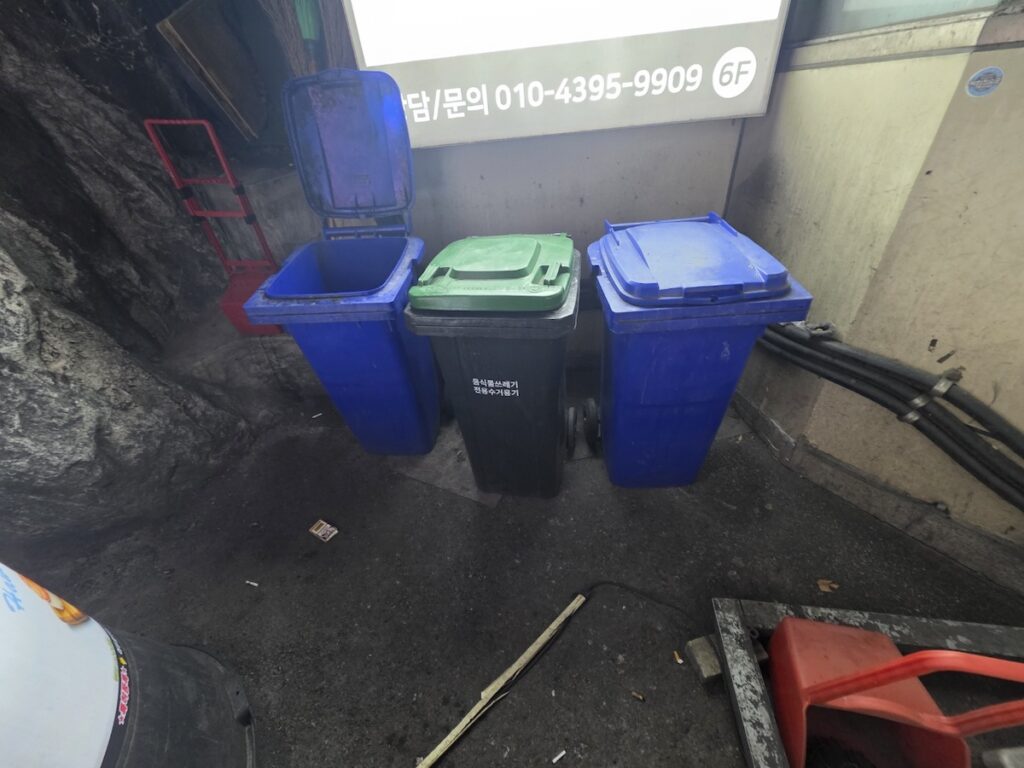
Most apartments have a designated area—often a sophisticated “Recycling Center”—where bins for paper, plastic, Styrofoam, and glass are always available or opened on specific days (typically once or twice a week). For food waste, apartments utilize the advanced RFID Smart Bin System. You tap your resident card, the lid opens, and it weighs your waste to the gram. The cost is then automatically added to your monthly management bill. It is a seamless, high-tech experience that prioritizes speed and cleanliness for thousands of residents.
Mastering the Art of Seoul’s Urban Living
To truly integrate into the local lifestyle, one must look beyond the bins and understand the cultural philosophy that drives these daily rituals. Whether you are curious about the evolution of pet ownership in these high-rises or seeking a step-by-step guide to the legalities of city living, our curated edits offer the ultimate clarity.
The Midnight Sorting Ritual: Why Recycling in South Korea Apartments is an Art Form (2026)
The House and Villa Protocol: Personal Responsibility and Curb-side Rules
Once you move away from the high-rises and into the “villas” (low-rise multi-family homes) or individual houses, the Seoul recycling system becomes deeply personal. There is no management office to handle the contracts. Here, every resident is an independent agent in the city’s waste network, and the rules are enforced with rigorous precision by the local district (Gu) office.
The “Sunset to Midnight” Disposal Window
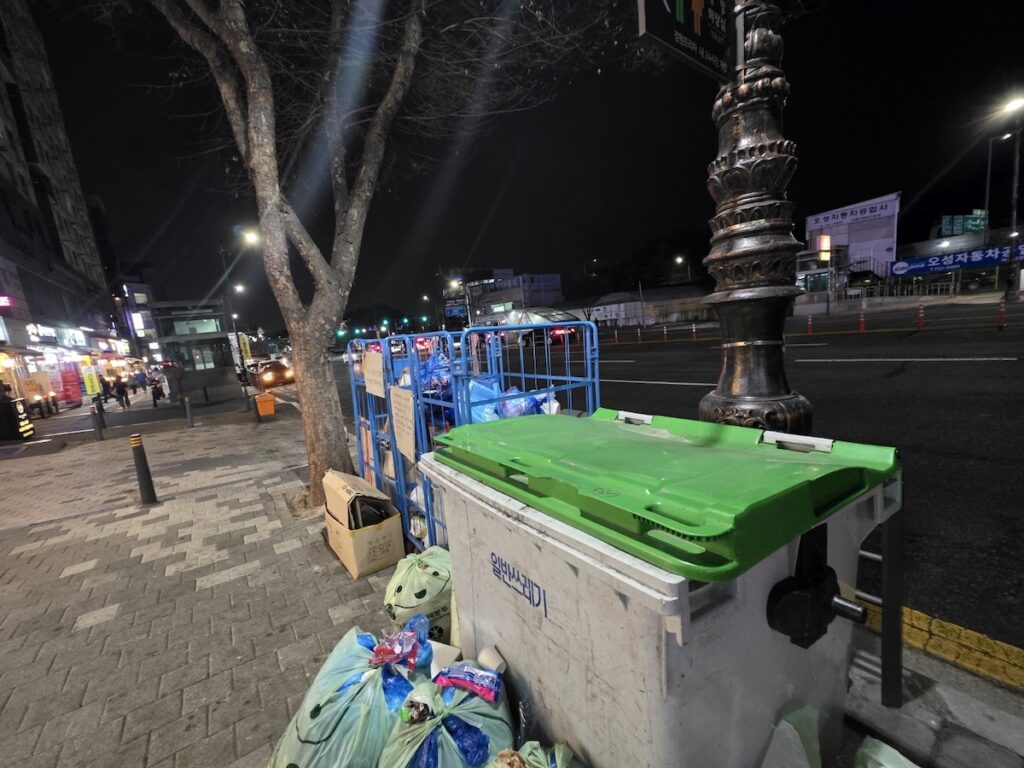
In residential house areas, the city operates on a strict “Curb-side Disposal” (Mun-ap Baechul) system. You do not walk to a central station; you place your waste directly in front of your gate or building entrance. However, timing is everything. To keep the streets aesthetic and clean during the day, waste must only be set out between 8:00 PM and Midnight on designated days. Placing trash out on a “non-collection” day or during daylight hours is a common mistake that leads to “Violation Stickers” and fines.
Direct Payment via Volume-Based Waste Fee (VBWF) Bags
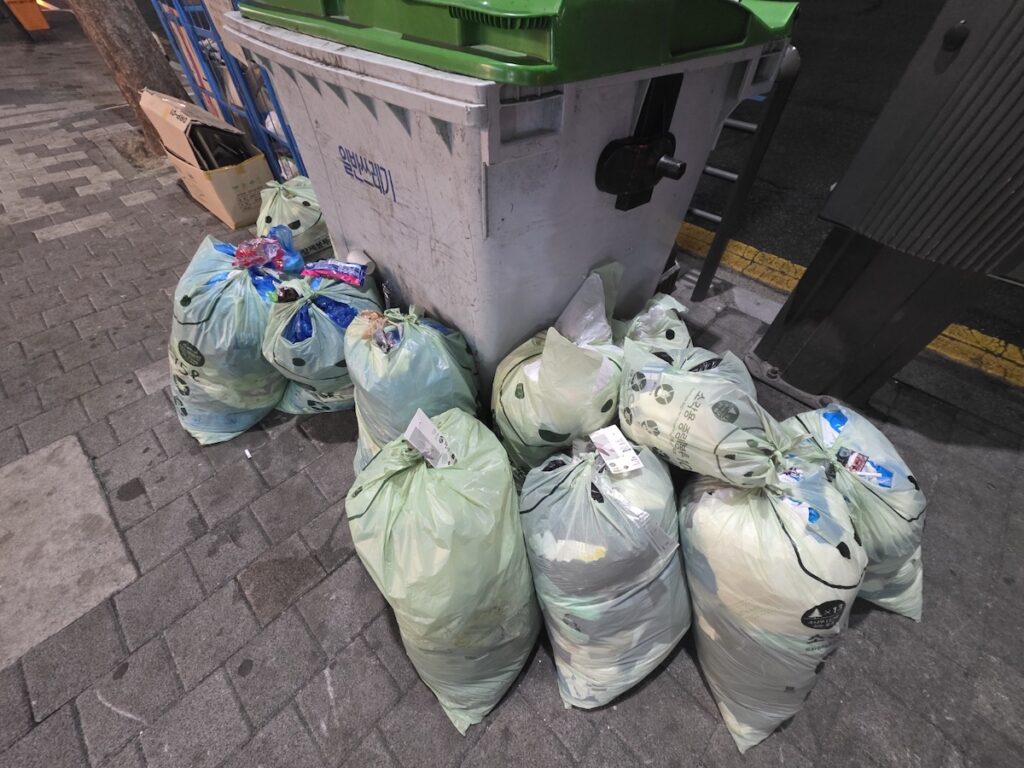
While recycling (plastic, paper, glass) is generally free if sorted into transparent bags, general waste and food waste require a direct purchase of “Standard Plastic Bags” (Jongryangje Bongtu). By buying these bags at a local convenience store, you are paying the waste treatment tax directly to your specific district. If you live in a house, you are the manager of your own waste budget. If you fail to sort a single plastic bottle and hide it in a general waste bag, the collectors may leave it behind, and the CCTV cameras common in Seoul alleys can lead the “Waste Police” straight to your door.
Technical Comparison: Waste Management in Seoul (2026)
| Feature | Apartment Complexes (Collective) | Individual Houses/Villas (Individual) |
| Primary Payment | Included in Monthly Management Fee | Purchase of Designated District Bags |
| Disposal Point | Centralized On-site Stations | Curb-side (In front of your gate) |
| Collection Schedule | Usually 24/7 or 1-2 Fixed Days | Specific Days (Sun-Thu, 8 PM-12 AM) |
| Food Waste System | RFID Smart Scales (Weight-based) | Specialized Yellow Bags or Small Bins |
| Enforcement | Building Security/Management | District Office CCTV & Manual Inspection |
The Legal Consequences: Fines and The Waste Control Act
The Seoul recycling system is backed by the Waste Control Act, and the penalties for non-compliance in 2026 are steeper than ever. Because the city operates on a high-density model, a single mismanaged household can cause odors and pest issues for an entire block.
Understanding Surcharge and Fines
If a resident in an individual house fails to use the correct bag or misses the disposal window, they can be hit with an administrative fine (Gwa-tae-ryo) ranging from 100,000 KRW to 1,000,000 KRW. In apartment complexes, the management office may issue warnings first, but persistent violations can be reported to the local district office. The “Waste Inspection Teams” are known to manually tear open illegally dumped bags to find receipts, mail, or any evidence of the perpetrator’s identity.
Mastering the Seoul Lifestyle
Whether you prefer the managed convenience of an apartment or the independent charm of a Seoul villa, mastering the Seoul recycling system is a badge of honor for any resident. It is a system built on the philosophy that while the city provides the infrastructure, the citizens provide the discipline. By understanding whether you are part of a managed collective or an individual responsible for your own gate, you ensure that Seoul remains the cinematic, clean metropolis that the world admires.