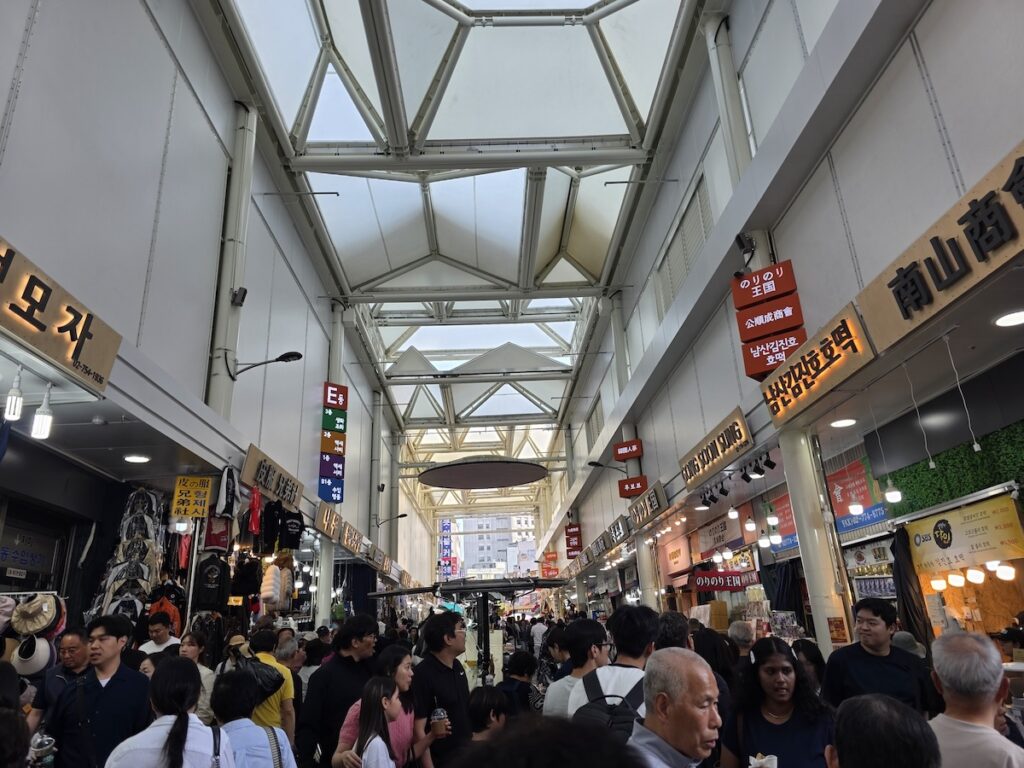
Why Seoul Feels Easy Until You Break an Invisible Rule
Seoul survival guide may sound dramatic, but if you are visiting Korea for the first time, you quickly realize that the hardest parts of Seoul are not always the big things.
It is not usually the subway map, the food, or even the language.
It is the small rules.
Where can you smoke?
Can you eat on the subway?
How do you call a waiter?
Where do you throw trash?
Why does everyone seem to know what to do except you?
Seoul is a very convenient city, but it runs on a mix of technology, public order, and unspoken social expectations. For visitors, that can feel confusing. You may not be trying to be rude. You may simply not know the rule yet.
This guide brings together the most common mistakes tourists and first-time visitors make in Seoul, so you can move through the city with more confidence.
For official travel information, you can also check Seoul’s official tourism website, but this guide focuses on the everyday rules visitors often miss.
Quick Answer: What Rules Do Tourists Get Wrong in Seoul?
Most mistakes in Seoul happen in everyday situations.
The most common areas are:
- Smoking in the wrong place
- Breaking subway rules without realizing it
- Throwing trash incorrectly
- Misunderstanding public toilet culture
- Calling restaurant staff the wrong way
- Struggling with self-service kiosks
- Missing basic etiquette in public spaces
The good news is that most of these mistakes are easy to avoid once you understand how Seoul works.
Smoking in Seoul: Don’t Assume the Street Is Free Space
One of the biggest surprises for visitors is that smoking in Seoul is more restricted than it may first appear.
You may see people smoking outside, but that does not mean smoking is allowed everywhere. Many streets, bus stops, subway entrances, parks, and public areas are designated as non-smoking zones.
In some parts of Seoul, especially busy districts, enforcement can be quite active. You may even see warning systems, signs, or local officers checking public areas.
The confusing part is this: Seoul does not always feel like a strict city on the surface. But when it comes to smoking rules, fines are real.
If you smoke, the safest habit is simple. Look for designated smoking areas or places where locals are already gathered. Do not be the first person to light a cigarette in an empty public area.
Subway Rules: Seoul’s Subway Is Easy, But Not Rule-Free
Seoul’s subway system is one of the best in the world. It is clean, fast, cheap, and usually easy to use.
But it also has rules that visitors may miss.
Some things that can cause trouble include:
- Sitting in priority seats carelessly
- Blocking doors
- Eating strong-smelling food
- Being too loud
- Misusing emergency facilities
- Ignoring prohibited acts in subway stations
Most visitors do not mean to break rules. They simply assume subway behavior is the same everywhere. But in Seoul, public transport is treated as a shared space where order matters.
Even if nobody says anything directly, people may notice.
If you are unsure what to do, watch the people around you. Seoul locals are usually very good at reading the rhythm of subway behavior.
Trash and Cigarette Butts: Small Mistakes Can Look Very Bad
Trash disposal in Seoul can be surprisingly difficult for first-time visitors.
Public trash cans are not always easy to find. At the same time, littering is taken seriously. This is especially important for smokers because smoking and throwing away cigarette butts are treated as separate issues.
Even if you are standing in a place where smoking is allowed, throwing a cigarette butt on the ground can still be considered littering.
This is one of those rules tourists often misunderstand.
They think:
“I already found a smoking spot, so I’m fine.”
But the second problem begins after smoking. Where do you put the cigarette butt?
The safest approach is to use an ashtray, a smoking booth, or carry a small portable ashtray if you smoke regularly.
Seoul is not only strict about where you smoke. It also cares about what you leave behind.
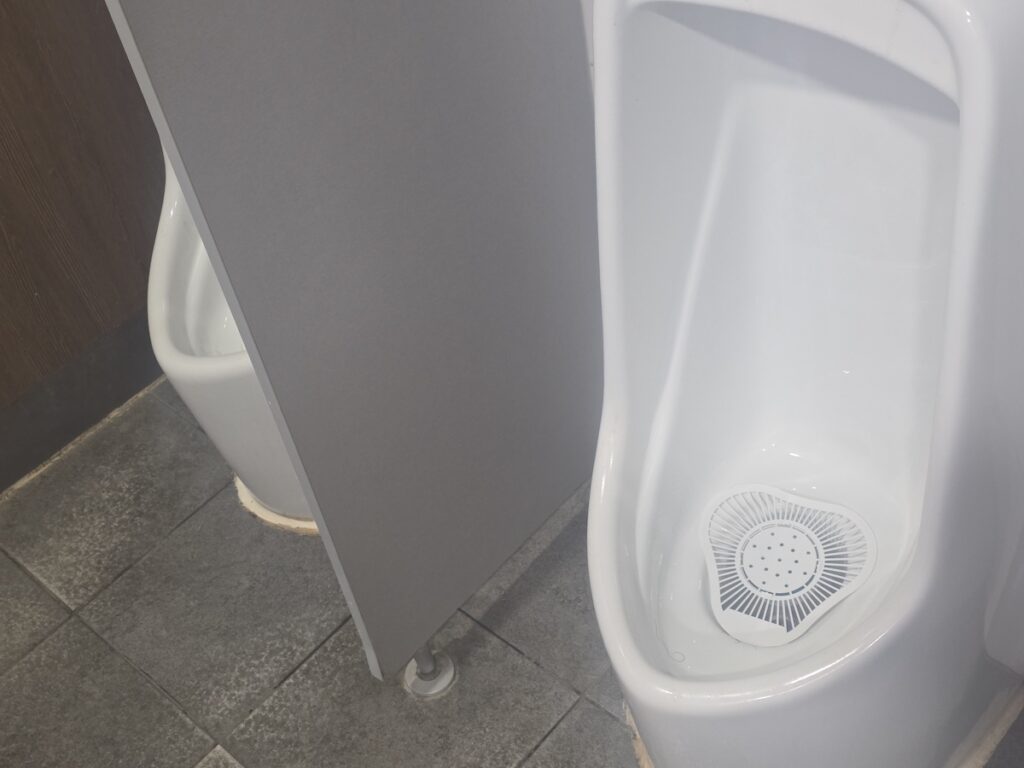
Public Toilets in Korea: Cleaner Than Expected, But Different
Many visitors are surprised by public toilets in Seoul.
In many areas, they are cleaner and more available than expected. Subway stations, department stores, large cafés, and public buildings often have restrooms that tourists can use.
But there are still differences.
Some restrooms have high-tech bidets. Some have unusual buttons. Some older places may feel less modern. And in certain areas, finding a restroom quickly can still be stressful.
There is also toilet etiquette to understand. In Korea, cleanliness and quiet public behavior matter. Leaving a messy restroom or using facilities carelessly can feel more socially uncomfortable than visitors expect.
This is not about fear. It is about reading the local standard.
Once you understand how Korean restrooms work, they become one of the most convenient parts of traveling in Seoul.
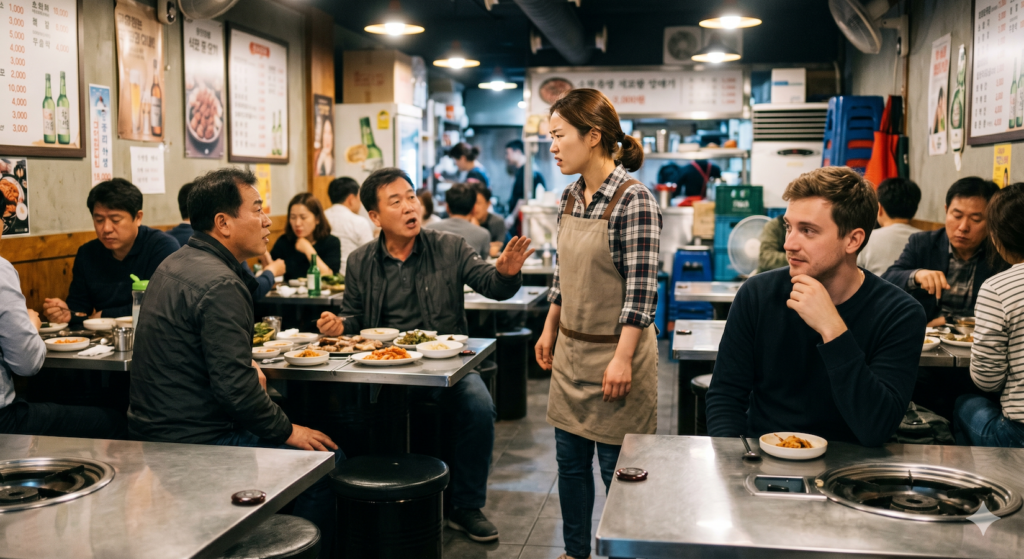
Calling Restaurant Staff: Don’t Say the Wrong Word
This is one of the easiest mistakes to make in Korea.
You are sitting in a restaurant. You need water, more side dishes, or the bill. The server is busy. What do you say?
Many foreigners hesitate because they do not know how to call staff politely.
The safest phrase is:
저기요 (jeogiyo)
It works like “excuse me” and is commonly used in restaurants.
What you should avoid is using words like 아줌마 (ajumma) or 아저씨 (ajusshi) casually. Even if you hear locals use them, they can feel too personal or rude depending on the person and situation.
In Korea, small words can carry social meaning. A visitor may not intend to offend anyone, but the wrong expression can still create an awkward moment.
Use “jeogiyo,” keep your tone polite, and you will usually be fine.
Self-Service Kiosks: Seoul Is High-Tech, But Not Always Easy
Seoul is full of self-service kiosks.
You will see them at:
- Fast-food restaurants
- Cafés
- Food courts
- Movie theaters
- Bus terminals
- Small shopping malls
For younger locals, they are normal. But for visitors, older travelers, or people who do not speak Korean, they can be stressful.
The problem is not only language. It is speed.
There may be people waiting behind you. The screen may reset. The English option may be hidden. Payment may require a Korean card or app.
This is where Seoul’s convenience can feel uncomfortable. Everything is designed to move quickly, but tourists often need more time.
The best tip is to slow down before you touch the screen. Look for language settings first. If you are unsure, take a photo and use a translation app. And if the line is long, do not feel embarrassed to step aside and try again.
Pharmacies and Medicine: Not Everything Requires a Prescription
Korean pharmacies are very useful once you understand how they work.
You can buy many basic medicines without a prescription, including common products for headaches, digestion, cold symptoms, patches, and vitamins.
But the system is different from some Western countries.
In many Korean pharmacies, you do not simply browse endlessly by yourself. You often describe your symptoms to the pharmacist, and they recommend something.
For foreigners, this can feel intimidating at first. But it is usually efficient.
The important thing to know is that foreigners do not normally pay a different price for over-the-counter medicine. If you are buying basic medicine without a prescription, the price is generally the same.
If you are worried about language, some areas also have pharmacies with foreign-language support.
Public Behavior: Seoul Is Quietly Strict About Shared Spaces
One thing visitors often notice is that Seoul is busy but controlled.
People move quickly. Subway stations are crowded. Cafés are full. Streets are dense. But there is still a strong expectation that people should not disturb others too much.
This applies to many situations:
- Speaking loudly on public transport
- Blocking narrow sidewalks
- Taking photos in sensitive places
- Leaving trash behind
- Smoking near others
- Acting too aggressively in queues
Korea does not always rely on direct confrontation. Sometimes the first sign that you did something wrong is not a warning. It is a look.
That can feel worse than a fine.
Nobody wants to travel to Seoul and feel embarrassed in front of locals. The safest rule is simple: when in doubt, pause and watch what others are doing.
Seoul Survival Table: Common Tourist Mistakes
| Situation | What Tourists Often Do | What To Do Instead |
|---|---|---|
| Smoking | Light up on any street | Find a designated smoking area |
| Subway | Sit anywhere or block doors | Watch signs and follow local flow |
| Trash | Carry trash briefly, then leave it | Keep it until you find a bin |
| Restaurant | Call staff with risky titles | Say “저기요” politely |
| Kiosk | Rush under pressure | Look for English first |
| Pharmacy | Expect to browse alone | Explain symptoms to the pharmacist |
| Toilets | Assume every restroom works the same | Check signs and buttons carefully |
How to Survive Seoul Without Overthinking Everything
The point of this guide is not to make Seoul feel scary.
Seoul is safe, convenient, and surprisingly easy once you understand the rhythm of the city.
The real trick is this:
Do not only learn where to go.
Learn how things work.
That is what separates a stressful trip from a smooth one.
If you are visiting Seoul for the first time, start with the basics:
- Learn the rules around smoking
- Understand subway behavior
- Know how to call restaurant staff
- Use kiosks calmly
- Respect shared spaces
- Watch how locals behave
You do not have to be perfect. Locals do not expect foreigners to know everything.
But a little awareness goes a long way.
Final Thoughts
This Seoul survival guide is really about avoiding small mistakes that can turn into uncomfortable moments.
Most tourists focus on attractions, restaurants, and hotels. Those things matter. But the small rules of everyday life matter just as much.
If you understand how Seoul handles smoking, subway etiquette, trash, toilets, restaurants, kiosks, and pharmacies, the city becomes much easier to enjoy.
Seoul is not difficult.
It just has its own rhythm.
Once you learn that rhythm, you stop feeling like a confused visitor and start moving through the city with confidence.
Where to Start Next
If this is your first time in Seoul, start with the rules that can cause the most awkward moments or fines.
First, read the smoking rules before lighting a cigarette in public.
Next, check the subway rules if you plan to use public transportation every day.
Then, learn how to use kiosks and call restaurant staff politely, because these are the small moments that happen again and again during a trip.
Seoul becomes much easier once you understand these everyday systems.