Korean Rules Foreigners Get Fined For are often not the serious crimes tourists imagine. In many cases, the confusing part is how ordinary the situation feels at first. A foreign visitor smokes near a subway exit because nobody else seems to care. Someone rides an electric scooter without a helmet for five minutes. Another person throws away trash the wrong way because the signs are entirely in Korean.
Then suddenly, there is a fine.
For many foreigners, Korea feels extremely safe and organized compared to large cities elsewhere. But part of that order comes from a system of small rules, public etiquette, and local enforcement that can feel surprisingly strict if you are not used to it.
Most tourists never experience major legal problems in Korea. What usually happens instead are small misunderstandings involving smoking areas, transportation rules, alcohol behavior, noise, scooters, or public spaces.
The confusing part is that locals often already understand these invisible boundaries without needing signs everywhere.
Quick Answer: What Small Rules Surprise Foreigners in Korea?
Many foreigners in Korea are surprised by how strictly certain everyday rules can be enforced. Common situations include smoking outside designated areas, riding electric scooters without proper safety equipment, ignoring garbage separation systems, or creating loud public disturbances late at night. Fines are usually small rather than severe, but confusion happens because some rules are enforced differently from Western countries. Korea often prioritizes public order, shared spaces, and group consideration more strongly than many visitors expect, especially in busy urban areas like Seoul.
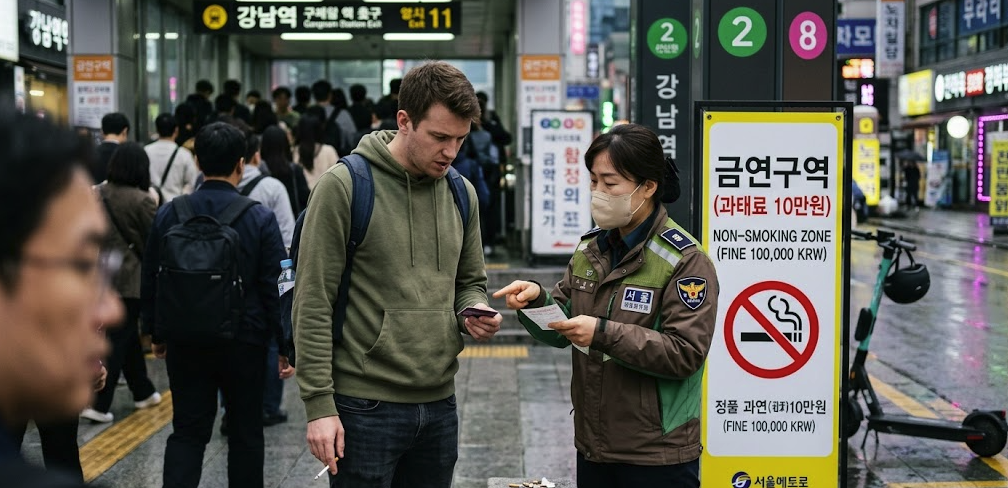
Why Smoking in Korea Confuses So Many Foreigners
One of the most common situations involves smoking.
Foreign visitors often assume that outdoor smoking is acceptable almost anywhere as long as they are outside. Seoul does not always work that way.
In some districts, smoking near subway exits, bus stops, major sidewalks, or crowded public areas can result in fines. The difficult part is that smoking zones sometimes feel surprisingly small or easy to miss.
A tourist may see several people smoking in one corner and assume the entire street allows it. In reality, the designated smoking area may only cover a tiny marked section.
This becomes especially confusing around places like:
- Hongdae
- Gangnam
- Myeongdong
- Jongno
- busy office districts
Enforcement can vary depending on the district and the time of day. Some areas actively monitor smoking zones, while others feel more relaxed.
| Situation | What Some Foreigners Expect | What Often Happens in Korea |
|---|---|---|
| Smoking outdoors | Allowed almost everywhere | Restricted in many busy zones |
| Subway exits | Open public space | Often monitored smoking area |
| Walking while smoking | Common in some countries | Socially disliked in Korea |
| Small warnings | Verbal reminder only | Possible on-the-spot fine |
Another difference is social reaction. Even when nobody says anything directly, smoking outside proper areas can attract visible discomfort from people nearby.
Electric Scooters Became a Bigger Issue Than Many Tourists Expected
Electric scooters look convenient in Seoul, especially late at night when subway service slows down.
But this is another area where foreigners accidentally misunderstand the rules.
Tourists sometimes assume scooters work casually like rental bicycles. However, Korean regulations around scooters became stricter after safety concerns and accidents increased.
Depending on the situation, issues can involve:
- helmets
- licenses
- drunk riding
- road usage
- app registration requirements
What surprises many foreigners is how quickly a short ride can become expensive if stopped by police.
Even locals sometimes complain that the rules changed quickly over recent years.
The strange part is that scooters are everywhere in Seoul, which makes them appear more relaxed than they actually are.
Public Drinking Is Legal, But Public Behavior Still Matters
Korea has a very visible drinking culture.
Foreigners often notice office workers drinking outside convenience stores, groups sitting near the Han River with beer, or late-night restaurant gatherings that continue far past midnight.
This creates the impression that public drinking rules are extremely loose.
Technically, drinking itself is usually not the issue. Behavior is.
Problems usually happen when alcohol becomes connected to:
- loud arguments
- disturbing passengers
- damaging property
- harassment
- aggressive behavior
- public disorder
Many visitors are surprised by how calm Korean nightlife often remains despite large amounts of alcohol.
Part of this comes from social pressure. People around you may tolerate drinking itself but strongly dislike behavior that disturbs shared public spaces.
In Seoul, maintaining group harmony often matters more than foreigners initially expect.
The Garbage System Feels More Serious Than Tourists Expect
Trash separation in Korea can confuse even long-term residents at first.
Short-term travelers usually notice this when staying in Airbnb apartments or officetels rather than hotels.
Unlike some countries where garbage is thrown away together, Korea often separates waste into detailed categories such as:
- food waste
- general waste
- plastic
- paper
- bottles
- recyclables
The difficult part for foreigners is that instructions are not always available in English.
Food waste becomes especially confusing because Korea treats it differently from many Western countries. Things like soup, liquids, bones, and sauces may follow different disposal rules depending on the building.
Most tourists will not receive major penalties for simple mistakes, but apartment staff or building managers may complain quickly if trash is handled incorrectly.
For foreigners, the system can feel unexpectedly strict for something as ordinary as throwing away dinner leftovers.
Concert Crowds in Korea Have More Rules Than Some Visitors Expect
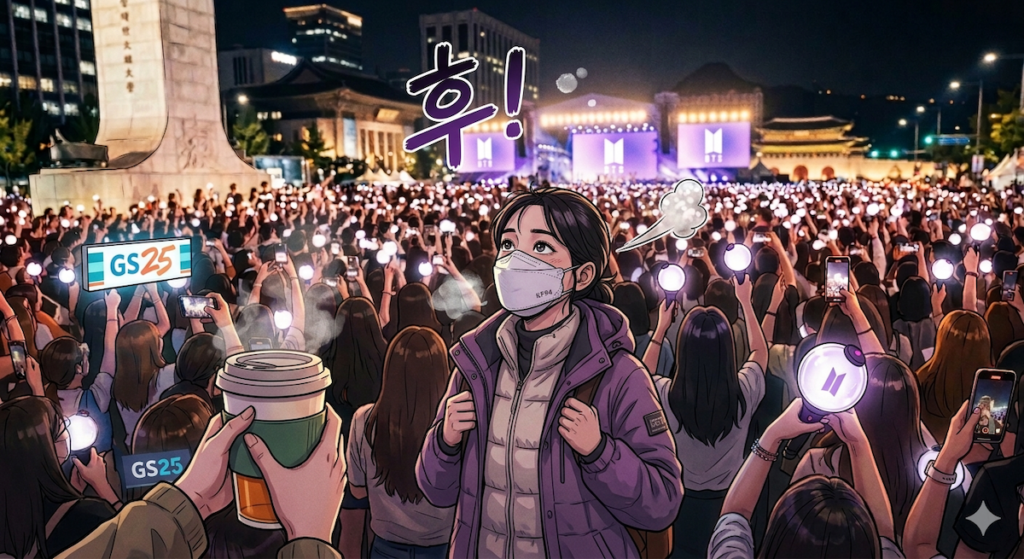
Korea’s concert culture can feel extremely organized compared to large festivals or stadium events in some Western countries. Fans often line up carefully, staff monitor crowd movement closely, and public behavior around venues is taken seriously, especially in busy areas like Seoul Olympic Stadium, KSPO Dome, Gocheok Sky Dome, and Jamsil Sports Complex.
Because of that, some foreigners accidentally create problems without realizing certain behaviors attract stronger reactions in Korea.
Queue Cutting Can Escalate Quickly
At concerts, pop-up stores, merchandise lines, and subway exits after events, cutting lines is viewed very negatively. Even small attempts to “hold a place” for large groups may trigger arguments with other fans.
Korean concert crowds usually expect visible order, especially for K-pop events where fans often wait for hours.
Spitting on the Street Is Socially Unacceptable in Many Areas
While older generations sometimes still do it in certain places, public spitting is widely viewed as dirty and disrespectful in modern Seoul, especially near stations, shopping streets, or crowded entertainment districts.
Foreign tourists who spit casually after smoking or drinking sometimes attract immediate negative attention.
Public Urination Can Become a Serious Problem
Late-night drinking areas around Hongdae, Itaewon, or Jamsil may feel chaotic after concerts or festivals, but public urination can still lead to police involvement or fines.
Many foreigners incorrectly assume nightlife districts become “anything goes” zones after midnight. Korea usually remains far stricter about public cleanliness than visitors expect.
Crowd Behavior Matters More Than Tourists Realize
Pushing aggressively, blocking subway doors after concerts, shouting loudly in residential streets late at night, or leaving trash near convenience stores can also create problems.
What surprises many visitors is that Korea’s entertainment culture may look energetic and loud inside venues, but public spaces outside still operate with strong expectations around order and shared behavior.
For first-time concert travelers in Seoul, simply following the crowd carefully is often the safest approach.
Subway Etiquette Is Not Exactly Law, But It Still Matters
Some of Korea’s strongest rules are social rather than legal.
Foreigners often notice how quiet Seoul subway cars feel compared to trains in other countries.
Technically, speaking on the phone is not illegal. Eating snacks is not always forbidden either. But social expectations can still feel surprisingly strong.
The most famous example is probably the priority seating area.
Even when seats remain empty, many younger passengers avoid sitting there completely unless necessary. Foreign visitors sometimes sit down without realizing the cultural meaning attached to those spaces.
Other situations foreigners often notice include:
- loud phone conversations
- strong food smells
- makeup application
- large backpacks during rush hour
- blocking train doors
Nobody may directly confront you. Korea often avoids open public conflict. But visible reactions, silence, or uncomfortable stares can still make foreigners realize they accidentally crossed an invisible line.
Photography Can Sometimes Become Awkward Quickly
Many tourists assume photography is harmless everywhere because Seoul is visually interesting almost constantly.
But Korea can become sensitive about photography in certain situations.
Foreigners occasionally create problems by photographing:
- strangers too closely
- children
- military-related areas
- subway passengers
- private businesses
- intoxicated people
This becomes more complicated because Korean privacy concerns increased significantly over recent years, especially around hidden-camera crimes and online harassment issues.
Even casual photography can sometimes make people uncomfortable if it feels invasive.
Most situations never become serious, but foreigners are often surprised by how cautious some people react to cameras in crowded areas.
Why Korea Feels Strict in Small Ways
For many visitors, the surprising part is not the fines themselves.
It is how much Korea depends on invisible cooperation in crowded spaces.
Seoul is dense, fast, and highly shared. Millions of people use the same sidewalks, trains, elevators, cafés, and apartment buildings every day.
Because of that, Korea often places stronger emphasis on:
- shared order
- public efficiency
- minimizing disruption
- social awareness
- respecting group spaces
Foreigners sometimes describe this as Korea feeling “strict,” but locals may simply see it as necessary for keeping large cities functioning smoothly.
That is why some small behaviors attract stronger reactions than tourists expect.
Most Foreigners Never Have Serious Problems
Despite these confusing moments, most foreigners never experience anything more serious than mild embarrassment or a small fine.
Korea remains one of the safer and more organized countries for travelers overall.
The easiest way to avoid problems is usually simple:
- follow visible local behavior
- look carefully for signs
- avoid assuming Western rules apply automatically
- stay calm during misunderstandings
- ask staff or locals when unsure
In many situations, people are understanding if foreigners clearly made an honest mistake.
The biggest problems usually happen when visitors become argumentative or ignore repeated warnings.
What Happens If a Foreigner Gets Fined in Korea?
Many foreign visitors assume small fines in Korea are not enforced against short-term tourists. In reality, fines and administrative penalties can still apply to foreigners, especially in situations involving smoking violations, public disorder, transportation issues, or local district regulations.
In many cases, officials may ask for identification such as:
- passport
- ARC (Alien Registration Card)
- phone number
- hotel information
The process depends on the type of violation and the district handling it.
Some Fines Are Paid Immediately, Others Are Mailed Later
For smaller public-order violations, foreigners may sometimes receive:
| Situation | Common Process |
|---|---|
| Smoking violation | Paper notice or on-site processing |
| Subway or transport penalty | Payment notice or station handling |
| Scooter violation | Police processing and later payment |
| Public disorder complaint | Warning or administrative fine |
In some situations, payment instructions are sent later by mail if the visitor has a registered Korean address.
How Foreigners Usually Pay Fines in Korea
Payment methods vary, but common options include:
- Korean bank transfer
- ATM payment
- online government payment portals
- local district office payment
- convenience store payment for certain notices
Tourists without Korean banking apps sometimes pay directly at banks or ask hotel staff for help understanding the notice.
Ignoring Fines Can Create Future Problems
Some travelers assume small administrative fines disappear once they leave Korea. However, unresolved penalties may occasionally create complications later involving immigration records, visa renewals, or future stays depending on the situation.
That is why most foreigners living in Korea long-term usually recommend handling even small fines properly rather than ignoring them.
Rules and Enforcement Can Differ by District
One confusing part for foreigners is that enforcement may vary depending on:
- district policies
- event security
- local government campaigns
- police presence
- time of day
A smoking violation near Gangnam Station may be treated differently from the same behavior in a quieter neighborhood.
For visitors, the safest approach is usually simple: if locals are carefully following signs, lines, or designated areas, it is smart to do the same even if enforcement is not immediately visible.
Conclusion
Many Korean Rules Foreigners Get Fined For are not dramatic crimes or dangerous situations. They are small daily-life rules connected to how Korea manages crowded public spaces and social order.
Smoking areas, scooters, garbage systems, subway etiquette, and public behavior can all feel surprisingly different from what some foreigners expect.
What makes Korea confusing is that many of these rules are partly legal and partly cultural at the same time. Locals often follow them automatically, while foreigners may not even realize a boundary exists until someone reacts.
Understanding these small differences usually makes daily life in Korea much smoother.
And once visitors start recognizing those invisible rules, Seoul often begins feeling less strict and more understandable.