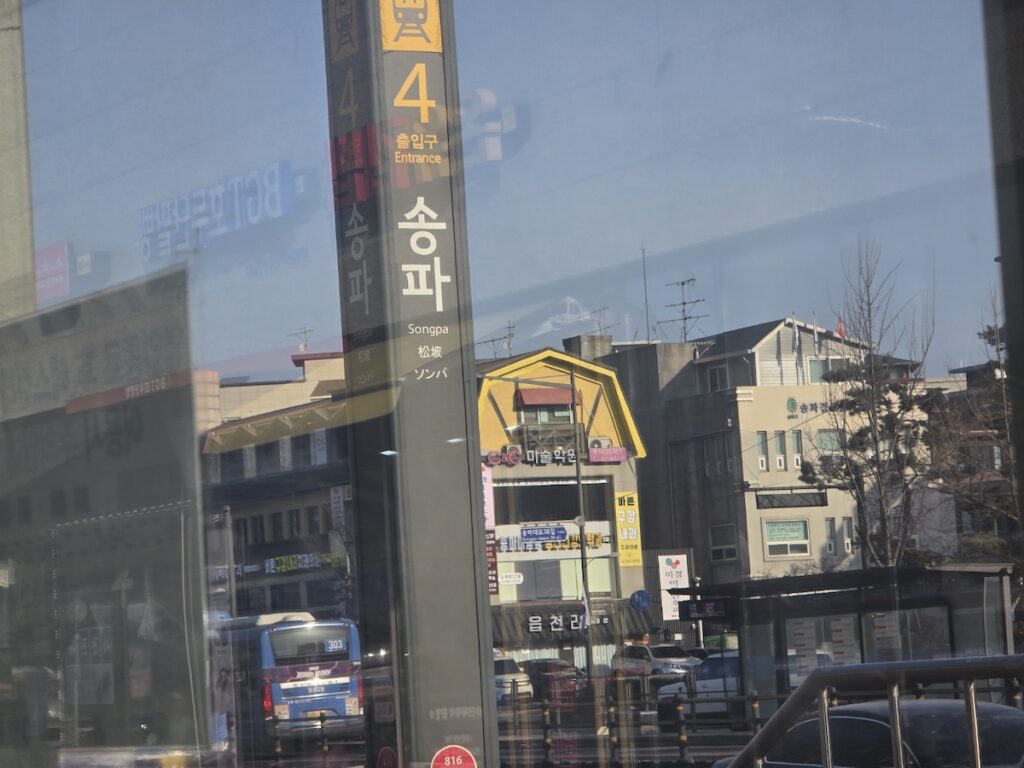
Seoul transportation guide is one of the first things foreigners need before exploring the city, because Seoul becomes much easier once you understand the basic system: subway, bus, taxi, transit cards, and long-distance trains.
At first, the city can feel overwhelming. There are subway lines in different colors, buses with different colors, airport trains, express terminals, taxis, KTX stations, SRT stations, and Korean navigation apps that may work better than the apps you use back home.
But the good news is this: you do not need to understand everything on your first day.
For most visitors, the basic rule is simple. Use the subway for most city travel, buses for local routes the subway does not cover, taxis when you have luggage or travel late at night, and KTX, SRT, or express buses when leaving Seoul for another city.
This guide gives you the big picture of how transportation in Seoul works, so you can move around with less stress and choose the right option for each situation.
Quick Answer: How to Get Around Seoul
For most foreigners, the easiest way to get around Seoul is to use the subway with a transit card. The subway is reliable, well-connected, and easier to understand than buses if you are new to the city.
Buses are useful once you understand routes and stops. Taxis are helpful for luggage, late-night travel, or short door-to-door trips. For long-distance travel, KTX, SRT, and express buses connect Seoul with other parts of Korea.
| Transport | Best For | What Foreigners Should Know |
|---|---|---|
| Subway | Most city travel | Reliable, English signs, easy with a transit card |
| Bus | Local neighborhoods and routes subway misses | Tap when boarding and usually when getting off |
| Taxi | Luggage, late night, door-to-door travel | Use Kakao T if possible |
| AREX | Incheon Airport to Seoul | Useful for Seoul Station, Hongdae, and airport routes |
| Airport limousine bus | Hotels and major districts | Comfortable if your hotel is near a stop |
| KTX | Fast intercity travel | Often uses Seoul Station or Yongsan Station |
| SRT | Fast trains from Suseo | Useful for Gangnam, Jamsil, and southeast Seoul |
| Express bus | Intercity trips | Often cheaper and useful for cities not served well by trains |
| Transit card | Subway and bus payment | T-Money or compatible cards make travel easier |
If you remember only one thing, remember this: get a transit card, use Naver Map or KakaoMap, and check your route before entering the station or bus stop.
Start With a Transit Card
Why a Transit Card Makes Seoul Easier
Before you think about subway lines or bus routes, you should understand the transit card.
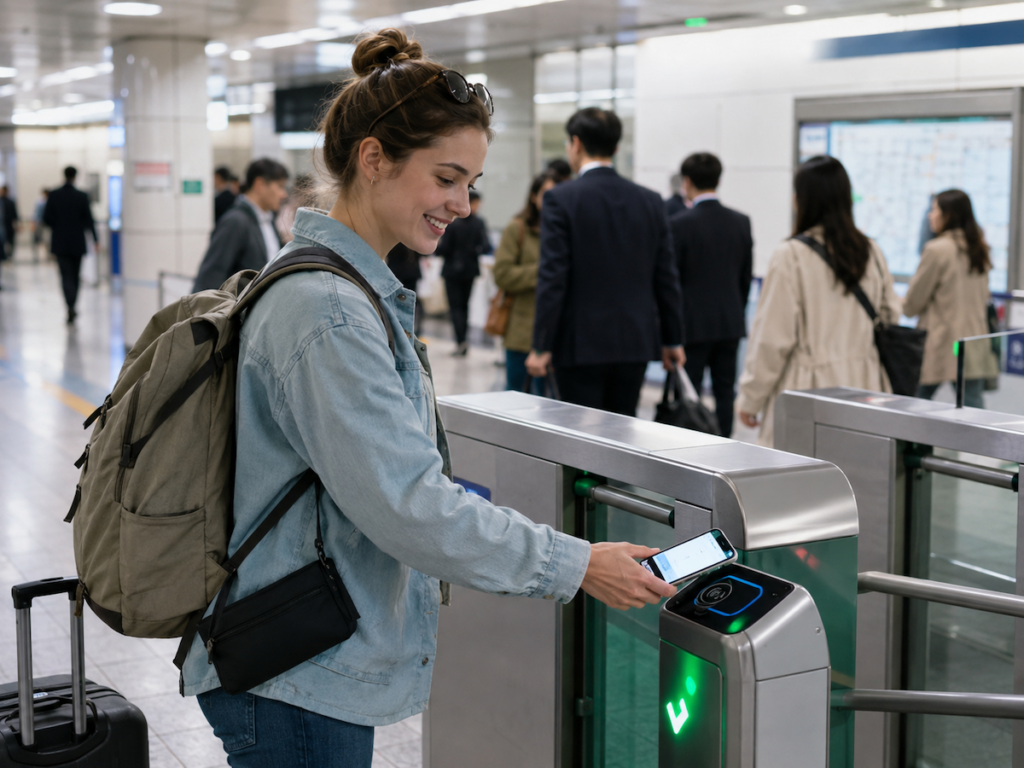
In Seoul, most people do not buy a single ticket every time they ride. They use a rechargeable transportation card, such as T-Money or a compatible transit card. You tap the card when entering the subway, exiting the subway, boarding a bus, and in many cases getting off a bus.
For first-time visitors, this is one of the easiest ways to reduce stress.
You do not need to calculate every fare manually. You do not need to buy a paper ticket each time. You simply load money onto the card and tap as you travel.
Where to Buy and Recharge It
You can usually buy and recharge transit cards at convenience stores, subway stations, and some airport locations. Convenience stores such as CU, GS25, 7-Eleven, and Emart24 are often the easiest places for travelers.
When recharging, cash may be useful. Some machines or stores may not accept every foreign-issued card for transit card top-ups, so it is smart to keep a little Korean cash with you.
Why Tapping Matters
Seoul’s transit system uses transfer discounts between subway and buses. To receive the correct fare and transfer benefits, you need to tap properly.
For the subway, tap when you enter and exit.
For buses, tap when you board. In many cases, you should also tap when you get off, especially if you plan to transfer or want the fare calculated correctly.
This small habit matters. Forgetting to tap out can affect your fare or transfer.
Seoul Subway: The Easiest Option for First-Time Visitors
Why the Subway Is Usually the Best Starting Point
The Seoul subway is usually the safest and easiest transportation option for first-time visitors. It connects major areas such as Myeongdong, Hongdae, Gangnam, Jamsil, Seoul Station, Dongdaemun, Yeouido, Itaewon, and many university neighborhoods.
The biggest advantage is predictability.
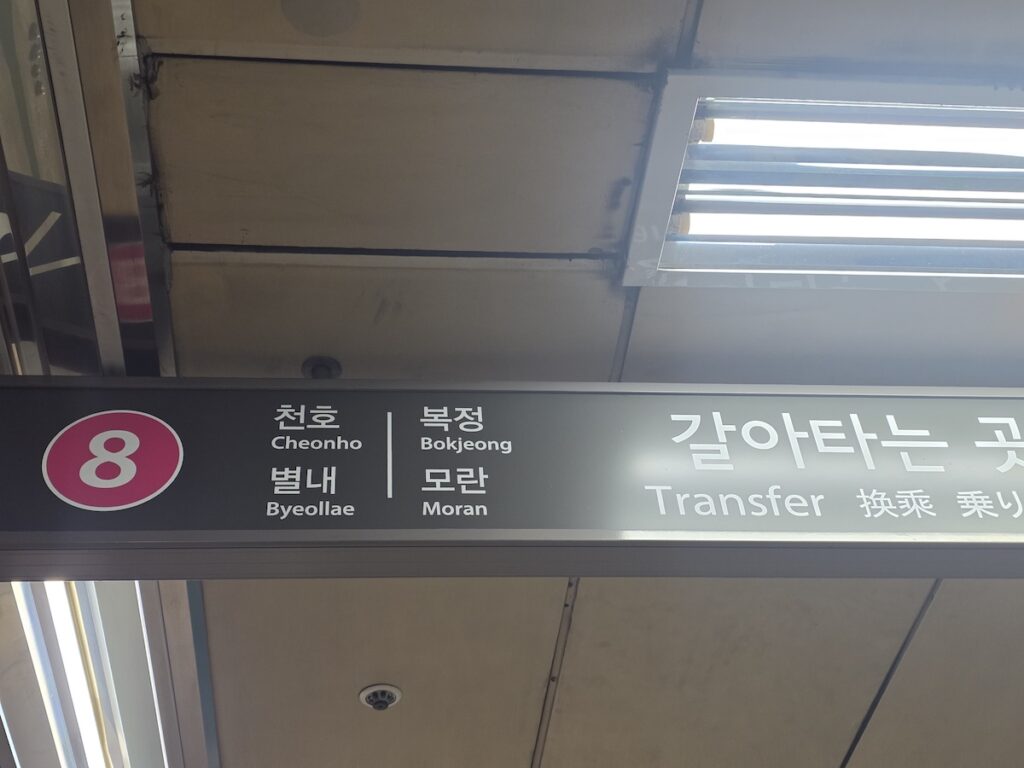
You can see the line color, station name, transfer station, and direction. Many signs include English, and station announcements are often made in Korean and English.
If you are nervous about taking buses in a foreign city, start with the subway.
What Can Still Feel Confusing
The subway is easy once you understand it, but the first few rides can still feel confusing.
The most common problems are:
- choosing the wrong direction
- entering the wrong side of the platform
- underestimating long transfer walks
- exiting from the wrong exit number
- traveling during rush hour with luggage
- assuming every station is small and simple
Some Seoul stations are huge. Seoul Station, Gangnam Station, Express Bus Terminal Station, Jamsil Station, Hongik University Station, and Sadang Station can feel complicated if you are not used to them.
The exit number matters. If a map tells you to use Exit 6, do not randomly use Exit 1 just because it is closer. You may end up on the wrong side of a large intersection.
When the Subway Is Not Ideal
The subway is not always the best choice.
It can be uncomfortable with heavy luggage during rush hour. Some transfers are long. Late at night, the last train may end earlier than you expect. Some stations have stairs or crowded escalators.
If you are traveling with suitcases, children, elderly family members, or after midnight, a taxi or airport bus may be easier.

Seoul Buses: Useful, But Harder at First
Why Buses Are Worth Learning
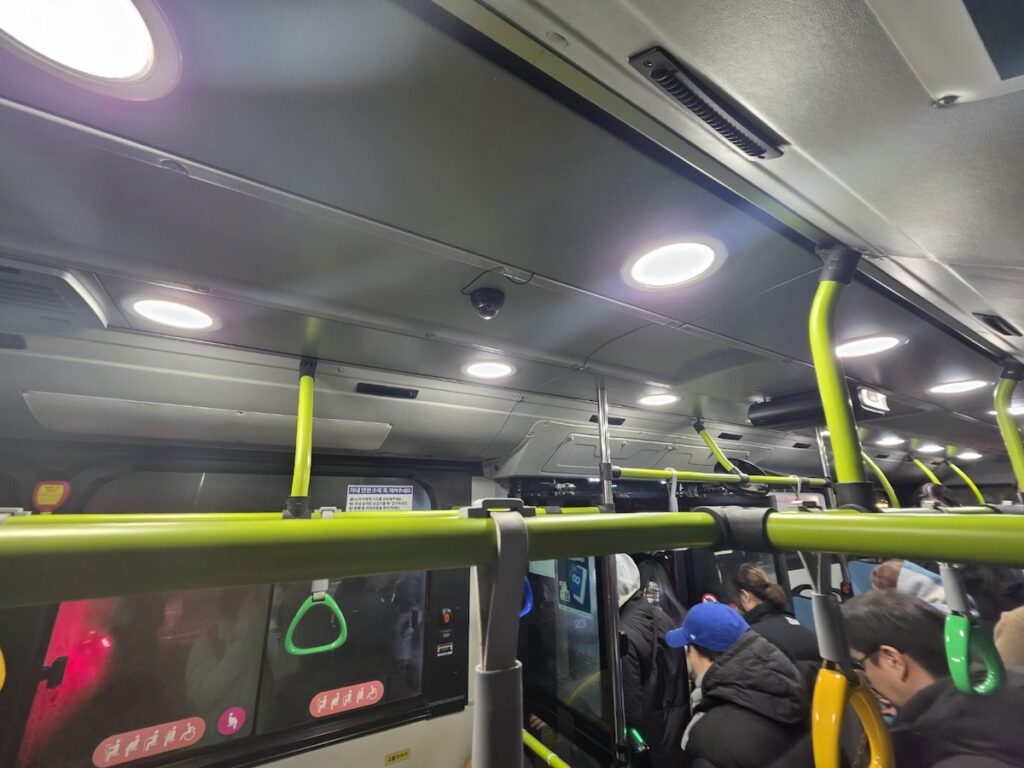
Seoul buses can be extremely useful. They go into neighborhoods that subway lines may not cover directly, and they can sometimes be faster for short or local trips.
Buses are especially helpful in hilly neighborhoods, residential areas, university districts, and places where the subway station is far from your final destination.
But for first-time visitors, buses can feel harder than the subway.
You need to know the correct bus stop, direction, route number, and when to get off. Bus stops with the same name may exist on opposite sides of the road, and taking the right bus in the wrong direction is an easy mistake.
Bus Colors in Seoul
Seoul buses use colors to show their general function.
| Bus Color | General Meaning |
|---|---|
| Blue | Main routes connecting major areas |
| Green | Local routes connecting neighborhoods and subway stations |
| Red | Longer-distance routes, often between Seoul and surrounding cities |
| Yellow | Circulation routes in certain districts |
| Village buses | Short neighborhood routes, often called maeul buses |
You do not need to memorize every bus type. But knowing the colors helps you understand why some buses travel across the city while others only move around one neighborhood.
Tapping In and Out
When you board a bus, tap your transit card. When you get off, tap again.
This is especially important if you are transferring to another bus or subway. Tapping out helps the system calculate the correct fare and transfer discount.
If you are not sure what locals are doing, watch the people in front of you. In Seoul, most passengers tap quickly and move without thinking because it is part of daily life.
Transfers and Fares: What Foreigners Should Understand
Seoul Is Built Around Transfers
One of the best things about Seoul transportation is that the system is designed around transfers.
You can often move from subway to bus, bus to subway, or bus to bus without paying a completely separate full fare each time, as long as you use the same transit card and follow the transfer rules.
This is one reason a transit card is better than paying separately each time.
Fares Can Change
Transportation fares in Seoul can change over time, so it is better not to rely only on old blog posts for exact prices. Before traveling, check current fares through official transportation websites, station information, or reliable local apps.
For everyday travel, the exact amount is usually less important than understanding the system:
- subway and bus fares are generally affordable
- longer distances can cost more
- transfer discounts depend on proper card use
- taxis are much more expensive than public transit
- airport routes cost more than ordinary subway or bus rides
- long-distance trains and buses vary by destination and seat type
Why Cash Is Less Convenient
Some buses may not accept cash, and even where cash is possible, it is usually less convenient. Foreign travelers should not rely on cash alone for public transportation in Seoul.
A transit card makes the system smoother and helps you avoid small problems at the moment you need to move quickly.
Taxis in Seoul: When They Are Worth Using
When a Taxi Makes Sense
Taxis in Seoul are useful, but they should not be your default transportation for every trip.
Use a taxi when:
- you have heavy luggage
- you are traveling late at night
- your destination is far from a subway station
- you are with family or a group
- it is raining heavily
- you are going to a hospital, hotel, or airport bus stop
- you are too tired to handle transfers
For short trips, taxis can be convenient. For long trips across the city during traffic, they can become slow and expensive.
Use Kakao T If You Can
Many locals use taxi apps, especially Kakao T. It can help you set a destination, reduce language problems, and call a taxi more easily.
If you are using a taxi without an app, it helps to show the destination in Korean on your phone. Hotel names, building names, and subway station exits are useful.
Do not assume every taxi driver will understand English pronunciation of a place name. Even famous places can be misunderstood if the pronunciation is different from Korean.
Late-Night Taxi Reality
Late at night, taxis can be harder to catch in busy areas. After the subway closes, demand increases around nightlife districts, stations, and office areas.
If you need to travel late, plan ahead. Check the last train time, consider night buses if available, or use a taxi app before the streets become crowded.
Airport Transportation: AREX, Bus, or Taxi?
Incheon Airport to Seoul
Incheon Airport is not in central Seoul, so you need to choose your airport transfer carefully.
The most common options are:
- Airport Railroad Express, often called AREX
- all-stop airport train
- airport limousine bus
- taxi
- private transfer
The best option depends on your luggage, hotel location, arrival time, budget, and comfort level.
Airport Railroad
The Airport Railroad is useful if you are going to Seoul Station, Hongdae, or areas connected easily by subway. It can be efficient and predictable.
However, if your hotel is far from a subway station or you have heavy luggage, the transfer after the train may be tiring.
Airport Limousine Bus
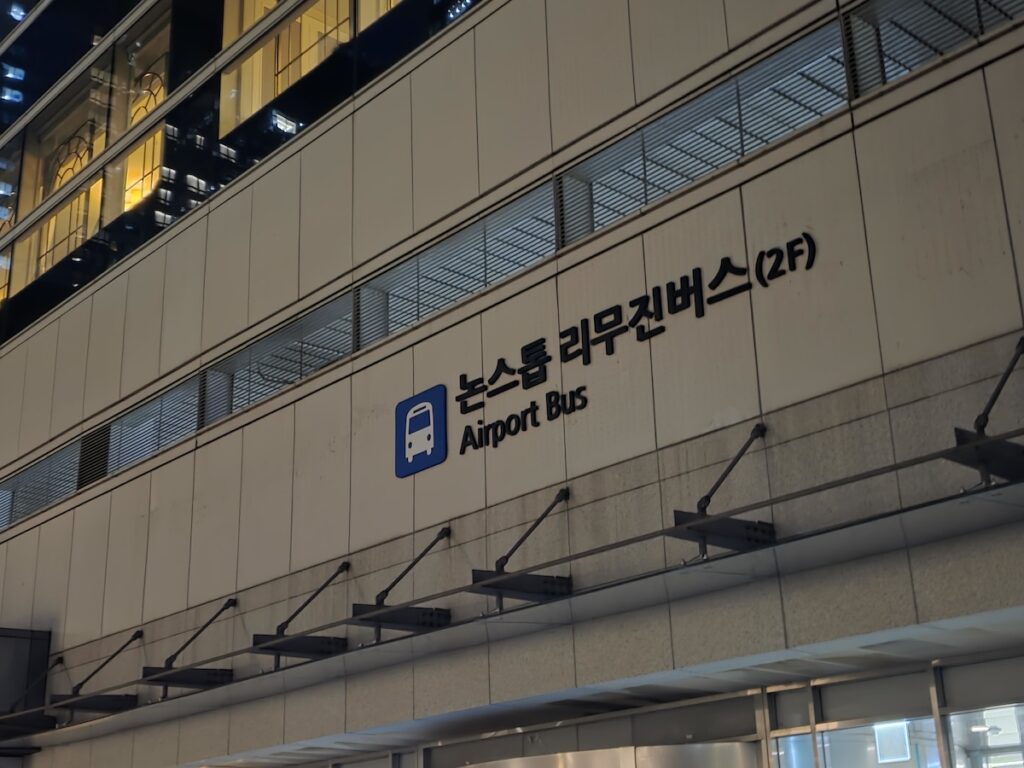
Airport limousine buses are comfortable and useful if your hotel is near a bus stop. They are often easier than carrying luggage through several subway transfers.
The downside is that travel time can depend on traffic.
Taxi or Private Transfer
A taxi or private transfer is the easiest option if you have heavy luggage, arrive late at night, travel with children, or want door-to-door convenience.
It is also the most expensive option.
The practical rule is simple: use the train if your route is easy, use the airport bus if it stops near your hotel, and use a taxi if comfort matters more than cost.
KTX, SRT, and Express Buses for Trips Outside Seoul
Seoul Is Not Only Seoul
Many foreigners use Seoul as a base for trips to Busan, Jeonju, Gangneung, Daegu, Daejeon, Gwangju, Sokcho, or other parts of Korea.
For these trips, you need to understand the difference between KTX, SRT, and express buses.
KTX
KTX is Korea’s high-speed train system. It is often the fastest way to travel between major cities.
But not every KTX route uses the same station in Seoul. Depending on your destination, you may need Seoul Station, Yongsan Station, or another major station.
This is one of the most common mistakes foreign travelers make. They assume “Seoul train station” means one place, but Korea’s long-distance train system is more divided than that.
SRT
SRT is another high-speed train system that uses Suseo Station in southeast Seoul.
If you are staying near Gangnam, Jamsil, Songpa, or Suseo, SRT may be more convenient than going all the way to Seoul Station. But if you are staying in Myeongdong, Hongdae, Jongno, or near Seoul Station, KTX may be easier.
Express Buses
Express buses and intercity buses are often cheaper than high-speed trains and can be useful for destinations that are not directly served by KTX or SRT.
Seoul has several major bus terminals, including Express Bus Terminal, Seoul Nambu Terminal, and Dong Seoul Terminal. The correct terminal depends on your destination.
Do not assume every bus leaves from the same place.
Best Apps for Seoul Transportation
Google Maps Is Not Always Enough
Many foreigners are used to relying on Google Maps, but in Korea, local apps are often more useful for routes, transit details, walking directions, and real-time information.
Google Maps can still help in some situations, but for everyday navigation in Seoul, Naver Map and KakaoMap are usually more reliable.
Naver Map
Naver Map is widely used in Korea and is helpful for subway, bus, walking routes, driving routes, business names, and addresses.
It can take time to get used to, but it is worth learning if you will stay in Korea for more than a few days.
KakaoMap
KakaoMap is another strong option for local navigation. Some users prefer its interface or route suggestions.
Kakao T
Kakao T is useful for taxis and some mobility services. If you plan to use taxis in Seoul, it is worth setting up before you actually need it.
Korail and SRT Apps or Websites
For long-distance trains, use the official Korail or SRT channels when possible. Third-party information can be useful, but train schedules, seat availability, and station details should be checked carefully.
Common Mistakes Foreigners Make
Assuming One App Solves Everything
No single app solves every transportation problem in Seoul. You may use Naver Map for routes, Kakao T for taxis, Korail for KTX, SRT for SRT, and airport websites or hotel information for airport buses.
This can feel annoying at first, but it becomes normal after a few days.
Taking the Subway in the Wrong Direction
This happens often. Always check the final direction, not only the line color.
Two platforms on the same line can take you in opposite directions. If you enter the wrong side, you may need to walk around or exit and re-enter.
Ignoring Exit Numbers
Exit numbers matter in Seoul.
A large station may have many exits, and the wrong exit can put you several blocks away from your destination. Always check the exit number in your navigation app before leaving the station.
Forgetting to Tap Off the Bus
Do not forget to tap when leaving a bus, especially if you are transferring. This is one of the easiest mistakes to make when you are new.
Carrying Heavy Luggage During Rush Hour
Avoid rush hour with large suitcases if possible. Subway cars and station corridors can become extremely crowded.
If you arrive during peak commuting time, consider an airport bus or taxi if your budget allows.
Choosing the Wrong Long-Distance Station
For KTX and SRT, always check the station before booking. Seoul Station, Yongsan Station, and Suseo Station are not interchangeable.
A ticket from the wrong station can create unnecessary stress.
Assuming Taxis Are Always Faster
Taxis are comfortable, but they are not always faster. Seoul traffic can be heavy, especially during commuting hours, rainy days, weekends, and around major events.
Sometimes the subway is faster even if it feels less comfortable.
Related Seoul Transportation Guides
Use this section as a hub for deeper guides. Keep the buttons short and practical.
Final Thoughts: Seoul Transportation Is Easier Once You Know the System
Seoul can feel complicated at first, but the transportation system becomes much easier once you understand the basic roles.
Use the subway for most city travel. Use buses when the subway does not take you close enough. Use taxis when you have luggage, travel late, or need door-to-door convenience. Use AREX or airport buses for airport transfers. Use KTX, SRT, or express buses when leaving Seoul for another city.
The real key is not memorizing every route. It is knowing which tool fits which situation.
For a first-time visitor, the most useful setup is simple: get a transit card, install Naver Map or KakaoMap, learn your nearest subway station, and check exit numbers before walking above ground.
Once those habits become familiar, Seoul stops feeling like a maze and starts feeling like one of the easiest big cities in Asia to move around.