If you need to know how to call 119 in Korea, dial 119 immediately for an ambulance, fire emergency, or rescue situation, and stay on the line even if you do not speak Korean.
Emergencies feel harder in a foreign country. You may not know the local emergency number, you may not be sure whether the operator can understand English, and you may struggle to explain your location in a city where addresses, building names, and subway exits can all matter.
In Korea, 119 is the emergency number for fire, ambulance, and rescue services. It is different from 112, which is used for police emergencies. If someone collapses, there is a fire, you witness a serious accident, or you need urgent rescue help, 119 is the number to call.
This guide is for foreign travelers, expats, students, and long-term residents who want a clear, practical explanation of what happens when you call 119 in Korea. You will learn what to say, how to ask for help in English, how to give your location, and what to expect if an ambulance takes you to a hospital.
In a real emergency, you do not need perfect Korean. You need to stay calm, call the right number, give the clearest location you can, and follow the operator’s instructions. This guide will help you understand that process before you ever need it.
1. What Is 119 in Korea?
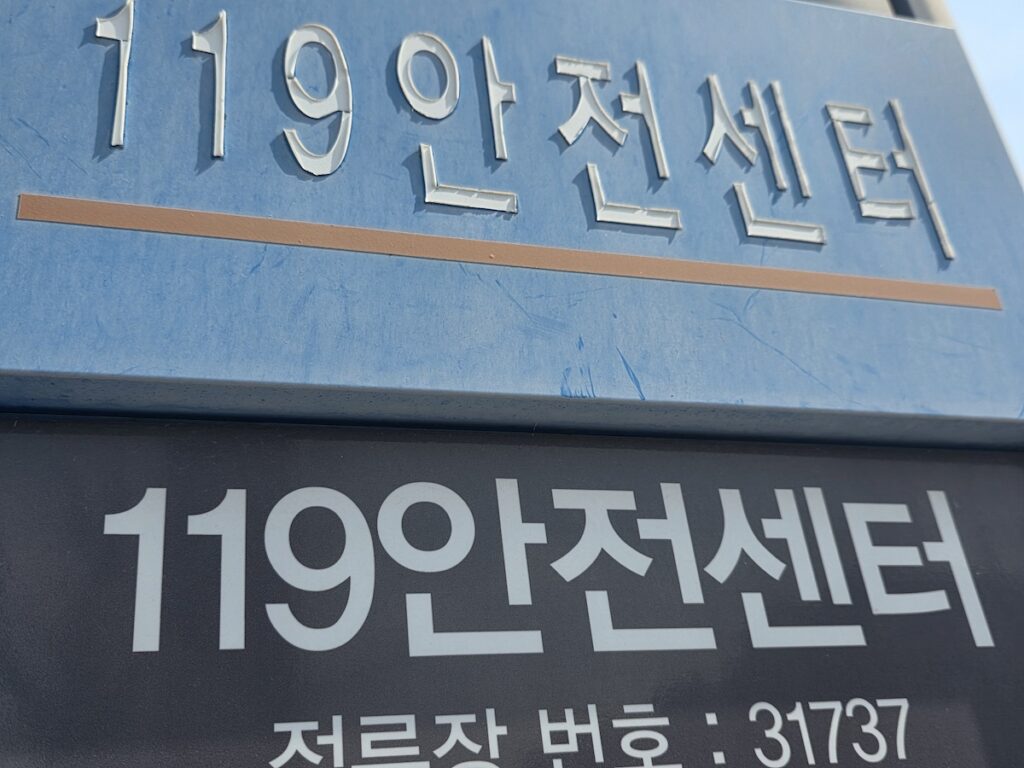
In Korea, 119 is the emergency number for fire, ambulance, and rescue services. If someone suddenly collapses, there is a fire, you witness a serious accident, or you need urgent rescue help, 119 is the number to call.
For police emergencies, Korea uses a different number: 112. This means you should think of 119 as the number for fire, medical emergency response, and rescue, while 112 is for crimes, violence, theft, or immediate police help.
For foreigners, this distinction can be confusing at first because emergency numbers vary by country. In the United States, many people are used to calling 911 for almost everything. In Korea, the situation is more divided.
When You Should Call 119
Call 119 in Korea for urgent situations such as:
- someone is unconscious or having difficulty breathing
- chest pain, stroke symptoms, severe allergic reactions, or serious injury
- a fire, smoke, gas leak, or dangerous building situation
- a traffic accident with injuries
- rescue situations, such as being trapped, injured on a mountain trail, or needing urgent help in a dangerous place
You do not need to decide whether your situation is “serious enough” perfectly. If there is immediate danger to life, health, or safety, call 119 and explain what is happening as clearly as you can.
When You Should Not Call 119
Do not use 119 for general medical questions, pharmacy searches, minor symptoms, or non-urgent hospital recommendations.
For non-emergency medical help, hospital information, or medical guidance for foreigners, 1339 may be more appropriate. For tourist help, interpretation, or general travel assistance, 1330 can also be useful.
The simplest way to remember it is this:
| Number | Use It For | Simple Meaning |
|---|---|---|
| 119 | Ambulance, fire, rescue | Immediate emergency help |
| 112 | Police | Crime, violence, danger |
| 1339 | Medical information | Hospital or medical guidance |
| 1330 | Tourist help | Travel support and interpretation |
Official Seoul and Korea tourism resources also list 119 for ambulance/fire emergencies, 112 for police, and 1339 for medical assistance, so these are the numbers foreigners should know before traveling or living in Korea.
2. Is Calling 119 Free in Korea?
One of the most common questions foreigners have is whether calling 119 or using a 119 ambulance in Korea costs money.
In general, calling 119 is free, and the public 119 ambulance service is also described by Seoul local government information as free. If you need urgent ambulance transport, you should not delay your call because you are worried about the dispatch fee.
However, this does not mean the entire emergency experience is free.
The Ambulance Ride and the Hospital Bill Are Different
The important distinction is this:
| Part of the Emergency | What to Expect |
|---|---|
| Calling 119 | Free |
| Public 119 ambulance dispatch/transport | Generally free |
| Emergency room consultation | Not free |
| Tests, scans, medication, procedures | Not free |
| Hospital admission | Not free |
| Private ambulance services | May involve separate costs |
If a 119 ambulance takes you to a hospital, the ambulance ride may be free, but the hospital treatment is billed separately. Foreigners without Korean National Health Insurance or private travel insurance may need to pay significant out-of-pocket costs depending on the hospital, treatment, and severity of the case.
What Foreigners Should Prepare
If you are traveling or living in Korea, keep these ready on your phone:
- a photo of your passport information page
- your hotel or home address in English and Korean
- your travel insurance or private insurance details
- an emergency contact
- a credit card that can be used for hospital payment
Many hospitals may ask for payment at the hospital and then give you documents that you can later submit to your insurance provider. The exact process depends on your insurance policy and the hospital, so it is better to check your coverage before an emergency happens.
A More Practical Way to Think About Cost
Do not think of 119 as the expensive part.
Think of 119 as the emergency response system that gets help moving.
The possible cost usually begins after you arrive at the hospital: examination, treatment, medication, scans, procedures, or admission.
So the safest rule is:
Call 119 first in a real emergency. Worry about insurance and billing after immediate danger is handled.
3. Can You Call 119 in English?
One of the biggest worries for foreigners in Korea is the language barrier. In an emergency, you may be afraid that your Korean is not good enough, or that you will not know how to explain what is happening.
The most important thing to remember is this: do not hang up.
Even if you cannot explain everything perfectly, call 119 and stay on the line. Say the simplest words you can. If you speak English, start with English and speak slowly.
What to Say First
You do not need complicated sentences. Short, clear phrases are better in an emergency.
You can say:
- “Ambulance, please.”
- “Fire.”
- “I need help.”
- “I don’t speak Korean.”
- “English, please.”
- “Someone is unconscious.”
- “Someone is hurt.”
- “There is a car accident.”
- “My location is…”
If you know only one Korean phrase, this can help:
한국어 못해요. 영어 가능해요?
Hangug-eo mot-haeyo. Yeong-eo ganeunghaeyo?
“I don’t speak Korean. Is English possible?”
But even if you cannot say this in Korean, do not delay the call. Use simple English and stay connected.
English Support May Be Arranged
In many emergency situations, interpretation support may be arranged, but you should not assume the call will feel smooth from the first second. There may be a pause, a transfer, or a moment when the dispatcher is trying to understand your situation.
This is why you should stay calm and repeat the most important information:
- what happened
- where you are
- whether someone is breathing
- whether there is fire, smoke, blood, or danger
- your phone number, if asked
Do not worry about speaking perfect English. Emergency calls work best when the information is short and clear.
How to Give Your Location in Korea
Giving your location may be the hardest part of calling 119 in Korea, especially if you are outside, in a taxi, near a subway station, or inside a building with a Korean address.
If you do not know the full address, give any landmark you can.
Useful location details include:
- hotel name
- building name
- subway station name and exit number
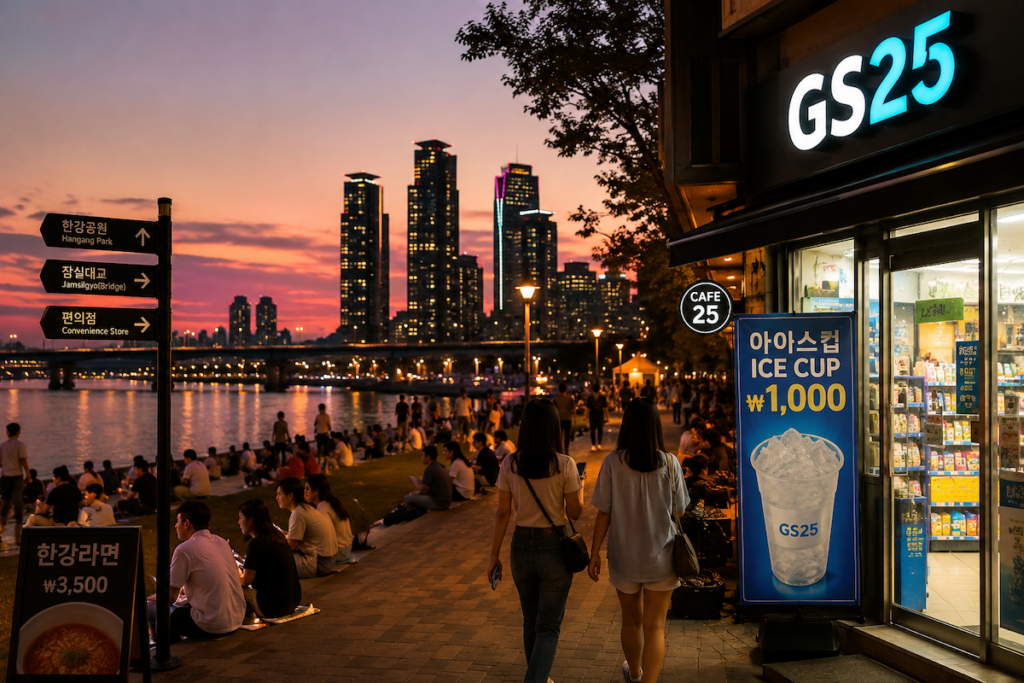
- nearby convenience store, such as CU, GS25, or 7-Eleven
- café or restaurant name
- road name address from Naver Map or KakaoMap
- floor number and room number
- apartment complex name and building number
For example, you can say:
“I am near Hongik University Station, Exit 9.”
“I am inside Lotte World Mall.”
“I am at GS25 near Seoul Station.”
“I am in a hotel near Myeongdong Station.”
If possible, open Naver Map, KakaoMap, Google Maps, or your hotel booking app and read the address shown on your phone. A Korean address screenshot can be very useful in an emergency.
A Simple Emergency Script for Foreigners
If you panic, use this simple order:
“Ambulance, please.”
“I don’t speak Korean.”
“My location is…”
“Someone is unconscious.”
“Please help.”
For a fire:
“Fire.”
“I don’t speak Korean.”
“My location is…”
“There is smoke.”
“Please help.”
For an accident:
“Car accident.”
“Someone is hurt.”
“My location is…”
“Please send help.”
This may sound basic, but in a real emergency, basic is good. The goal is not to explain everything perfectly. The goal is to get help moving.
4. What Happens After You Call 119?
After you call 119, the dispatcher will try to understand the emergency, confirm your location, and send the appropriate help. Depending on the situation, this may be an ambulance, fire response, rescue team, or another emergency unit.
For foreigners, the process may feel stressful because you may not know what is happening in Korean. But the general steps are simple.
Step 1: The Dispatcher Asks What Happened
The dispatcher needs to know the type of emergency.
They may try to find out:
- Is it a medical emergency?
- Is there a fire?
- Is someone trapped?
- Is the person conscious?
- Is the person breathing?
- Is there bleeding?
- Is the scene still dangerous?
Answer as simply as possible.
If you do not know medical words, describe what you see:
- “He is not waking up.”
- “She cannot breathe.”
- “There is a lot of blood.”
- “He fell down.”
- “There is smoke.”
- “Someone is trapped.”
Step 2: You Give Your Location
The dispatcher will need your location before help can arrive. This is why it is useful to prepare your Korean address in advance if you are staying in Korea.
If you are a tourist, keep your hotel name and address saved on your phone. If you are an expat or student, save your home address in both English and Korean.
A subway exit number can also be very helpful in Seoul. For example, “Gangnam Station Exit 10” is often clearer than trying to explain a nearby street.
Step 3: Help Is Sent
Once the situation and location are understood, emergency help can be dispatched. If it is a medical emergency, paramedics may arrive and check the patient’s condition.
They may ask questions such as:
- What happened?
- When did it start?
- Does the patient have any medical conditions?
- Is the patient taking medication?
- Does the patient have allergies?
- Is there a passport, ID, or insurance card?
If you are helping someone else, try to keep their passport, ARC, medication, or medical information nearby.
Step 4: The Ambulance May Take You to a Hospital
If the paramedics decide that hospital care is needed, the ambulance may take the patient to an emergency room. The hospital may depend on the patient’s condition, available facilities, location, and emergency response decision.
It is important to understand that arriving by ambulance does not always mean you will be treated immediately for everything. Korean emergency rooms, like emergency rooms in many countries, prioritize patients by severity.
A person with life-threatening symptoms will be treated faster than someone with a less urgent condition.
Step 5: You May Still Need to Wait at the ER
Even if you arrive by ambulance, you may wait if your condition is not considered critical. This can be frustrating, especially if you are in pain or scared, but emergency rooms must treat the most serious cases first.
If you do not understand what is happening, ask for language help. You can say:
- “English, please.”
- “Can I get an interpreter?”
- “I don’t understand.”
- “Please explain slowly.”
If you have a Korean-speaking friend, coworker, hotel staff member, or school contact who can help by phone, contact them if the situation allows.
5. Hospital Bills, Insurance, and What Foreigners Should Know
Calling 119 and getting emergency help are only one part of the process. If you are taken to a hospital, you may also need to deal with registration, payment, insurance documents, and follow-up treatment.
This is where many foreigners feel confused.
The Ambulance and the Hospital Bill Are Separate
The public 119 ambulance service is generally understood as free for emergency transport, but hospital treatment is not free.
Once you arrive at the emergency room, the hospital may charge for:
- consultation
- emergency room fees
- blood tests
- X-rays, CT scans, or other imaging
- medication
- procedures
- observation
- admission
- specialist treatment
The total cost depends on the hospital, your condition, the tests performed, your insurance status, and whether you are covered by Korean National Health Insurance.
If You Have Korean National Health Insurance
Foreign residents who are enrolled in Korean National Health Insurance should bring their Alien Registration Card or Residence Card if possible. Hospitals can usually check insurance status through your identification information.
National Health Insurance can reduce many medical costs, but it may not cover everything. Some treatments, tests, private rooms, or optional services may still create additional charges.
If you are unsure, ask the hospital billing desk what is covered and what is not.
You can say:
“Is this covered by National Health Insurance?”
“Can I get an estimate?”
“Can I receive the receipt and medical documents?”
If You Are a Tourist or Not Covered by NHI
If you are a tourist or a foreigner without Korean National Health Insurance, you may need to pay the hospital directly and then claim reimbursement from your travel insurance provider later.
Before leaving the hospital, ask for documents for your insurance claim.
Useful documents may include:
- detailed receipt
- proof of payment
- medical certificate or doctor’s note
- diagnosis document
- treatment record
- prescription record, if medication was given
If you need English documents, ask whether the hospital can provide them. Not every document may be available in English immediately, and some hospitals may charge a small fee for official certificates or translated documents.
Prepare Insurance Information Before You Need It
Before traveling to Korea, check your travel insurance carefully. Do not only check whether you “have insurance.” Check what it actually covers.
Important questions include:
- Does it cover emergency room treatment?
- Does it cover ambulance-related costs if private transfer is needed?
- Does it cover hospitalization?
- Does it cover pre-existing conditions?
- Does it require you to contact the insurer before or after treatment?
- What documents are needed for reimbursement?
- Is there a 24-hour emergency assistance phone number?
Save your insurance policy number, emergency assistance number, and claim instructions on your phone. It is also useful to keep a screenshot offline in case you do not have internet access.
Do Not Delay Calling 119 Because of Cost
In a real emergency, do not delay calling 119 because you are worried about money.
If someone cannot breathe, is unconscious, has severe chest pain, shows signs of stroke, has serious bleeding, or is in immediate danger, call 119 first.
Billing and insurance can be handled later. The first priority is safety and emergency care.