Jeonju Makgeolli Street is one of the easiest ways to understand why Jeonju is known as one of Korea’s strongest food cities.
At first, it may not look dramatic. You walk into a local makgeolli house, sit at a table, order a kettle of cloudy rice wine, and wait. Then the table begins to change. Side dishes arrive one by one: pancakes, tofu, kimchi, fish, soup, vegetables, pork, seasonal anju, or whatever that house is known for that night.
For many foreigners, the surprise is not only the alcohol. It is the generosity of the table.
In many Western bars, you order drinks and food separately. A beer is a beer. A plate is a plate. In Jeonju, ordering makgeolli can feel like ordering a whole night: food, drink, conversation, and a slow local rhythm built around sharing.
This guide explains how Jeonju Makgeolli Street works, how the kettle and side dish system feels, what to expect, how much it may cost, where to go, and what foreigners should know before visiting.
Quick Answer: What Is Jeonju Makgeolli Street?
Jeonju Makgeolli Street, also called Jeonju Makgeolli Alley, refers to local makgeolli areas in Jeonju where visitors can drink Korean rice wine with generous side dishes. The most famous area is Samcheon-dong Makgeolli Street, a roughly 200-meter stretch of makgeolli bars along Geomasan-ro in Wansan-gu, Jeonju. Visit Korea describes Samcheon-dong Makgeolli Street as a line of makgeolli bars that developed in a city once known for producing some of Korea’s best makgeolli.
| Question | Short Answer |
|---|---|
| Main experience | Makgeolli with many side dishes |
| Best for | Groups, food lovers, local nightlife |
| Best time | Evening or dinner time |
| Solo-friendly? | Possible, but better with 2–4 people |
| Alcohol type | Makgeolli, Korean rice wine |
| Food style | Jeon, tofu, stews, fish, kimchi, pork, seasonal anju |
| Language | Korean menus are common, so translation apps help |
| Nearby plan | Combine with Jeonju Hanok Village, Nambu Market, or a local stay |
The easiest way to understand it is this: you are not going only for a drink. You are going for the table.
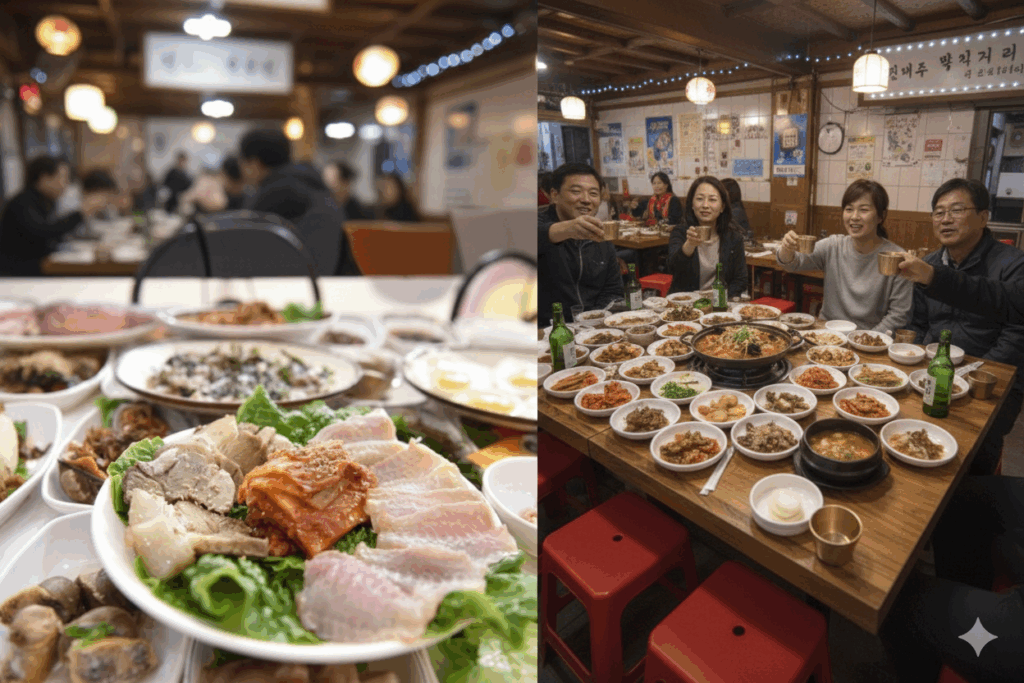
1. Jeonju Makgeolli Is About the Table, Not Just the Drink
Makgeolli itself is easy to find in Korea. You can buy it at convenience stores, order it at Korean restaurants, or drink it with pajeon on a rainy day.
Jeonju Makgeolli Street is different because the drink is only one part of the experience.
The real appeal is the table system. In many Jeonju makgeolli houses, ordering a kettle of makgeolli also brings out a spread of anju, or drinking food. As your group orders more makgeolli, additional dishes may come out. The exact system depends on the restaurant, price, group size, and day, but the general idea is abundance.
Jeonju’s official tourism site explains that Samcheon-dong is considered the original makgeolli alley and was designated as a Jeonju Future Heritage. It also notes that the alley has more than 20 makgeolli houses along a 200-meter street and is known for generous side dishes served with makgeolli.
That is why this is not simply a drinking spot. It is a local dining format.
2. How the Kettle and Side Dish System Works
In many Jeonju makgeolli restaurants, you order makgeolli by the kettle or pot. When the first kettle arrives, the table usually begins with a set of side dishes.
If your group orders more, the table may become fuller.
The exact rule is not identical everywhere. Some restaurants have set menus. Some bring a basic spread with the first order and additional dishes with later kettles. Some restaurants may offer different price levels or menu styles.
But the basic Jeonju makgeolli experience usually feels like this:
| What You Order | What Often Happens |
|---|---|
| First kettle of makgeolli | Basic side dishes and house anju arrive |
| Second kettle | More dishes may be added |
| Third kettle or more | The table may become fuller, depending on the restaurant |
| Group order | Usually works better than visiting alone |
This is the part foreigners often remember most. In many countries, alcohol and food are separate transactions. In Jeonju makgeolli houses, the drink and food can feel connected. The night develops as the table develops.
Still, do not expect the exact same system everywhere. The number, quality, and style of side dishes vary by restaurant. Some places may feel generous and old-school. Others may be more menu-based or modern.
The safest mindset is this: expect a shared local food-and-drink experience, not a fixed buffet.
3. What Kind of Food Comes With Makgeolli?
The food served with makgeolli is called anju, which means food eaten with alcohol.
In Jeonju, the anju can be part of the reason people go.
You may see dishes such as:
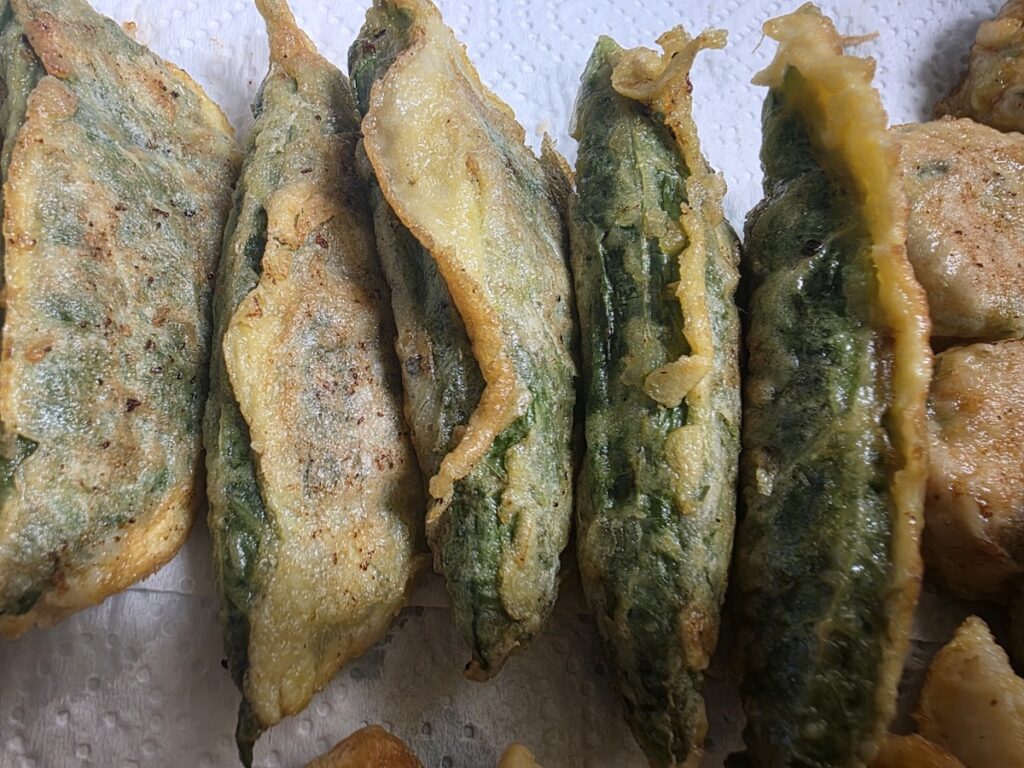
- kimchi pancakes
- tofu
- grilled or braised fish
- bossam-style pork
- stews or soups
- seasonal vegetables
- stir-fried dishes
- jeon
- kimchi
- small seafood dishes
- house specialties
Every restaurant is different, and the exact dishes can change. That unpredictability is part of the fun.
For foreigners, this can feel more generous than ordering a single main dish at a restaurant. But it can also feel confusing because you may not know which dishes are included, which dishes are extra, or how the restaurant’s system works.
If you are unsure, ask before ordering.
Useful Korean phrases:
| Korean | Meaning |
|---|---|
| 막걸리 한 주전자 주세요 | One kettle of makgeolli, please |
| 안주는 포함돼요? | Are side dishes included? |
| 추가 안주는 얼마예요? | How much is extra anju? |
| 이 메뉴는 몇 명 기준이에요? | How many people is this menu for? |
| 덜 맵게 가능해요? | Can it be less spicy? |
Even if you cannot speak Korean well, showing these phrases on your phone can help.
4. Why Foreigners Are Surprised by Jeonju Makgeolli Street
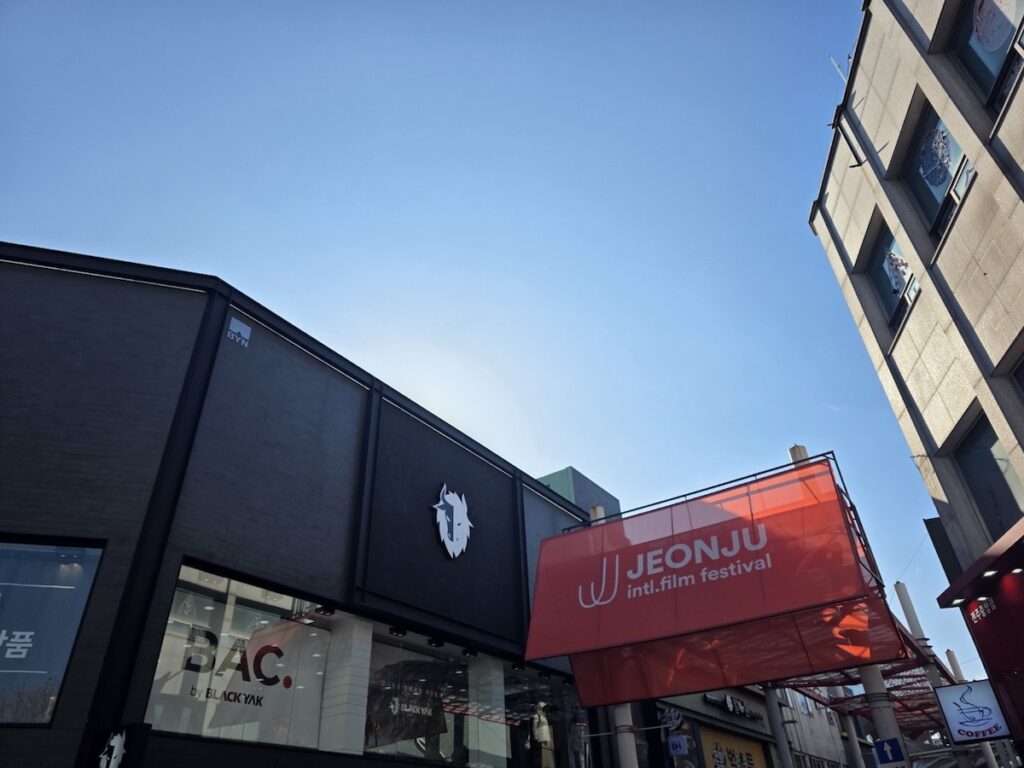
For many foreigners, the surprising part is not that Korea has rice wine. It is that ordering alcohol can create such a full table.
In many Western countries, you choose each item separately. You order one beer, one plate of fries, one main dish, one dessert. The receipt reflects each decision.
In Jeonju makgeolli houses, the experience can feel less individual and more communal. The table belongs to the group. The kettle is shared. The side dishes are shared. The conversation slows down because the meal is not built around one person’s order.
That is why this experience connects well with Korean dining culture.
Korean meals often work through shared dishes, refills, group rhythm, and the question of what everyone will drink together. Jeonju Makgeolli Street turns that into a full evening.
It is not polished fine dining. It is local, social, and sometimes chaotic in the best way.
5. Is There a K-Culture or Celebrity Angle?
Makgeolli has become more visible to international audiences through Korean dramas, variety shows, food travel content, and the wider interest in Korean food culture.
But Jeonju Makgeolli Street is not interesting because a celebrity drank makgeolli once.
It is interesting because the system itself is so Korean.
The real story is not “which idol drank this.” The real story is how one kettle of makgeolli can turn into a table full of food, and how that table becomes a slow social experience.
If K-pop or K-drama introduced you to Korean drinking scenes, Jeonju gives you something more grounded. It shows the local version: not glamorous, not staged, but warm, generous, and built for people sitting together.
6. Where Is Jeonju Makgeolli Street?
The most famous Jeonju makgeolli area is Samcheon-dong Makgeolli Street in Wansan-gu. Visit Korea identifies it as a 200-meter-long line of makgeolli bars along Geomasan-ro Street.
Jeonju’s official tourism site also notes that Jeonju has several makgeolli alleys, including Gyeongwon-dong, Samcheon-dong, Seosin-dong, and Inhu-Ua-dong.
For most first-time foreign visitors, Samcheon-dong is the easiest name to remember because it is widely recognized as the representative makgeolli alley.
Is It Near Jeonju Hanok Village?
It is not usually the same as simply walking around Jeonju Hanok Village. You may need a taxi, bus, or a planned route depending on where you are staying.
If you are staying near Jeonju Hanok Village, it is smart to check the route before dinner and think about your return trip in advance. After drinking, a taxi is usually the simplest option.
7. Best Time to Go and Who Should Go
Jeonju Makgeolli Street works best in the evening, especially around dinner time. This is when the food-and-drink format makes the most sense.
It is usually better with a small group than alone.
Best For
Jeonju Makgeolli Street is best for:
- food lovers
- small groups
- couples who want a local night out
- travelers who want something beyond Hanok Village
- people curious about Korean drinking culture
- visitors who like shared tables and surprise dishes
Not Ideal For
It may not be ideal if:
- you do not drink alcohol
- you strongly prefer choosing every dish yourself
- you are traveling alone and feel uncomfortable in group-style restaurants
- you need full English service
- you dislike noisy local restaurants
- you have strict dietary restrictions
You can still visit if you do not drink much, but the experience is built around makgeolli, so it helps to go with someone who wants to share the table.
How Much Does It Cost?
Prices vary by restaurant, menu type, number of people, and how much makgeolli your group orders.
It is better not to rely on a single fixed price because Jeonju makgeolli houses can operate differently. Some may offer set menus. Some may price by kettle and table spread. Some may have different levels depending on the side dishes.
Before sitting down or ordering multiple rounds, check:
- price per kettle or set
- whether side dishes are included
- whether extra dishes cost more
- whether there is a minimum order
- whether the menu is priced per person or per table
- whether card payment is accepted
A translation app can help, but if possible, ask a staff member directly.
Useful phrase:
이 가격에 안주 포함인가요?
I gagyeoge anju poham-ingayo?
“Are side dishes included in this price?”
Can Foreigners Visit Without Speaking Korean?
Yes, but it helps to prepare.
Jeonju Makgeolli Street is local. Some restaurants may not have English menus, and staff may not speak much English. That does not mean foreigners cannot enjoy it. It just means you should go in with realistic expectations.
Tips:
- use Naver Map or KakaoMap to check recent reviews
- translate the menu with your phone
- go with 2–4 people if possible
- confirm the price before ordering
- ask whether side dishes are included
- avoid ordering too many rounds too quickly
- check your route back before drinking
If language makes you nervous, choose a restaurant with clear menu photos or recent foreign reviews.
Drinking Etiquette and What to Expect
Korean drinking culture is often shared rather than individual.
At a makgeolli table, people usually pour, share, eat, talk, and pace themselves together. You do not need to copy every Korean drinking rule perfectly, but a few simple habits help.
Basic Etiquette
- pour for others if they pour for you
- use two hands when receiving a drink from an older person
- do not pressure anyone to drink more
- pace yourself because makgeolli can be deceptively easy to drink
- eat while drinking
- drink water between rounds
- be respectful if the restaurant is busy
Makgeolli is usually lower in alcohol than soju, but it can still catch up with you because it is easy to drink with food.
Safety, Taxis, and Getting Back
Jeonju is generally manageable for travelers, but you still need a plan after drinking.
Before the night starts, check:
- how far your accommodation is
- whether taxis are easy from the area
- whether your phone has battery
- your hotel name and address in Korean
- whether your group will return together
Do not assume you can easily walk back after several kettles of makgeolli, especially if your stay is not nearby.
If you are staying near Hanok Village or a hotel area, save the address on your phone before dinner. A taxi driver may not understand an English hotel name, so show the Korean address.
What to Do Before or After Makgeolli Street
Jeonju Makgeolli Street is best as part of a slower Jeonju evening, not as the only thing you do.
Before dinner, you can explore:
- Jeonju Hanok Village
- Nambu Market
- local cafés
- traditional streets
- Jeonju food spots
- nearby cultural areas
Visit Korea describes Jeonju as the cultural heart of Jeonbuk State, known for hanok, gastronomy, and traditional arts, with Jeonju Hanok Village containing more than 700 traditional Korean houses.
That makes the city a good place to combine daytime heritage with nighttime food culture.
A simple plan could be:
| Time | Plan |
|---|---|
| Afternoon | Walk around Jeonju Hanok Village |
| Early evening | Rest at your stay or café |
| Dinner | Go to Jeonju Makgeolli Street |
| Late evening | Take a taxi back before you are too tired |
Common Mistakes Foreigners Make
Expecting a Western Bar
Jeonju Makgeolli Street is not a cocktail bar or craft beer pub. It is closer to a shared local dinner built around makgeolli.
Going Alone Without Checking the System
Solo visits are possible, but many makgeolli houses work better for groups. If you go alone, check whether the restaurant has a smaller menu or single-person option.
Thinking All Side Dishes Are Unlimited
The table may be generous, but that does not mean everything is unlimited or free. Ask if you are unsure.
Drinking Too Fast
Makgeolli is smooth and easy to drink with food. Take your time.
Forgetting the Return Trip
Plan your way back before drinking. This is especially important if your accommodation is not close.
Final Thoughts
Jeonju Makgeolli Street is not famous because makgeolli is rare.
It is famous because Jeonju turns makgeolli into a table.
You order a kettle, food arrives, people pour, dishes are shared, and the night begins to slow down. For foreigners, that can feel very different from ordering drinks at a bar. It is less about individual choice and more about a group meal unfolding around alcohol, side dishes, and conversation.
This is why the experience is worth trying if you visit Jeonju and want more than a daytime Hanok Village walk.
Go with realistic expectations. Check the price. Bring friends if you can. Use a translation app if needed. Eat slowly, drink slowly, and pay attention to the table.
Because in Jeonju, makgeolli is not just what you drink.
It is how the night is served.