1. Introduction: Why Food Waste is the Biggest Challenge for Expats
Living in Korea is a dream for many, but the reality of daily chores can be a nightmare—especially when it comes to trash. In most countries, food scraps go into a single bin. In Korea, however, Food Waste (음식물 쓰레기 – Eumsingmul Sseuregi) is treated as a valuable resource for animal feed and fertilizer.
Getting this wrong isn’t just a minor mistake; it can lead to angry neighbors, unpleasant smells, and heavy fines (과태료) ranging from 100,000 KRW to 300,000 KRW. As someone who has navigated the Seoul waste system for over 10 years, I’ve compiled everything you need to know to handle your kitchen waste like a seasoned local.
2. The Golden Philosophy: “Can an Animal Eat This?”
The most critical part of the Korean system is the classification. The Korean government uses a simple logic: Is it biodegradable and safe for animals? If the answer is no, it goes into the General Waste (일반 쓰레기) bag.
The Definitive Classification Table (Must-Read)
| Category | Food Waste (음식물) | General Waste (일반) |
| Fruits | Soft peels (apple, banana, orange) | Hard shells (pineapple, coconut, durian) |
| Vegetables | Leafy scraps, carrot ends | Onion/garlic skins, corn husks, roots |
| Meat & Fish | Leftover cooked meat, fish flesh | Bones (beef, pork, chicken), fish bones |
| Shells/Seeds | None | Eggshells, clam/oyster shells, peach pits |
| Others | Bread, rice, soft leftovers | Tea bags, coffee grounds, medicine |
Marcus’s Pro Tip: If you are unsure, ask yourself: “Would a pig be able to digest this comfortably?” If it’s a hard bone or a salty shell, the answer is no.
3. Deep Dive into the Three Disposal Systems
Korea doesn’t have a single way to throw away food. Your method depends entirely on your housing type.
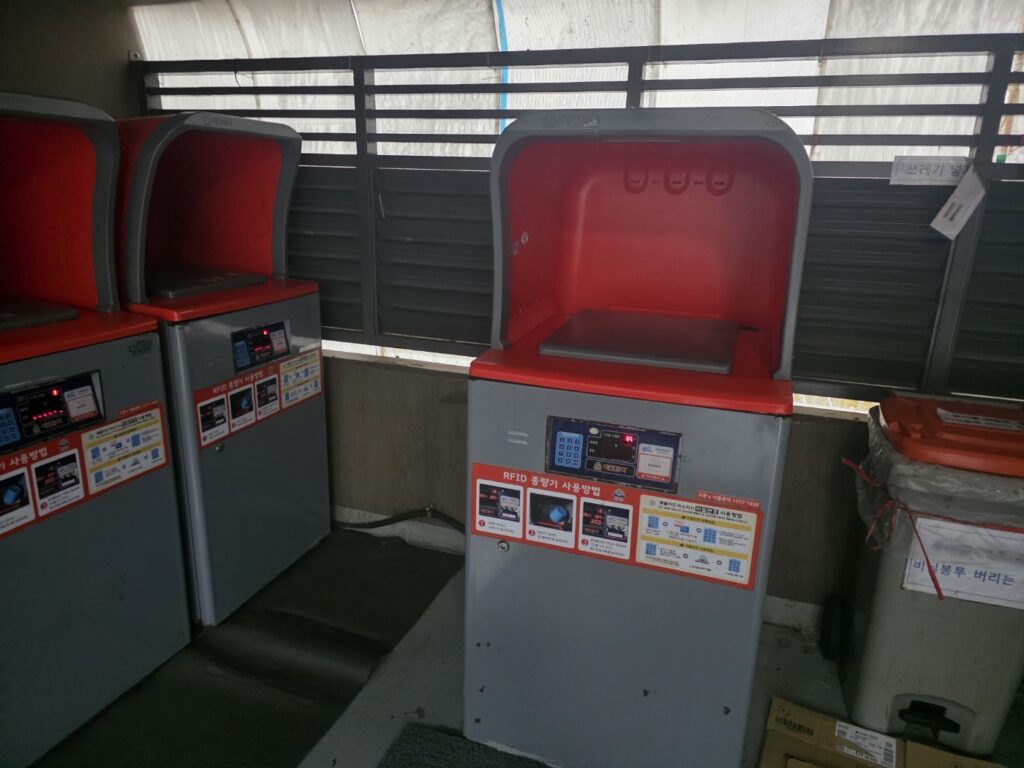
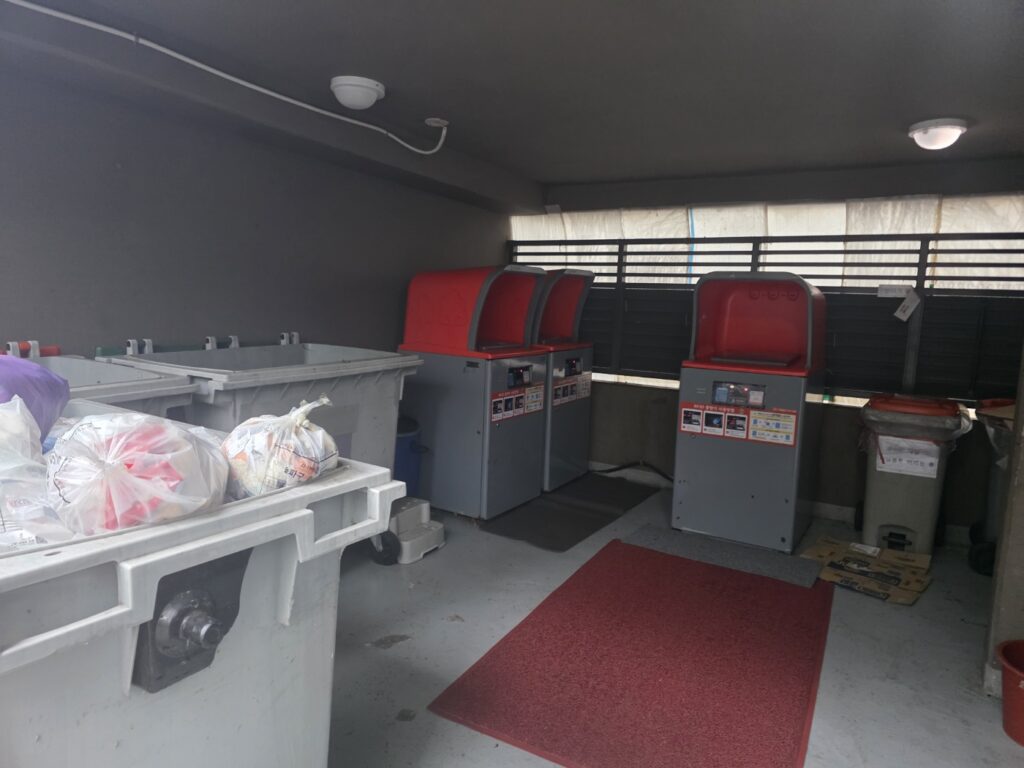
A. The RFID System (Modern Apartments)
This is the most “high-tech” way. You will see a metal machine with a digital display and a card reader.
- How to use: Tap your residence card $\rightarrow$ Wait for the lid to open $\rightarrow$ Dump the waste $\rightarrow$ Tap the card again.
- The Benefit: It weighs your waste in real-time. You are billed based on the exact weight (usually around 100-200 KRW per kg).
- Caution: Never dump the plastic bag into the machine. Only the food scraps inside.
B. The Yellow “Pay-As-You-Throw” Bags (Standardized Plastic Bags)
If you live in a Villa or a traditional house, you must buy Standardized Food Waste Bags (음식물 쓰레기 종량제 봉투).
- Where to buy: Any convenience store (CU, GS25, 7-Eleven) or local mart.
- Price & Size: They range from 1L (approx. 100 KRW) to 20L.
- The “Gu” Rule: You must use the bag specific to your district (e.g., Mapo-gu bags cannot be used in Gangnam-gu).
C. The Sticker and Bucket System
Some districts provide a dedicated plastic bin (like the one in Marcus’s photo).
- Process: Fill the bin $\rightarrow$ Buy a “Collection Sticker” (납부필증) $\rightarrow$ Attach the sticker to the handle $\rightarrow$ Place it outside at the designated time.
4. Step-by-Step: How to Survive Summer (Smell and Bug Management)
Korea’s summers are humid, and food waste can become a breeding ground for fruit flies within hours.
- The “Freezer” Hack: Many Koreans keep their small food waste bags in a dedicated section of the freezer. This stops decomposition and prevents smells. Note: Only do this if you are comfortable with it!
- Drain the Liquid: Before putting scraps in the bag, use a strainer to remove all water. Water adds weight (costing you more) and causes the bag to leak.
- Baking Soda & Vinegar: Sprinkle a little baking soda at the bottom of your bin to neutralize acidic odors.
5. Frequently Asked Questions (FAQ for Expats)
Q: What happens if I get caught putting bones in food waste?
A: Local district offices (Gu-cheong) often inspect bags. If they find your address (from mail in general trash), they will send a fine notice starting at 100,000 KRW.
Q: Where is the trash collection point?
A: Look for the designated “Trash Corner” near your building entrance. In villas, it’s usually near the main gate. Check your local district website for “Collection Days”—some areas don’t collect on Saturdays.
Q: Can I use biodegradable bags I bought online?
A: No. You can only use the official government-issued bags sold in your specific district.
6. Conclusion: A Small Step for a Greener Korea
Mastering the food waste system is a rite of passage for any foreigner living in Korea. It might feel like a chore at first, but it’s a reflection of Korea’s commitment to sustainability. By following these rules, you save money, avoid legal trouble, and contribute to a cleaner neighborhood.
If you’re still confused about a specific item (like watermelon rinds or pizza crusts), leave a comment below and I’ll help you out!