“In most global metropolises, the subway is a ‘Tube’ or a ‘Subway’ lurking just a few meters beneath the pavement. But according to this GTX-A Seoul Guide 2026, the future doesn’t wait across the street; it waits 50 meters straight down.
Google Maps is a hallucination here; to survive, you must master the GTX-A Seoul Guide 2026 and its lethal 180km/h subterranean bullet. This isn’t just a faster commute—it is a vertical ritual that redefines the geography of the Korean Peninsula, shooting you from the heart of Seoul to the silent tension of the DMZ border in mere minutes.”
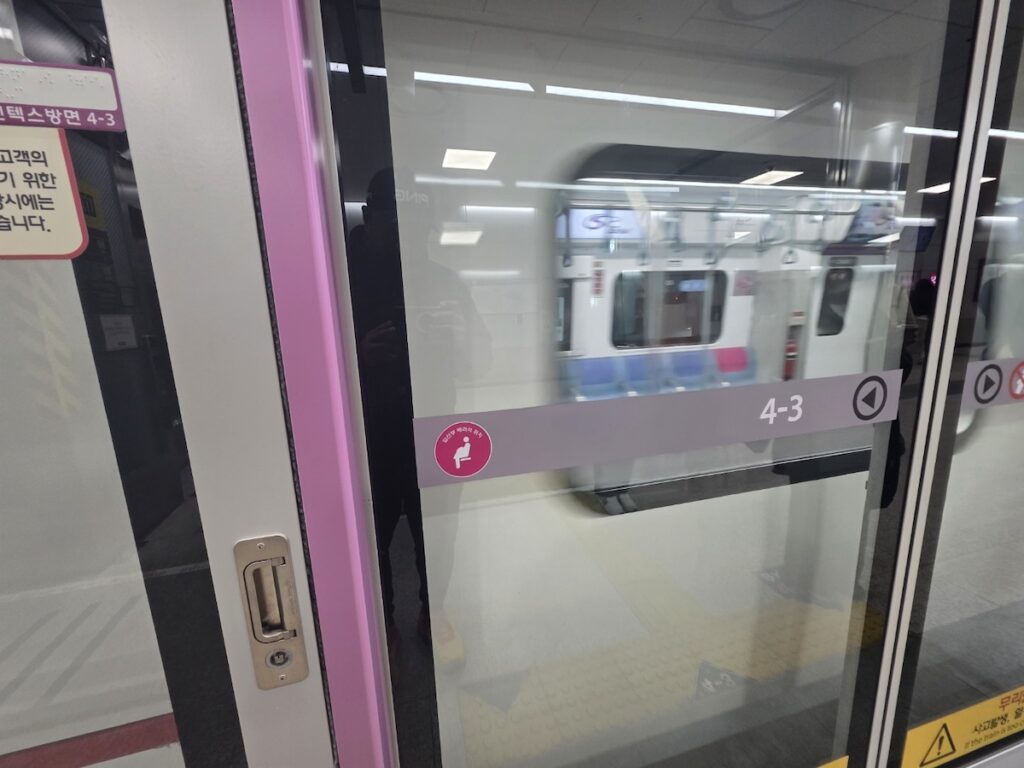
Phase 1: The B8 Ritual—Descending into the Abyss
The first shock for any Westerner arriving at Unjeong Central Station isn’t the train; it’s the depth. While the London Tube averages 24 meters deep, the GTX-A operates at Level B8—over 50 meters underground.
The Reality Check: Do not look for the stairs. If you attempt to use the escalators at this depth, you are looking at a 7-minute vertical trek. In Seoul, time is a ruthless currency.
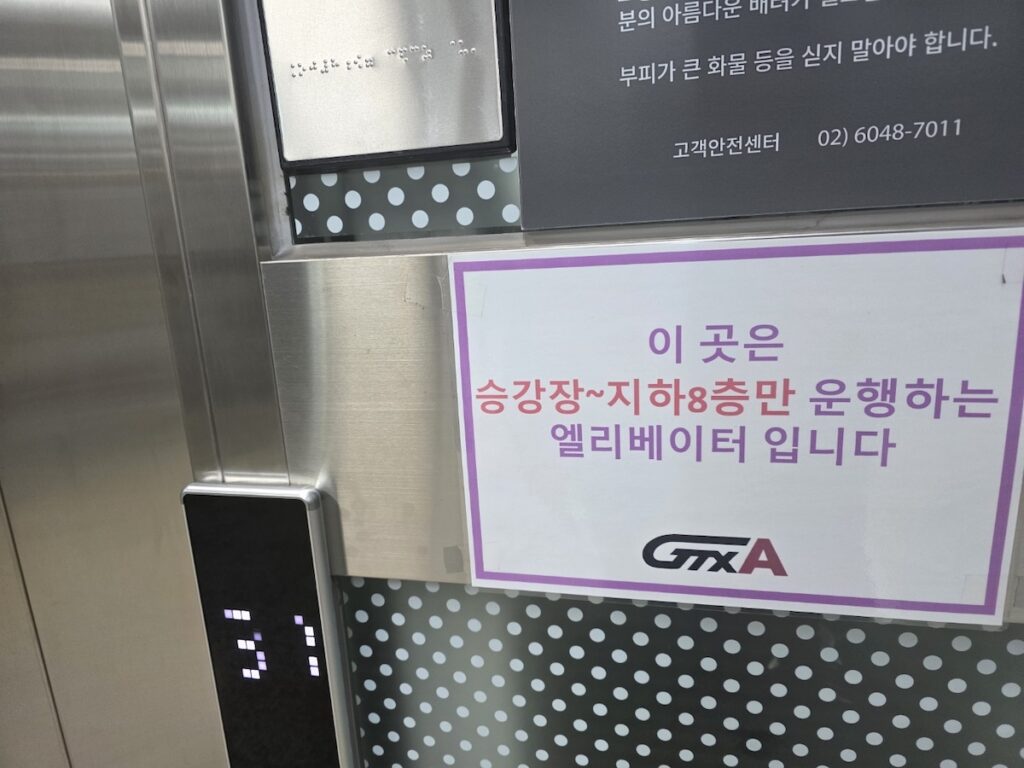
- The Survival Move: Target the High-speed Glass Elevators. These industrial-sized pods are designed to drop you into the abyss in under 60 seconds.
- The Sensation: As you descend 15 stories into the earth, you will feel the “Ear-Popping Ritual”—a physical pressure change that signals you are entering the realm of the subterranean elite.
Phase 2: 180km/h—The Velocity Hierarchy
Once you reach the platform, the sheer scale of the infrastructure feels more like a lunar colony than a train station. This is where the GTX-A separates itself from the “crawlers.”
| Metric | Standard Subway (Line 1-9) | GTX-A (The Bullet) | KTX / SRT (Intercity) |
| Top Speed | 80 km/h | 180 km/h | 300 km/h |
| Avg. Velocity | 30 km/h (Slow) | 100 km/h (Tactical) | 200 km/h (Long-distance) |
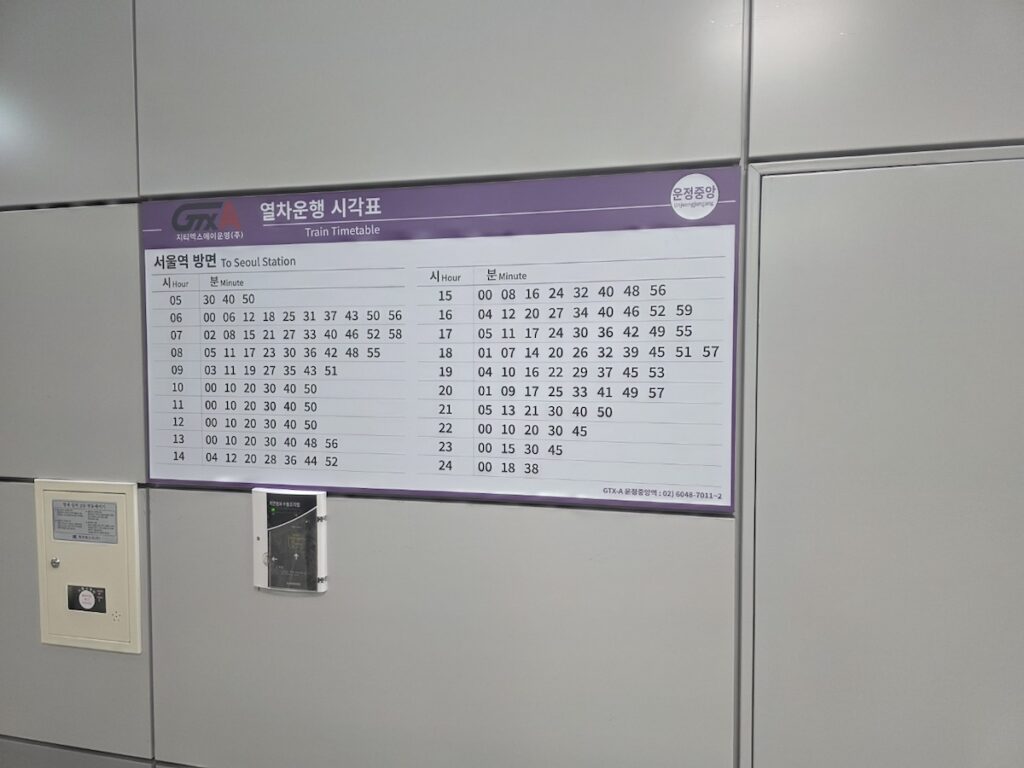
Why it matters: A standard subway train is a city crawler. The GTX-A is a Subterranean Bullet. It triples the speed of a normal commute, effectively shrinking the distance between the heart of Seoul and the northern frontier. While it shares the DNA of the high-speed KTX, it maintains the convenience of a subway tap.
Phase 3: The Bullet to the Border (DMZ Connectivity)
For the sophisticated traveler, the GTX-A is the ultimate hack for reaching the DMZ (Demilitarized Zone). Historically, reaching the border meant a grueling 90-minute bus ride from central Seoul.
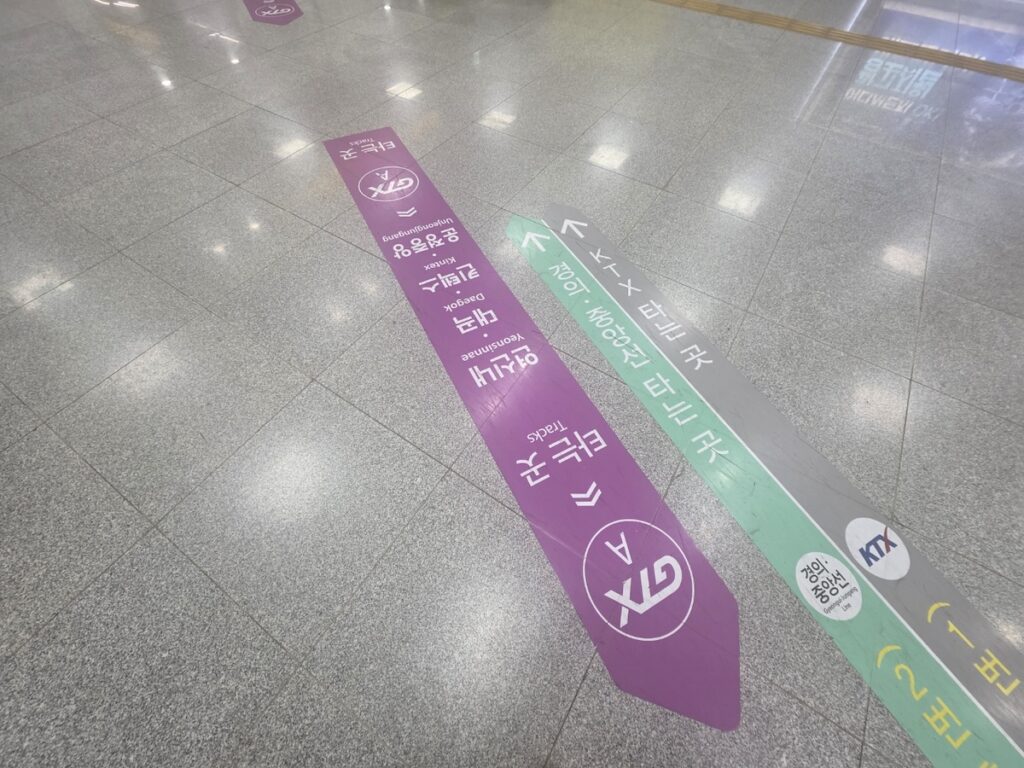
The New Ritual: 1. Board the GTX-A at Seoul Station.
2. Shoot north for 20 minutes to reach Unjeong Central.
3. From here, you are a mere stone’s throw from Imjingak and the Dorasan Observatory.
By using this high-tech corridor, you aren’t just traveling; you are experiencing the stark contrast of South Korea—using a 180km/h marvel to reach the world’s most fortified and frozen border. The juxtaposition of Level B8 technology and the Cold War silence of the DMZ is a ritual every visitor must witness.
Phase 4: The Financial Armor—K-Pass vs. T-money
Speed comes at a price, but the “uninitiated” pay more. A single trip on the GTX-A is significantly higher than a standard subway fare.
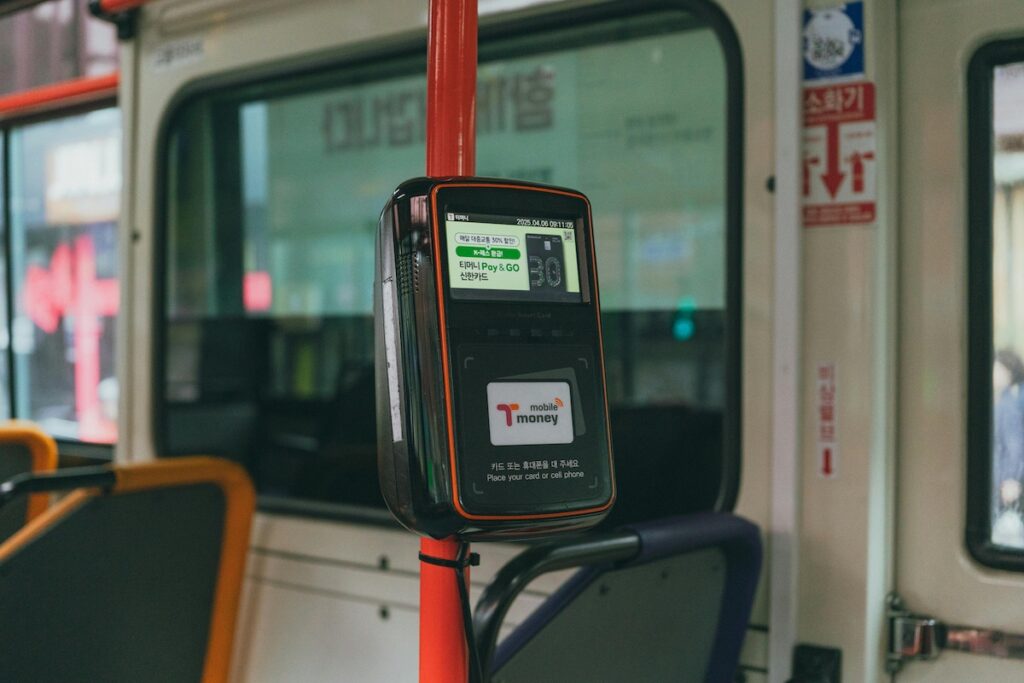
- The Survival Move: Do not rely on a standard T-money card if you plan to master this route. You need the K-Pass.
- The Ritual: The K-Pass offers a tiered refund system (up to 53% for some demographics), turning a premium transit experience into a tactical financial win. In Seoul, being smart with your card is as important as being fast with your feet.
Phase 5: Why the GTX-A Seoul Guide 2026 is Your Ultimate Asset
For a foreigner in Seoul, the concept of “Freedom of Movement” is often a paradox. In the U.S. or Europe, freedom is a car and an open highway. In Seoul, a car is a liability—a nightmare of gridlock, impossible parking, and a labyrinth of registration bureaucracy that will drain your soul before you even hit the road.
This is where the GTX-A Seoul Guide 2026 becomes your survival manual. Mastering this system isn’t just about transit; it’s about Quality of Life.
- The Car-Free Elitism: In Seoul, the elite don’t sit in traffic at the Gangnam intersection; they bypass the chaos entirely by descending to B8. When you master the GTX-A, you gain the mobility of a car owner without the $50,000 price tag or the insurance headaches.
- The Trillion-Won Investment: South Korea didn’t just dig a hole; they invested billions of dollars (Trillions of Won) to synchronize the city’s pulse. Understanding this complex subterranean web is the difference between a “lost tourist” and a “sophisticated resident.”
- Subterranean Intelligence: The quality of your life in Seoul is directly proportional to your knowledge of its underground systems. While others are stuck on a slow bus, you are teleporting across the peninsula.
Phase 6: The Evolution of Velocity—What Happens Next?
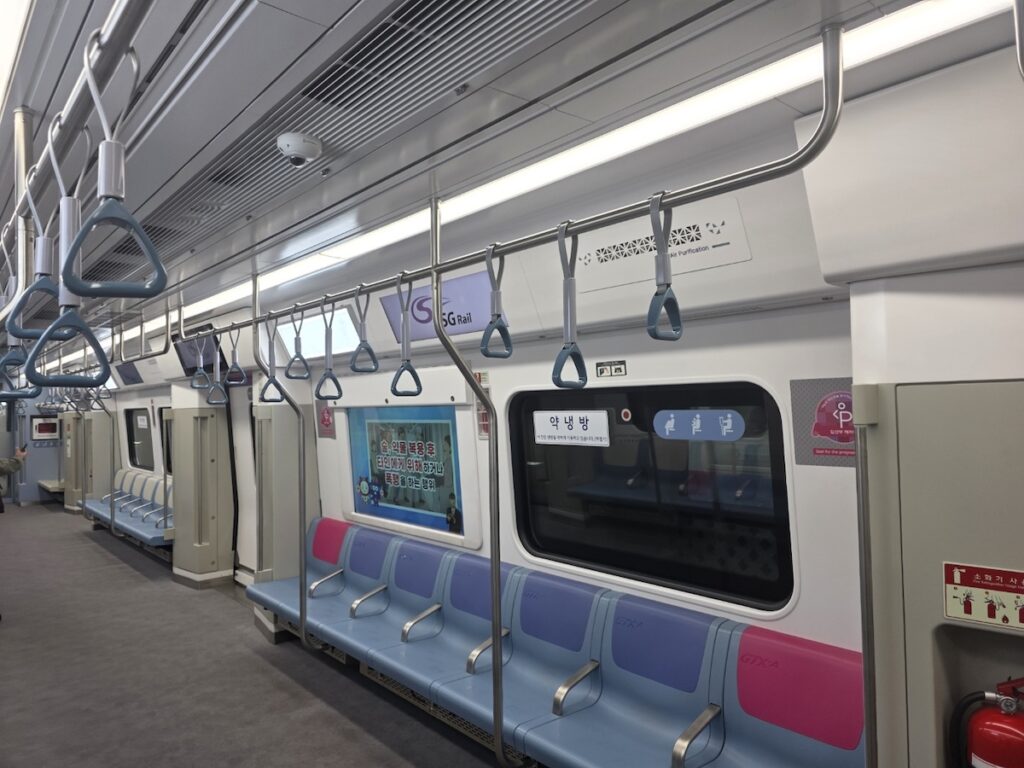
The GTX-A Seoul Guide 2026 is not just about a single line; it is about a living, breathing infrastructure project that is rewriting the map of South Korea. According to the official roadmap released by the Ministry of Land, Infrastructure and Transport (MOLIT), the completion of this subterranean bullet will happen in strategic stages.
| Timeline (Estimated) | Connectivity Milestone | Strategic Impact |
| Current (Early 2026) | Unjeong Central ↔ Seoul Station | The Northern Fast-track to the Border. |
| Late 2026 | Suseo ↔ Dongtan (Full Operation) | The Southern Tech Corridor Integration. |
| 2027 (Expected) | Full Connection (Excluding Samseong) | Direct line from Paju to Dongtan (Non-stop through Seoul). |
| 2028 (Final Goal) | Samseong Station Completion | The Birth of the “Grand Hub” (Gangnam Integration). |
The “Samsung Gap” Reality Check
As a sophisticated resident, you must understand the Samseong Station Paradox. While the entire line will be physically connected by 2027, the train will not stop at Samseong (the heart of Gangnam) until the massive underground transit hub is completed in 2028.
- The Survival Move: Until 2028, plan your transfers at Seoul Station or Suseo to reach Gangnam. Do not expect a direct drop-off at COEX just yet.
Source: Master Plan for the Great Train eXpress (GTX), Ministry of Land, Infrastructure and Transport (MOLIT), Republic of Korea.
🔗 Master the Seoul Subterranean Network (Related Guides)
Once you have mastered the GTX-A Seoul Guide 2026, your next mission is to synchronize with the rest of the city’s complex pulse. These essential rituals are the difference between a struggling expat and a sophisticated resident.
- [Experience the Modern Seoul Subway: A Visual Survival Guide for Expats in 2026]
- Tactical Intel: If the B8 depth of the GTX-A shocked you, you must first decode the visual language of the entire Seoul system.
- [The Ultimate Survival Guide to Seoul Subway Line 9 (2026): Express vs. Local]
- Tactical Intel: While GTX-A is the bullet of the North, Line 9 is the combat zone of Gangnam. Master the ‘Express Ritual’ or lose your ribs to the rush hour.
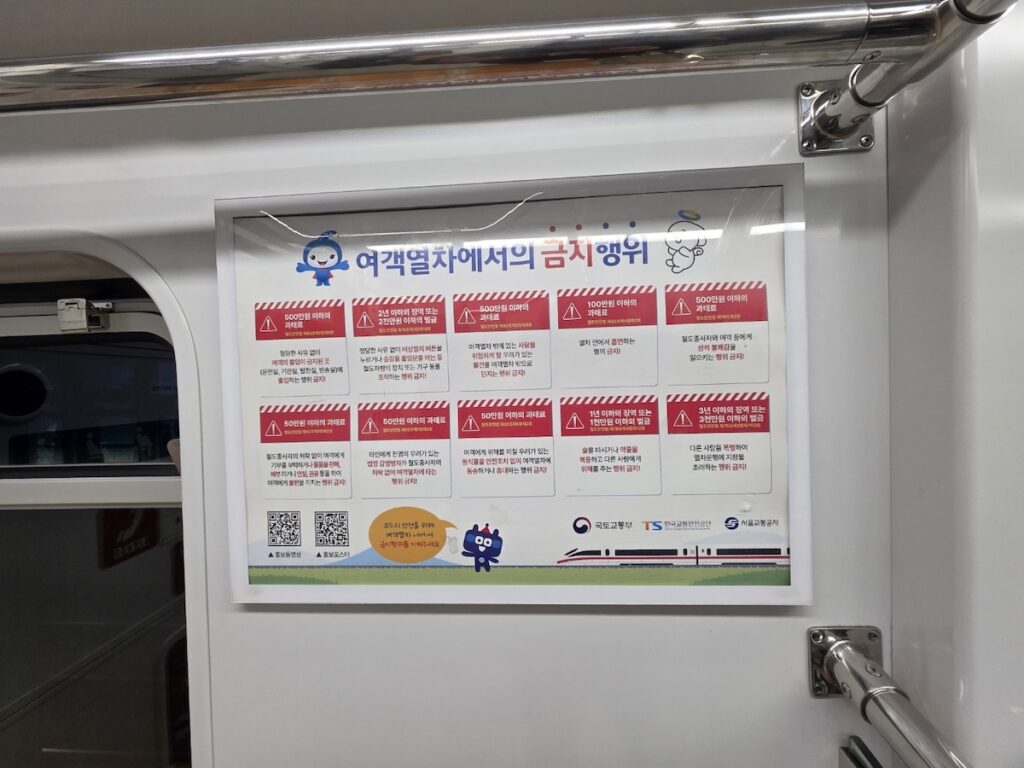
- [Seoul Subway Rules and Fines: A 2026 Guide to Prohibited Acts and Penalties]
- Tactical Intel: Speed at 180km/h requires discipline. Do not let a minor lapse in etiquette result in a heavy fine that drains your settlement fund.
- [The Ultimate Jamsil Station Transfer Guide: Subway Line 8 & Bus Center (2026)]
- Tactical Intel: Until Samseong Station opens in 2028, Jamsil remains your southeast fortress. Learn to navigate its labyrinthine corridors in a single sprint.
🏛️ [Conclusion: Mastering the Subterranean Pulse]
Seoul is a city that never stops, but it is also a city that does not wait for those who move too slowly. In 2026, the GTX-A Seoul Guide 2026 is more than just a transit manual; it is your blueprint for reclaiming the most precious currency in this metropolis: Time. By descending to the Abyss at B8 and boarding the 180km/h subterranean bullet, you aren’t just traveling—you are bypassing the gridlock that traps the uninitiated. You are choosing the clinical efficiency of a $11.6 billion infrastructure over the chaotic uncertainty of the surface.
The Reality Check: Whether you are shooting toward the silent tension of the DMZ border or navigating the high-tech corridors of Seoul Station, remember that this system was built for the prepared. The “Samsung Gap” will eventually close by 2028, but your life in Seoul starts now.
Your Survival Action Plan:
- Trust the Depth: Master the B8 elevator ritual.
- Verify the Roadmap: Stay updated with the official MOLIT timeline as new segments open.
- Claim your K-Pass: Do not pay the “tourist tax” with standard fares.
Seoul does not reward the weak. It rewards the fast, the deep, and the sophisticated. Master the GTX-A, and the city is finally yours.