Jeonju Makgeolli Street: 7 Rituals of Korea’s Warmest Night
At our core, we do not travel to find ourselves; we travel to lose the versions of ourselves that have become weary of the familiar. Psychologically, humans are wired for ‘Optimal Stimulus’—a state where the brain seeks environments that contrast sharply with our daily routines. For a traveler who has already navigated the sharp glass and steel of Seoul, Jeonju Makgeolli Street (Jeonju Makgeolli Alley) offers a visceral return to the “Human Scale.”
In this humble neighborhood lane, dinner is not a transaction; it is a slow, generous ritual. Unlike the clinical efficiency of Western dining, where every dish is a line item on a bill, Jeonju operates on the philosophy of ‘Jeong’ (Affectionate Attachment). Here, the table begins to bloom not because you ordered it, but because the house welcomes you
1. The Social Choreography: The Kettle System
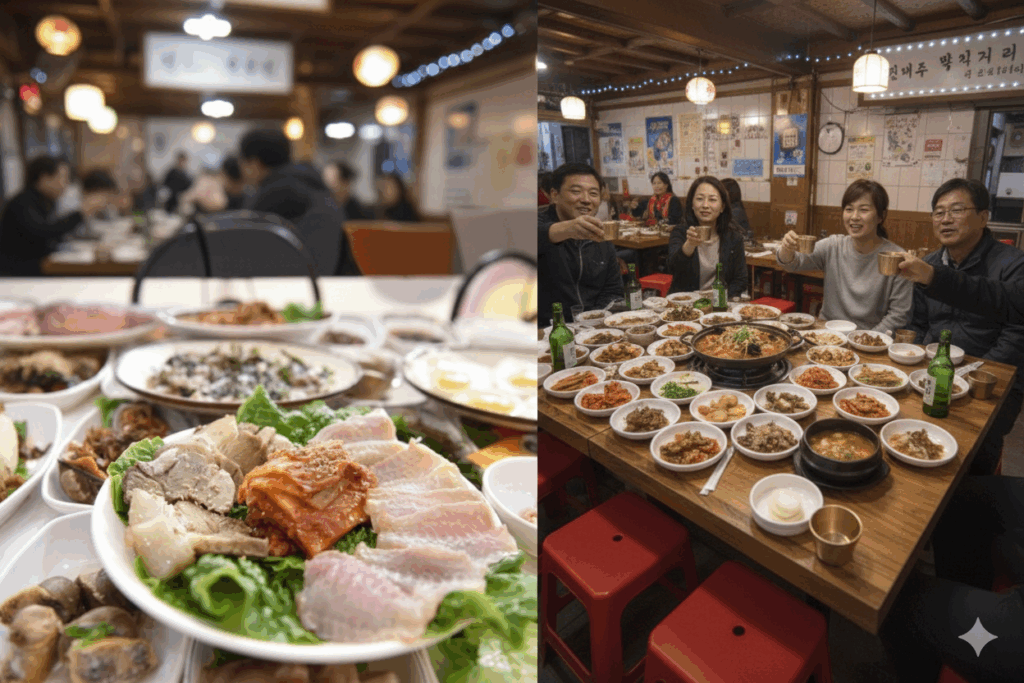
The defining feature of Jeonju Makgeolli Street is the “Kettle + Parade” system. You do not chase menus. You order one kettle of makgeolli—the city’s cloudy, unfiltered rice brew—and the choreography begins.
The Macro-Economic Hospitality of Jeonju
| Category | Typical Experience | The “Jeonju” Advantage |
| Pricing | ₩15,000 – ₩25,000 | Drink + 15~20 side dishes included in the first kettle. |
| The “Anju” Parade | Fixed Course | Side dishes evolve and upgrade with every subsequent kettle. |
| Social Pace | Fast / Transactional | Slow / Communal (The pace is set by conversation). |
2. Architectural Porosity: Choosing Your “Jip” (House)
The taverns in Jeonju Makgeolli Street are masters of architectural resonance. For the Londoner used to the heavy, closed masonry of a British pub, these houses offer a “Democratic Interior.”
- The Old-School Classic: Defined by worn wooden tables and the low hum of local gossip. These are the “Midnight Run” sanctuaries where history is felt in the patina of the kettle.
- The Neo-Traditional House: Clean lines and curated lighting, ideal for those seeking the Jeonju soul with a modernized aesthetic.
3. Scientific Vitality: The Anju Parade
What makes Jeonju Makgeolli Street special is the Anju (side dishes). This is not mere “bar food.” It is a rotating cast of seasonal vitality designed to balance the fermentation of the rice wine.
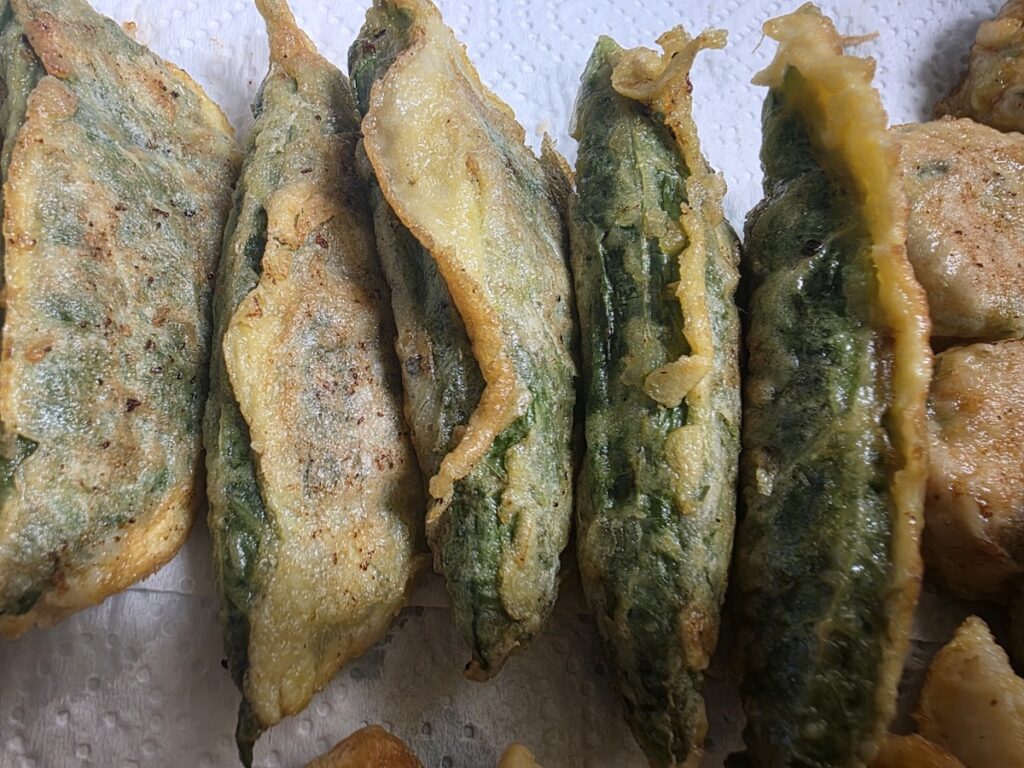
- The Base: Jeon (savory pancakes) and warm stews that provide the necessary lipids to coat the stomach.
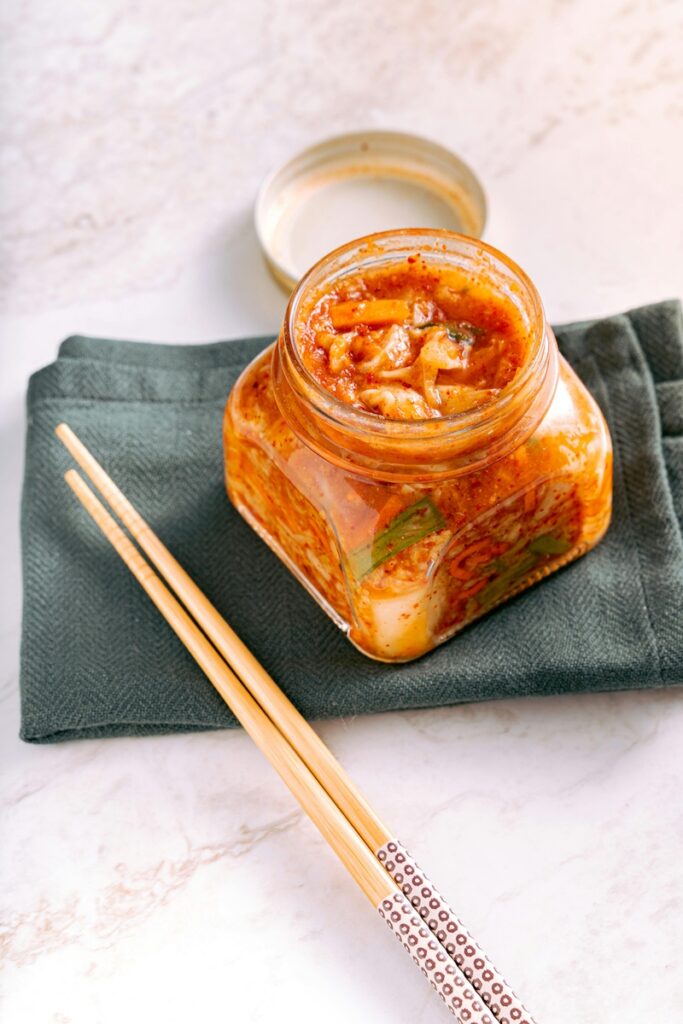
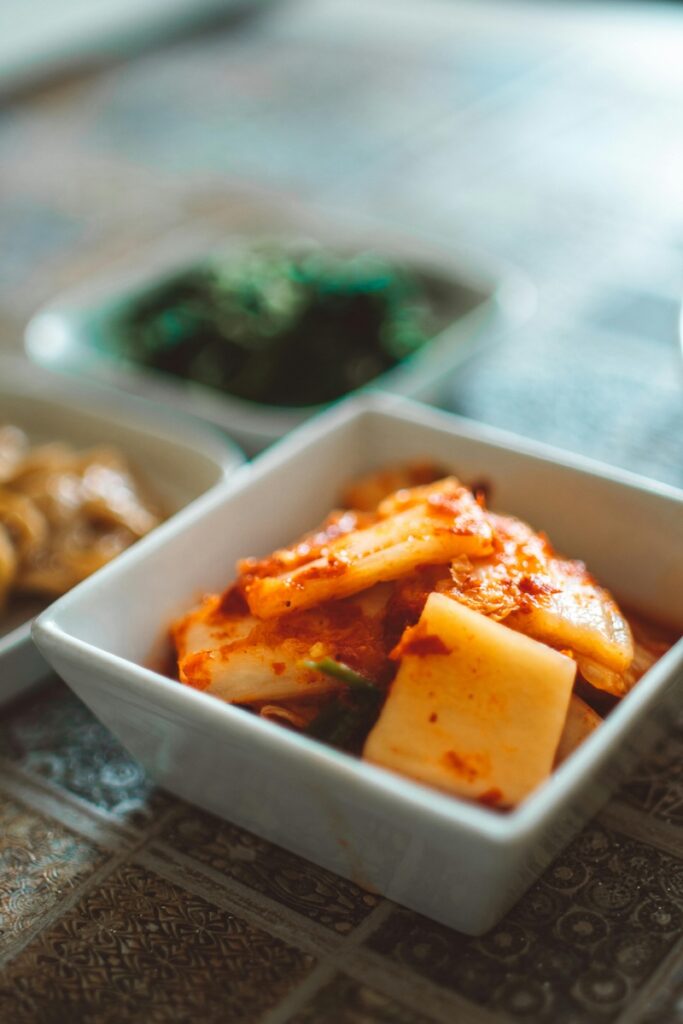
- The Ferment: Kimchi and pickled vegetables that enhance the probiotic nature of the Makgeolli.
- The Protein: Small grilled fish, spicy chicken, and silken tofu with soy dressing.
Ritual Note: For Londoners accustomed to processed vegan options, the vegetable-forward plates in Jeonju offer a masterclass in “Ancestral Plant-Based Intelligence.”
4. Temporal Sovereignty: The 24-Hour Safety Grid
Even in this regional alley, the infrastructure of the future is present. The Jeonju Makgeolli Street experience is underpinned by the same structural security found in Seoul.
- The “Oh My Card” Ritual: You can leave your belongings on a tavern table to step outside for a moment; the near-zero theft rate remains a hallmark of the Korean night.
- Safe Passage: Even at 2 AM, the neighborhood remains illuminated and safe, monitored by the national safety grid that Europeans find both startling and liberating.
5. The Philosophy of Abundance: Why Your Table Never Stops Blooming
The true reason Jeonju Makgeolli Street has become a legendary pilgrimage site is not found in a marketing brochure, but in the deep-rooted cultural DNA of the Jeolla-do province. To understand the table in front of you, you must understand the soil beneath it.
The “Jeolla-do” Hospitality Ritual
Historically, Jeolla-do has been the breadbasket of Korea, a vast granary defined by its fertile plains and massive rice production. In this agrarian society, a guest was never just a visitor; they were a soul to be nourished. The greatest virtue of a Jeolla-do household was “never letting a guest leave with an empty stomach.” When you sit in a tavern on Jeonju Makgeolli Street, you are not just purchasing a service; you are entering a living museum of this hospitality.
- The Mystery of the Next Kettle: The most thrilling part of the ritual is the “Sequential Upgrade.” While you pay a base price for each kettle, you never truly know what the next “Anju” will be. It could be a steaming bowl of spicy blue crab stew or a plate of grilled skate.
- The “Jeong” Refill: Unlike the rigid “extra charge” culture of London or Paris, Jeonju operates on a flexible grace. If you fall in love with a specific side dish, a polite request—“Jogeum-man deo juseyo”—is usually met with a smile and a fresh heap of food.
- Economic Generosity: While it is a business, the underlying drive is to see the customer overwhelmed by the variety. It is a challenge to your appetite, a friendly “battle of abundance” where the house always wins with kindness.
6. Global Resonance: When Idols Encounter the Jeonju Soul
This “unfussy generosity” has not gone unnoticed by global icons who seek authenticity over polished luxury. When K-Pop stars or international figures visit Jeonju, they often speak of this specific Makgeolli Ritual as a grounding experience.
“When I’m in Jeonju, it’s not about being a star; it’s about being part of the table. The way the food keeps coming—it feels like being at a grandmother’s house where ‘enough’ is never the answer.”
— Excerpts inspired by the travelogues of idols like SNSD’s Taeyeon (a Jeonju native) who has frequently showcased her pride for Jeonju’s culinary heart.
Furthermore, global food explorers like the late Anthony Bourdain or modern culinary influencers often highlight that the “Makgeolli Alley” experience is the ultimate antithesis to the high-pressure, commercialized dining of the West. It is the “Slow Food” movement in its most raw, honest, and fermented form.
7. The “Hollow Cylinder” Effect: Scientific Socializing
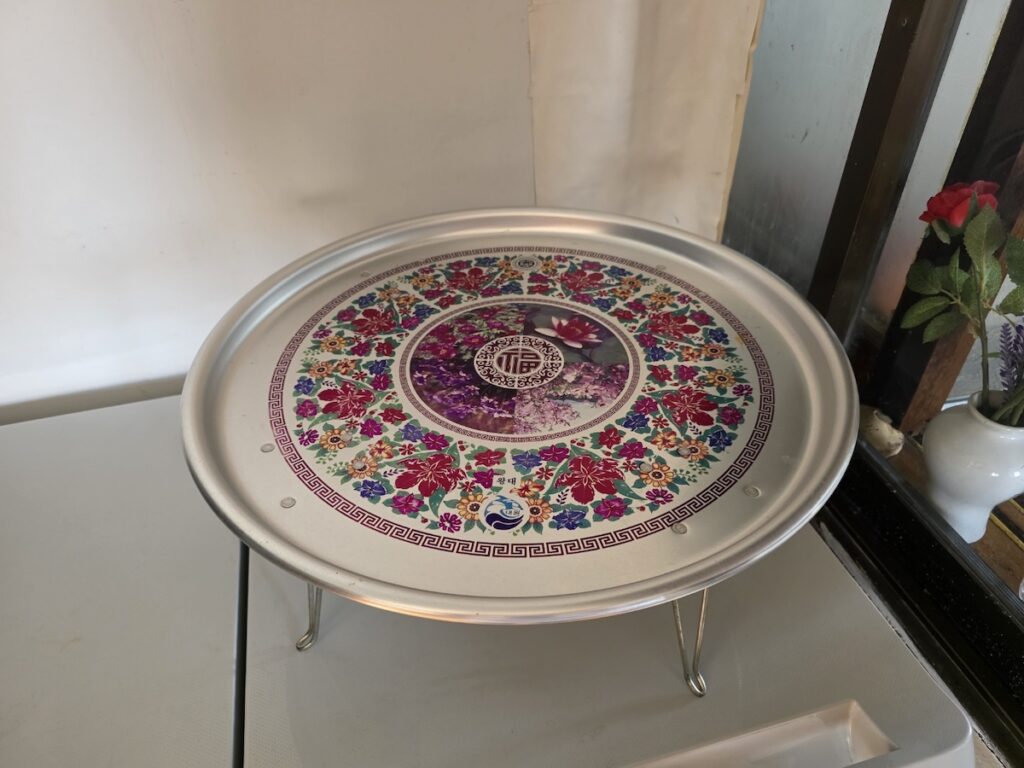
The yellow aluminum kettle of Jeonju Makgeolli Street is more than a vessel; it is a social catalyst. Scientifically, the act of sharing a “Hollow Cylinder” (the kettle) requires a specific social choreography:
- The Pouring Cycle: One person must always hold the handle for another. This creates a rhythmic, alternating duty of care that dissolves social barriers.
- The Aeration of Conversation: Unlike a glass bottle, the kettle must be tilted, swirled, and handled with two hands—a physical ritual that forces you to slow down your speech and listen to the person across the table.
[Data Update: The Evolution of the Table]
| Kettle Count | Typical Beverage | The “Anju” Evolution |
| 1st Kettle | 2L Fresh Makgeolli | 12-15 Base plates (Jeon, Tofu, Acorn Jelly, Veggies) |
| 2nd Kettle | 2L Refill | Upgrade: Steamed pork, grilled fish, or spicy stews. |
| 3rd Kettle+ | 2L Refill | Luxury Tier: Seasonal delicacies (Raw oysters, Soy-marinated crab). |
Related Guides for Your Jeonju Exploration
To truly master the regional pulse of Jeolla-do, we recommend integrating these curated experiences into your itinerary:
- [Jeonju Hanok Village Experience: 5 Essential Tips for the Noble Traveler (2026)] – A guide to the architectural grace and daytime rituals of the historic center.
- [4 Essential Jeonju Night Scenes: Decoding the Urban DNA of Korea’s Heritage Capital] – Beyond the taverns, discover the illuminated soul of Jeonju’s nocturnal landscape.
- [Gimje Countryside Travel Guide: Explore Jeollabuk-do’s Rural Korea and Rice Fields] – Trace the source of Jeonju’s abundance back to the fertile golden plains of Gimje.
Conclusion: The Soul of the Provinces — A Call to Jeonju
South Korea is not a monolith; it is a tapestry of distinct regional identities, much like the contrast between the grit of Manchester and the elegance of Edinburgh, or the energy of NYC and the soul of the Deep South. While you may only have a few days to explore, Korea’s hyper-efficient KTX network and compact geography offer a unique luxury: the ability to experience the radical shifts in flavor and temperament across Gyeonggi, Gangwon, Chungcheong, Gyeongsang, and Jeolla-do in a single week.
Among these, I have presented to you the Jeonju Makgeolli Street and the spirit of Jeolla-do. It is a place of undeniable magnetic pull. Even for Koreans, Jeolla-do remains the undisputed “Culinary Capital”—a region where the food is not just eaten but revered.
Do not settle for the neon lights of the capital. Venture south. Seek out the yellow kettle. In these taverns, you will not find cold service or transactional dining; you will find the warmth of an aunt, a mother, or a grandmother who takes personal pride in your satisfaction. You may come to Jeonju for the Makgeolli, but you will leave with a piece of the Jeolla-do soul.
Go slowly. Enjoy the abundance. Let Jeonju feed you.