Korea Hiking Ritual 2026 is not merely a recreational activity; it is a profound cultural dialogue between the rugged earth and the human spirit. While many global destinations offer trails, Korea offers a sanctuary where the vertical intensity of the landscape meets a highly professionalized social contract. As we navigate the ridges in 2026, the experience has evolved into a cinematic journey that blends physical exertion with deep-seated respect for the environment.
The Revelation at Owners CC: A Gangwon Epiphany
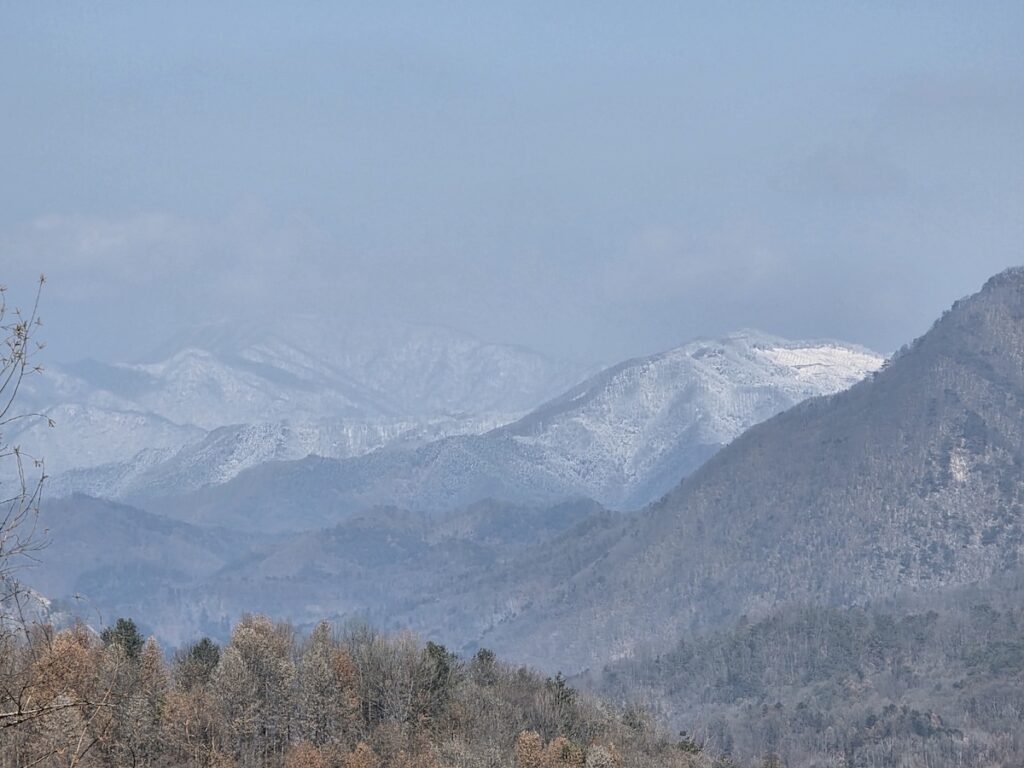
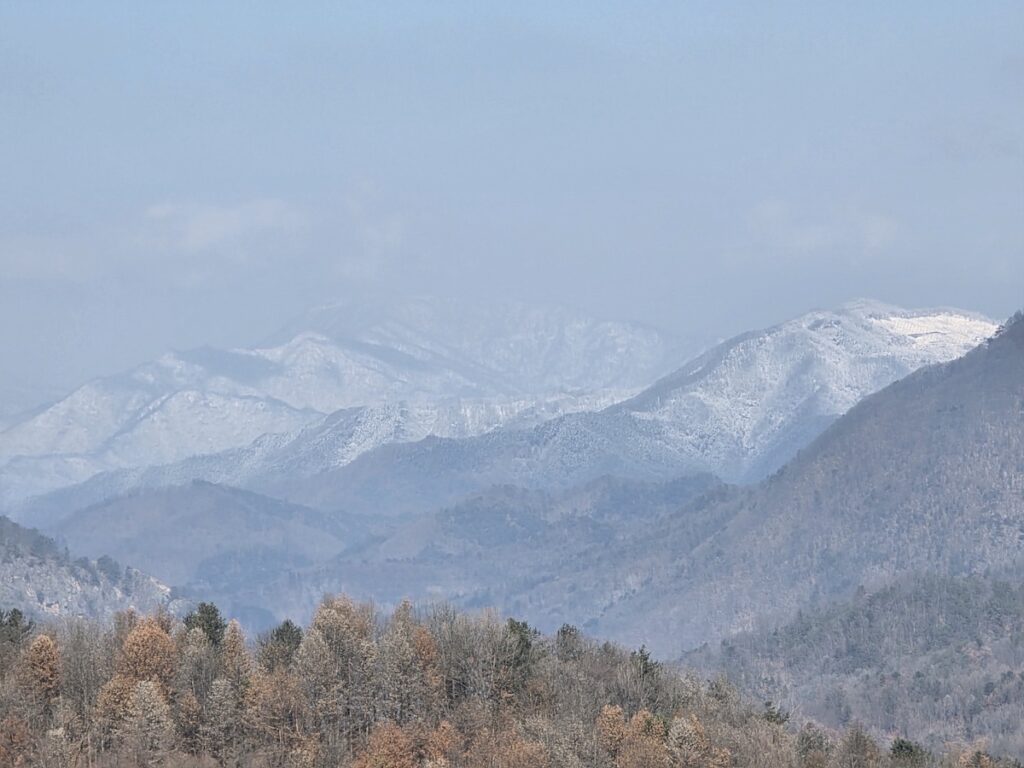
My journey into the heart of the Korea Hiking Ritual 2026 took an unexpected turn during a recent round of golf at Owners CC in Chuncheon. Standing on the tee box, driver in hand, my focus was abruptly stolen by the distant silhouette of Samaksan Mountain. In that moment, the frustration of a lackluster swing vanished, replaced by an overwhelming sense of awe.
While the mountains in the southern provinces like Gyeongsang-namdo possess a gentle, rolling grace, the peaks of Gangwon-do are carved from a different, more ancient stubbornness. Even in March, the lingering snow on the craggy granite ridges serves as a reminder of the region’s resilience. This is where the Korea Hiking Ritual 2026 truly begins—not in the gym, but in the spontaneous realization that the landscape demands our absolute presence.
The Anatomy of Intensity: Verticality over Altitude
A common misconception among international travelers is that Korean mountains, typically ranging from 600 to 1,700 meters, are “easy.” However, the Korea Hiking Ritual 2026 reveals a “Vertical Intensity” that defies numerical height.
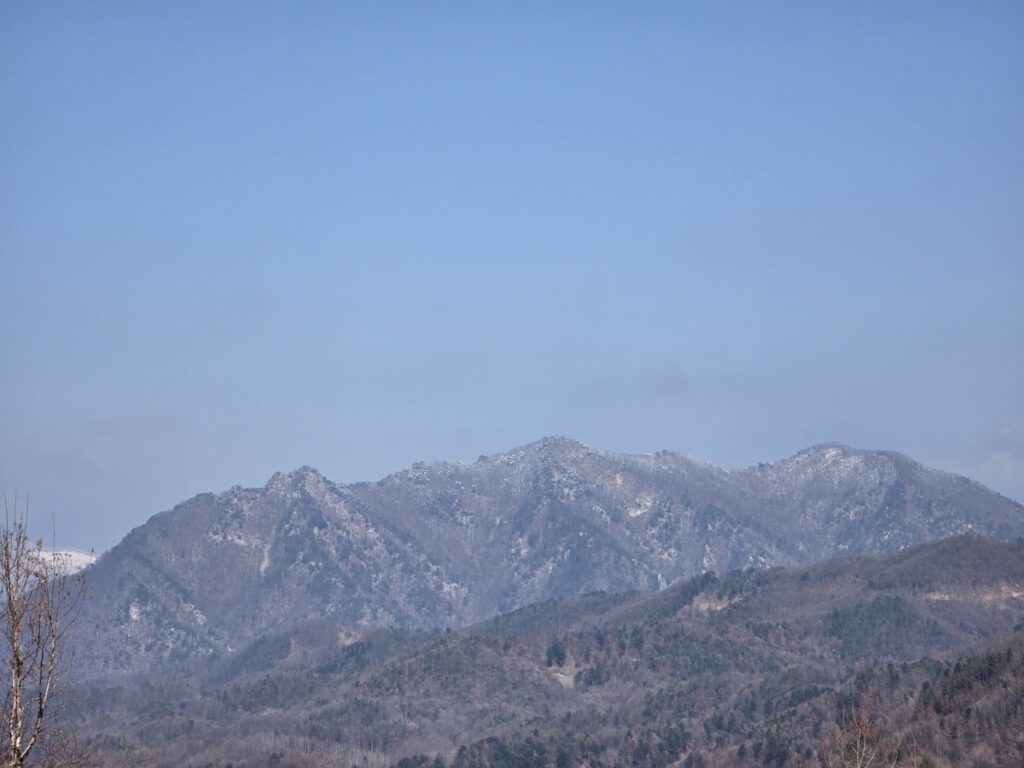
- The Granite Soul: Unlike the volcanic soil of Jeju or the soft earth of the southern hills, the mountains surrounding Seoul and Gangwon-do are defined by exposed granite. These “Granite Ridges” require a tactile engagement with the rock, turning a simple walk into a professional-grade climb.
- The Seasonal Contrast: In March, the landscape is in transition. The vibrant greens are yet to arrive, leaving the “Scent of Romance” in the crisp, cold air and the stark beauty of bare branches against a pale blue sky.
The Social Contract: Forbidden Rituals and Ethics
What sets the Korea Hiking Ritual 2026 apart from global hiking cultures is the strict “Social Contract” enforced within our National Parks. For the international visitor, these “Taboos” are not restrictions, but rather the reason why the trails remain pristine and professional.
1. The Zero-Alcohol Mandate
In 2026, the ritual of the “Summit Toast” has been entirely replaced by the ritual of the “Summit Silence.” Alcohol consumption is strictly prohibited on the trails. This policy has transformed the mountain into a sanctuary of health and safety, ensuring that every hiker respects the vertical challenge without the impairment of spirits.
2. The LNT (Leave No Trace) Professionalism
Korean hikers have elevated the LNT principle to a point of national pride. You will find no trash cans on the trails; every ritual participant carries their waste back to the city. This collective discipline is what makes the Korea Hiking Ritual 2026 one of the cleanest outdoor experiences in the world.
3. The Anti-Camping Pact
Wild camping is forbidden to protect the fragile ecosystems of peaks like Seoraksan and Jirisan. Instead, hikers engage in the “Shelter Ritual”—staying in designated mountain huts that offer a communal, meditative experience at high altitudes.
The Gear Ritual: Battle Gear as a Sign of Respect
Foreigners often marvel at the “Battle Gear” worn by local hikers. In the Korea Hiking Ritual 2026, wearing high-performance, colorful technical clothing is not an act of vanity; it is a sign of Professionalism.
- The Layering Ritual: In March, the temperature can shift 15 degrees between the base and the peak. Professional hikers use a sophisticated layering system to manage moisture and heat.
- The Essential Crampons: Because snow lingers in the shaded granite crevices of Gangwon-do well into the spring, carrying a pair of “Eye-zens” (crampons) is a mandatory safety ritual that separates the professional from the amateur.
Related Guides
- Hiking in Seoul for Foreigners 2026: 10 Mountains That Defy Their “Neighborhood Hill” Reputation – If you believe Seoul’s peaks are merely small city hills, this guide will redefine your expectations. Explore 10 urban summits that demand Professionalism and offer the same vertical intensity as the high ridges of Gangwon-do, all within the reach of a subway card.
- Ganghwa Island: Why a Winter Trip to the Grey Coast is the Ultimate Escape from Seoul – For those who have experienced the granite soul of the mountains and seek a different kind of Scent of Romance, the grey winter coast of Ganghwa offers a cinematic contrast. Discover the desolate beauty of the West Sea and the historical resilience of Korea’s fortress island.
- Top 7 Mountains Near Seoul Accessible by Public Transport: Nature, Cafes & Hidden Gems – Master the Urban Contrast ritual by navigating the best peaks accessible via KTX, ITX, and local buses. This guide bridges the gap between the rugged trails and the sophisticated cafe culture that awaits at the base of every major Korean mountain.
The Shelter Lottery: A Night Among the Stars
The ultimate achievement in the Korea Hiking Ritual 2026 is securing a spot in a National Park shelter. These sanctuaries, located near the summits of major peaks, are accessed through a highly competitive “Reservation Lottery.”
To sleep at the Socheong Shelter in Seoraksan or the Jangteomok Shelter in Jirisan is to witness the “Scent of Romance” at dawn—a sea of clouds rolling beneath you as the sun breaks over the East Sea. It is a shared ritual where strangers become comrades over a bowl of warm noodles before beginning the final ascent.
Action Plan: Navigating the Peaks in 2026
If you wish to participate in the Korea Hiking Ritual 2026, follow this professional roadmap:
- Monitor the Snow: If you are heading to Gangwon-do (like Samaksan or Seoraksan) in March, check the National Park Service website for real-time trail closures due to lingering ice.
- Respect the Gear: Do not underestimate the granite. Wear shoes with high-traction rubber (like Stealth or Butora) designed specifically for Korean rock.
- The Shelter Hack: Set your alarm for the reservation opening times on the Korea National Park Service website. It is a digital battle, but the reward is a cinematic night at the edge of the world.
- Embrace the “After-Hiking” Ritual: The ritual only concludes when you descend to the base of the mountain for a plate of “Pajeon” (green onion pancake) and fresh mountain herbs—the ultimate reward for your physical resilience.
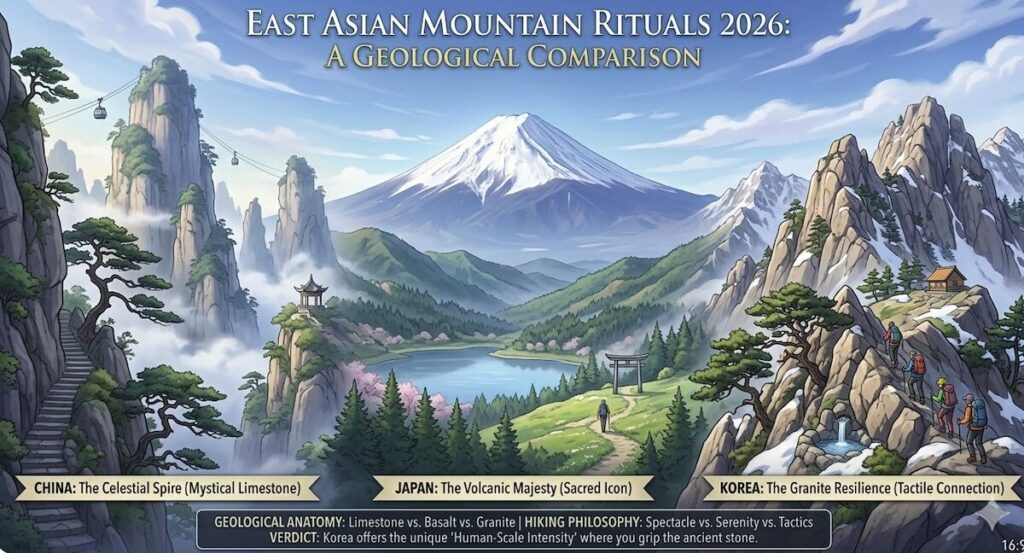
The East Asian Peak Trilogy: Japan, China, and Korea
To truly appreciate the Korea Hiking Ritual 2026, one must understand how it stands in stark contrast to its neighbors. While Japan offers volcanic grandeur and China boasts celestial vastness, Korea offers a unique “Human-Scale Intensity” that is both professional and profound.
1. Japan: The Volcanic Majesty
Japanese mountains are often defined by their volcanic origins (like Mt. Fuji). They are majestic, conical, and covered in deep, soft ash or dense alpine forests. The ritual here is often about conquering a singular, towering icon.
- The Vibe: Zen-like, isolated, and monumental.
2. China: The Celestial Infinite
Chinese mountains (like Huangshan) are characterized by their immense scale and mythical mist-covered spires. The experience is often “Top-Down,” facilitated by extensive cable cars and ancient stone stairs. It is a ritual of spectacle and vastness.
- The Vibe: Grandiose, otherworldly, and intimidating.
3. Korea: The Granite Resilience (The Winner)
The Korea Hiking Ritual 2026 wins because of its Tactile Accessibility. Unlike the soft volcanic soil of Japan or the unreachable spires of China, Korean mountains are made of solid, ancient granite.
- Tactile Engagement: You don’t just look at the mountain; you grip it. The granite ridges require a physical, hands-on dialogue with the earth.
- The Urban Alchemy: Korea is the only place where this raw, “Wild Resilience” exists in a seamless loop with ultra-modern urban life. You can experience a professional-grade granite climb and be back for a sophisticated dinner in the city within the same afternoon.
🗺️ East Asian Mountain Comparison
| Feature | Japan (Volcanic) | China (Celestial) | Korea (Granite) |
| Primary Material | Volcanic Ash / Basalt | Limestone / Sandstone | Solid Granite |
| Hiking Style | Long, Forested Ascents | Stone Stairs / Cable Cars | Technical Ridge Scrambling |
| Accessibility | Remote / Destination-based | Remote / Mass Tourism | Urban / Seamless |
| Philosophy | “The Sacred Icon” | “The Mythical Empire” | “The Resilient Life-Partner” |
The Verdict: Why Korea is the Ultimate Choice
Why should a global traveler prioritize the Korea Hiking Ritual 2026? Because it is the most “Human-Centric” wilderness in the world.
In Japan, you are a visitor to a sacred site. In China, you are a spectator of a grand empire. But in Korea, the mountain is your partner. The granite ridges of Gangwon-do—like the ones I witnessed from Owners CC—don’t just offer a view; they offer a reflection of your own strength. It is this unique blend of Professionalism, technical challenge, and immediate urban reward that makes Korea the world’s most sophisticated hiking destination in 2026.
Conclusion: Why the Korean Peaks Demand Your Presence
The Korea Hiking Ritual 2026 is more than a journey through nature; it is a masterclass in the resilience of both the landscape and the culture that cherishes it. As I stood on the fairways of Owners CC, gazing at the defiant ridges of Samaksan, it became clear that Korea’s mountains offer a unique sensory contrast found nowhere else. It is a place where the lingering March snow meets the ancient, unyielding granite, creating a “Scent of Romance” that is as sharp as it is beautiful.
This is my invitation to you: Do not just visit Korea for its neon lights and urban rhythms. Step onto the granite. Whether you are navigating the vertical intensity of Gangwon-do or finding a moment of clarity on a subway-accessible trail in Seoul, you are participating in a Professional social contract that honors the earth. The strict ethics, the impeccable gear culture, and the sacred silence of the summits are all waiting for you. Come and experience the Korea Hiking Ritual 2026 for yourself—you will find that while you may lose your breath on the ascent, you will finally find your soul at the peak.
🗺️ Korean Mountain Comparison Table (Summary for Travelers)
| Feature | Gyeongsang-namdo (South) | Gangwon-do (North/East) | Seoul (Urban Center) |
| Aura | Gentle, Rolling Grace | Rugged, Granite Intensity | Dramatic, Urban Contrast |
| Best Ritual | Spring Flower Trails | Winter/Spring Snow Peaks | After-work Sunset Hikes |
| Difficulty | Moderate / Meditative | High / Professional | Variable / Accessible |
| Vibe | “The Scent of Romance” | “The Spirit of Resilience” | “The Urban Alchemy” |