Korean bank account for foreigners in 2026 is not merely a financial transaction; it is a brutal initiation into the digital bureaucracy of Seoul. You might expect a 10-minute “Checking Account” setup like you had back in Seattle or New York. Instead, you’ll find yourself sitting in a swivel chair for an hour, signing twenty documents, and wondering why a nation with the world’s fastest internet deliberately slows down your money.
The cinematic irony of Korean banking lies in the “300,000 KRW Trap.” To combat increasingly sophisticated Voice Phishing scams, Korean authorities have implemented a “Financial Limit Account” system. As a newcomer, even with your ARC in hand, your daily transfer limit will be frozen at a mere 300,000 KRW (approx. $220)—a frustrating reality when your first month’s rent is due. This is where the local “real-life” begins: you are no longer just a visitor at Dragon Hill Lodge; you are a resident navigating the high-security digital fortress of South Korea.
[The Error Section] The “300,000 KRW Trap”: Don’t Get Stranded
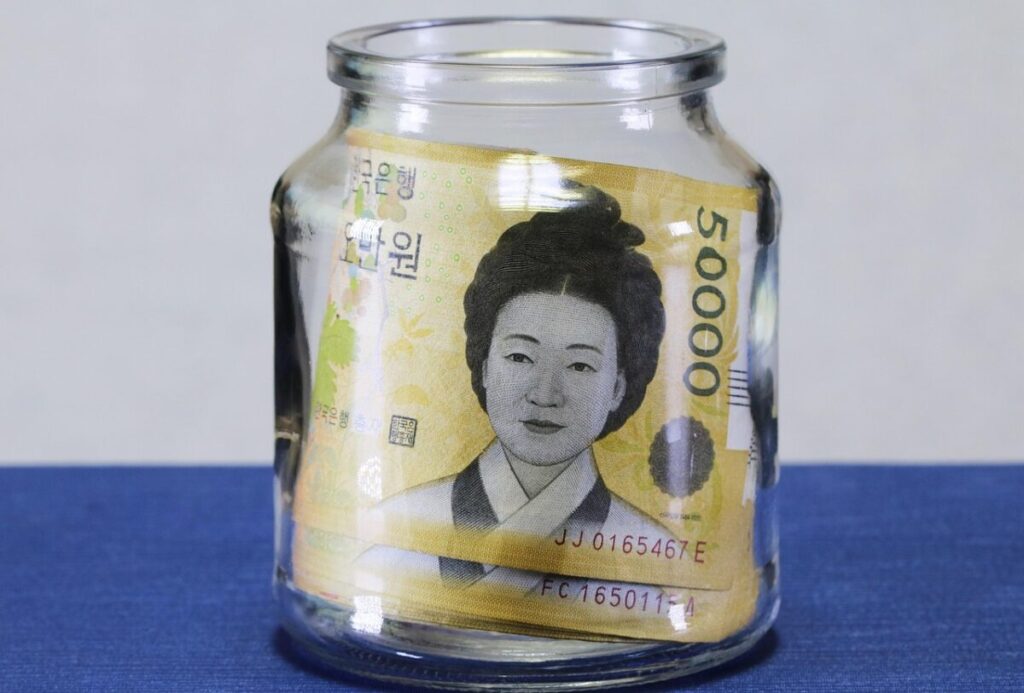
The most shocking realization for a newcomer is the “Financial Limit Account (한도제한계좌).” In an effort to combat sophisticated Voice Phishing scams, Korean banks now restrict all new accounts to a daily transfer limit of just 300,000 KRW (approx. $220).
Imagine trying to pay your first month’s rent or a security deposit for an off-post apartment, only to find your app barking “Limit Exceeded.” To escape this trap, you must prove you are a “Real Resident.”
- The Secret Fix: Most banks won’t tell you this, but bringing a Certified Employment Contract or a Utility Bill (electricity/water) with your name and address is the only way to unlock “Full-access.” Don’t wait until rent is due; bring these on day one.
[The Comparison] Zelle vs. KakaoPay: Speed Meets Security
If you are used to the simplicity of Zelle or Venmo, the Korean system will feel like a paradox.
- The Speed: Once set up, a transfer via KakaoPay or Toss is instantaneous. It is faster than any wire transfer in the US.
- The Security: However, the “Entrance Fee” is high. You will deal with “Security Cards,” “OTP Tokens,” and biometric face-scans that make US banking feel like the 1990s. This is the price of living in a society where money moves at the speed of light.
[The USFK Bridge] From Dragon Hill to Shinhan
Many who start their journey at Dragon Hill Lodge assume their US military bank is sufficient. But without a local 010 number and a Korean bank account, you cannot use Coupang (the Amazon of Korea) or Baemin (food delivery). Transitioning to a local bank like Shinhan or Hana is your first step to true independence in Seoul.

Navigating the Maze: Opening a Korean Bank Account for Foreigners in 2026 vs. the USA
When you step into a major Korean bank branch in a busy district like Jamsil, the first thing you encounter isn’t a person, but a Kiosk. In the US, you might walk up to a single line or wait for a teller to wave you over. In Korea, you must play the “Number Ticket” game.
1. The Strategy of the Ticket (번호표)
Before you even sit down, you must choose your fate at the kiosk. Unlike American banks where one line fits all, Korean banks are strictly segmented:
- General Banking (일반 창구): For deposits, withdrawals, and simple tasks.
- Loan/Credit (대출/기업): Often a separate, more private area for complex financial contracts.
- Foreign Exchange/Global (외환): Some branches in expat hubs have dedicated desks just for you. Pro-tip: If you pick the wrong category, you might wait for 40 minutes only to be told to pull a new ticket.
2. Efficiency vs. Privacy
- In the USA: Banking is often a private affair. You might sit in a separate office for anything beyond a simple deposit. The pace is slower, but the environment is quiet.
- In Korea: It’s a high-speed production line. Tellers sit behind a long continuous counter, separated only by small acrylic glass. You will hear the “Ding-dong” of numbers being called every few minutes. It’s loud, it’s fast, and the pressure to have your documents ready is real.
3. The “Service” Culture
In Korea, you might be offered a small cup of coffee or a vitamin drink while you wait in a sophisticated lounge. However, don’t let the hospitality fool you—the teller’s primary goal is to process your ARC and Employment Certificate with surgical precision. While a US teller might engage in small talk about your weekend, a Korean teller is focused on ensuring every “Stamp (Dojang)” is perfectly aligned.
🔗 Beyond the Paperwork: Explore the Soul of Korea
- [The Coastal Radiance]Gwangan Bridge in Busan: Night View, Fireworks, and Gwangalli Beach Guide
- Once your banking is settled, head south. Discover why the diamond lights of Gwangan Bridge are the ultimate reward for your first week in Korea.
- [The Golden Serenity]Gimje Countryside Travel Guide: Explore Jeollabuk-do’s Rural Korea and Rice Fields
- Escape the digital noise of Seoul. Experience the cinematic vastness of Korea’s rice paddies and the slow, rhythmic life of the Jeollabuk-do countryside.
[The Action Plan] Your Sophisticated Banking Kit
Don’t just walk into a bank; walk in prepared.
- The Identity Triple-Threat: Carry your Passport, your ARC, and your Korean phone number (activated).
- The Address Proof (The Pro-Tip): Bring a printed copy of your Lease Agreement or a Resident Tax Bill. If you are at a dorm or base, get a Proof of Residency from your office.
- The “Income” Evidence: If you are working, a Certificate of Employment (재직증명서) is mandatory to bypass the 300,000 KRW limit.
- The App Setup: Before leaving the counter, ensure the teller helps you install the English version of their mobile app and sets up your “Digital Certificate.”
Korean bank account for foreigners in 2026 is the foundation of your life here. It’s complex, it’s regulated, but once you’re in, the convenience is unmatched.