When people think of K-food, they often imagine sizzling barbecue or colorful bibimbap in a fancy restaurant. However, to truly understand the authentic daily life of a local, you must experience the Korean Company Cafeteria Culture. In 2026, while global inflation continues to rise, this unique system allows many Korean office workers to enjoy a full, nutritionally balanced meal for just 6,000 KRW (approx. $4.50).
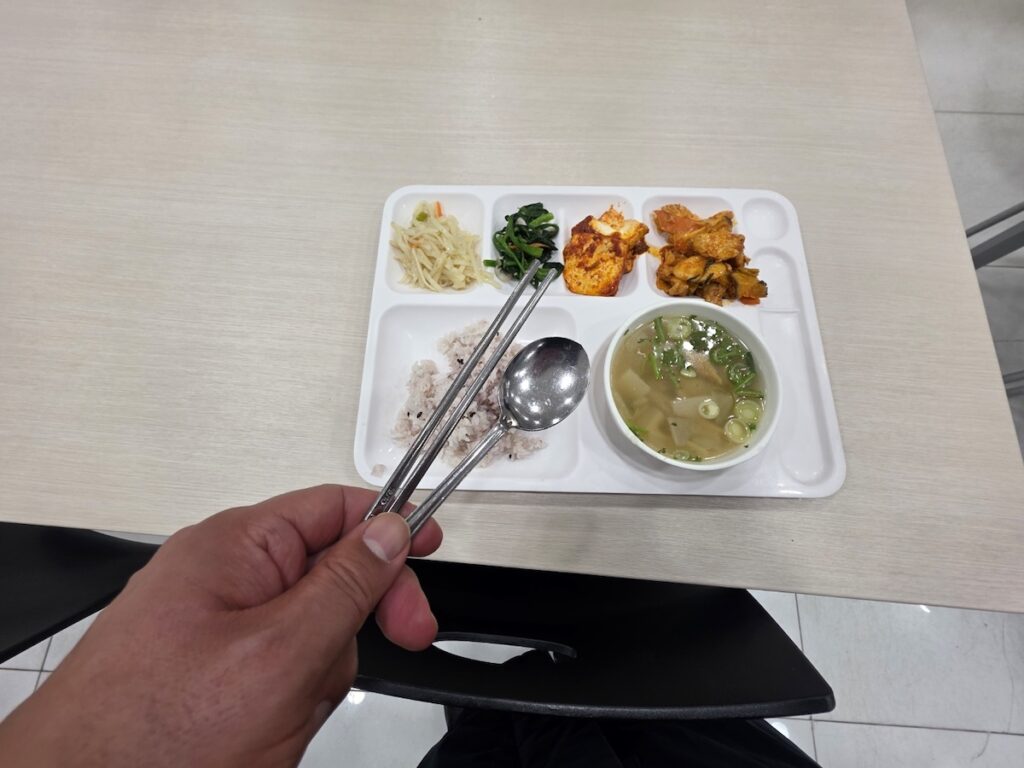
Yesterday, I took photos of my actual lunch at my office to show you why the Korean Company Cafeteria Culture turns an “ordinary” lunch into something truly extraordinary. Beyond just a meal, it represents a standard of welfare and a healthy lifestyle that is now gaining global fascination.
1. The Evolution of “Geupsik”: From School Rituals to Global Fascination
The term “Geupsik” (급식), which literally translates to “provided meal,” is a cornerstone of the Korean social fabric. For a Korean, this isn’t just a lunch; it’s a nostalgic shared experience that spans an entire lifetime, from the first day of kindergarten to the peak of their professional career.
- A National Standard of Nutrition: Korea’s institutional food service is strictly regulated by law to ensure every meal meets specific caloric and nutritional requirements. This system began in schools as a way to provide equal nutritional opportunities to all children, regardless of their family’s economic background. Over time, this “culture of caring through food” became the standard for corporate welfare, where companies viewed providing a high-quality lunch as a vital way to respect and energize their workforce.
- The “K-Geupsik” Phenomenon on Social Media: In recent years, the world has become obsessed with Korean school and office lunches. Viral videos showing trays overflowing with spicy pork, colorful vegetables, and comforting soups have sparked a global debate on how other countries provide for their citizens. International viewers are often shocked to see that even a “standard” $5 office meal includes multiple side dishes (Banchan), a bowl of hot soup, and fiber-rich rice—a stark contrast to the cold sandwiches or expensive, nutrient-poor fast food common in many Western workplaces.
- A Continuous Lifecycle: Unlike in many Western cultures where “school lunch” is something people gladly leave behind after graduation, Koreans carry the Geupsik habit into their adult lives. The transition from school cafeteria to company dining hall is seamless. For a Korean employee, seeing a well-organized Sik-pan (식판) at 12:00 PM is a signal of stability and psychological comfort.
- The Chef’s Professionalism: Behind every great Geupsik is a team of licensed nutritionists and professional chefs. They don’t just “cook”; they engineer meals that balance flavor profiles—salty, spicy, sweet, and savory—ensuring that even though the meal is produced at a large scale, it retains the “home-cooked” feel of a Korean mother’s kitchen.
- Efficiency Meets Hospitality: The Geupsik system is the pinnacle of Korean efficiency. The self-service buffet style allows hundreds of workers to receive a gourmet-level meal in minutes, leaving more time for the essential post-lunch coffee and social interaction with colleagues.
2. The $5 Miracle: Why It’s the Most Cost-Effective Choice in 2026
With the cost of living in Seoul steadily increasing, a typical lunch at a restaurant can easily exceed 12,000 KRW. This makes the 6,000 KRW company cafeteria meal a massive benefit for office workers.
- Affordability: At roughly $4.50, it is arguably one of the cheapest ways to eat high-quality food in Korea.
- Speed and Efficiency: For the busy “Pali-pali” (hurry-hurry) culture of Korea, being able to eat a healthy meal within 15-20 minutes inside the office building is a huge time-saver.
- Variety: Most company cafeterias offer a rotating menu, meaning you never get bored with the same food every day.
3. Anatomy of a “Sik-pan”: The Science of a Balanced Tray
The symbol of Korean institutional dining is the “Sik-pan” (식판)—a stainless steel or plastic tray with specific compartments. This design isn’t just for convenience; it’s a built-in guide for nutritional balance.
In my photo from yesterday, you can see the perfect “Tan-Dan-Ji” (Carbs, Protein, Fat) harmony:
- The Main Carb: Black rice (Heungmi-bap), which is more nutritious than plain white rice.
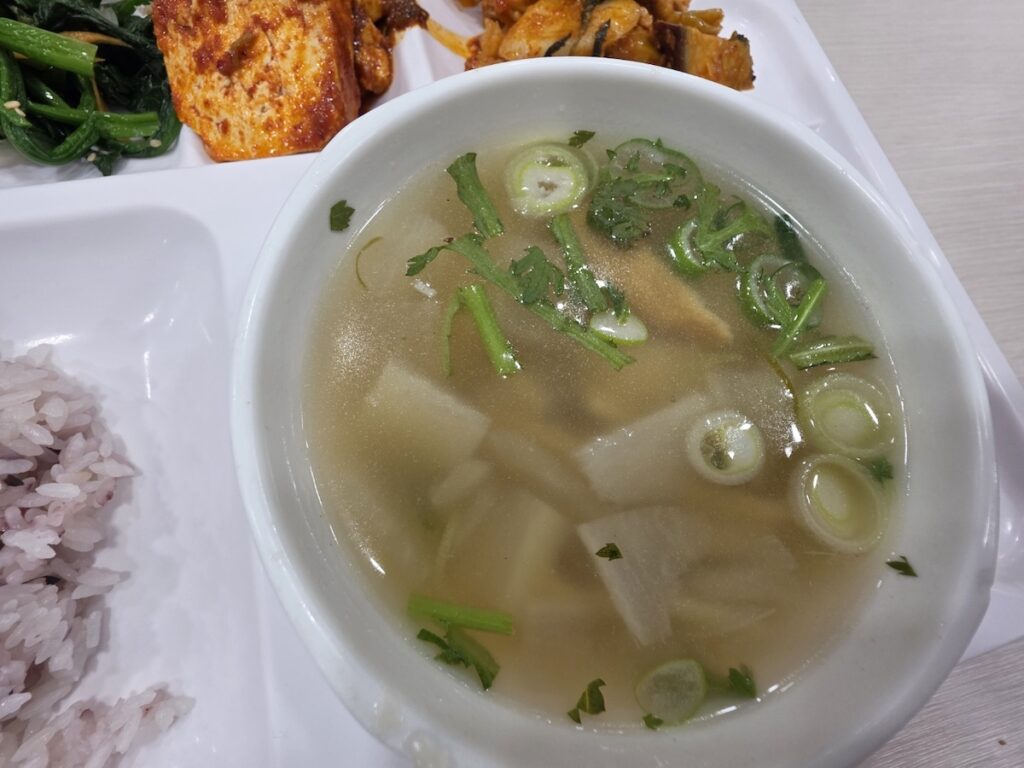
- The Warmth: A clear Radish Soup (Mu-guk) that aids digestion.
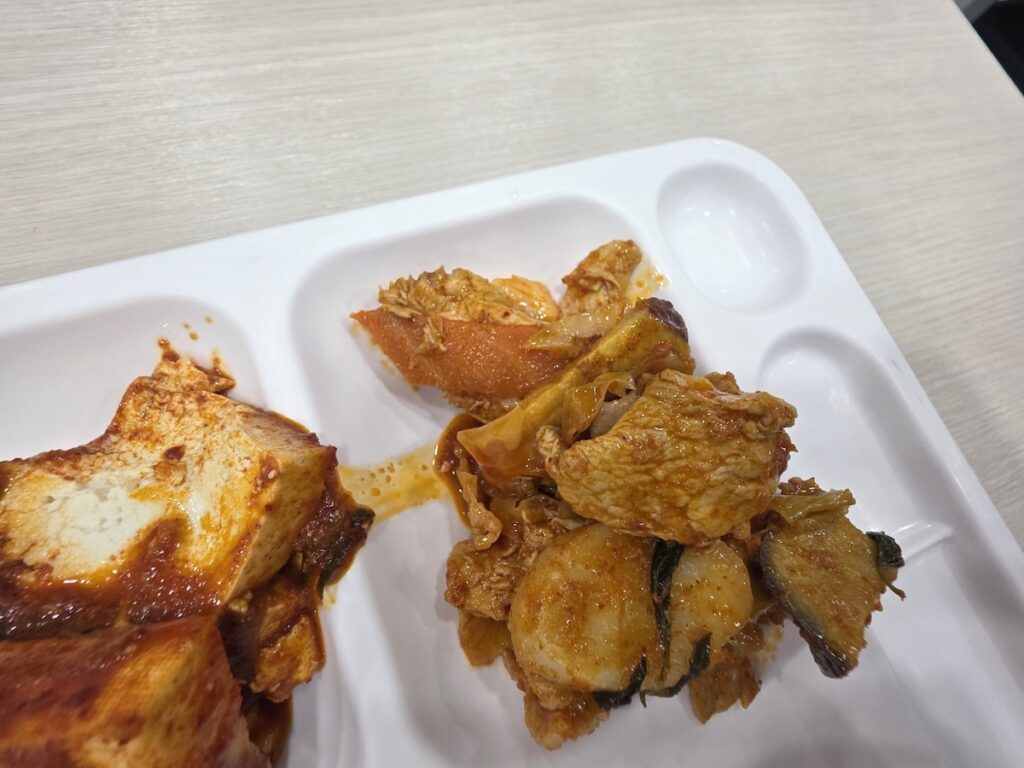
- The Proteins: Braised Tofu (Dubu-jorim) and Stir-fried Pork (Jeyuk-bokkeum), providing essential amino acids.
- The Fiber: Fresh Spinach and other seasoned vegetables (Namul) that provide vitamins and minerals.
4. Why This Culture Fascinates Expats and Travelers
For foreigners living in Korea, the company cafeteria experience is often one of the most surprising parts of their work life.
- The Communal Vibe: Even in a fast-paced environment, eating together with colleagues fosters a sense of belonging.
- Health Consciousness: Unlike processed fast food, these meals are designed by professional nutritionists to be low-calorie yet filling.
- Daily Life Reality: While tourists see the “glamorous” side of K-food, this tray represents the gritty, hardworking, and healthy reality of a Korean employee’s life.
“After a healthy lunch like this, many Koreans look forward to a rewarding evening. Check out our [The Ultimate Guide to Korean Makgeolli Culture] to see how we unwind after work.”
5. Conclusion: A Lesson in Value and Health
Korean company cafeteria culture is more than just a cheap lunch. It is a system that values the well-being of the workforce by providing accessible, healthy, and affordable food. If you ever have the chance to visit a corporate cafeteria in Korea, don’t miss the opportunity to see how $5 can buy you a feast fit for a king.