“Navigating the Korean Deodorant and Body Scent Etiquette Guide is an essential ritual for any global traveler entering the sensory landscape of Seoul.”
In the bustling arteries of Seoul, from the silent efficiency of the Subway Line 2 to the high-rise office clusters of Gangnam, there exists an unspoken law: the Odorless Social Contract. For the global traveler, navigating Best Korean Deodorants and Body Scent Etiquette 2026 is not just about personal hygiene; it is about respecting a cultural space that views body odor as a sensory intrusion.
Unlike many Western cultures where a strong cologne or a natural “musk” might be accepted, South Korean society leans toward a neutral or soapy baseline. This is partly rooted in biology—the ABCC11 gene, which renders a vast majority of the Korean population naturally devoid of the bacteria that cause underarm odor—and partly in a collective etiquette that prioritizes the comfort of the group over individual expression.
1. The Science of the “No-Scent” Standard: Biological Rarity meets Social Intelligence
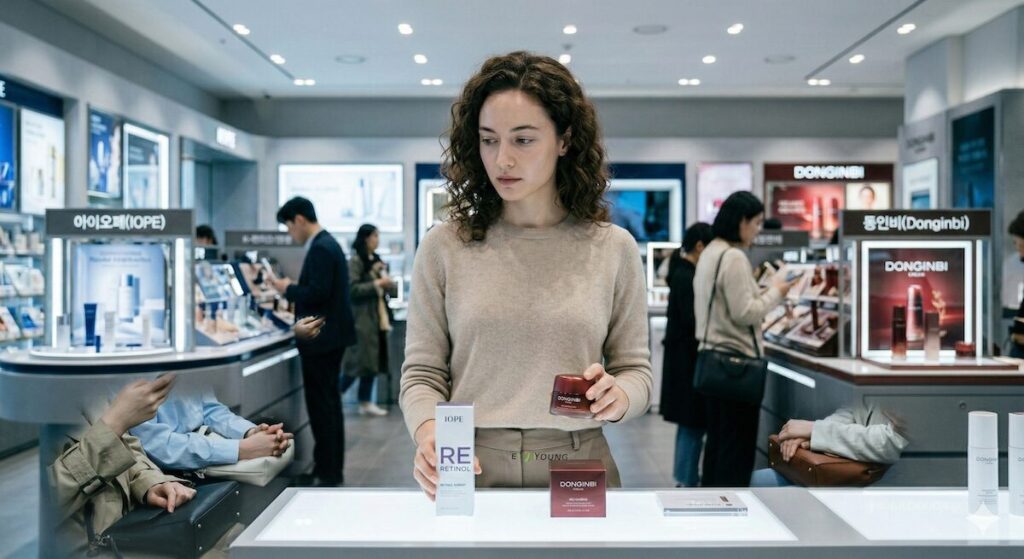
To the uninitiated, the scarcity of heavy-duty antiperspirants in Seoul’s premier shopping districts might seem like a retail oversight. However, this is rooted in a profound biological anomaly that sets the Korean peninsula apart from the rest of the world. Understanding this “No-Scent” standard is the first step in mastering the sensory landscape of South Korea.
The Genetic Foundation: The ABCC11 Miracle
The primary driver behind Korea’s odorless culture is the ABCC11 gene. Scientific studies have consistently shown that South Koreans possess the “A” allele of this gene at a frequency nearing 100%. This specific genetic configuration dictates the production of “dry” earwax and, more crucially, a lack of the volatile organic compounds (VOCs) in apocrine sweat glands that bacteria feast upon to create body odor.
While much of the global population carries the “G” allele—which triggers the production of odorous sweat—Koreans are biologically predisposed to be the least odorous ethnic group on Earth. For the global traveler, this creates a unique “Sensory Baseline.” In a society where 99% of the people naturally emit zero pungent body odor, any deviation from this norm is not just noticed; it is magnified.
The Humidity Paradox and the “Sticky” Threat
While Koreans may not produce pungent sweat, the peninsula’s summers are notoriously humid, reaching levels of 80% or higher. This creates a different type of sensory challenge: “Kkeun-jeok-im” (The Sticky Sensation).
In Korean skincare science, the enemy is not the smell, but the texture. This is why Korean deodorants and body care products prioritize “Sebum Control” and “Instant Drying” over heavy floral masking. The local market is saturated with “cooling mists” and “powder sheets” designed to lower skin temperature and eliminate stickiness. For a foreigner, using a thick, creamy Western deodorant in this humidity can feel suffocating and “heavy,” clashing with the local desire for a weightless, airy finish.
Odor as a Metric of Social Intelligence
In South Korea, managing one’s scent is viewed as a form of “Nunchi” (the art of sensing others’ feelings). To have a noticeable body odor in a shared space—whether it is a high-speed KTX train or a minimalist cafe in Hannam-dong—is often interpreted as a lack of self-discipline or a disregard for the collective comfort.
This has led to the rise of “Etiquette Technology.” From specialized fabric sprays that neutralize the smell of charcoal-grilled meat to industrial-grade air purifiers in every public building, the environment is engineered to maintain a “Zero-Scent” vacuum. For the sophisticated visitor, adopting this standard—by focusing on neutralization rather than heavy perfuming—is the ultimate sign of cultural integration and social intelligence.
2. Gender-Specific Strategies: A Seasonal Protocol for the Global Traveler
Mastering Best Korean Skincare Ingredients and Brands 2026 requires a tactical approach to body care that shifts with the lunar calendar. In Korea, a deodorant is not a “one-size-fits-all” product; it is a seasonal tool tuned to the specific physiological needs of men and women.
The Masculine Protocol: Precision and Neutralization
Korean men’s grooming is defined by “The invisible maintenance.” The goal is to appear as though no effort has been made, yet maintaining a clinical level of freshness.
Spring & Autumn: The Transition Phase
During the mild but dry seasons, the focus is on light protection and skin health.
- Recommended Product:Nivea Men Silver Protect Roll-on (Korea Edition)
- Scientific Edge: Utilizes silver ions to inhibit 99% of odor-causing bacteria without heavy aluminum salts.
- Price: ₩8,000 – ₩10,000.
- The Lifestyle Fit: Perfect for those moving between air-conditioned offices and outdoor cafe terraces.
Summer: The High-Intensity Combat
The monsoon season (Jangma) requires industrial-grade humidity control.
- Recommended Product:Dr. Banggiwon Power Barrier Deodorant Stick
- Scientific Edge: A high-adhesion “Powder-Stick” formula that absorbs sebum 4x faster than standard rollers. It prevents the “Sticky shirt” syndrome common in Gangnam’s humid afternoons.
- Price: ₩15,000 – ₩18,000.
- Recommended Product (Medical Grade):NoSweat (Noseun-sen)
- Scientific Edge: Available at local pharmacies (Yak-guk), this is a 20% Aluminum Chloride solution for hyperhidrosis. It is applied at night and washed off in the morning.
- Price: ₩12,000 – ₩15,000.
The Feminine Protocol: Aesthetic Brightening and Texture
For women, the Best Korean Skincare Ingredients and Brands 2026 philosophy extends to the underarms. The focus is on “Ton-up” (Brightening) and “Soothing” (Calming after hair removal).
Winter: The Hydration & Brightening Phase
Even in winter, the friction from heavy layers (Long-padding) requires care.
- Recommended Product:Nivea Extra Brightening Serum Roll-on
- Scientific Edge: Infused with 10x Vitamin C and Avocado oil to repair the skin barrier and brighten darkened pigmentation caused by friction.
- Price: ₩9,000 – ₩12,000.
- The Ritual: Apply after a warm bath to ensure the serum penetrates the pores before layering winter wool.
Summer: The Visual Perfection Phase
In a culture that values flawless skin, “White-cast” and “Pore-visibility” are the enemies.
- Recommended Product:Belif The True Anti-Perspirant Stick
- Scientific Edge: A luxury herbal formula from LG Household & Health Care. It uses Napier’s original formula to provide a “Velvet Finish” that blurs the skin texture while controlling moisture.
- Price: ₩25,000 – ₩30,000 (Department Store Grade).
- The Lifestyle Fit: Ideal for wearing sleeveless luxury Hanbok or high-fashion summer ensembles in Hannam-dong.
[Comparative Price & Seasonal Matrix: 2026 Edition]
| Season | Priority | Male Recommendation | Female Recommendation | Avg. Price |
| Spring | Freshness | Nivea Silver Protect | Crystal Mineral Stone | ₩10,000 |
| Summer | Anhydrous | Dr. Banggiwon Stick | Belif Velvet Stick | ₩20,000+ |
| Autumn | Neutralization | W.Dressroom Mist | Innisfree No-Sebum Powder | ₩8,000 |
| Winter | Brightening | Neutrogena Unscented | Nivea Vitamin C Serum | ₩11,000 |
3. Cultural Etiquette: The Architecture of Sensory Respect
In the global discourse of travel, “etiquette” usually refers to visual gestures or verbal formalities. However, in South Korea, the most sophisticated form of manners is invisible. The Best Korean Deodorants and Body Scent Etiquette 2026 is built upon the “Architecture of Sensory Respect”—a social system where silence and scentlessness are the ultimate currencies of refinement.
The “Invisible Presence”: Why Less is Always More
Global media outlets, including the BBC and The New York Times, have frequently analyzed Korea’s unique “Collective Sensitivity.” Unlike the fragrance-heavy cultures of Western Europe or the Middle East, the Korean social fabric is woven with a preference for “Cleanness” over “Perfuming.”
- The Newspaper Insight: Leading Korean dailies like The Chosun Ilbo have often featured editorials on “Scent Pollution” (Hyang-gi Gong-hae). These articles argue that in a high-density urban environment like Seoul, imposing one’s personal fragrance on others is a breach of the “Public Peace.”
- The Takeaway: To be truly elegant in Korea is to have a “Water-like” presence. Your scent should not precede you into a room, nor should it linger after you leave. It is a philosophy of “Minimalism in Motion.”
The “K-BBQ” Paradox: Post-Dining Deodorization
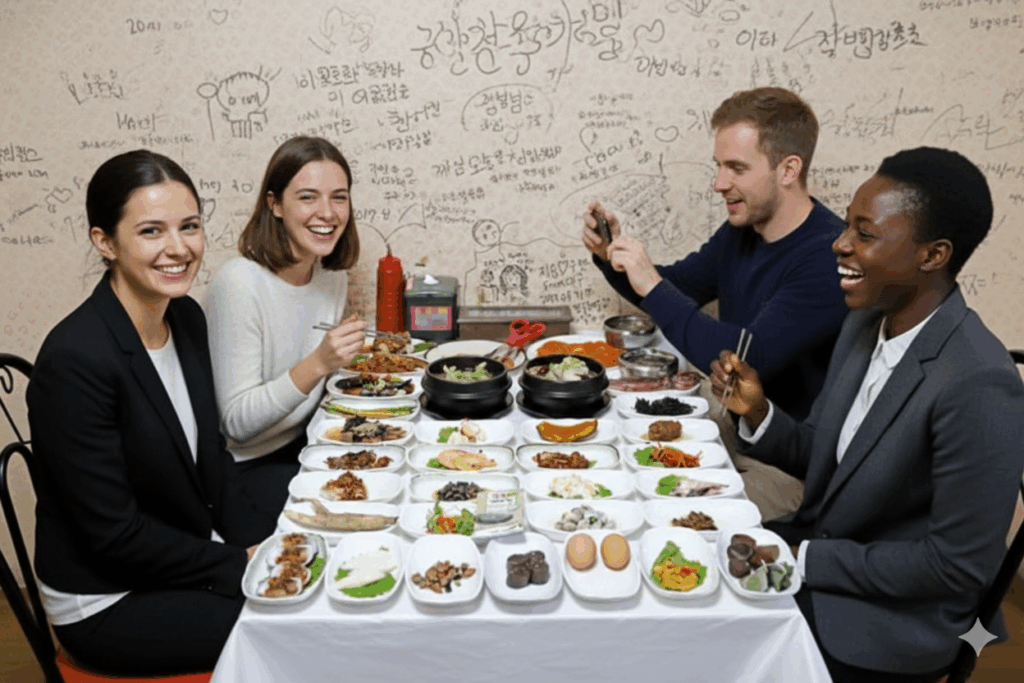
The most challenging trial for any traveler is the transition from a traditional Korean meal to a professional or social setting. The aroma of garlic, fermented paste, and charcoal-smoke is celebrated at the table but stigmatized in the elevator.
- Professional Rituals: In major corporations like Samsung or Hyundai, it is common practice for employees to keep “Fabric Refreshers” (like Perron or W.Dressroom) in their office lockers.
- The Social Intelligence (Nunchi): After a meal, a sophisticated traveler does not simply “re-perfume” to hide the smell. Instead, they utilize the specialized “Deodorizing Booths” found in many upscale BBQ restaurants or use portable “Breath Mists” (like O-Clear). This act demonstrates a high level of Nunchi—showing that you are aware of how your sensory trail affects the collective atmosphere.
Sensory Etiquette in High-Density Zones (Subways & Elevators)
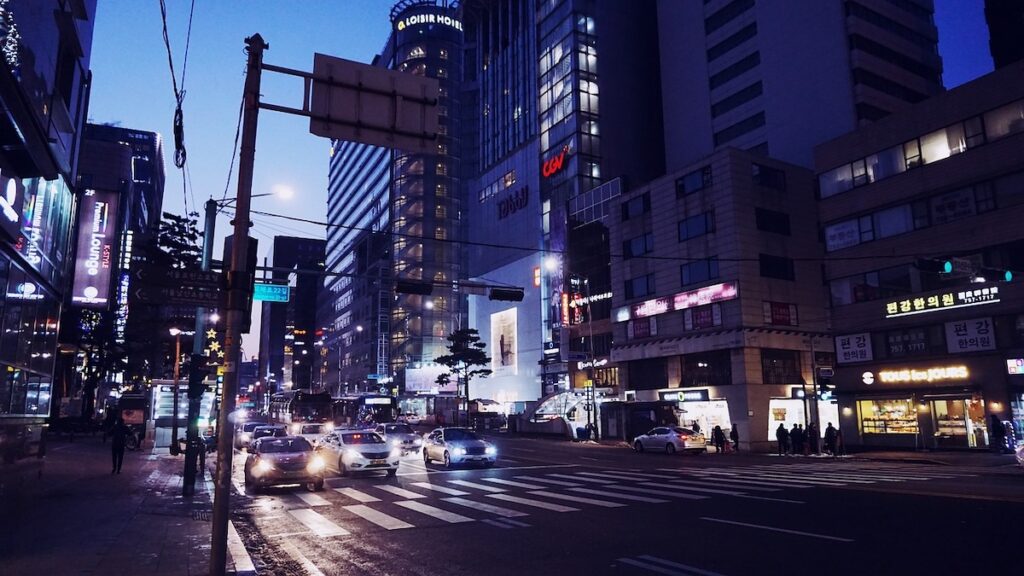
South Korea’s public infrastructure is among the most advanced in the world, but its density is extreme. In a packed Line 2 subway car during rush hour, the “Sensory Barrier” becomes a critical survival tool.
- The Unspoken Rule: In these confined spaces, the lack of scent is considered a “Civil Right.” International travel journals have noted that while foreigners might worry about being “smelled,” Koreans are equally concerned about being “intruded upon” by heavy artificial scents.
- The Pro Tip: If you are attending a meeting in a high-rise in Yeouido or Teheran-ro, avoid using heavy “Oud” or “Spicy” notes. Opt for “Cotton,” “Soap,” or “Citrus” profiles that mimic the smell of fresh laundry. This aligns your presence with the Korean ideal of being “Fresh and Diligent.”
Related Guides: Elevating the Korean Narrative
- The Porcelain Foundation: 10 Best Korean Skincare Ingredients and Brands 2026 Before mastering the invisible scent, understand the molecular canvas of the face. This definitive guide deconstructs the ten most potent active ingredients defining the 2026 K-Beauty landscape, offering a clinical yet poetic look at the brands that have perfected the art of the skin barrier.
- Korea Travel: LG Beauty Brand Guide: Beyond Olive Young for 30+ Skin (2026) For those seeking a level of restoration that transcends viral trends, we go inside the R&D laboratories of the LG Household & Health Care empire. Discover the high-performance anti-aging protocols of The History of Whoo and Sum37, specifically curated for the sophisticated 30+ demographic.
- Korean Exfoliating Mitt: The Amazing Secret to Celebrity “Glass Skin” The true foundation of “Glass Skin” starts with the ritual of exfoliation. Explore the humble yet revolutionary history of the “I-taly Towel”—the abrasive green mitt found in every Korean bathhouse that remains the best-kept secret behind the translucent, poreless glow of Korea’s top celebrities.
4. Conclusion: The Art of Invisible Elegance
The journey through Best Korean Deodorants and Body Scent Etiquette 2026 is ultimately an invitation to practice a higher form of social grace. In South Korea, beauty is not merely a visual spectacle—it is a multisensory symphony where “Silence” and “Cleanliness” are the leading movements. By understanding the biological rarity of the ABCC11 gene and adopting the meticulous seasonal protocols of the local elite, you are doing more than just managing hygiene; you are mastering the art of the “Invisible Presence.”
Whether you are navigating the high-density pulses of the Seoul subway or sharing an intimate meal in a Hannam-dong bistro, the goal is to align your sensory trail with the Korean ideal of “Nunchi.” True elegance in this peninsula is found in the subtle trail of fresh laundry, the meticulous neutralization of post-dining aromas, and the respectful restraint of one’s olfactory footprint. To travel through Korea with this awareness is to experience the country not as a mere visitor, but as a sophisticated participant in its most refined social contracts.