A korean exfoliating mitt is one of those small bathroom items that can surprise foreigners more than expensive K-beauty products.
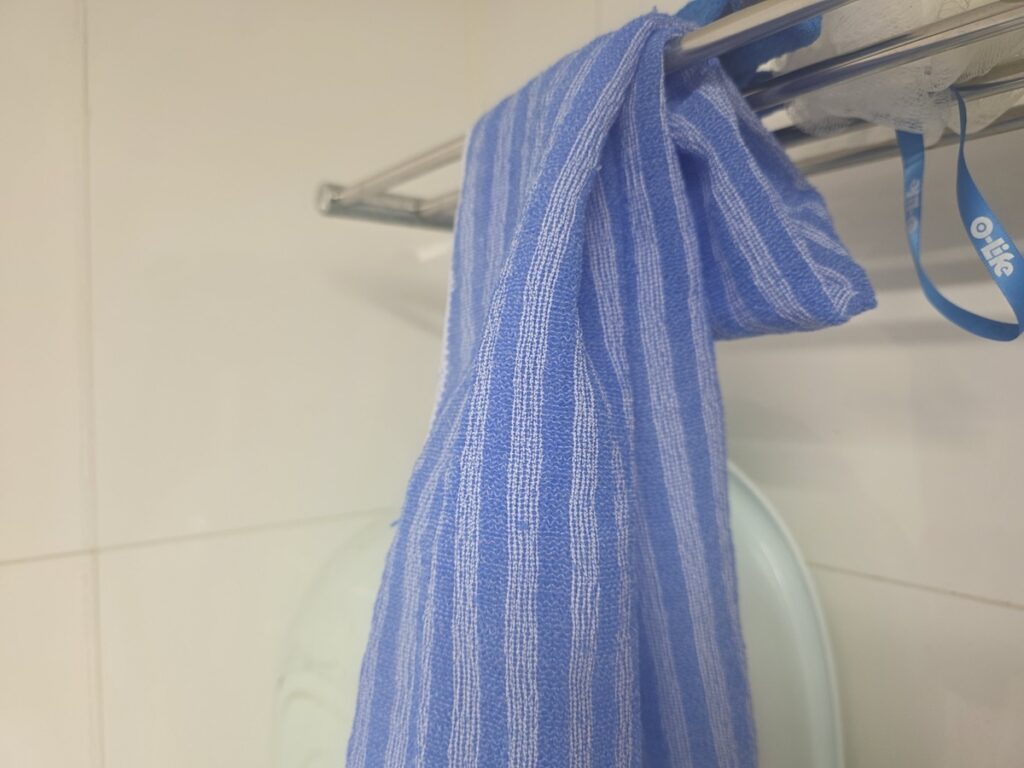
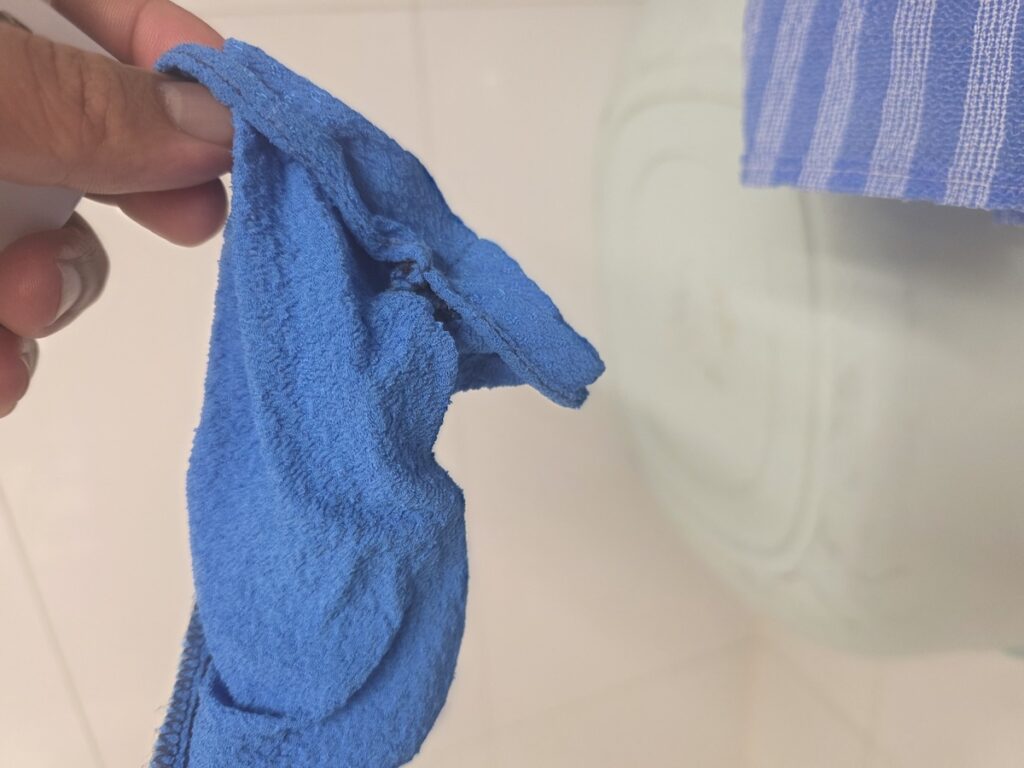
At first, it looks simple: a rough little towel, often green, pink, yellow, or blue. It does not look luxurious. It does not come in a glossy bottle. It does not feel like the kind of product that would appear in a modern skincare routine.
But in Korea, this small scrub towel is part of a much older bath culture.
It is used after warm water softens the skin, often at home, in a public bathhouse, or at a jjimjilbang. Many Koreans know the feeling of soaking first, scrubbing the body, seeing dead skin roll off, and leaving the bath feeling strangely light and clean.
For foreigners, the first experience can be shocking. The towel feels rough. The amount of dead skin that appears can look unbelievable. And the whole ritual may feel very different from Western shower culture, where daily soap, body wash, and soft loofahs are more common.
This guide explains what a Korean exfoliating mitt is, why it is called an Italy towel, how to use it safely, where to buy one in Korea, and what to know before trying it for the first time.
Quick Answer: What Is a Korean Exfoliating Mitt?
A Korean exfoliating mitt is a rough bath scrub towel used to remove dead skin from the body after the skin has been softened with warm water.
In Korea, it is often called an Italy towel, or 이태리 타올. It is also connected to the Korean word 때밀이, which refers to scrubbing off dead skin and body grime.
| Question | Short Answer |
|---|---|
| Korean name | 이태리 타올, 때밀이 타올 |
| English name | Korean exfoliating mitt, Italy towel, Korean scrub towel |
| Main use | Body exfoliation |
| Best timing | After soaking or a warm shower |
| Face use | Not recommended for most people |
| Frequency | Occasional, not daily |
| Where to buy | Daiso, supermarkets, Olive Young, jjimjilbang shops |
| Main caution | Do not scrub too hard or use on irritated skin |
The most important thing to know is simple: this towel is usually for the body, not the face. It works through physical friction, so using it too hard or too often can irritate your skin.
Why Is It Called an Italy Towel?
The Name Sounds More Foreign Than the Object Feels
One funny detail is the name.
In Korea, many people call it 이태리 타올, which means “Italy towel.” But if you are Italian or from Europe, you may have no idea what this towel is.
The name is part of Korean everyday language now, but the object itself feels very Korean because of how strongly it is connected to bathhouse culture, public baths, and body scrubbing.
For foreigners, this can be confusing. You may hear “Italy towel” and expect something European or luxurious. But what you actually get is a rough, practical scrub cloth used for removing dead skin.
It Is Not a Soft Spa Towel
The Korean exfoliating mitt is not soft. That is the point.
It is rough enough to create friction when used on softened skin. This friction helps remove dead skin from the body. The result can feel very satisfying, but it can also be too much if you use it aggressively.
This is why Korean people often use it after soaking in warm water, not on completely dry skin.
Why Foreigners Find Korean Scrub Towels Surprising
Western Shower Culture Is Usually Softer
Many foreigners are used to shower routines that involve body wash, soft sponges, loofahs, washcloths, or gentle exfoliating products.
The Korean scrub towel feels more direct. It is not about fragrance, foam, or packaging. It is physical. You rub the skin, and you can often see the dead skin come off.
That visible result is one reason people remember it.
The “Gray Noodles” Moment
Many first-time users talk about the strange gray rolls that appear when scrubbing. These are usually dead skin cells mixed with moisture, body oil, and residue from the skin surface.
It can feel both gross and satisfying.
This is also why people sometimes overdo it. When you see something coming off your skin, it is tempting to keep scrubbing. But more scrubbing does not always mean better skin. It can simply mean more irritation.
How to Use a Korean Exfoliating Mitt Safely
Step 1: Soften the Skin First
Do not start scrubbing on dry skin.
The classic Korean method is to soak in warm water first. At a jjimjilbang or public bath, people may sit in warm baths before scrubbing. At home, you can take a warm shower or bath for several minutes.
The skin should feel softened, not raw.
Step 2: Use Light Pressure
Put the mitt on your hand and rub the body in gentle strokes.
Start with areas such as:
- arms
- legs
- back
- shoulders
- feet
- elbows
- knees
Avoid using strong pressure at first. If you are new to it, your goal is not to scrub until your skin turns red. Your goal is to see how your skin reacts.
Step 3: Avoid Sensitive Areas
Do not use a Korean exfoliating mitt on:
- face
- neck if sensitive
- sunburned skin
- cuts or wounds
- eczema patches
- acne-inflamed areas
- freshly shaved skin
- irritated skin
- areas after waxing or laser treatments
The American Academy of Dermatology advises choosing an exfoliation method based on skin type and notes that mechanical exfoliation can be too irritating for dry, sensitive, or acne-prone skin. It also recommends being careful with strong exfoliation methods if your skin is prone to dark spots after irritation or injury.
That warning matters here because an Italy towel is a mechanical exfoliation tool.
Step 4: Rinse and Moisturize
After scrubbing, rinse your skin well.
Then apply a simple body lotion or moisturizer. You do not need a complicated routine. A fragrance-free body lotion, ceramide cream, or gentle moisturizer is enough for many people.
The skin may feel smoother after scrubbing, but it can also be more sensitive. Moisturizing helps reduce dryness and tightness.
How Often Should You Use an Italy Towel?
Not Every Day
This is one of the most important points.
A Korean exfoliating mitt is not a daily shower tool for most people. It is too rough for everyday use, especially if you have dry, sensitive, or easily irritated skin.
Many people use it occasionally, such as once every one or two weeks, but there is no perfect schedule for everyone. Your skin type matters.
If your skin feels tight, red, stinging, itchy, or uncomfortable afterward, you may be scrubbing too hard or too often.
Listen to Your Skin
Use less pressure and less frequency if your skin is:
- dry
- sensitive
- acne-prone
- eczema-prone
- easily red
- prone to dark marks after irritation
- recently sunburned
- recently shaved
If you have a skin condition, it is safer to ask a dermatologist before using rough physical exfoliation.
Home Shower vs Korean Bathhouse
Using It at Home
At home, using an Italy towel is simple.
Take a warm shower, wait until your skin softens, then scrub lightly with the mitt. Rinse thoroughly and moisturize afterward.
This is the easiest way to try it without feeling self-conscious.
Using It at a Jjimjilbang or Public Bath
In a Korean public bath or jjimjilbang, the scrub culture can feel more intense.
You may see people soaking, scrubbing, rinsing, and repeating the process. Some bathhouses also offer professional body scrub services, often called seshin or 때밀이.
For foreigners, this can be both fascinating and intimidating. Korean public baths often involve nudity in gender-separated bath areas, and the body scrub may be much stronger than what you would do at home.
If it is your first time, it may be better to observe the bathhouse routine first before booking a full scrub service.
What Is a Professional Korean Body Scrub?
Seshin Is Stronger Than Home Scrubbing
A professional Korean body scrub is usually done by a bathhouse scrub attendant. The scrubber uses a rough mitt to exfoliate the body while you lie on a table in the bathing area.
This experience can feel very different from a spa massage.
It is practical, direct, and sometimes surprisingly vigorous. Many Koreans see it as a normal part of bathhouse culture, but foreigners may find it intense at first.
Should First-Timers Try It?
You can try it if you are comfortable with Korean bathhouse culture, but it is not necessary.
If you are nervous about nudity, strong scrubbing, or language barriers, start with using an Italy towel at home first.
If you do try a professional scrub, remember:
- do not go with sunburned or irritated skin
- do not scrub right after shaving
- say if something hurts
- moisturize afterward
- drink water after the bath
Where to Buy a Korean Exfoliating Mitt in Korea
Daiso
Daiso is one of the easiest places to buy a Korean exfoliating mitt. It is cheap, practical, and easy to find in many neighborhoods.
Look in the bathroom, shower, or household goods section.
Supermarkets and Local Stores
Large supermarkets and neighborhood household stores often sell Italy towels. You may find different colors, textures, or sizes.
Some are mitt-shaped. Others are long towels that are easier to use on the back.
Olive Young
Olive Young may carry body exfoliation products, though the selection can vary by store. It is better for skincare and beauty-related items, while Daiso or supermarkets are often easier for basic scrub towels.
Jjimjilbang or Bathhouse Shops
Some public baths or jjimjilbangs sell scrub towels and bath items near the entrance or changing area.
This can be convenient if you forgot to bring one.
Which Color Should You Choose?
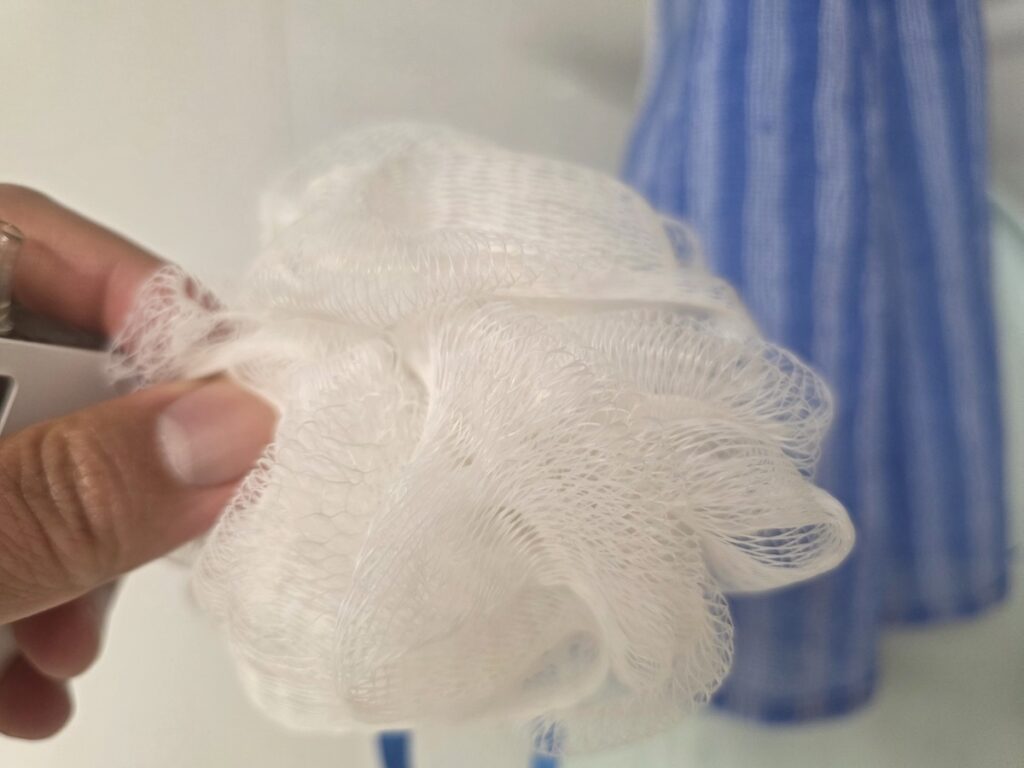
Some Korean scrub towels come in different colors and textures. In many cases, the color may indicate roughness or product type, but this can vary by brand.
Do not assume one color always means the same strength everywhere.
If you are new, choose a softer or medium texture and use light pressure. You can always scrub more next time, but you cannot undo irritation once your skin barrier is damaged.
Common Mistakes First-Timers Make
Using It on the Face
This is the biggest mistake.
The face is more delicate than the body. A rough Korean exfoliating mitt can easily irritate facial skin. If you want facial exfoliation, use a product designed for the face and follow the instructions carefully.
Scrubbing Too Hard
You do not need to attack your skin.
If your skin becomes bright red, painful, or stinging, stop. The goal is smooth skin, not damaged skin.
Using It Too Often
Daily use can be too much for many people. Treat the Italy towel as an occasional body exfoliation tool.
Skipping Moisturizer
After physical exfoliation, the skin can feel dry. Moisturizer is not optional if your skin feels tight.
Using It Before Sun Exposure
Freshly exfoliated skin can feel more sensitive. Harvard Health notes that exfoliating can make skin more prone to sunburn, so be careful with sun exposure and use sun protection after exfoliation.
Is a Korean Exfoliating Mitt Worth Trying?
Yes, but with realistic expectations.
A Korean exfoliating mitt can make the body feel smoother and cleaner when used carefully. It can also help foreigners understand a very normal part of Korean bath culture.
But it is not magic. It will not give you celebrity glass skin overnight. It is not a cure for skin problems. It is not something you should use aggressively every day.
Its real value is more cultural and practical.
It shows how Korean self-care is not always delicate, expensive, or product-heavy. Sometimes it is direct, physical, and based on an older bathhouse habit: soak, scrub, rinse, rest.
Final Thoughts
A Korean exfoliating mitt may look like a small, ordinary towel, but it carries a lot of Korean bath culture inside it.
It belongs to a world of warm baths, jjimjilbangs, public bathhouses, body scrubs, and the familiar Korean feeling of removing 때 from the body. For foreigners, that experience can feel strange at first. It may even feel too rough. But once you understand how to use it gently and safely, the Italy towel becomes easier to appreciate.
The key is not to chase dramatic results. Use warm water first. Scrub lightly. Avoid your face. Do not use it on irritated skin. Moisturize afterward. And remember that this is not a daily beauty secret—it is an occasional body care tool from Korean bath culture.
That makes it more interesting than another skincare trend.
It is not just about exfoliation. It is about seeing how everyday Korean self-care can be practical, physical, and deeply tied to the culture of bathing.