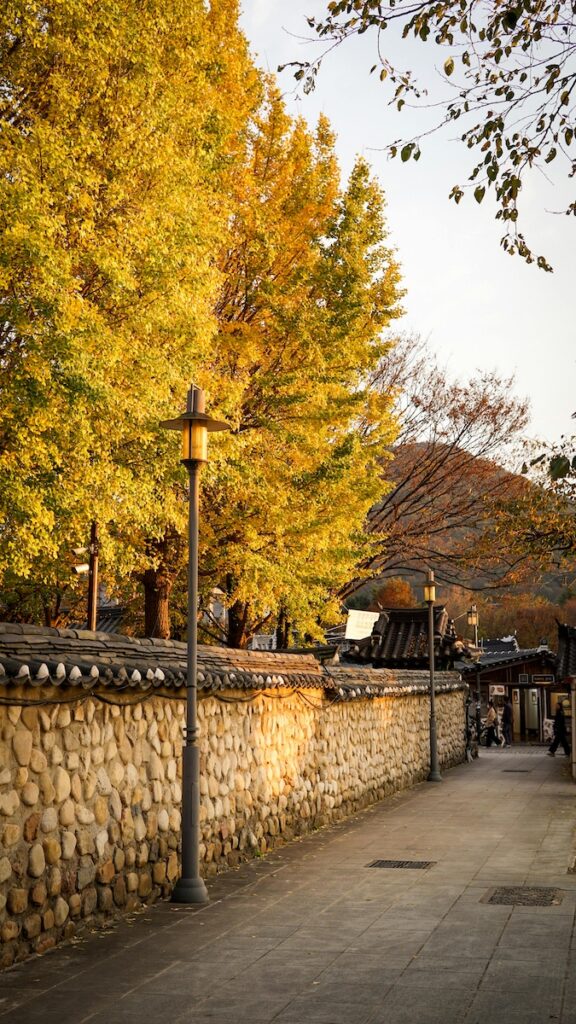
Luxury Korea Travel for Seniors in 2026 is defined by a profound respect for pace, heritage, and the art of “Nunchi“—the intuitive ability to provide comfort before it is even requested. In a culture that has historically revered its elders as the keepers of wisdom, Korea has developed a specialized infrastructure that caters to the silver elite with surgical precision. This is not a country of exhausting treks; it is a sanctuary where the heights are accessible by limousine and the healing is rooted in millennia-old botanicals.
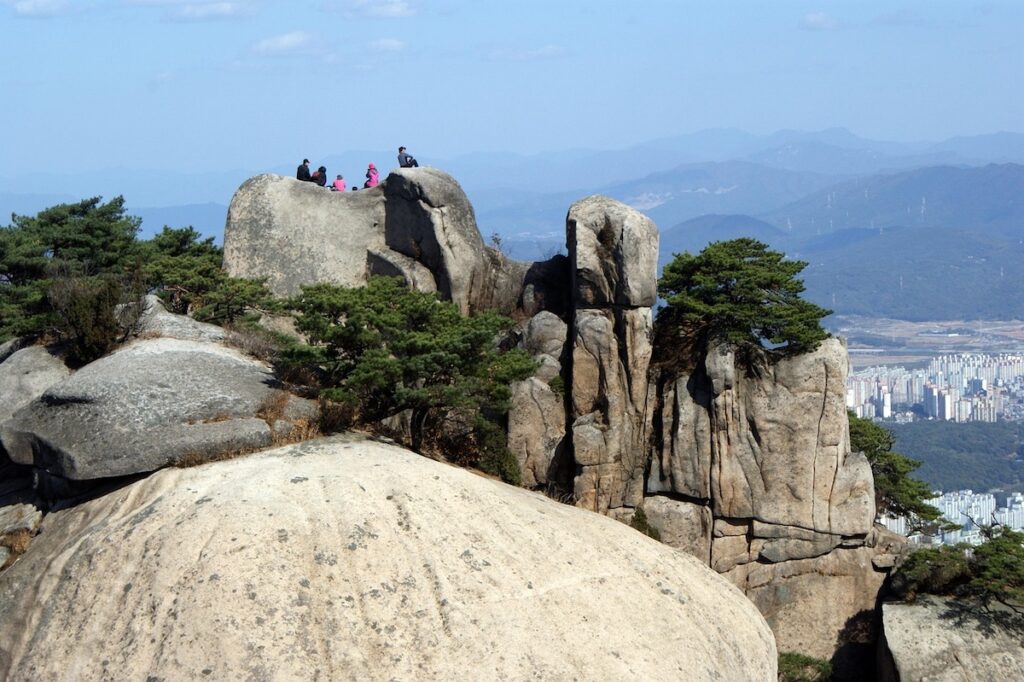
1. The Gentle Peak: Reaching the Clouds Without the Climb
In the philosophy of Luxury Korea Travel for Seniors, the mountain is not an adversary to be defeated, but a sanctuary to be observed. While younger hikers tackle the granite crags of Bukhansan, the sophisticated senior traveler understands that Korea’s most stunning vistas are best enjoyed with minimal physical cost. The “Gentle Peak” ritual is a curated experience where the ascent is handled by engineering, leaving only the serene beauty for the traveler.
- The Limousine Ascent to Namhansanseong: As a UNESCO World Heritage site, Namhansanseong offers a panoramic view of the Gyeonggi basin. Instead of trekking from the base, elite travelers utilize private chauffeured services that navigate the winding paved roads directly to the South Gate (Jigyeongmun). From here, the walking paths are exceptionally level—composed of ancient stone and modern wooden decks—allowing for a dignified stroll that spans centuries of history without a single steep incline.
- The Electric Mobility of Namsan: For those staying in the heart of the city, the Namsan circuit has been revolutionized for senior accessibility. Yellow electric circulation buses and the Namsan Cable Car provide a seamless transition from the urban bustle to the forest canopy. Once at the top, the “Fortress Path” offers a 360-degree view of the Han River. It is a place where the air is noticeably thinner and cleaner, providing a natural respiratory ritual that has been a staple of Korean longevity for generations.
- Bukhansan’s Hidden Terrace: Even the formidable Bukhansan National Park has been tamed for the silver elite. Certain entry points, like the one near Jingwansa Temple, offer “Barrier-Free” forest paths. These are wide, flat wooden boardwalks that penetrate deep into the pine forests, allowing seniors to immerse themselves in the “Phytoncide” (natural forest oils) while remaining perfectly stable on level ground.
2. Royal Recovery: The Sulwhasoo & Guerlain Rituals
Wellness within the realm of Luxury Korea Travel for Seniors moves beyond simple relaxation; it is a clinical and spiritual restoration rooted in the concept of “Bo-yang” (Restorative Nourishment). For the senior body, which may carry the fatigue of long-haul flights or the stiffness of age, these rituals are designed to stimulate the “Qi” (vital energy) without the jarring pressure of traditional sports massage.
- The Sulwhasoo Ginseng Ritual (The Art of Longevity): Sulwhasoo is not merely a cosmetic brand; it is a custodian of Korean herbal medicine. Their flagship rituals for seniors focus on Korean Red Ginseng, aged for six years to reach its peak potency. The treatment begins with a warm foot bath infused with medicinal herbs to draw the “cold energy” away from the heart. The massage itself uses “Jaeum” (balancing) techniques—soft, rhythmic strokes that improve lymphatic drainage and skin elasticity. It is a meditative experience where the scent of sandalwood and ginseng creates a sensory cocoon, transporting the traveler back to the serenity of a Joseon-era royal villa.
- The Guerlain Sanctuary at The Shilla (Western Precision, Eastern Soul): For those who prefer a more clinical approach to wellness, the Guerlain Spa at The Shilla Seoul offers a bespoke “Silver Recovery” program. Every element, from the ergonomic curvature of the treatment beds to the specific temperature of the towels, is calibrated for senior comfort. This ritual combines French aesthetic precision with the legendary hospitality of the Shilla. It is particularly effective for post-travel joint stiffness, utilizing specialized oils that warm the muscles and promote deep, restorative sleep—a vital component for any high-end traveler over sixty.
- The Thermal Springs of the Elite: Beyond the urban spas, this ritual often extends to the “Oncheon” (natural hot springs) of regions like Seorak or Asan. These waters are rich in minerals that have been prescribed by royal physicians for centuries to treat neuralgia and arthritis. In a private “Ryokan-style” villa, the senior traveler can soak in the healing waters while overlooking a snow-capped forest, completing the cycle of royal recovery.
3. Heritage with a Twist: Sophisticated Hansik for the Silver Palate
In the realm of Luxury Korea Travel for Seniors, dining is not merely a biological necessity; it is a theatrical performance of lineage and seasonal alchemy. For the silver traveler, the primary challenge of traditional Korean cuisine—often characterized by bold spices and firm textures—is met with the refined “Modern Hansik” movement. This sub-genre of fine dining prioritizes “Sok-pyeon-an” (Comfort of the Stomach), ensuring that every bite is as gentle on the digestion as it is stimulating to the senses.
- La Yeon at The Shilla (The Apex of Softness): As Korea’s premier Michelin-starred destination for royal cuisine, La Yeon specializes in the “Slow-Braised” technique. Their signature Galbi-jjim (Braised Short Ribs) is cooked for over 48 hours at a precise low temperature, resulting in a texture so tender it can be enjoyed without the need for traditional cutlery. For seniors, this represents the height of dignity—a meal that requires no physical struggle, served in a high-altitude sanctuary overlooking the tiled roofs of Namsan.
- Bicena (Elevation and Fermentation): Located on the 81st floor of the Lotte World Tower, Bicena offers a “Sky-High” dining experience that focuses on the science of fermentation. For the elderly traveler, fermented foods like Aged Jang (Soy Paste) and Kimchi are essential for gut health, but Bicena elevates these into clear, refined broths and delicate seafood pairings. The menu is structured to move from light to dense, mirroring the natural metabolic rhythm of the senior body, ensuring a night of deep, undisturbed sleep.
- Min’s Kitchen (The Bridge of Familiarity): For those who may be wary of entirely foreign flavors, Min’s Kitchen provides a sophisticated “Bridge.” Here, classic Korean ingredients like perilla oil and seasonal greens are transformed into dishes that echo the elegance of a French bistro but retain the soul of a Korean home. It is a space where the 4050 generation often brings their parents, creating a multi-generational dialogue over plates that are visually vibrant yet soothingly familiar.
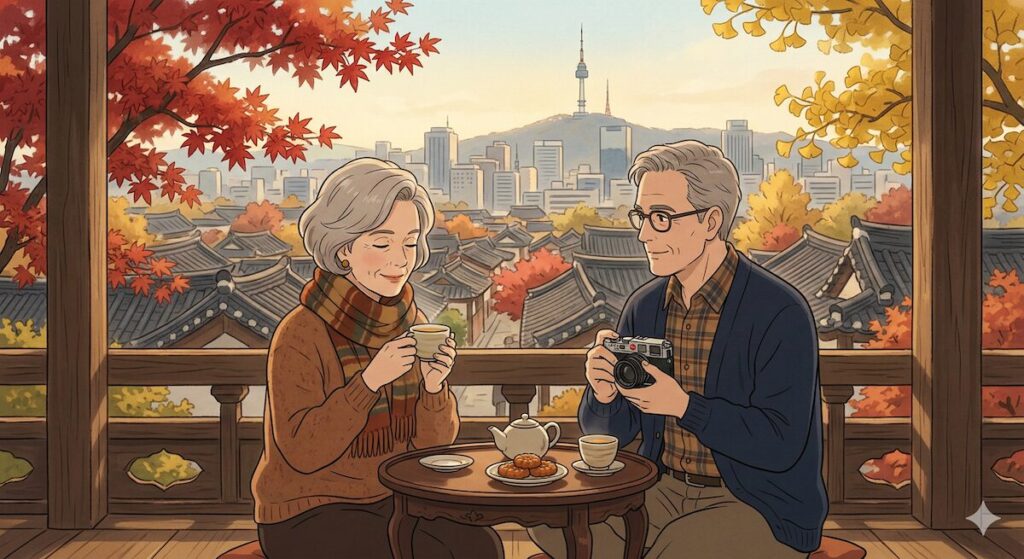
4. The Living Museum: Private Tea Rituals & Spiritual Privacy
Sightseeing in the context of Luxury Korea Travel for Seniors moves away from the “Bucket List” mentality and toward “Sicha-yeohaeng” (Time-Travel). Instead of battling the crowds at Gyeongbokgung, the silver elite are guided toward the “Quiet Corners” of Seoul’s heritage, where history is experienced through the fingertips and the breath.
- Jingwansa Temple’s Private Dado (The Tea Ritual): Nestled in the lower valleys of Bukhansan, Jingwansa is a “Barrier-Free” temple where the gravel paths have been leveled for ease of movement. The highlight for the luxury traveler is a private audience with a resident monk for Dado (The Way of Tea). Unlike public ceremonies, this is held in a private wooden villa (Hanok) with breathtaking views of the pine-covered peaks. For seniors who may find traditional floor-sitting difficult, the temple provides “Kyo-ui” (traditional scholar chairs), allowing for a 60-minute meditative session focusing on the aroma of wild tea and the philosophy of “Jeong-jung-dong” (Stillness within Motion).
- The Bukchon “Gek-jo” Walk: Bukchon Hanok Village can be a daunting uphill climb, but the Luxury Korea Travel for Seniors protocol utilizes private electric carts or chauffeured “Black Taxis” to reach the highest points of the village. From there, it is a gentle downhill stroll into private artisan workshops. Here, travelers can engage in “Knot Tying” (Maedeup) or “Natural Dyeing,” tactile activities that celebrate the fine motor skills of the artisan—a deeply resonant experience for those who appreciate the patience of craftsmanship.
- Bongeunsa’s Midnight Silence: For those staying in the Gangnam/Samsung area, a private evening tour of Bongeunsa Temple offers a spiritual counterpoint to the city’s neon lights. The temple’s stone lanterns are lit, and the sound of the wooden “Mok-tak” drum creates a rhythmic backdrop for a slow, reflective walk. It is a “Living Museum” where the senior traveler is not a spectator, but a participant in a thousand-year-old stillness.
5. The Cinematic Backdrop: Reliving the Visual Poetry of Korean Media
For many elite travelers, the invitation to Luxury Korea Travel for Seniors began on a screen. The global phenomenon of Korean dramas and cinema has not only showcased the country’s rapid modernization but also its deep, immovable roots in Confucian aesthetics. For the silver traveler, visiting these filming locations is not about “fandom”—it is about stepping into a living painting where the pace of life slows to a rhythmic, historical pulse.
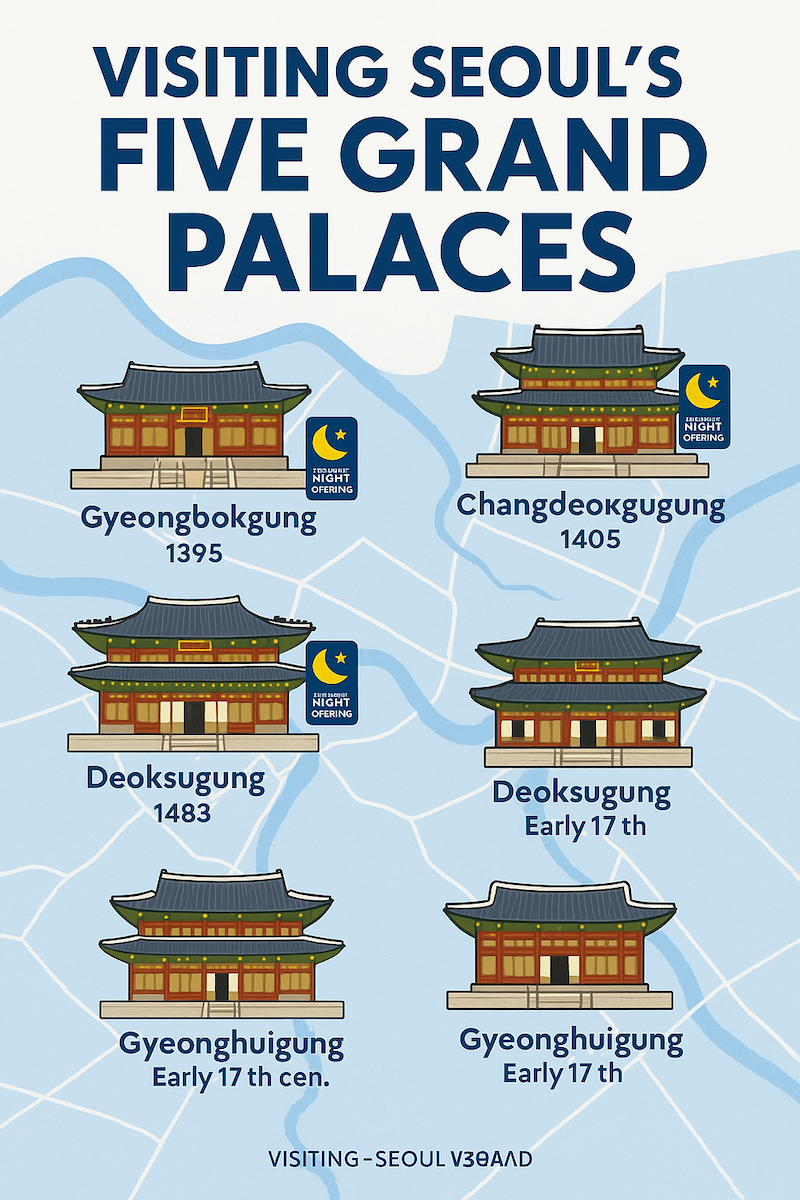
- The “King’s Path” at Gyeonghui Palace (Kingdom & The Red Sleeve): While Gyeongbokgung is grand, the silver elite prefer the intimacy of Gyeonghui Palace. Featured in numerous period dramas for its architectural purity, this palace offers flatter, more manageable stone paths. It allows seniors to walk the same corridors as the cinematic monarchs without the overwhelming crowds, providing a private, “behind-the-scenes” atmosphere.
- The Modern Hanok of “The Glory” & “Mine”: The high-end senior audience often recognizes the soaring, minimalist Hanok structures seen in contemporary dramas about Korea’s “1%.” Places like Museum San (designed by Tadao Ando) or the private Hanok villas in Gahoe-dong represent the architectural evolution of the country. These sites are equipped with world-class elevators and seating, ensuring that the visual “Zen” is experienced without physical fatigue.
- The “Slow Life” of Gongjin (Hometown Cha-Cha-Cha): For those willing to venture slightly outside Seoul to the coastal regions, the filming locations of “Hometown Cha-Cha-Cha” in Pohang offer a seaside ritual. For seniors, we recommend the private yacht tours around the harbor, allowing them to view the iconic red lighthouse and the “Sabang Memorial Park” from the comfort of a deck chair, avoiding the steep coastal climbs.
- The Culinary Narrative of “Dae Jang Geum”: Even two decades later, the legacy of “Jewel in the Palace” remains a powerful draw for the 60+ demographic. We integrate this by recommending a visit to the Korea House (Hanguk-ui Jib), where the Royal Court Cuisine is served exactly as depicted on screen, accompanied by traditional performances that the silver generation finds deeply resonant and respectful.
[Action Plan: The Elite Silver Protocol]
- The “Black Taxi” Mandate: For all movements between the temple and the dining hall, utilize only Kakao T Venti or Black. These vehicles offer higher seating (easier entry/exit for seniors) and drivers who act as informal concierges.
- The Medical Concierge: Ensure your hotel (Four Seasons or Shilla) is alerted to any dietary restrictions 24 hours in advance. In Korea, this level of “Pre-Nunchi” service is the hallmark of a true luxury stay.
- Timing the Ritual: Schedule mountain visits for Tuesday through Thursday mornings to avoid the weekend hiking crowds, ensuring the “Gentle Path” remains exclusively yours.
Conclusion: Why Korea is the Ultimate Sanctuary for the Silver Elite
Luxury Korea Travel for Seniors is ultimately a journey into a culture where time is treated with reverence rather than haste. South Korea stands as a rare global destination where cutting-edge medical infrastructure and high-speed efficiency coexist with a deeply ingrained Confucian respect for elders. For the silver traveler, this translates into a seamless sanctuary; it is a place where the “Gentle Path” is not an exception, but a social standard.
From the barrier-free wooden decks of ancient mountain fortresses to the restorative herbal alchemy of royal spas, every ritual in Korea is designed to honor the physical and spiritual needs of the experienced traveler. The city’s “Pre-Nunchi” service culture ensures that comfort is provided before it is even requested, making it the world’s most intuitive environment for those over sixty. To travel through Korea as a senior is not just to see a new country, but to experience a society that still views aging as a transition into a period of supreme elegance and grace.