— Discover the Peak of Fall Foliage and the Quiet Soul of Korea’s Autumn
🍂 1. Why We Go to the Mountains Before Autumn Ends
There’s always a touch of longing at the edge of autumn.
The wind grows crisp, the air feels clearer, and suddenly, colors start calling us.
For Koreans, that color is danpung — the brilliant red and gold leaves that transform mountains into living paintings.
Each fall, as the season quickly fades, people return to the hills.
Among all the destinations, Naejangsan National Park in Jeongeup, Jeollabuk-do, stands as the ultimate stage of Korea’s autumn —
a place where nature performs its final, most breathtaking act.
Some come to take photos,
some to share quiet moments with family,
and others simply to breathe again —
away from the noise of everyday life.
🌄 2. Why Korean Autumn Mountains Feel Different
There are famous foliage spots around the world — Kyoto in Japan, Vermont in the U.S., the Alps in Switzerland.
But Korea’s autumn mountains have a unique intensity.
The colors are not just beautiful — they are alive.
That’s because Korean mountains are a rich mosaic of trees:
maple, oak, zelkova, ginkgo, and hornbeam.
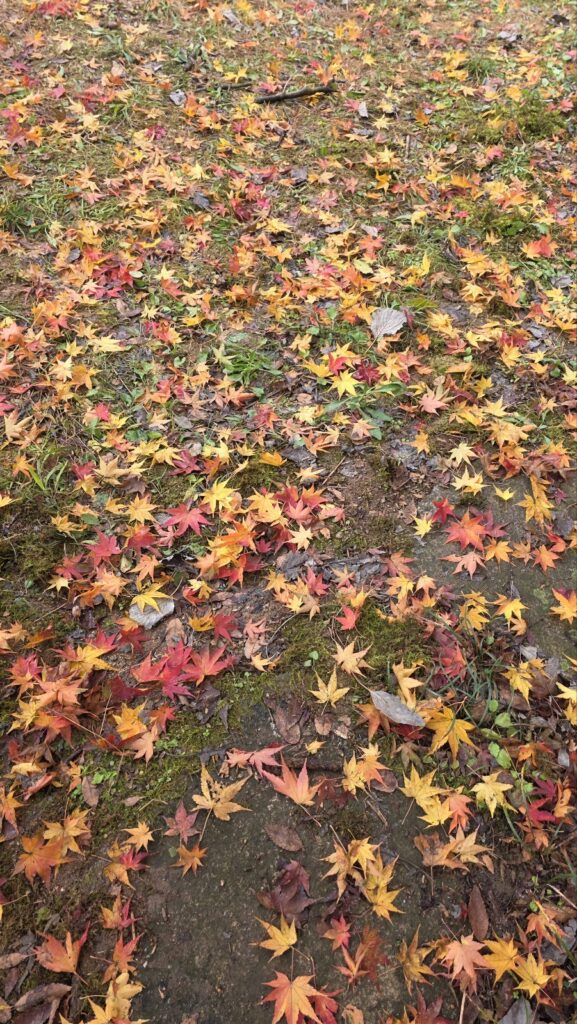
When these leaves change together, the result is not a single hue but a moving canvas of red, orange, and gold.
Japanese foliage is known for its refinement.
Korean foliage feels more vibrant — more emotional.
In the morning, the hills glow golden.
By noon, they deepen into crimson.
At sunset, a soft violet hue settles over the peaks.
In a single day, the mountain becomes three entirely different landscapes.
That fleeting transformation —
that compressed beauty of time —
is the very essence of Korean autumn.
🏞 3. Naejangsan – Where Autumn Reaches Perfection
The name Naejang means “a treasure hidden deep within the mountain.”
And that treasure is its color.
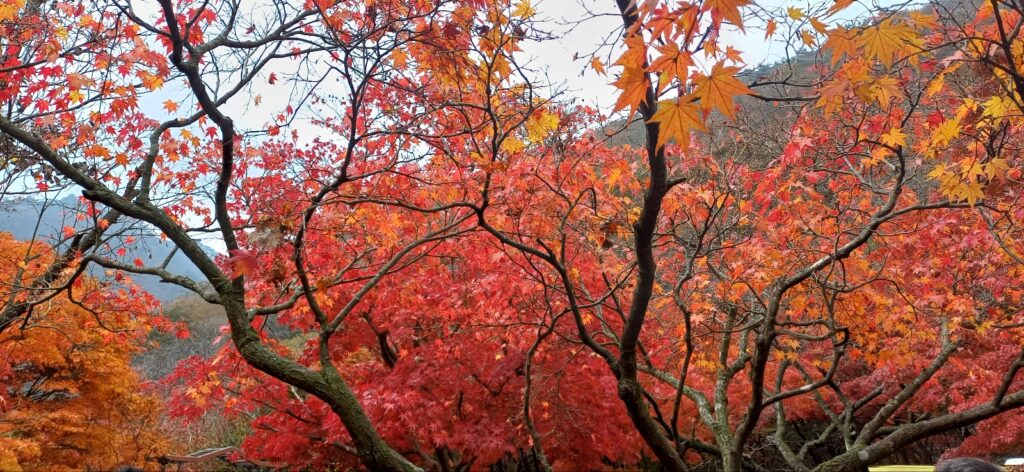
The foliage here is remarkably rich and layered:
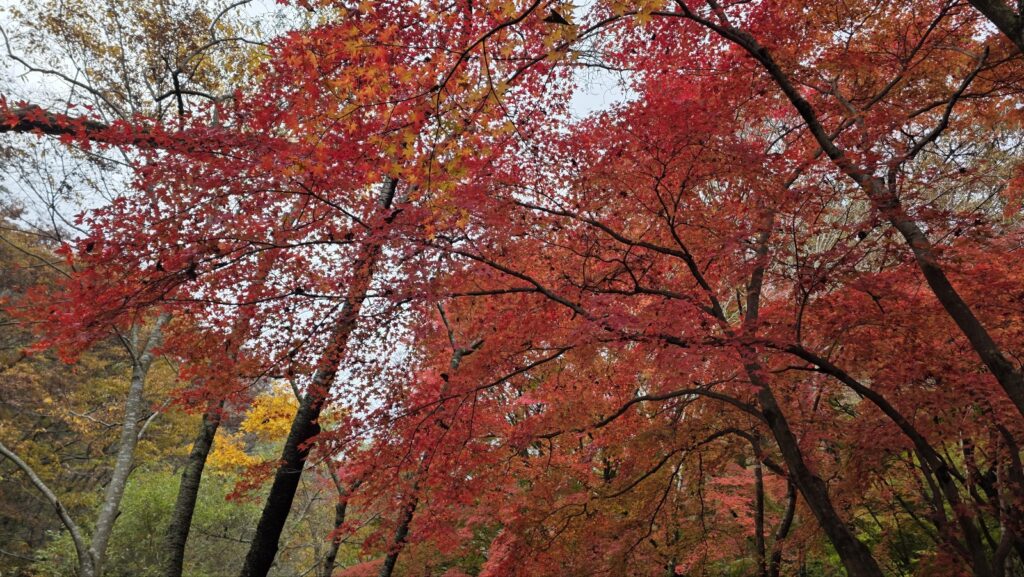
the peaks shimmer with purple-red tones,
the middle slopes glow with scarlet,
and the valleys blend into warm yellows and oranges.
The mountain doesn’t show one color — it breathes them all.
Visitors often say:
“No photo could ever match the real view.”
“Even after the leaves fell, the landscape felt more beautiful.”
“I didn’t know autumn could smell this strong.”
The terrain is gentle and welcoming.
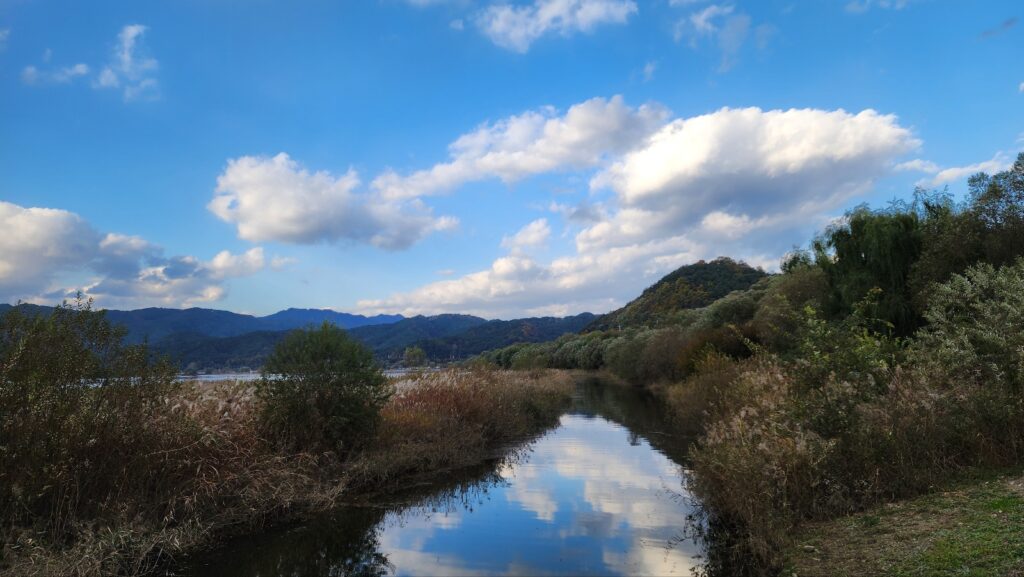
Streams mirror the fiery canopy above, and the sound of running water softens the silence.
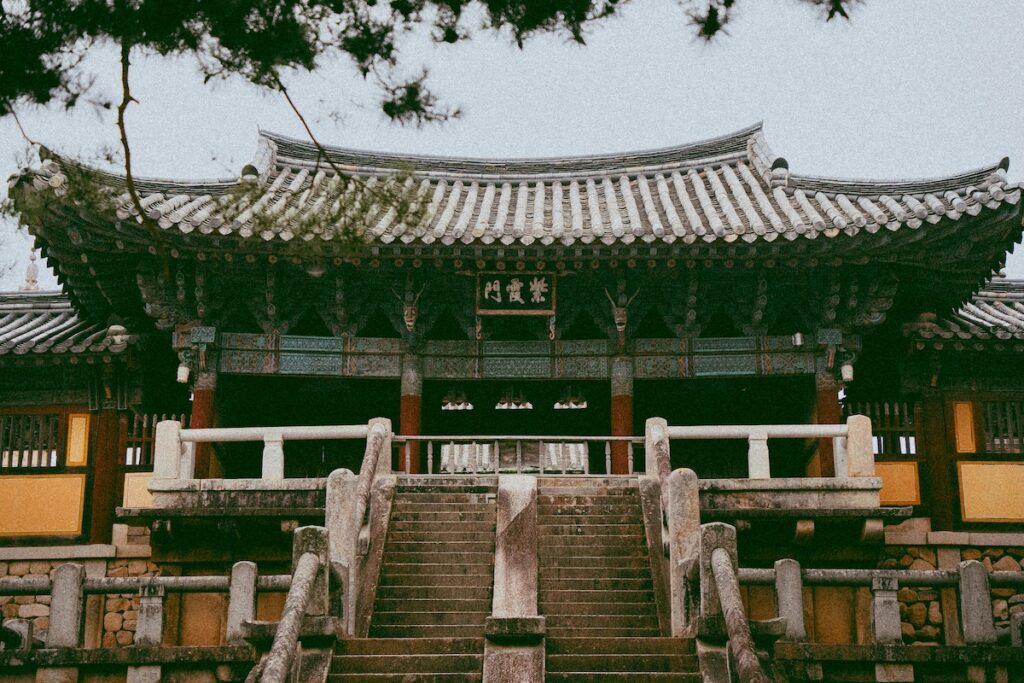
Ancient temples like Naejangsa, Uhwajeong Pavilion, and Wanjeokam Hermitage rest gracefully among the colors, adding a sense of timeless calm.
Even centuries ago, scholars like Yoo Han-jun of the Joseon era wrote:
“When autumn’s light rests upon the land, Naejangsan reigns supreme.”
Today, the Korea Tourism Organization continues to list it as
“Korea’s No. 1 Fall Foliage Destination.”
📸 4. Where to Experience the Best of Naejangsan’s Autumn
① The Maple Tunnel at Naejangsa Entrance
Your journey begins here — the most photographed point of the park.
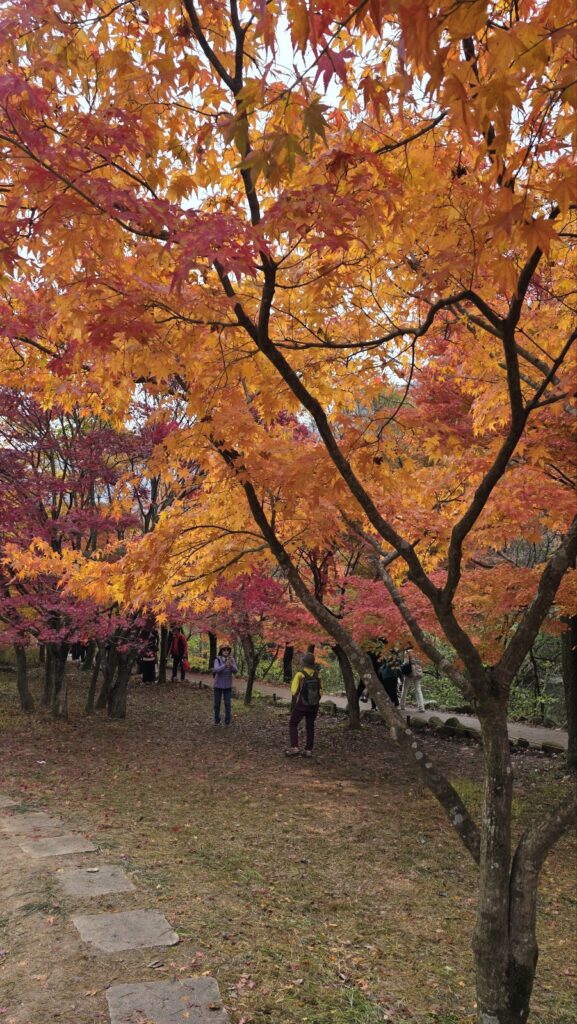
Rows of tall maple and oak trees form a glowing red tunnel stretching more than 100 meters.
Depending on the angle of the sunlight, the colors seem to shift and breathe as you walk through.
“It felt like walking through falling red snow.”
“You don’t hear autumn here — you see it.”
Every visitor becomes part of the painting.
② Uhwajeong Pond
This is Naejangsan’s signature scene —
and perhaps Korea’s most iconic autumn reflection.
A small pavilion sits beside a mirror-like pond that perfectly captures the crimson forest.
In the early morning, when the mist still floats on the surface,
the reflection looks like molten color melting into water.
It’s no surprise that in 2025, this spot ranked #1 most shared fall photo on the official Visit Korea social media channels.
③ Baegyangsa Temple Ginkgo Trail (10 minutes away)
Just beyond Naejangsan lies a different palette — gold.
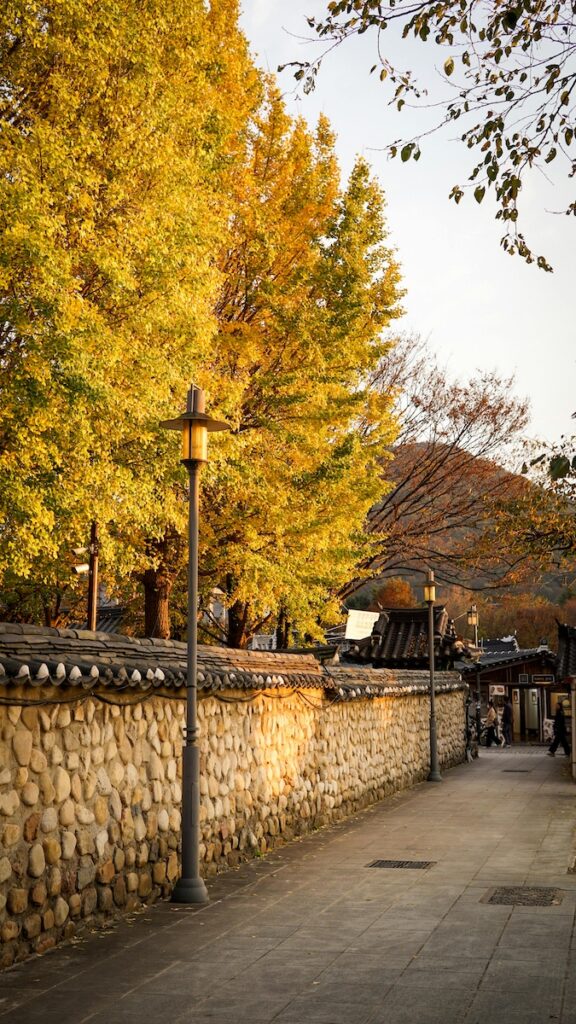
Two thousand-year-old ginkgo trees stand in front of Baegyangsa Temple,
their yellow leaves carpeting the ground like sunlight turned solid.
The sound of footsteps on fallen leaves,
the soft rustle of wind —
it’s peace painted in gold.
Visiting Naejangsan and Baegyangsa in one day
gives you both faces of Korean autumn: vibrant and serene.
👨👩👧👦 5. A Family-Friendly Way to Walk Naejangsan
Naejangsan isn’t a hike — it’s a walk through beauty.
That’s why families love it.
Suggested route:
- Arrival: Before 8:00 a.m. (ample parking & calm atmosphere)
- Route: Maple Tunnel → Uhwajeong Pond → Naejangsa Temple → Wanjeokam Hermitage
- Total time: ~2.5 hours round-trip
The trail is mostly flat and well-maintained with wooden decks and resting benches.
Elderly visitors can walk comfortably, and every turn offers a postcard view.
After the walk, try a traditional Korean meal in Jeongeup city —
local specialties like mushroom hotpot or set-course hansik made with seasonal ingredients.
It’s the perfect ending to a day filled with colors.
Finish your trip with a quiet stroll along Jeongeup Stream or catch the sunset at Jeongeupsa Park —
a golden finale to the crimson day.
❄️ 6. Weather & What to Wear: Surviving Korea’s Late Autumn Like a Local
🍂 From Warm Breeze to Winter’s First Breath
If you visit Naejangsan in November or early December, you’ll notice something magical —
the season doesn’t simply change, it shifts in layers.
Mornings arrive with mist and soft air around 10–12°C (50–54°F),
but by sunset, the chill drops fast to 2–5°C (35–41°F).
And as December begins, the first breath of winter slides down from the northern mountains,
making evenings crisp and quiet — perfect for a steaming bowl of soup after a long walk.
That’s the beauty of late autumn in Korea:
it’s neither too cold to explore nor too warm to lose its charm.
But the temperature changes quickly —
and that’s where a bit of local wisdom comes in handy.
🧣 6-1. Dress Like a Local: Layering Is Everything
Koreans don’t fight the cold — they layer against it.
The trick isn’t heavy clothes, but smart layering that can adapt to the day’s rhythm.
Morning:
A thin heat-retaining undershirt (Koreans call it naebok) + light knit sweater
→ Keeps warmth in without bulk.
Afternoon:
A long wool coat or padded vest
→ Easy to remove while hiking or on shuttle rides.
Evening:
Add a scarf, gloves, and a light windproof jacket —
The mountain breeze can feel sharp once the sun dips below the ridgeline.
💡 Pro Tip:
Most Koreans carry a reusable heat pack (핫팩 / hot pack) in their pockets —
small hand warmers that stay hot for hours.
You can buy them anywhere: convenience stores, subway stations, even temple gift shops.
They’re inexpensive (around ₩1,000 each) and genuinely lifesaving on cold nights.
🧦 6-2. What to Pack — The “Korea November Survival Kit”
| Item | Why You Need It |
|---|---|
| Heat Packs (핫팩) | Stay warm while walking; great for pockets or gloves. |
| Thermal Base Layers (내복) | Essential for mornings and nights, especially under jeans. |
| Moisturizing Cream / Lip Balm | Korean autumn air is dry — protect your skin. |
| Warm Hat or Beret | Keeps body heat in; looks stylish in travel photos. |
| Comfortable Walking Shoes | Naejangsan trails are smooth but long — sneakers or loafers work best. |
| Light Gloves | Thin enough for phone use but warm enough for wind. |
| Compact Umbrella | Just in case — November occasionally brings short drizzles. |
And one small local secret:
many convenience stores near Naejangsan sell “autumn kits” —
a paper cup of tea, a disposable hand warmer, and a snack bar —
because locals know that warmth is part of the travel experience.
☕ 6-3. Warmth Beyond Clothes — The Culture of Comfort
In Korea, warmth isn’t just physical — it’s cultural.
After a chilly walk under the red canopy,
people often stop for sweet roasted chestnuts (군밤), hot corn tea (옥수수차),
or steaming fishcake broth (오뎅 국물) sold by roadside vendors.
It’s part of the charm:
a simple act of holding something warm in your hands
while watching the last golden leaves drift down.
Many cafés near Jeongeup Station and Naejangsan’s park entrance serve
seasonal drinks like sweet pumpkin latte, yuzu tea (유자차), and citron honey tea —
each one tasting like a sip of sunlight.
🏠 6-4. How Koreans Embrace the Chill — “Warm Inside, Cold Outside”
Korean homes and guesthouses are famous for their ondol — the traditional underfloor heating system.
So while the air outside cools rapidly,
the floors inside stay gently warm, radiating comfort through your feet.
After a day of walking through the mountain chill,
coming back to a heated room feels like entering a quiet cocoon of warmth.
It’s one of those cultural experiences that visitors never forget —
a reminder that in Korea, the warmth always finds you.
✈️ 6-5. A Traveler’s Final Tip
If you’re coming from warmer regions like Southeast Asia or the Mediterranean,
Korea’s November might feel unexpectedly cold —
but that’s what makes it beautiful.
Bring one good coat, a few layers, and curiosity.
Because late autumn here isn’t about endurance — it’s about feeling alive in the air that bites and soothes at once.
🌡 Quick Reference: Korea’s Late Autumn Climate
| Month | Average High | Average Low | Experience |
|---|---|---|---|
| October | 20°C (68°F) | 10°C (50°F) | Mild and colorful |
| November | 13°C (55°F) | 4°C (39°F) | Crisp, dry, perfect foliage |
| December | 6°C (43°F) | -2°C (28°F) | Clear, cold, and quiet |
“The chill makes the colors sharper,
and the warmth you find — in tea, in light, in people —
feels even deeper.”
That’s how Korea’s autumn teaches you balance:
cold enough to awaken you, warm enough to hold you.
🚗 7. Travel Information
📍 Location: 291 Naejang-dong, Jeongeup, Jeollabuk-do, South Korea
🚆 By train: Jeongeup Station → Naejangsan Shuttle Bus (every 15 min)
🎟 Admission: Adults ₩3,000 (National Park fee)
🍁 Peak foliage: Mid–late November
🕓 Best times: Before 8 a.m. on weekends / After 3 p.m. on weekdays
🌳 8. The Deeper Meaning — History and Spirit of Naejangsan
Beyond the colors, Naejangsan is a spiritual mountain.
Since the Baekje Kingdom, it has been regarded as a sacred site of Buddhism.
Naejangsa Temple, first built over 1,400 years ago, still stands as a place of peace.
Poets and scholars of the Joseon Dynasty once came here to seek inspiration,
and today, it remains Korea’s 8th National Park —
a living fusion of nature, culture, and faith.
Media often call it “the pinnacle of Korea’s autumn.”
To Koreans, it’s not just a mountain —
it’s a seasonal ritual, a way of feeling time itself.
🍁 9. Don’t Wait — Autumn Won’t
Foliage doesn’t wait.
Colors shift overnight.
Leaves fall within days.
That’s why Naejangsan feels so special —
because its beauty is brief.
Walk beneath the crimson tunnel,
listen to the soft crunch of fallen leaves,
and let the sunlight warm your face.
Then you’ll understand what Koreans mean when they say:
“This is the true face of autumn.”
If you want to see the final scene of fall,
go now —
to Naejangsan.