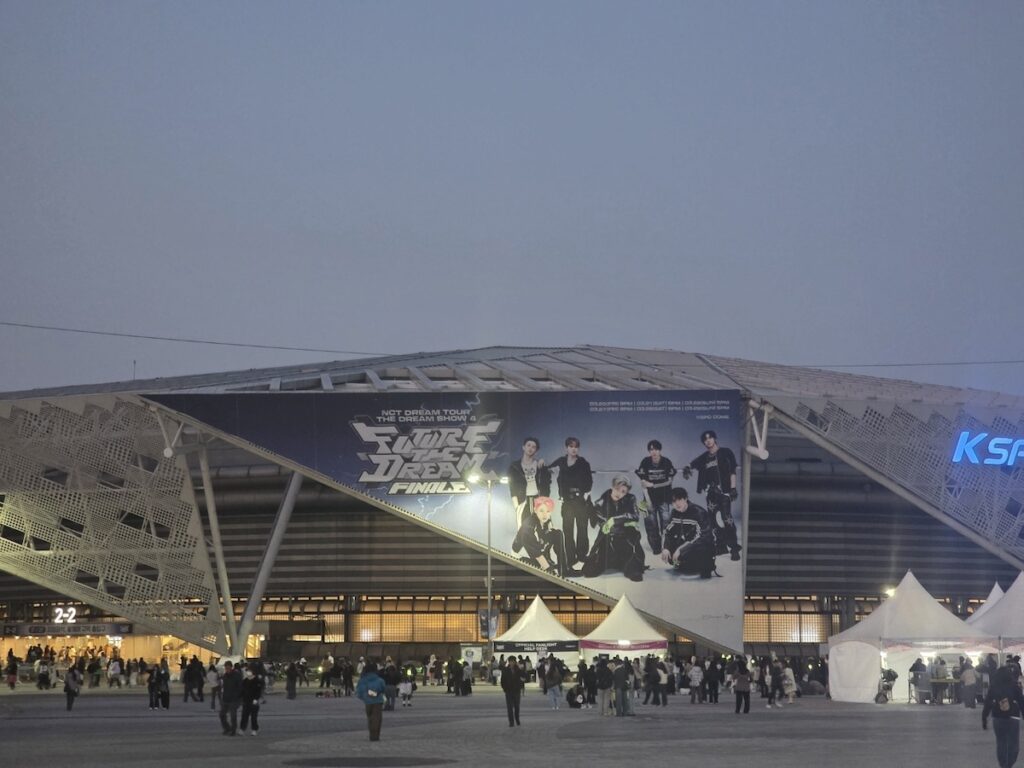
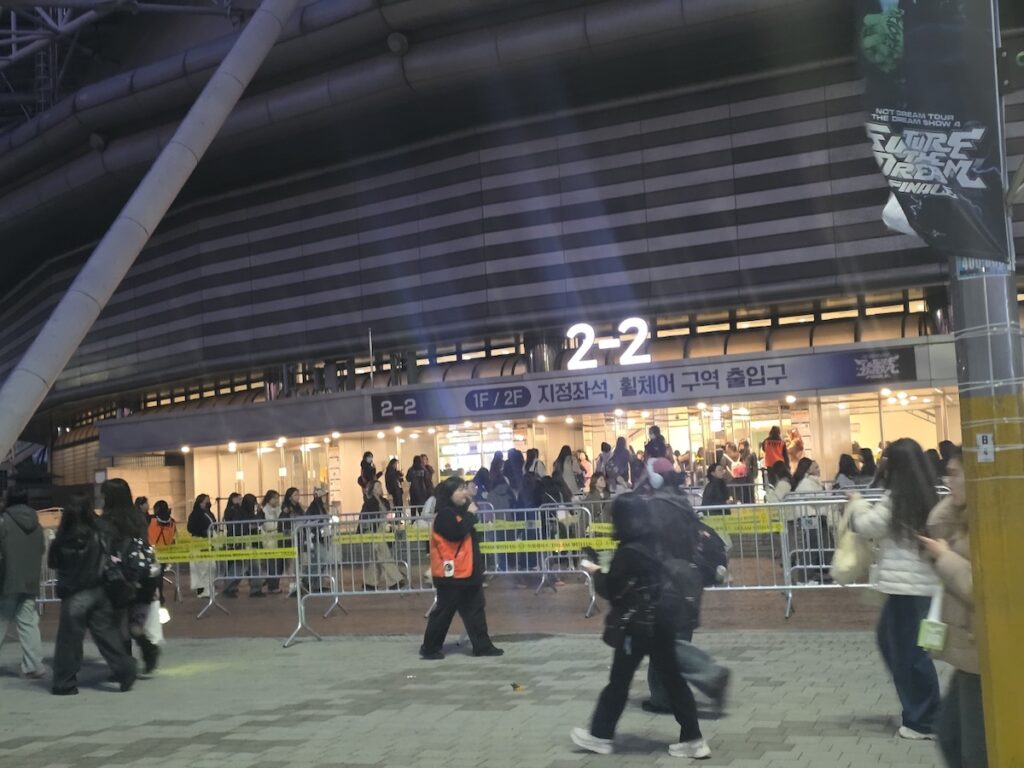
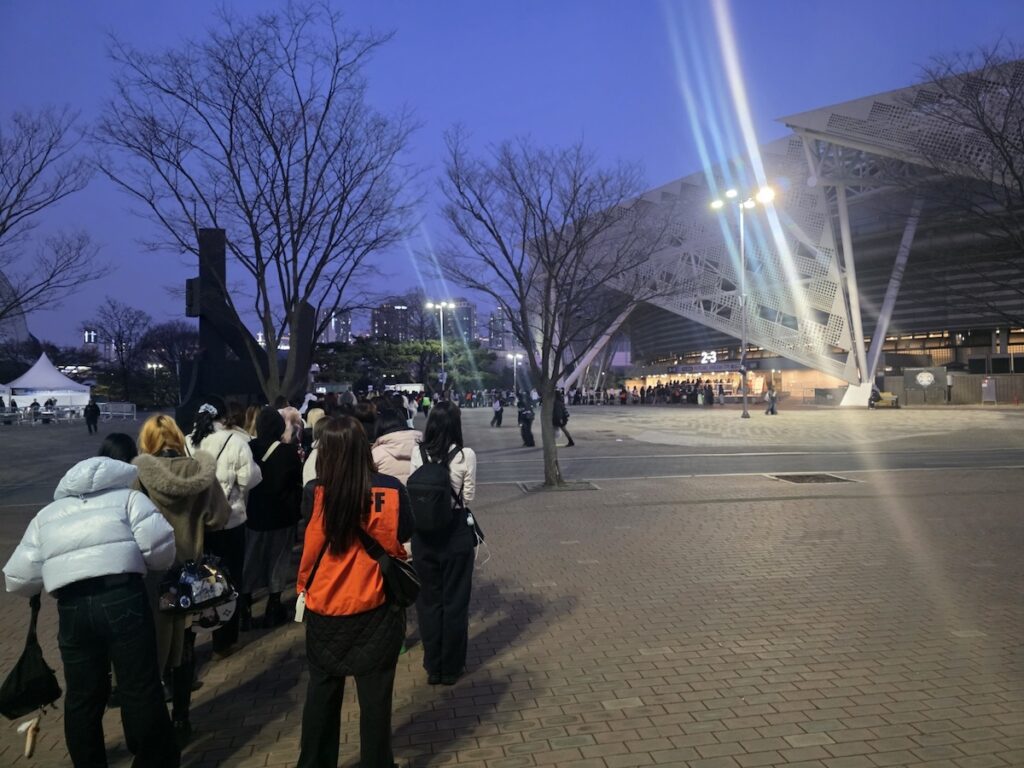
It is the evening of March 20, 2026. As a local resident who frequents Olympic Park for my daily exercise, the sight of a massive crowd is usually just a background hum to my routine. But tonight is different. The air around the arena is electric, vibrating with the collective anticipation of thousands of fans gathered for the NCT DREAM Seoul Concert 2026.
As a boy group concert, the gender demographics are overwhelmingly skewed. The park is a sea of young women, punctuated by the glowing lightsticks. It is a vibrant, commercial spectacle of global K-pop culture. However, amidst this high-definition stardom, I witnessed a moment of raw, unscripted humanity that outshone any stage performance.
The Gender Gap and the Wall of Patience
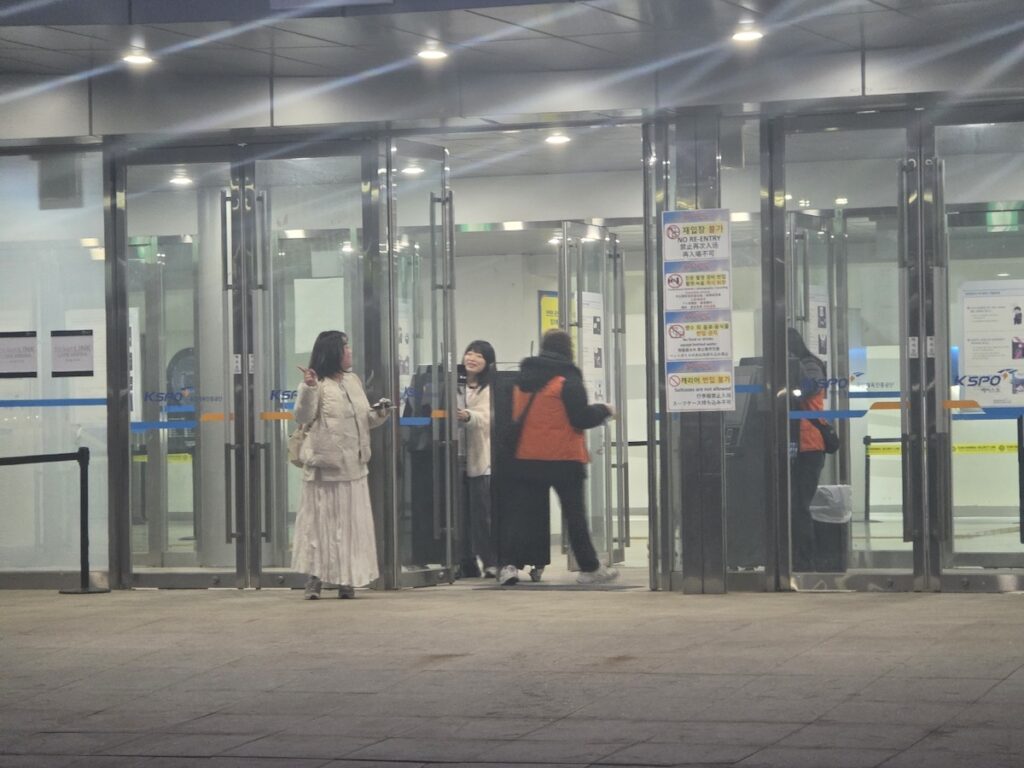
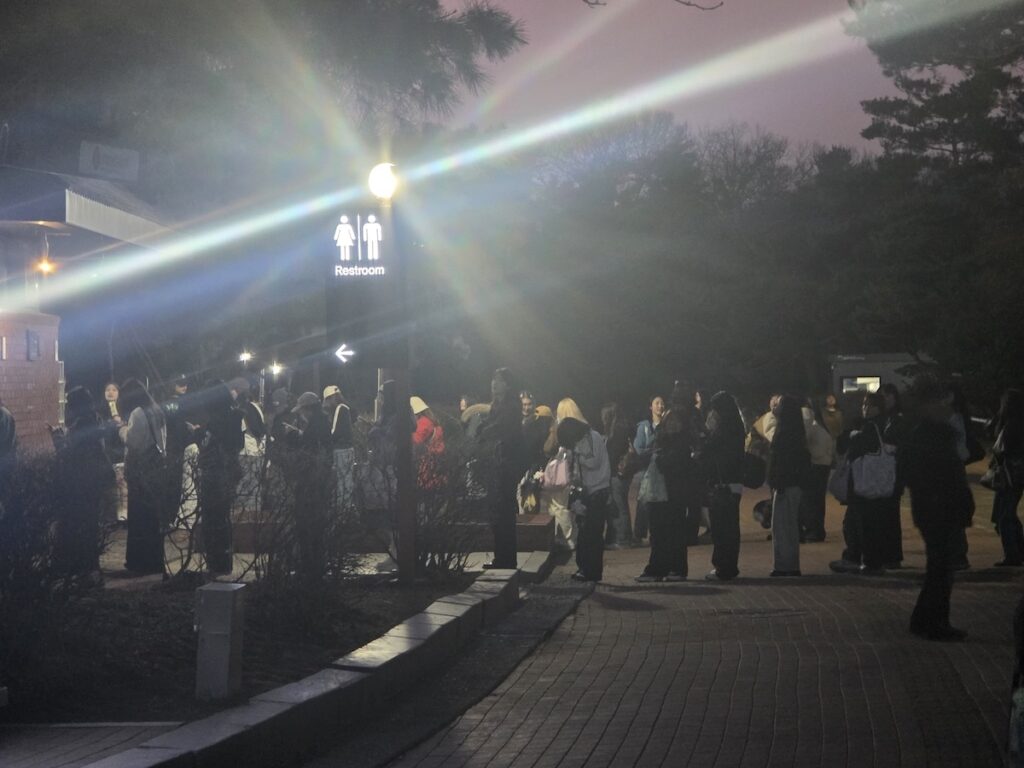
The sheer volume of attendees created a logistical crisis that is all too familiar to women at major events: the bathroom line. Near the concert hall, the queue for the ladies’ room was staggering—a winding wall of patience that seemed to stretch into eternity. For many, it wasn’t just a wait; it was a race against the opening notes of the show.
As a man, I moved toward the men’s room with what I can only describe as “Free-Pass” privilege. Inside, it was the opposite world—plenty of empty stalls and a quiet, efficient atmosphere. It was in this sterile, functional space that a small “invasion” occurred, breaking the unspoken rules of the gender-segregated sanctuary.
The Guardian at the Door: A Father’s Quiet Courage
The door swung open, and a man entered, gripping the hand of his young daughter—likely an elementary school student who had come to see her idols with her “Good Dad.” The girl was clearly in distress; the endless line outside was simply not an option for a child in an emergency.
Without hesitation, the father led her into the men’s room. He guided her into one of the stalls and then stood firmly outside the door, acting as a human shield. He was a sentinel of protection in an environment that was fundamentally foreign to his daughter. His face was a mask of focused concern, bracing for any potential judgment or discomfort from the men around him.
The Silent Pact of the Seoul Night
What happened next was a profound display of Korean social etiquette. In that restroom, filled with grown men, there was a heavy, respectful silence. Not a single person complained. No one whispered or cast a judgmental glance at the father.
We all understood. Every man in that room was either a son, a brother, or a father himself. We recognized the 비장함 (solemnity) in his stance—the universal protective instinct that transcends social “rules.” We gave them space, maintained our gaze forward, and allowed that father to fulfill his most basic duty in peace. It was a silent pact of solidarity; a recognition that in the face of a child’s need, the rigid boundaries of the city dissolve.
Explore More of Seoul’s Unforgettable Nights
If the cinematic streets of Myeongdong and Euljiro have captivated you, ensure you have the complete map of Seoul’s soul. These specialized guides are designed to help you navigate the 2026 traveler experience with ease and depth.
Best Seoul Night Road: Myeongdong to Euljiro Walk Guide (2026)
If you are standing at Olympic Park wondering where to go next, this is your definitive map. Our Best Seoul Night Road guide takes you through the neon-soaked alleys of Myeongdong and the industrial grit of Euljiro. It is the perfect atmospheric contrast to the modern energy of the NCT DREAM concert, offering a cinematic walking route that reveals the hidden layers of Seoul’s history and nightlife.
The Cultural Shift: Olympic Park from Graduation Photos to Global Stage
Olympic Park is no longer just a weekend jogging path for the locals of Songpa-gu. Surrounded by a dense forest of apartment complexes and villas, it was once a humble space where middle and high school students gathered for their graduation photos—a rite of passage for every Seoulite. But as Hallyu (the Korean Wave) surged, the park’s identity underwent a profound transformation.
The Nodes of Songpa: Navigating the Perimeter
The park is anchored by three major transit hubs that pump life into its vast greenery.
- Line 8 (Mongchontoseong Station): The gateway to the historical Baekje earthen fortress walls.
- Line 9 (Hanseong Baekje Station): A sleek, modern entry point for the “Golden Line” travelers.
- Lines 5 & 9 (Olympic Park Station): The ground zero for concert-goers heading to the KSPO DOME.
From Noise to Respect: The Grandmothers’ Walk
The most striking change isn’t in the infrastructure, but in the residents. A decade ago, a major idol concert meant “noise” and “congestion” for the local seniors. But today, the atmosphere is different. As I walked past the park, I overheard two grandmothers discussing the crowd. They weren’t complaining about the traffic; they were talking about BTS and how the ARMY wears purple.
In Korea, K-pop was once a source of generational conflict—a “strange noise” for the elders. But now, it has become a subject of mutual respect. To see local grandmothers recognize the fandom’s color is to witness a society that has finally integrated its global cultural power into its domestic daily life. The idol is no longer a stranger to the neighborhood; they are a guest of honor that the entire community, from toddlers to the elderly, has learned to welcome.
Stay Connected and Prepared in 2026 Seoul
As you navigate the massive crowds at Olympic Park, digital survival and weather readiness become your top priorities. Explore our specialized guides to ensure your 2026 Seoul experience remains seamless and safe.
Seoul BTS Concert Location 2026: Digital Survival & Weather Ritual Guide
Whether you are attending the NCT DREAM finale or preparing for future events, understanding the local weather rituals and digital infrastructure is essential. This guide provides the tactical knowledge needed to survive the unpredictable March winds and stay powered up throughout the longest concert nights at Seoul’s major venues.
Seoul Digital Survival Guide 2026: Staying Connected During the Gwanghwamun BTS Surge
Massive gatherings in Seoul require a specific digital strategy. From securing stable network connections to navigating the city during high-traffic surges like the Gwanghwamun events, this guide ensures you stay connected with your group and the world, no matter how dense the crowd becomes.
The Evolution of Respect: K-pop as a Shared Cultural Pride
In the past, K-pop was often seen as a “generational wall” in Korea—a loud, fleeting subculture for the youth that many elders dismissed as mere noise. However, walking through Olympic Park in 2026, I realized that this wall has completely dissolved. I observed two elderly women on their evening stroll, casually discussing the crowds and noting how the ARMY (BTS fans) always stays true to their signature purple. This is not just a casual observation; it is a profound shift in national identity.
According to a report by JoongAng Ilbo in early 2026, South Koreans’ self-perception and national pride have reached record highs. For decades, Koreans were more critical of their own culture than foreigners were. But as Hallyu became a global standard, the domestic perspective shifted from “skeptical” to “deeply respectful.”
A 2024 study by the Ministry of Culture, Sports, and Tourism further supports this, showing that K-pop’s favorability among people in their 50s and 60s has surged. What was once seen as a “disruption” to the neighborhood’s peace is now embraced as a “source of pride.” The idols are no longer strangers to the local residents; they are honored guests who bring the world to their doorstep, turning a simple neighborhood park into a global stage where all generations coexist with mutual respect.
The Forest of Coexistence: Beyond the Hallyu Horizon
The night at Olympic Park is no longer just about the noise of a transient event. It is a profound testament to how Seoul has matured. What I witnessed—from the silent solidarity of men in a restroom to grandmothers embracing the “purple” wave—is the true face of modern Korea.
We have moved beyond the stage where K-pop is merely a cultural export. It has become a bridge of mutual respect, where a local resident’s workout path, a father’s desperate duty, and a global idol’s performance all breathe within the same space. In this forest of coexistence, the “Best Seoul Night Road” finds its most human conclusion: a city that finally knows how to protect and respect what it has built together.