Seoul mandu protocol begins not in a high-end restaurant, but in the biting chill of a neighborhood arcade in Jamsil. The winter air in Seoul is a physical weight, a dry and sharp cold that makes every breath visible. As I walked toward the local apartment complex after taking a half-day off to nurse a rising fever, I saw it—the ritualistic pillars of steam rising from the industrial exhaust fans of a humble Mandu shop. In the “Midnight Run” spirit of observing the city, there is no sight more evocative of home than that thick, white vapor vanishing into the freezing sky, carrying the scent of steamed flour and seasoned pork.
The Call to the Matriarch: A Ritual of Care
My throat was scratchy, the unmistakable precursor to a seasonal cold. In Korea, when the body weakens, the soul seeks comfort in familiar textures. I dialed my mother. “What should I bring home?” I asked, my voice slightly raspy. Her answer was immediate: “Mandu.”
I could have stopped at a luxury department store or a sterile 24-hour mart to buy frozen bags of mass-produced dumplings. But frozen food lacks the “Ondo” (temperature) of human effort. I needed the mandu that was born right in front of my eyes—the ones subjected to the Seoul mandu protocol of precise timing and translucent skins.
The Thin-Skin Philosophy: Transparency in Every Bite
For the sophisticated palate, the thickness of the dough is a non-negotiable metric of quality. I have always harbored a disdain for dumplings shrouded in thick, bready flour. To me, a thick skin is a veil of mediocrity, hiding the true soul of the ingredients. I seek the “Yalpeun-pi” (Thin-skin) variety—dumplings so delicate that they are nearly transparent, revealing the vibrant greens of the chives and the rich hues of the pork within.
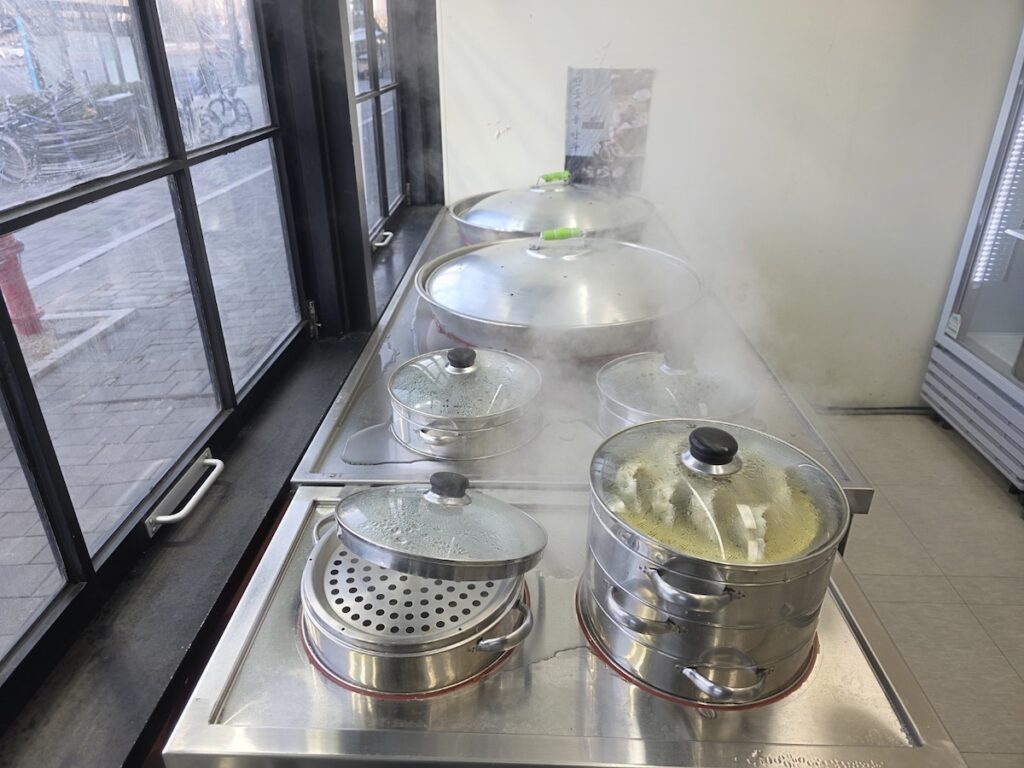
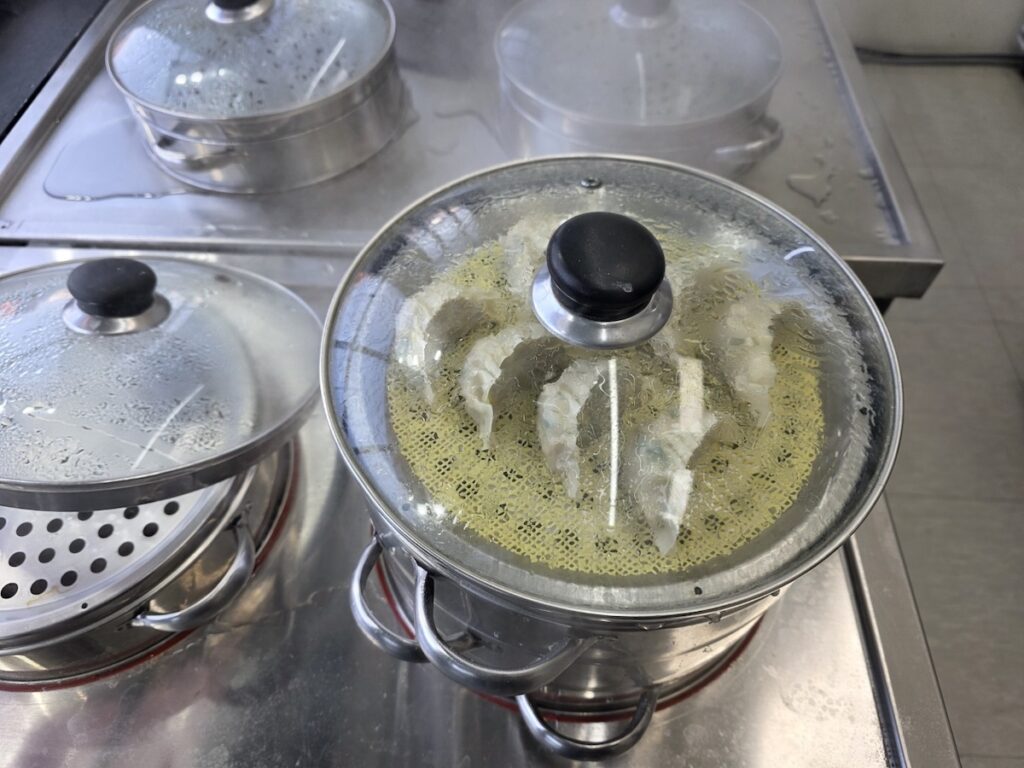
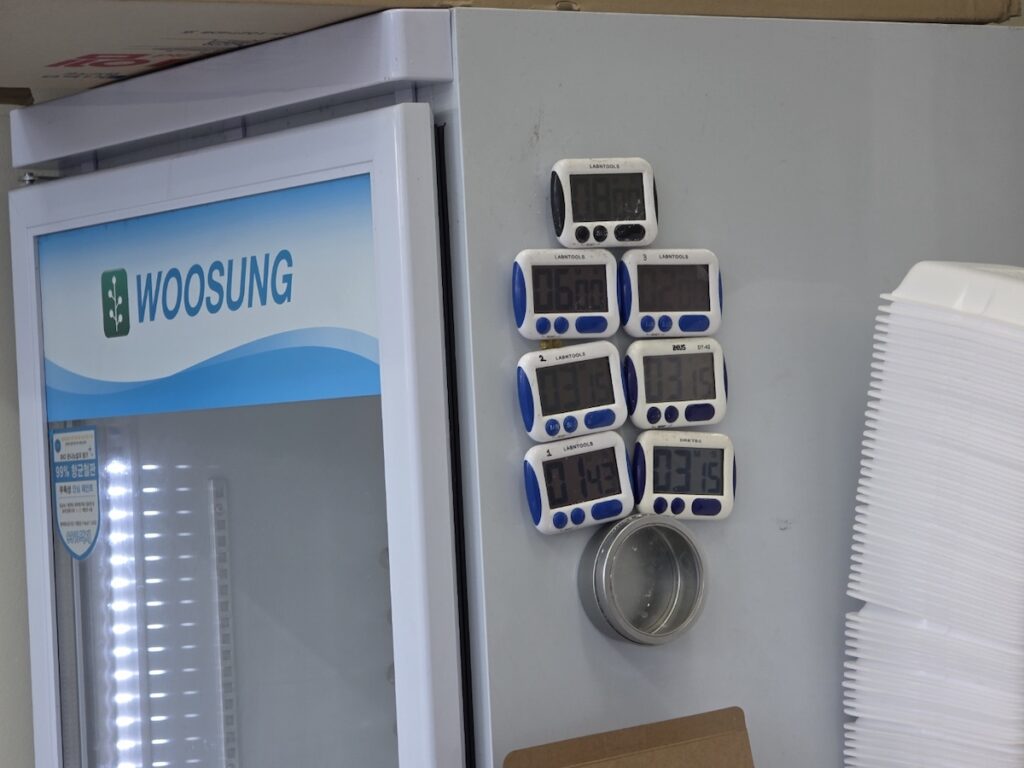
Standing at the counter of Adam Mandu, I watched the steam swirl around the metal tiers. This wasn’t just cooking; it was an urban symphony of heat versus cold. The owner, a silent master of the steamer, didn’t need to check the interior of the dumplings. He relied on the row of seven digital timers magnetized to the refrigerator, each one counting down the seconds to a perfect, translucent finish.
Deciphering the Steamer Tiers: A Visual Guide for Travelers
When you approach a local Seoul mandu shop, the visual cues can be overwhelming for a foreigner. You see stacks of circular metal pans, each hissing with pressurized steam. Here is the tactical breakdown of what you are seeing through the mist:
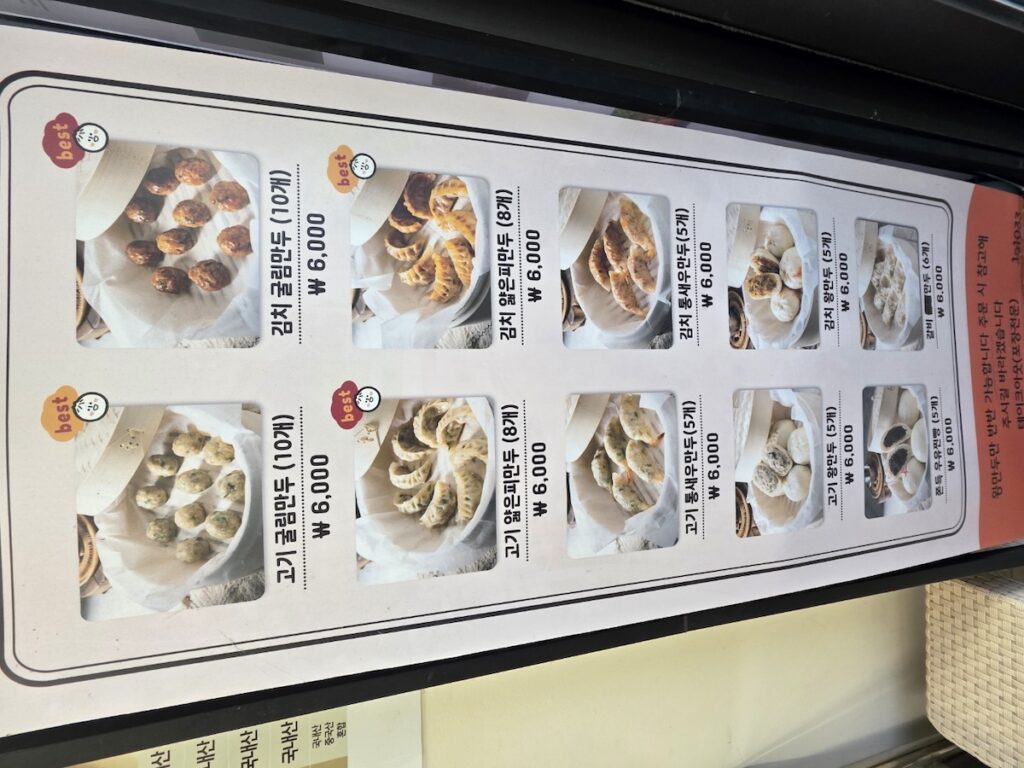
- The Meat Mandu (Gogi Mandu): The baseline of the protocol. Clean, savory, and essential for those who cannot tolerate the heat of Korean spices.
- The Kimchi Mandu: A vibrant, crimson-tinted interior that offers a sharp, fermented kick—the soul of the Korean winter.
- The Galbi Mandu: A sweeter, smoky profile that appeals to those raised on BBQ flavors, often a favorite for the “With Kids” demographic.
Action Plan (Part 1)
- Spot the Steam: Look for the white exhaust clouds in local apartment arcades; this is where the freshest Mandu is found.
- Request “Yalpeun-pi”: If you prefer texture over breadiness, always look for the “Thin-skin” labels on the menu.
- Watch the Timers: A shop with multiple digital timers is a sign of a “Precision Protocol” establishment—stay for the quality.
The Digital Handshake: Mastering Seoul Pay at the Counter
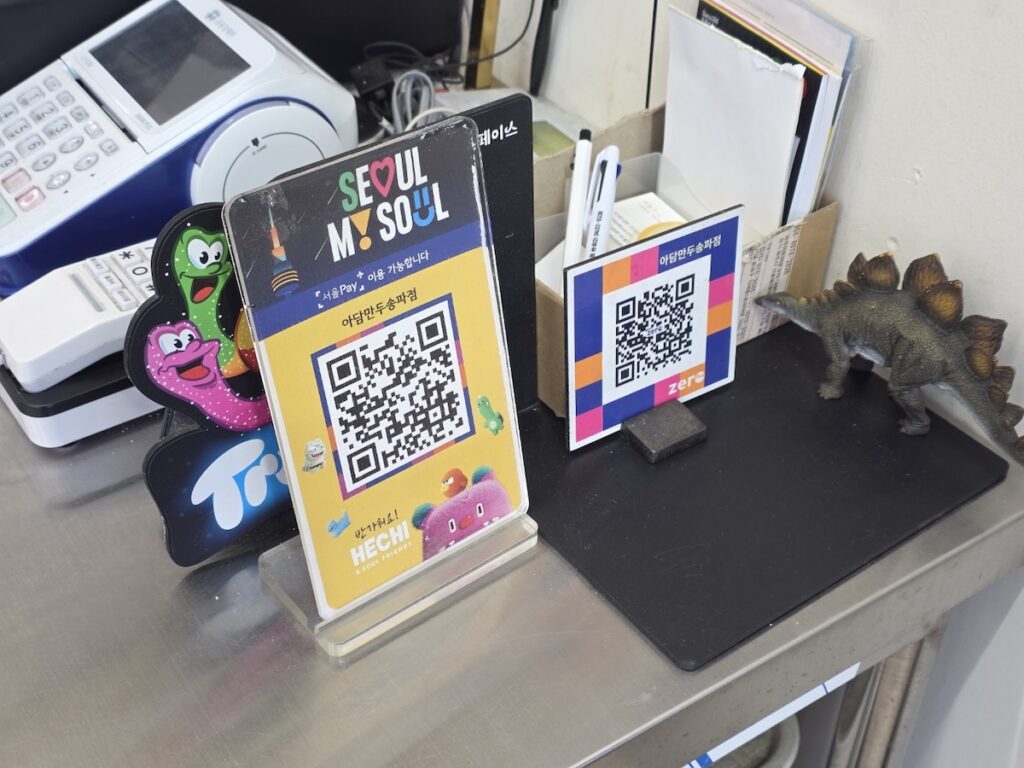
In the “Midnight Run” philosophy, the moment of payment is a tactical transition. At the counter of Adam Mandu, you won’t find a cluttered cash drawer. Instead, you are greeted by the vibrant “Seoul My Soul” QR stands—the gateway to the Seoul mandu protocol’s digital economy. For the foreign traveler, this is where the city’s high-tech infrastructure meets the steam-filled warmth of a neighborhood shop.
Decoding the QR Code: Seoul Pay vs. Global Wallets
The yellow and blue QR signs are more than just stickers; they are a part of the Seoul Pay and Zero Pay ecosystem. If you are accustomed to using Alipay or WeChat Pay, the process will feel familiar, yet distinctly refined for the Seoul grid.
- The Seamless Scan: To use these, you simply open your banking app or a dedicated payment app like Seoul Pay+, scan the code, and enter the amount displayed on the digital timer or the printed menu.
- The Expat Advantage: For long-term travelers or expats, using Seoul Pay often comes with localized discounts or “Gift Certificates” (Seoul Love Gift Certificates) that can save you up to 10% on every steamed dumpling.
- Tactical Transparency: Unlike cash, which can be fumbled in the cold air of Jamsil, digital payment is an instant “handshake” between the customer and the master. The confirmation sound on the owner’s device is the final green light to collect your steaming package of thin-skin mandu.
Why Cash is Becoming a “Legacy” System
As I stood there, nursing my cold and waiting for my mother’s kimchi mandu, I noticed that not a single person used physical currency. In the heart of 2026 Seoul, cash has become a “legacy system”—something for emergency reserves rather than daily tactical use.
For families traveling “With Kids,” the convenience of QR payment is unmatched. When one hand is holding a stroller and the other is checking a map, being able to settle the Seoul subway child fare or buy a box of warm dumplings with a single thumb-tap is the ultimate survival move.
Action Plan (Part 2)
- Download Before You Go: Install a verified payment app like Seoul Pay+ or check if your global wallet (Alipay/etc.) is integrated with the Korean Zero Pay network.
- Look for the “Hechi” Mascot: The QR stands often feature Hechi, Seoul’s official mascot; this is your signal that digital payment is the preferred protocol.
- Check for Discounts: Before paying at local shops in Jamsil, ask if they accept “Seoul Love Gift Certificates” to maximize your travel budget.
The Paradox of Palli-Palli: Precision Over Pressure
In the West, the Korean phrase “Palli-Palli” (Hurry-Hurry) is often misunderstood as a frantic rush that sacrifices quality. But at the steam-filled front of a neighborhood mandu shop, you witness the true evolution of this cultural trait: The Precision Protocol. While the city moves at a lightning pace, the locals understand that some things, like the perfect steaming of a thin-skin mandu, cannot be negotiated with time.
The Self-Imposed Standard: Waiting in Silence
What struck me as I stood in the Jamsil cold was the silence of the queue. In many cultures, a delay leads to vocal frustration or a demand to “hurry up.” But in Seoul, we rarely request others to hasten their craft. Instead, we solve the situation by pushing ourselves harder or waiting with a stoic respect for the process.
- The Internal Clock: The owner of Adam Mandu doesn’t rush the steam; he manages it with seven digital timers. This isn’t for the customer’s eyes—it’s his own self-imposed standard to ensure that every “Yalpeun-pi” (thin-skin) dumpling reaches the exact point of translucency.
- The Trust Factor: For a population obsessed with culinary excellence, these flashing digital numbers provide a profound sense of Trust (E-E-A-T). To a Seoulite, a timer isn’t a sign of a novice; it is the mark of a master who refuses to let human error ruin a single bite.
Mastery Through Seconds: Why We Wait
We are a people who value the “Golden Time.” Whether it is the perfect fermentation of kimchi or the 3-minute-and-15-second steam of a meat dumpling, we respect the duration. By rushing ourselves but never the craft, we maintain the delicate balance of a hyper-modern society that still honors the integrity of the meal.
For the foreign observer, this is the ultimate “Midnight Run” lesson: In Seoul, speed is reserved for the delivery, but precision is reserved for the creation. When you see a row of timers at a street stall, you aren’t just looking at clocks; you are looking at the ironclad commitment of a chef who values your experience more than their own convenience.
🛡️ Citygram Tactical Summary: The Mandu Ritual
| Feature | Tactical Value for Travelers | Why It Matters (EEAT) |
| 7 Digital Timers | Guaranteed consistency in every batch. | Shows professional expertise and mastery. |
| Thin-Skin (Yalpeun-pi) | Optimal meat-to-veggie ratio and texture. | Demonstrates high-quality culinary standards. |
| Seoul Pay Integration | Secure, cashless, and local-friendly. | Reflects the transparency of the city’s tech. |
Action Plan (Part 3)
- Respect the Timer: If the timer is still counting down, avoid asking “How much longer?” The master knows, and the result will be worth the extra 30 seconds.
- Observe the Hustle: Notice how the staff move with incredible speed around the steamers, while the steamers themselves are left undisturbed—this is the Palli-Palli paradox in action.
- Capture the Steam: These shops are visually stunning in winter; take a photo of the timers and the steam to capture the true “soul” of Seoul’s street food culture.
## Further Intelligence: The Citygram Regional Masterclass
To fully grasp the depth of Korean culinary rituals beyond the streets of Jamsil, we recommend consulting our specialized tactical dossiers on regional expertise and traditional preservation:
📂 The Coastal Protocol: Jeju Island
- Perfectly Chewy Jeju Octopus:The Ultimate Korean Sukhui Guide to Mastering Coastal Textures
- Strategic Context: Transition from the delicate “Yalpeun-pi” of Seoul to the firm, oceanic textures of Jeju’s deep-sea Sukhui.
📂 The Heritage Protocol: Jeonju
- Jeonju Hanok Village Experience:5 Essential Tips for the Noble Traveler in the 2026 Cultural Capital
- Strategic Context: Explore the architectural and historical backdrop of the Joseon era that still influences the “Noble” standards of modern Korean hospitality.
📂 The Fermentation Protocol: Traditional Arts
- Traditional Korean Fermentation:5 Secrets of the Fermentation Experience—A Journey Beyond Taste
- Strategic Context: A deep dive into the chemical and cultural mastery of Kimchi and Jang—the foundation of every Mandu filling.
🛡️ Editorial Strategy: The Narrative Bridge
By categorizing these links under “Protocols” (Coastal, Heritage, and Fermentation), you reinforce the Seoul Mandu Protocol as part of a larger, expert-led ecosystem. This structure signals to both Google and your readers that Citygram is not a casual blog, but an authoritative source on the precision and traditions of Korean life.
The Global Soul of a Jamsil Arcade: A Conclusion
As the seventh digital timer finally beeped, signaling the end of the Seoul mandu protocol, I witnessed the most cinematic moment of the afternoon. The person handing me the steaming box of “Yalpeun-pi” (thin-skin) dumplings was a young woman wearing a hijab, her Korean fluent and rhythmic as she coordinated with the local masters. In this small arcade in Jamsil, the boundary between “foreigner” and “local” had vanished through the shared language of labor and precision.
The Evolution of the Neighborhood
The regulars in the queue didn’t offer a second glance at her attire; they were focused on the quality of her service and the speed of her pack-out. This is the reality of 2026 Seoul—a city where diversity is no longer an “event” but a quiet, integrated part of the daily ritual. Seeing a foreign worker master the intricate nuances of the Korean mandu shop is the ultimate proof that our culture is not a closed circle, but an open invitation to those who respect the craft.
Why We Obsess: The Mandu as a Microcosm
Through this single shop, we can decode the entire Korean psyche:
- The Pursuit of Perfection: The seven timers represent a culture that refuses to settle for “good enough.”
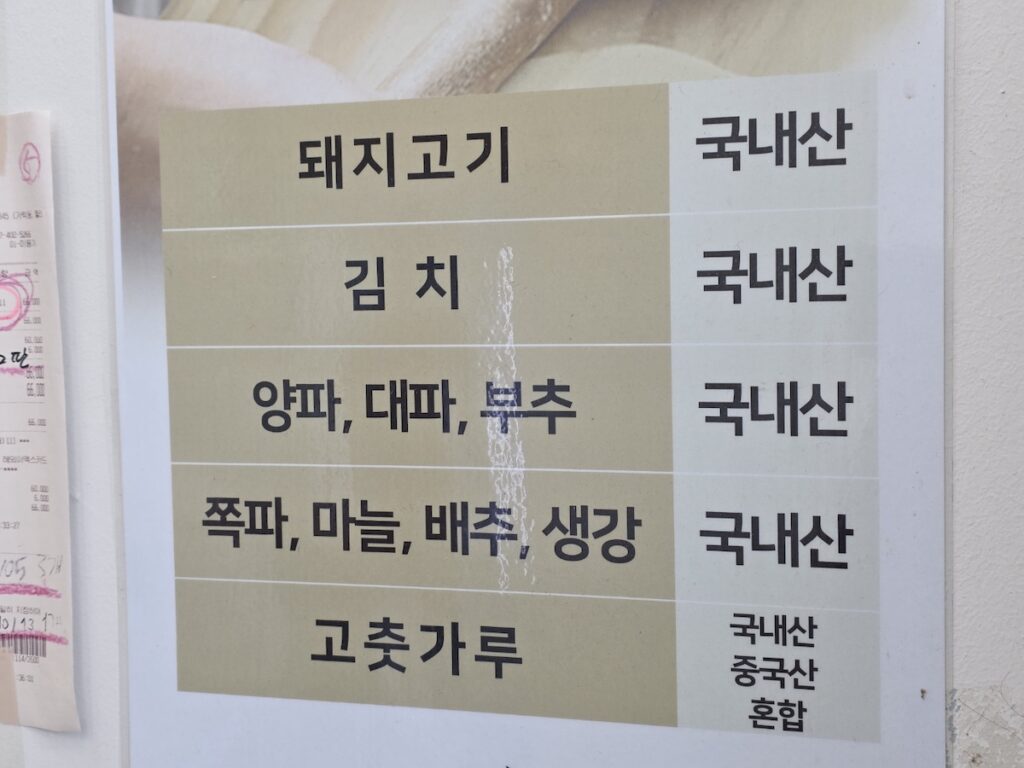
- The Desire for Transparency: The “Domestic Origin” protocol ensures that even in a fast-paced urban environment, the integrity of the food is sacred.
- The Digital Efficiency: Seoul Pay and QR codes prove that we value time as much as we value tradition.
- The Cultural Warmth: Despite the “Palli-Palli” rush, the act of buying mandu for an aging parent remains the emotional anchor of our society.
The Final Gate: Bringing the Steam Home
I walked away from the shop, the warmth of the mandu box seeping through the cardboard and into my cold-numbed hands. My fever felt a little lighter. In Seoul, we don’t just eat to survive; we eat to reconnect. Whether it’s navigating the Seoul subway child fare with a toddler or buying a box of dumplings for a mother, every move is a tactical decision driven by care.
As I opened the front door, the scent of the thin-skin dumplings filled the entryway. The cold was gone. The protocol was complete.