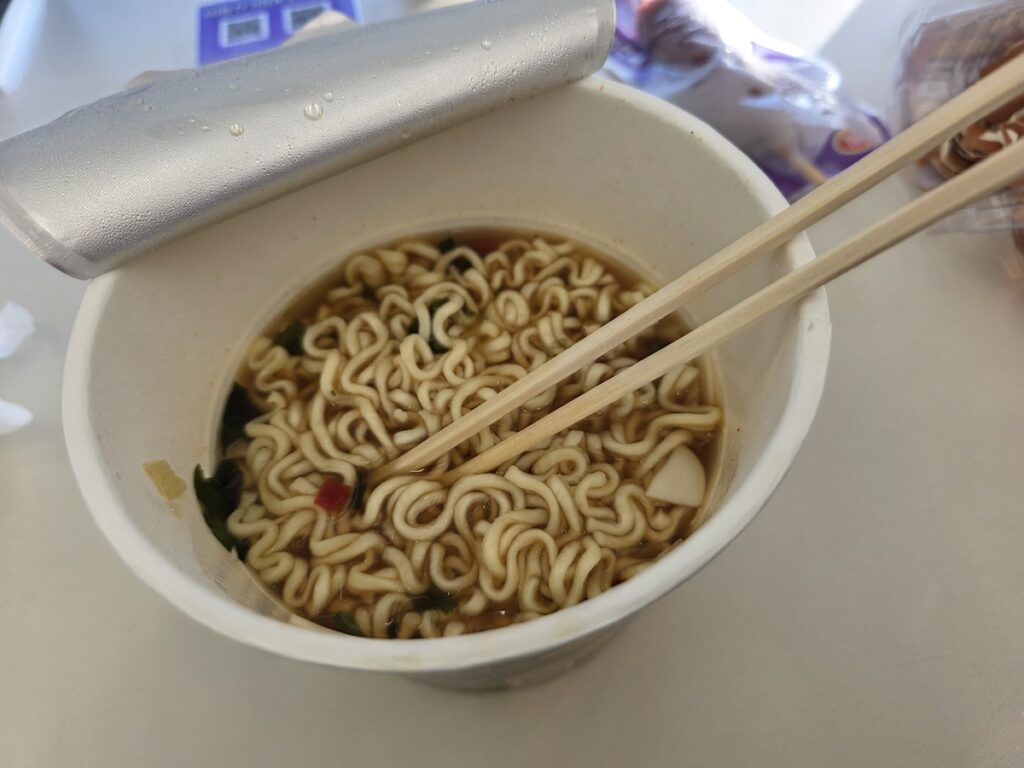
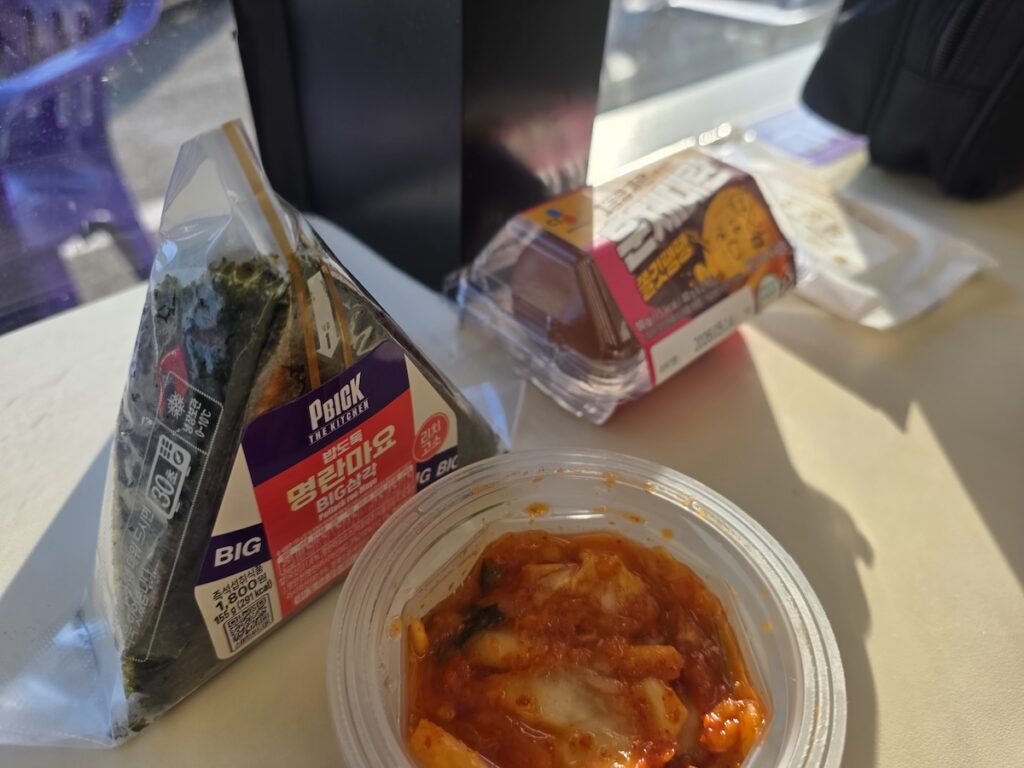
South Korea convenience stores aren’t just retail shops; they are high-speed dining hubs that saved my morning when my friend and I were racing to a golf course for an early tee-off. We had absolutely no time for a sit-down restaurant, so we swung by a local CU. Within five minutes, we had a steaming feast of spicy ramen, roasted eggs, kimchi, and triangle kimbap spread out before us. While tourists often see these stores as quirky “attractions” to find viral snacks, for those of us living or traveling here, they are the ultimate survival centers for when time is your biggest enemy.
The Reality of Dining at South Korea Convenience Stores
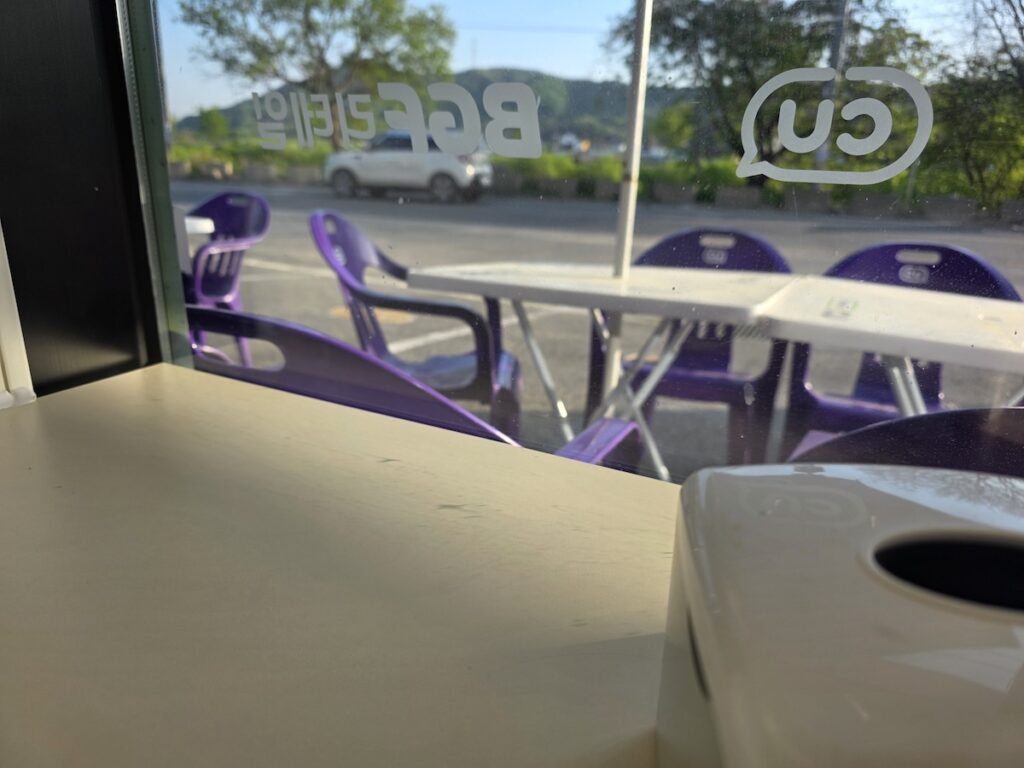
In the West, a convenience store meal usually means a sad, pre-packaged sandwich or a questionable hot dog. In Korea, it’s a legitimate culinary subculture. During our pre-golf rush, we grabbed sausages and “samgak kimbap” (triangle kimbap), which are surprisingly fresh because they are restocked multiple times a day. Most locations provide a dedicated space to eat, whether it’s a high-top counter inside with stools or plastic tables set up on the sidewalk outside.
Indoor vs. Outdoor Eating Spaces
You will notice that even in the smallest alleys of Seoul or near suburban golf courses, these stores prioritize dining space. If a store is too small for tables, you might see locals standing at a narrow ledge near the window, quickly finishing their ramen before hopping on a bus. It’s a fascinating glimpse into the fast-paced “pali-pali” (hurry-hurry) lifestyle.
Comparing Convenience Store Experiences
| Feature | South Korea | Western Countries (US/EU) |
| Food Quality | High (Fresh meals, hot ramen) | Low (Mostly shelf-stable snacks) |
| Dining Area | Common (Indoor/Outdoor tables) | Rare (Grab-and-go only) |
| Alcohol Rules | Strictly No drinking indoors | Varies (Usually no on-site drinking) |
| Special Features | Hot water dispensers & microwaves | Very basic microwave (if any) |
| Discounts | Membership & Telecom (10%) | Store-specific loyalty only |
Essential Rules and the Social Etiquette of ID Checks
There is one golden rule you must remember: you cannot drink alcohol inside a South Korea convenience store. While you are free to buy a cold beer and enjoy it at the outdoor tables (depending on local ordinances), cracking one open inside next to the ramen station is a major legal and social no-no. This isn’t just about store policy; it’s a strict boundary in Korean public life. You can feast on your spicy noodles and drink your banana milk inside, but the moment you pop a beer tab, you’ve crossed the line.
Why the Staff Might Seem Extra Strict
In recent years, the pressure on store owners has reached an all-time high. Under the Youth Protection Act, selling alcohol or tobacco to minors can lead to devastating consequences for small business owners, including heavy fines and immediate business suspension for up to two months. Even if a teenager uses a fake ID or deceives the owner, the store often faces the brunt of the legal penalty. This has made clerks incredibly vigilant, sometimes even checking the IDs of people who look well into their thirties.
Why You Should Smile at an ID Check
If a staff member asks for your ID while you’re picking up a bottle of Soju or a craft beer, don’t be annoyed—be absolutely flattered! In Korea, it is a widely shared sentiment that if you get carded, it’s a direct compliment on your appearance. It’s the ultimate “you look young” verification. In a culture where skincare and youthful looks are highly valued, being asked for your passport or ARC (Alien Registration Card) is essentially the clerk telling you that your skin routine is working. Smile, hand over your ID, and enjoy the confidence boost that comes with your beverage.
Prime Locations: Finding Convenience Near Seoul’s Best Hotels
When you are staying in the heart of the city, especially in the Myeongdong district, having a solid 24-hour shop nearby is often more convenient than any room service. Most luxury hotels have a “Big Three” franchise (CU, GS25, or 7-Eleven) just a few steps from the lobby, perfect for those late-night snack runs.
Myeongdong and the Luxury Hubs
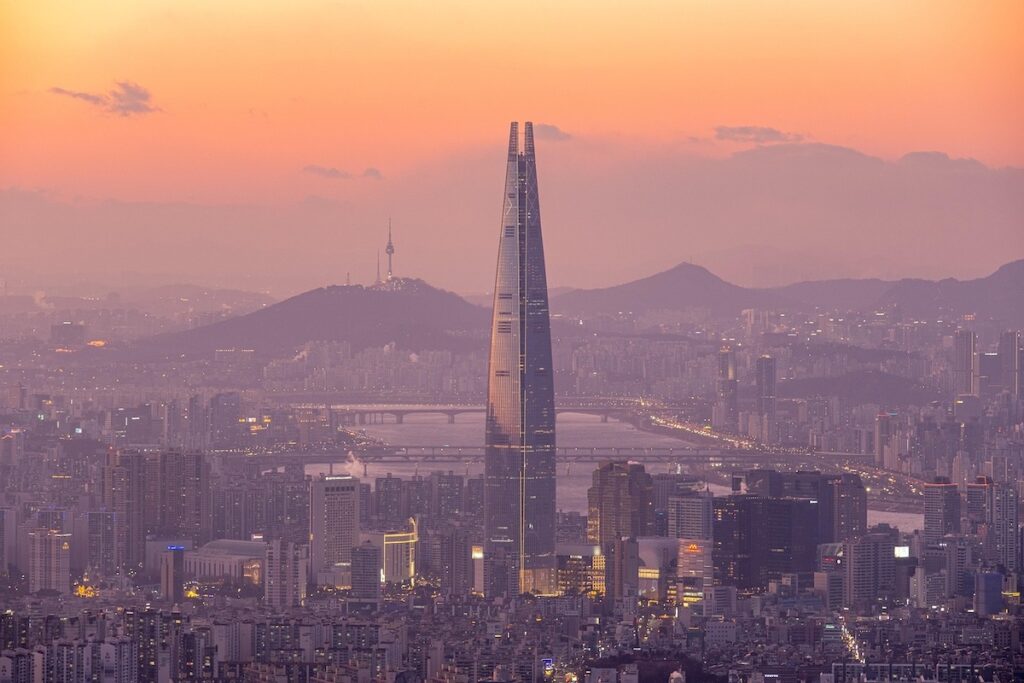
If you are staying at the Lotte Hotel Seoul or the Westin Josun Seoul, you are in a prime spot. These hotels are surrounded by several GS25 locations that cater specifically to international guests, often stocking more diverse souvenir snacks and premium ramen options. Just a short walk toward Myeongdong Cathedral, the Aloft Seoul Myeongdong also sits right next to a cluster of convenience stores that are perfect for grabbing a quick breakfast of triangle kimbap before heading out for a day of sightseeing.
Beyond the Tourist Path
If you find yourself near Namsan or the City Hall area, look for stores tucked into the ground floors of major office buildings. These often have the largest indoor seating areas because they serve the local workforce during busy lunch hours. They are usually cleaner and less crowded than the ones on the main tourist drags of Myeongdong, providing a much more relaxed space for your convenience store feast.
Hidden Savings and Practical Insights
If you are staying in Korea long-term, the South Korea convenience stores offer incredible savings through telecom partnerships. If you use a major carrier like SKT, KT, or LG U+, you can often get a 10% discount just by showing your membership barcode at checkout. It might only be a few hundred won, but over a month of “triangular kimbap” runs, it adds up to a free meal.
Tips for First-Time Visitors
- Microwaves are self-service: Don’t wait for the clerk to heat your food. There is a station with microwaves and hot water for your ramen.
- Dispose of trash properly: Korean stores have specific bins for liquids, food waste, and recyclables. Look at what others are doing so you don’t dump your ramen soup in the plastic bin.
- Try the “Ice Cup” drinks: In the summer, grab a pouch of coffee or blue lemonade and pour it into an ice cup from the freezer. It’s the unofficial national drink of Korean summers.
Conclusion
Whether you’re rushing to a golf course like I was or just looking for a midnight snack after exploring Hongdae, South Korea convenience stores offer a level of reliability and quality that is hard to find elsewhere. They bridge the gap between a grocery store and a restaurant, providing a clean, well-lit space to refuel at any hour. Trying a “convenience store feast” isn’t just a budget move; it’s a rite of passage for anyone who wants to experience the true, efficient pulse of modern Korea.
Convenience stores in Korea are not just places to buy snacks. They are part of everyday Korean eating culture, especially for quick meals, late-night food, and travelers who need something simple when restaurants are closed.