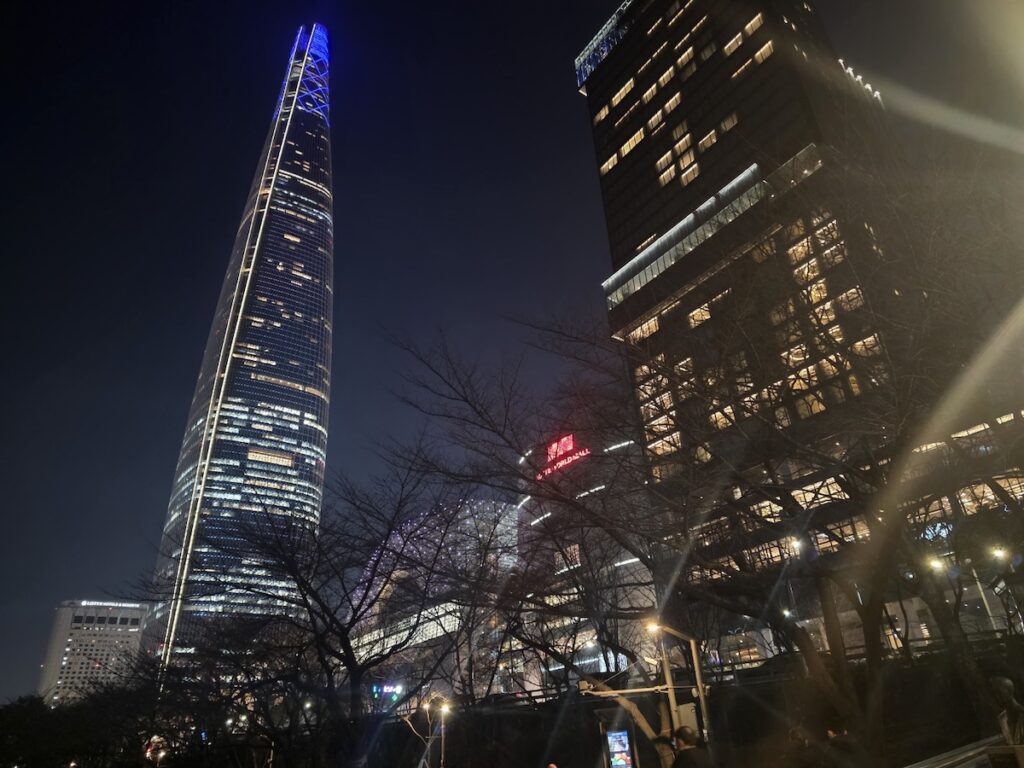
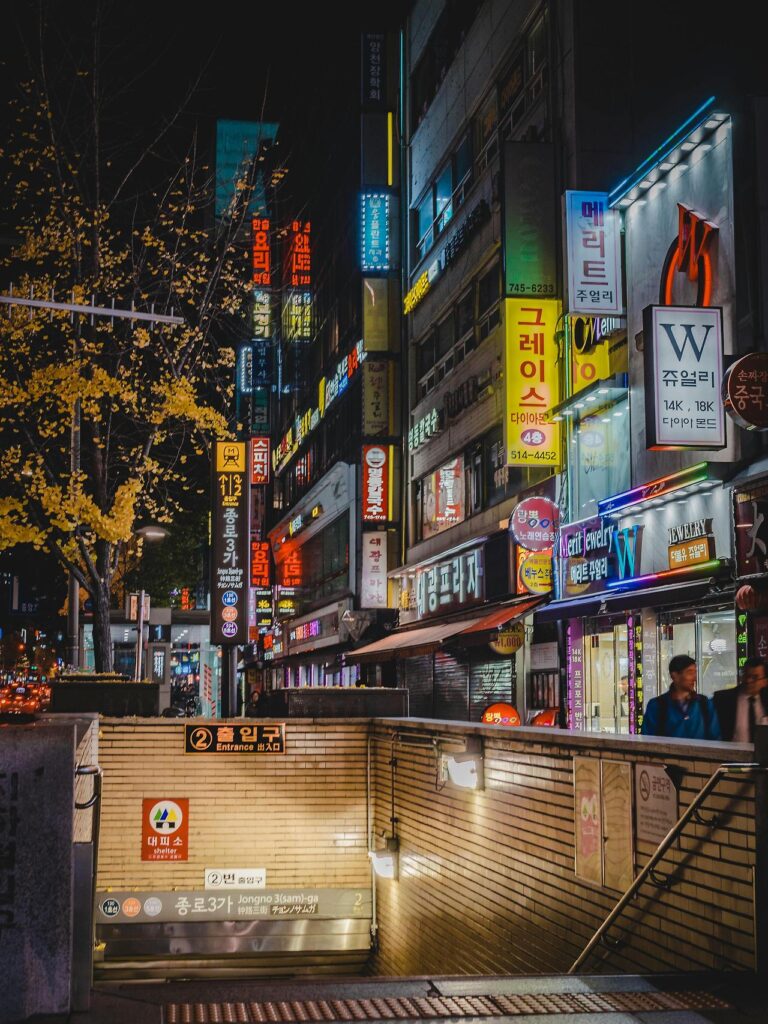
My “Heart-Stopping” Moment at Express Bus Terminal Station
Welcome to this comprehensive Seoul Subway Line 9 Guide, designed to help you navigate one of the city’s most complex transit routes. I consider myself a seasoned Seoulite, but even I get a bit nervous when I have to pass through Express Bus Terminal Station during rush hour on Line 9. I remember one Tuesday evening, around 6:30 PM. As the doors of the gold-colored train opened, a literal “human tide” pushed me back. For a moment, my feet weren’t even touching the ground.
If a local like me feels this way, what must it be like for a traveler trying to get to Gimpo Airport or a K-POP concert? Today, I’m sharing everything you need to know to not only survive but master this unique transit system through this Seoul Subway Line 9 Guide.
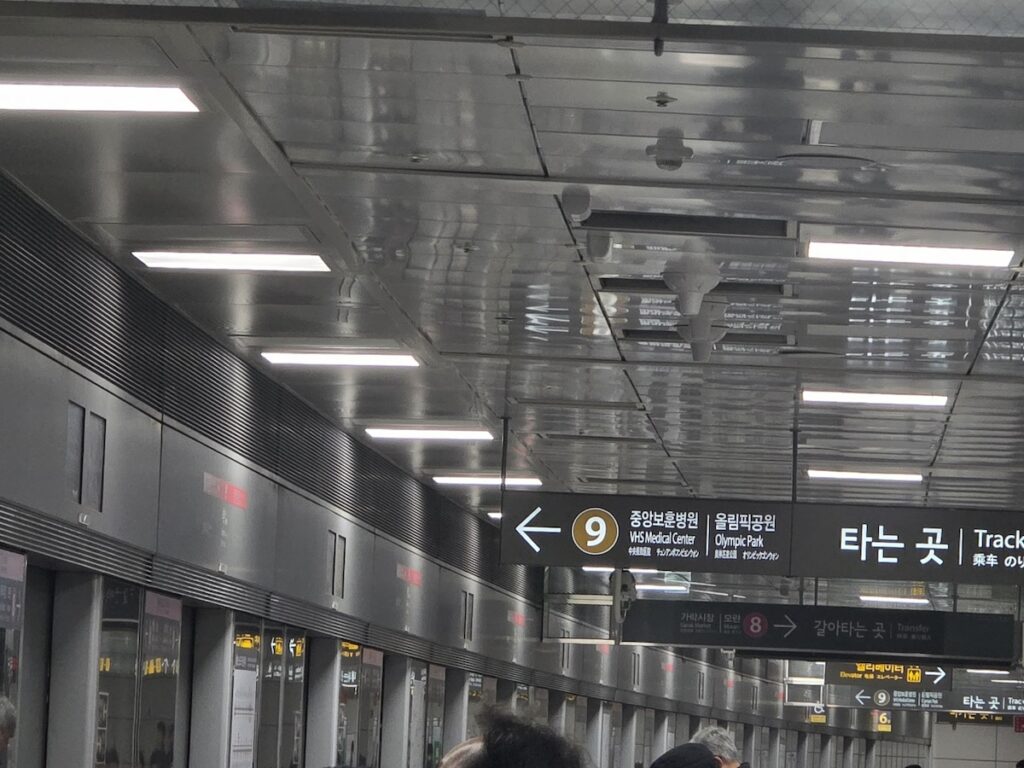
1. The Golden Rule of this Seoul Subway Line 9 Guide: Express vs. Local
The most common mistake travelers make is boarding the wrong train. This isn’t just a minor delay; it can mean missing your stop entirely or ending up in a crowd you weren’t prepared for. To master this Seoul Subway Line 9 Guide, you must distinguish between these two:
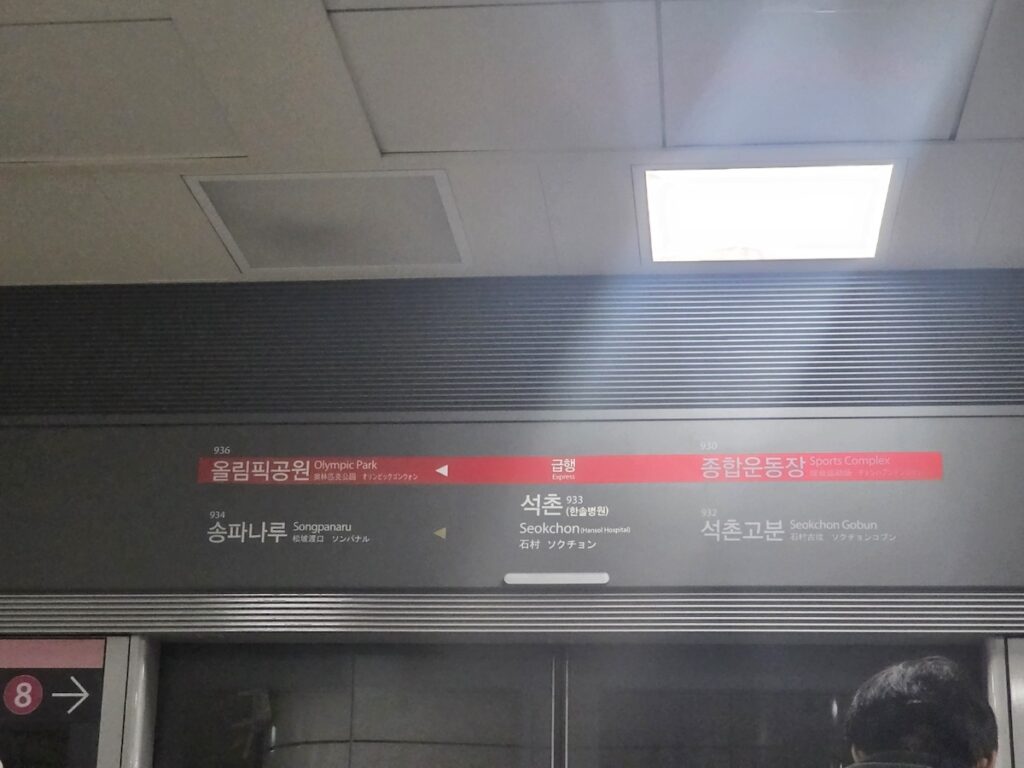
- The Express Train (Red Indicators): These stop only at major hubs like Gimpo Airport, Magongnaru, Dangsan, Yeouido, Noryangjin, Express Bus Terminal, Sinnonhyeon, and Olympic Park. They save a massive amount of time but are significantly more crowded.
- The Local Train (Blue/Green Indicators): These stop at every single station. If your destination is a smaller neighborhood station like Songpanaru or Seokchon Gobun, you must be on the Local train.
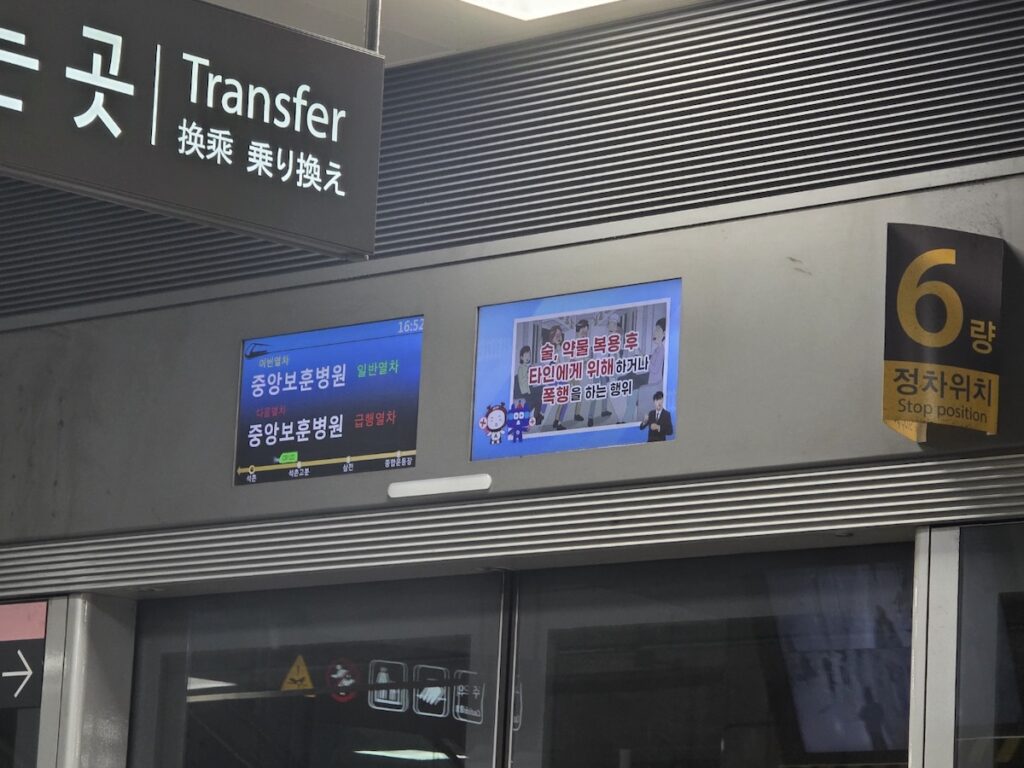
- Pro Tip for 2026: Always check the digital display on the platform screen doors. If you see the word “Express” (급행) in red, it’s the fast one. If it says “All Stops” or “Local” (일반), it’s the slow one.
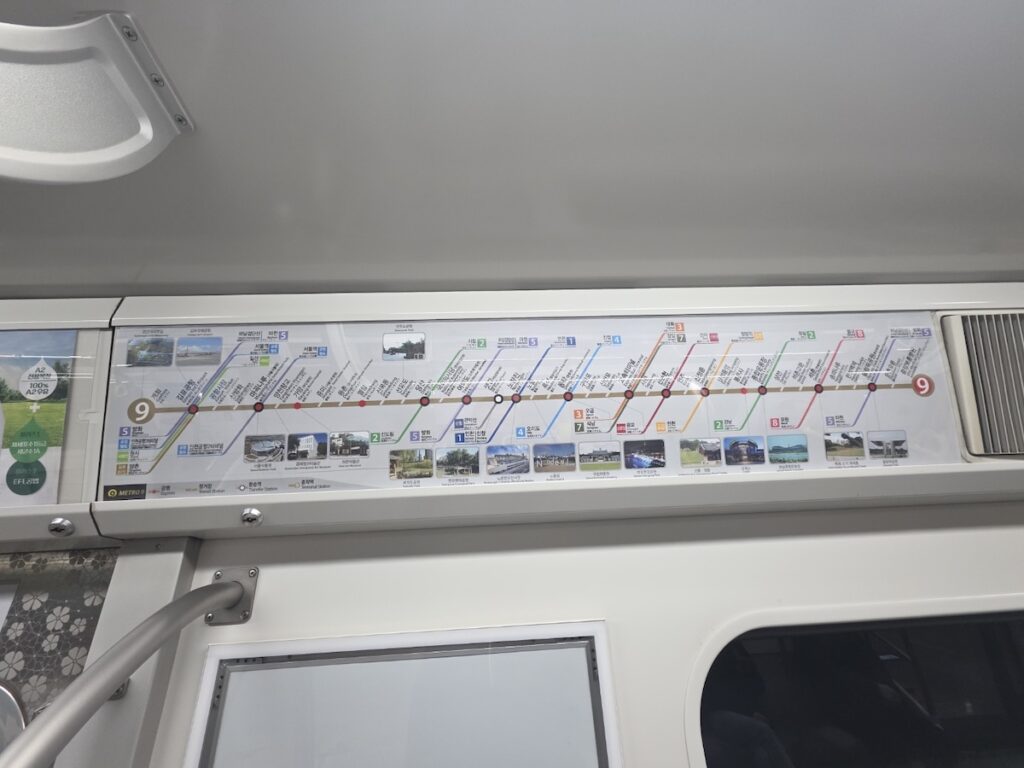
2. Noryangjin Station: A Core Part of the Seoul Subway Line 9 Guide
As the train pulls into Noryangjin Station, you’ll notice a distinct change in the crowd. Hundreds of young people, often carrying heavy books, hop on and off. This station is the heart of Korea’s “Exam Village” (Gosi-chon).
Passing through here as part of your Seoul Subway Line 9 Guide experience always makes me sentimental. It reminds me of my younger days and the sheer grit young Koreans put into their future. For a traveler, it’s a poignant reminder that the shiny skyscraper-filled Seoul is built on the immense hard work of its people. If you have time, step out for some “Cup Rice” (Kup-bap)—an iconic meal for students here.
3. Reaching Han River and K-POP Stadiums via Line 9
This Seoul Subway Line 9 Guide highlights the most “fun” line because it connects the best leisure spots:
- Han River Ramen (Yeouido/Dangsan): Access the parks to experience the famous “Han River Ramen” which, in 2026, is a global bucket list item.
- K-POP and Sports (Sports Complex/Olympic Park): If you are in Seoul for a concert at the Jamsil Olympic Stadium or the Olympic Park, Line 9 is your best friend. The Express train will whisk you from Gangnam to these venues in less than 20 minutes.
- Airport Access: It connects Gimpo International Airport directly to the heart of Gangnam (Sinnonhyeon/Bongeunsa). It’s often faster than a taxi during peak hours.
4. Advanced Strategy: The “Jump & Switch” Masterclass
To use this Seoul Subway Line 9 Guide like a pro, you must learn the “Jump & Switch.” Knowing the difference is basic; knowing how to combine them is true mastery.
- The Seamless “Cross-platform” Transfer: At key stations like Magongnaru, Gayang, Dongjak, and Seokchon, the Express and Local trains often arrive on the same platform. Take the Express as far as it goes, hop off, and walk five steps across to the Local train. You’ve just bypassed 10 stations of stop-and-go travel.
- The “Wait and Leap” Technique: If you are at a Local station and see a crowded train, stay on until you hit a major hub (like Yeouido), then jump onto the Express. It’s like switching to the fast lane on a highway.
- Strategic Boarding for Airport Travelers: If you have a massive suitcase during rush hour, avoid the Express. Take the Local train. It takes 15 minutes longer, but you will actually have physical space for your luggage.
5. Final Survival Tips for the “Hell-Train”
Every Seoul Subway Line 9 Guide must warn you about the “Jiok-cheol” (Hell-Train) congestion.
- Avoid Peak Hours: 7:30 AM – 9:00 AM and 6:00 PM – 7:30 PM. If you have a flight to catch, leave 30 minutes earlier.
- Wait for the Next One: If an Express is too full, a Local train often follows in 3-4 minutes and is much emptier.
- The 6-Car Rule: Line 9 has fewer cars than other lines (usually 6), so the platforms feel much tighter. Look for the “Stop Position” markers on the floor.