I recently took the high-speed SRT train down to the southern coast, and my time at Gwangalli Beach in Busan reminded me that this famous destination is experienced completely differently depending on who you are. I arrived very early in the morning, long before the cafes opened, and decided to grab a warm breakfast. I walked into a small restaurant serving Kongnamul Gukbap, a boiling Korean bean sprout soup. At exactly 6:30 AM, a man in his seventies walked through the doors wearing nothing but a swimsuit. Seawater was still dripping from his body onto the linoleum floor. He sat down, ordered his soup, and ate it comfortably in his wet swimming gear.
I later learned from the staff that he is a lifelong local who swims in the ocean every single morning, 365 days a year. It was a striking realization. For visitors, this area is a spectacular coastal getaway filled with neon lights, but for others, it is simply the neighborhood they have always called home. I ended up taking an airplane back to Seoul the next day, but that short trip left me thinking about how to truly experience this neighborhood beyond the surface level.
Quick Answer: Is Gwangalli Beach in Busan Right for Your Trip?
If you are wondering whether to make Gwangalli your main base in the city, it depends entirely on your travel goals. If you want an action-packed itinerary moving constantly from one city landmark to another, a central transit hub might be better. However, if your goal is a relaxing one-night or two-night stay focused on beautiful scenery, ocean breezes, and a mix of tourist energy with authentic local charm, Gwangalli is the perfect choice. Book an ocean-view room so you can experience the quiet mornings, the lively afternoons, and the illuminated bridge at night without ever having to rush.
The Quiet Luxury of a Gwangalli Beach in Busan Morning
The atmosphere at the beach changes drastically depending on the hour you choose to step outside. Most travelers do not see the water until mid-morning or lunchtime, which means they miss out on the most peaceful version of the neighborhood.
Why Waking Up Early Matters
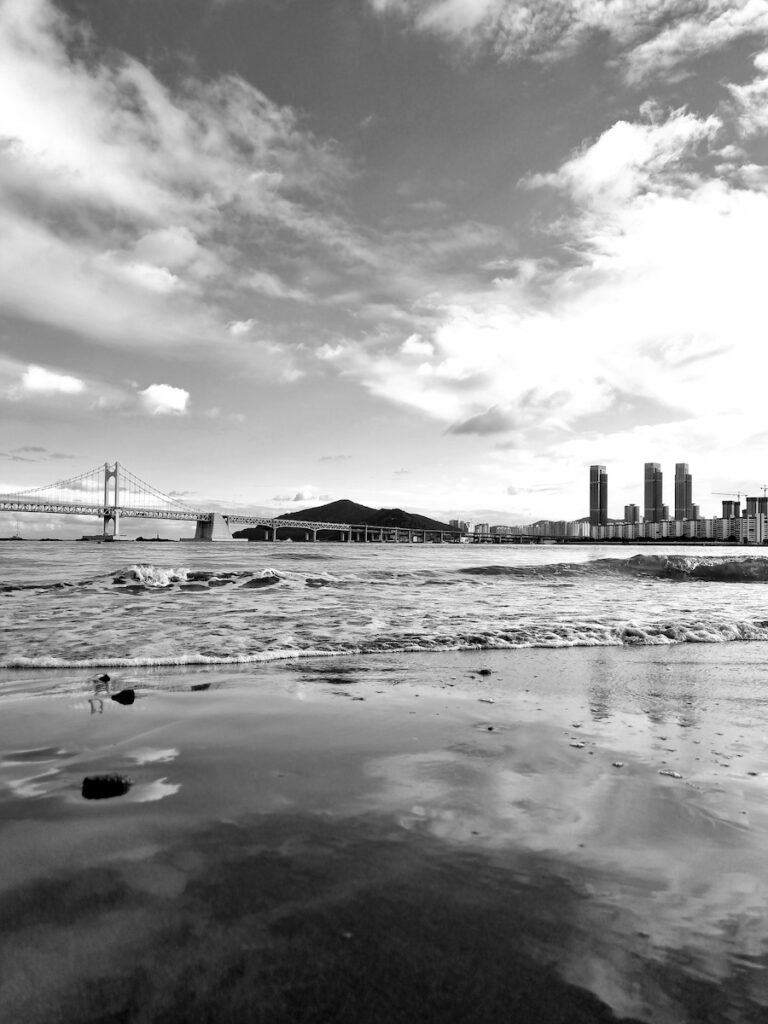
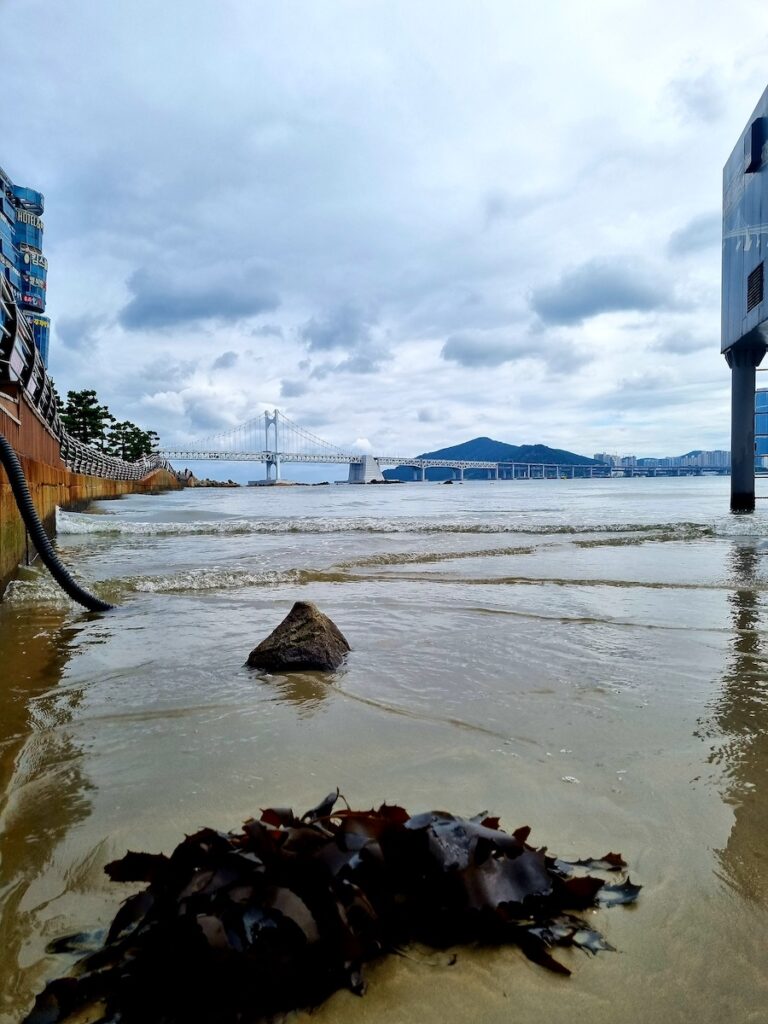
There is something incredibly precious about looking at the shoreline early in the morning. Before 8:00 AM, the sand is mostly empty, save for a few dedicated joggers, street cleaners, and local residents walking their dogs. When you stand there watching the gentle waves roll in against the backdrop of the massive suspension bridge, you feel as though you have the entire space to yourself. Give it just a few hours, and that same stretch of sand will be completely packed with thousands of people, picnic mats, and beach umbrellas. Owning that brief, quiet moment in a bustling city is a luxury that requires nothing more than an early alarm.
The Contrast of the Breakfast Routine
Having breakfast near the water also highlights the dual nature of the area. Right next to closed-down cocktail bars and upscale western brunch cafes that cater to the afternoon crowd, you will find traditional Korean soup restaurants that have been open since 5:00 AM. Eating a deeply flavorful, inexpensive bowl of hot soup while watching locals go about their daily routines provides a grounding contrast to the flashy, vacation-focused energy that takes over later in the day.
Daytime Vibes and Expat Culture at Gwangalli Beach in Busan
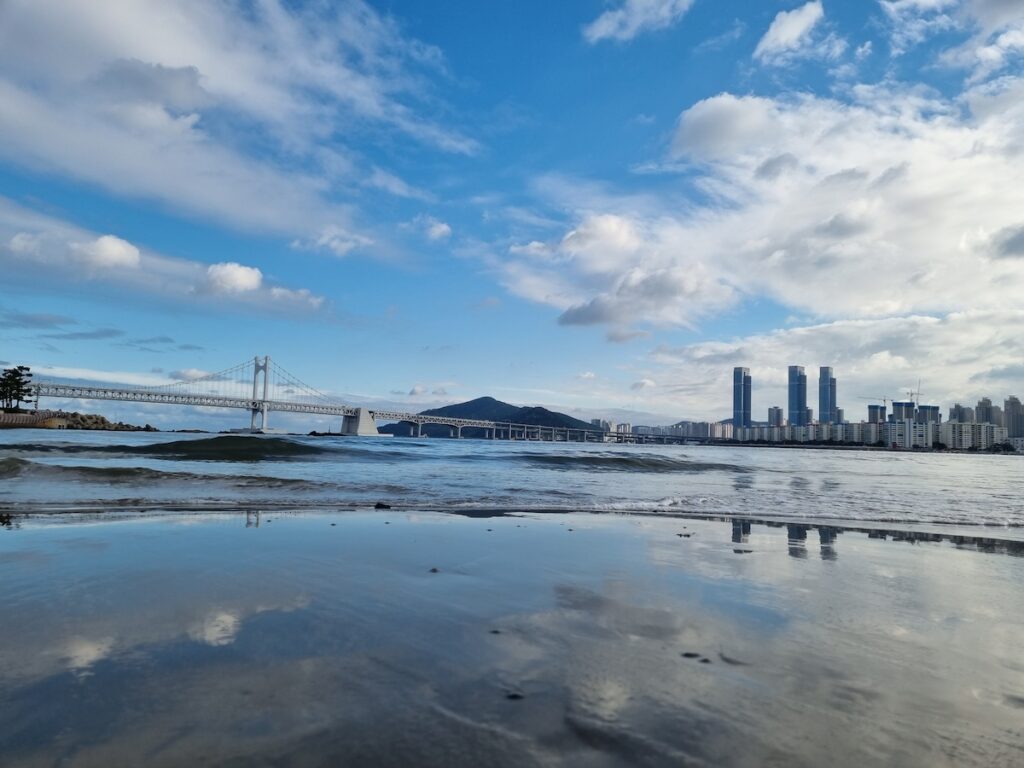
As the sun rises higher, the demographic on the sand shifts dramatically. This area is famously popular with foreigners, expats, and younger crowds, creating a daytime culture that feels slightly different from other coastal towns in Korea.
Tanning and the Giant Beer Bottles
If you walk along the water on a sunny afternoon, you will notice a distinct beach culture that often surprises first-time visitors to Korea. I always find it amusing to observe the groups of western tourists and expats laying out on towels in bikinis and swimsuits, soaking up the sun. What makes the scene uniquely Korean, however, is what they are drinking.
In Korea, drinking in public spaces is legal and widely accepted. Many beachgoers hold what we jokingly call “fatty beer” or “chubby beer” in Korean—massive 1.6-liter plastic PET bottles of domestic lager that you can buy at any convenience store for just a few dollars. Seeing someone lounging in western-style beachwear while casually pouring from a giant plastic bottle of Korean beer perfectly captures the cultural blend of the area. It is relaxed, inexpensive, and entirely unpretentious.
Navigating the Commercial Front
The main road running parallel to the sand is heavily commercialized. It is packed with towering franchise cafes, fancy pubs with open terraces, and aesthetically pleasing restaurants designed specifically for tourists. These places offer incredible views and are great if you want a comfortable seat to stare at the ocean. However, if you rely entirely on this main strip for your meals, you might miss out on the true culinary soul of the city.
Moving Beyond the Waterfront of Gwangalli Beach in Busan
To find the authentic elements of local life, you simply need to walk away from the water. The tourist infrastructure is remarkably shallow; it often only extends one or two blocks deep.
Leaving the Fancy Pubs Behind
If you venture into the back alleys behind the glittering beachfront hotels, the atmosphere shifts immediately. The modern architecture is replaced by older residential buildings, small neighborhood grocery stores, and humble restaurants that have been serving the same menu for decades. This is where the people who actually live and work in the area spend their time.
Why I Head to Namcheon-dong for Dinner
When evening rolls around, I almost never eat at the beachfront restaurants. Instead, I take a short walk down to Namcheon-dong, a neighborhood located just at the southern end of the beach.
Namcheon-dong is famous among locals. When you eat here, you immediately notice a drop in prices and a massive jump in quality. You can sit down at a modest, slightly worn-out restaurant and order incredibly fresh seafood that was likely caught that same day. Furthermore, the auditory experience changes. On the main beach, you hear a mix of English, standard Seoul Korean, and various international languages. In the restaurants of Namcheon-dong, the air is thick with the fast, highly expressive, and rhythmic tones of the Busan dialect (Saturi). It feels like you have traveled much further than a simple fifteen-minute walk.
Comparing the Two Experiences
If you are trying to decide how to split your time, understanding the difference between the main strip and the surrounding local neighborhoods is highly useful.
The Surprisingly Peaceful Night Culture of Gwangalli Beach in Busan
When the sun finally sets and the massive suspension bridge lights up, the energy of the neighborhood peaks. Yet, the way people behave at night here is something that often leaves a strong impression on visitors from western countries.
Drinking by the Water Without the Chaos
By 9:00 PM, the sand is dotted with hundreds of small groups. People buy snacks, fried chicken, and alcohol from nearby convenience stores, spread out small picnic mats, and sit in the dark talking and drinking. In many countries, thousands of people drinking alcohol on a dark beach would inevitably lead to loud arguments, broken glass, and a feeling of unsafety.
Here, the reality is entirely different. Despite the large crowds and the alcohol, there is an unspoken etiquette that governs the space. It is remarkably peaceful. People keep their voices to a reasonable level, they collect their trash meticulously in plastic bags, and nuisances are incredibly rare. There is a strong cultural inclination to respect the public space and a deep-seated desire to avoid causing inconvenience to others. You can walk right through the middle of the drinking crowds at midnight and feel completely safe and undisturbed.
How to Plan Your Ideal Stay at Gwangalli Beach in Busan
If you are building an itinerary for a trip down south, how you treat this neighborhood will define your experience.
The Right Travel Style for This Neighborhood
Travelers who want to visit every famous temple, hike every mountain, and shop in every district might find themselves frustrated trying to commute from the beach every day. However, if you are the type of traveler who views a 1-night or 2-night trip as a chance to genuinely rest, this is exactly where you should be.
My best advice is to book an accommodation that directly faces the water. Use the room as your personal viewing deck. Wake up early to catch the quiet morning sand, step out in the afternoon to witness the lively expat and tourist culture, walk over to Namcheon-dong when you want a genuine, reasonably priced seafood dinner, and finally, bring a mat and a convenience store beer back to the sand to enjoy the respectful, peaceful night culture. It is a place that manages to balance the flashy appeal of a top-tier tourist destination with the grounded, everyday reality of local coastal life.
Where to Stay: Best Hotels Near Gwangalli Beach in Busan
To fully experience the shifting moods of the beach from sunrise to midnight, booking a room directly on the waterfront is essential. The front row of the beach is lined with hotels that cater to different budgets, but they all share one major selling point: an unobstructed view of the Gwangandaegyo Bridge. Here are the most representative beachfront accommodations to consider for a one- or two-night stay.
Kent Hotel Gwangalli by Kensington
Located right in the absolute center of the main beachfront strip, this property is highly popular among trendy young travelers and couples. It is operated by a reliable domestic hotel group, ensuring clean, standardized service. The rooms feature modern, sleek interiors, and the hotel is famous for its sky lounge on the top floor, which offers one of the best panoramic views of the ocean in the entire area.
- Key Feature: Best central location, vibrant sky lounge, and high-quality bedding.
- Price Range: Generally around $100 to $180 USD per night, depending on the season and whether you choose a bridge-view room.
Hotel Aqua Palace
This is one of the most iconic, long-standing landmarks on the beach. While the interior decor feels slightly more traditional and older compared to the newer boutique hotels nearby, it offers amenities that are hard to find elsewhere. It features a massive indoor water park and a traditional Korean public bath (Jjimjilbang) with actual deep-ocean water. It is highly recommended for travelers who want to experience authentic Korean sauna culture while looking out at the sea.
- Key Feature: Authentic ocean-water sauna and spa facilities inside the building.
- Price Range: Typically ranges from $80 to $150 USD per night.
H Avenue Hotel Gwangalli (Branch locations)
There are a couple of H Avenue branches near the water, but the ones positioned on the upper floors of the beachfront commercial buildings offer incredible value. These are boutique-style hotels that maximize the view with massive floor-to-ceiling windows and, in some premium rooms, private outdoor terraces. The vibe is very aesthetic and photo-friendly, making it a favorite for social media savvy travelers.
- Key Feature: Private terraces and massive glass windows designed specifically for bridge viewing.
- Price Range: Usually falls between $70 and $130 USD per night, making it an excellent mid-range choice.
Quick Accommodation Comparison
| Hotel Name | Main Vibe | Price Point | Standout Amenity |
| Kent Hotel | Trendy & Central | Moderate to High | Top-floor Sky Lounge |
| Hotel Aqua Palace | Classic & Family-friendly | Moderate | Ocean-water Sauna (Jjimjilbang) |
| H Avenue Hotel | Boutique & Photogenic | Budget to Moderate | Open Terraces & Large Windows |
Tip for Travelers: When booking any accommodation in this area, always double-check that the room description explicitly states “Full Ocean View” or “Bridge View.” Some cheaper rooms in the exact same buildings face the back alleys, meaning you will miss out on the nighttime light displays.
Conclusion: Finding Balance on Gwangalli Beach in Busan
Gwangalli Beach in Busan is a rare kind of destination that manages to be two things at once without losing its identity. On the surface, it is a brilliant, high-energy tourist hub complete with craft beer bars, international crowds lounging with giant plastic bottles of beer, and a spectacular view of the suspension bridge. Yet, just one block back, or a short walk down toward the older residential corners of Namcheon-dong, it remains a thoroughly grounded Korean neighborhood where elderly locals wash off the salt water to enjoy a steaming bowl of bean sprout soup at sunrise. It is this harmony between the modern vacation culture and the deeply rooted local rhythm that makes the area so fascinating to observe.
If your upcoming trip to Korea involves a hectic schedule of checking off historic landmarks and sprinting between distant neighborhoods, you might not fully appreciate what this slice of the coast has to offer. But if you are looking for a genuine pause—a short escape where you can slow down and simply watch the world go by—Gwangalli is precisely where you belong. By booking a room with a view of the water and allowing yourself to experience the distinct shifts between its quiet mornings, lively afternoons, and remarkably peaceful nights, you get to experience Korea at its most relaxed and respectful. Give yourself the time to see both sides of this remarkable beach, and you will leave with a much deeper understanding of how the people of Busan truly live.