“Understanding the unique Half-and-Half Korean Chicken Culture is essential for anyone wanting to experience the true soul of Seoul’s dining scene in 2026.”
To the uninitiated, Korean fried chicken is just a crispy meal. But to a local, it is a complex social ritual, a symbol of communal harmony, and a masterclass in dining sequence. While the world obsesses over the “crunch,” the true soul of the experience lies in the phrase “Yangnyeom-ban, Fried-ban” (Half-and-Half). This guide explores the deep-seated cultural codes, the specific dining apparatus, and the chronological “ceremony” that makes Korean chicken a unique global phenomenon.
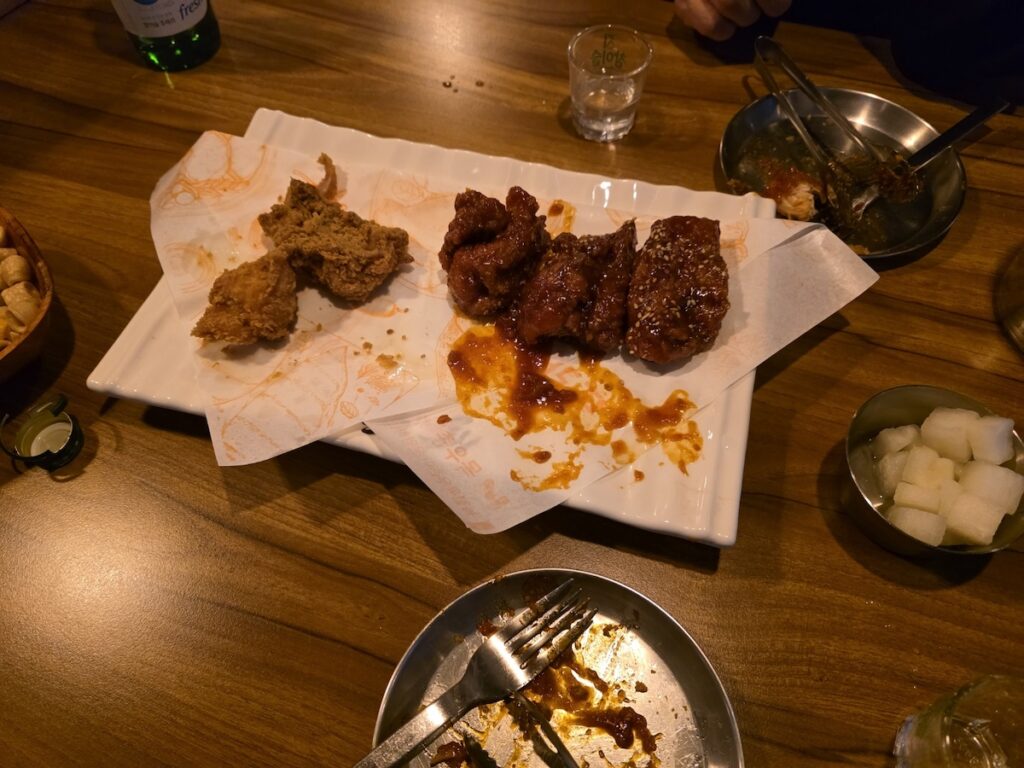
1. The Philosophy of “Ban-Ban”: Why Koreans Prioritize the Half-and-Half Choice
In many Western cultures, dining is an individualistic act—each person orders their own plate. In Korea, dining is a collective mission.
- The Collective Satisfaction: Ordering “Half-and-Half” is not just about indecision; it is a strategic social compromise. It ensures that the needs of the group are met. By sharing two flavors, the group experiences a variety of tastes without the risk of “flavor fatigue” (Mullim).
- The Cultural Code of Sharing: In Korean society, “Eating together” (Sik-gu) literally means “those who share food from the same pot.” Picking pieces from a shared center platter reinforces social bonds. The “Ban-Ban” system is the modern evolution of this communal heritage.
2. The Chronological Ceremony: What Happens Before the Chicken Arrives
A true Korean chicken experience is a three-act play. Understanding the sequence is vital for any expat or tourist.
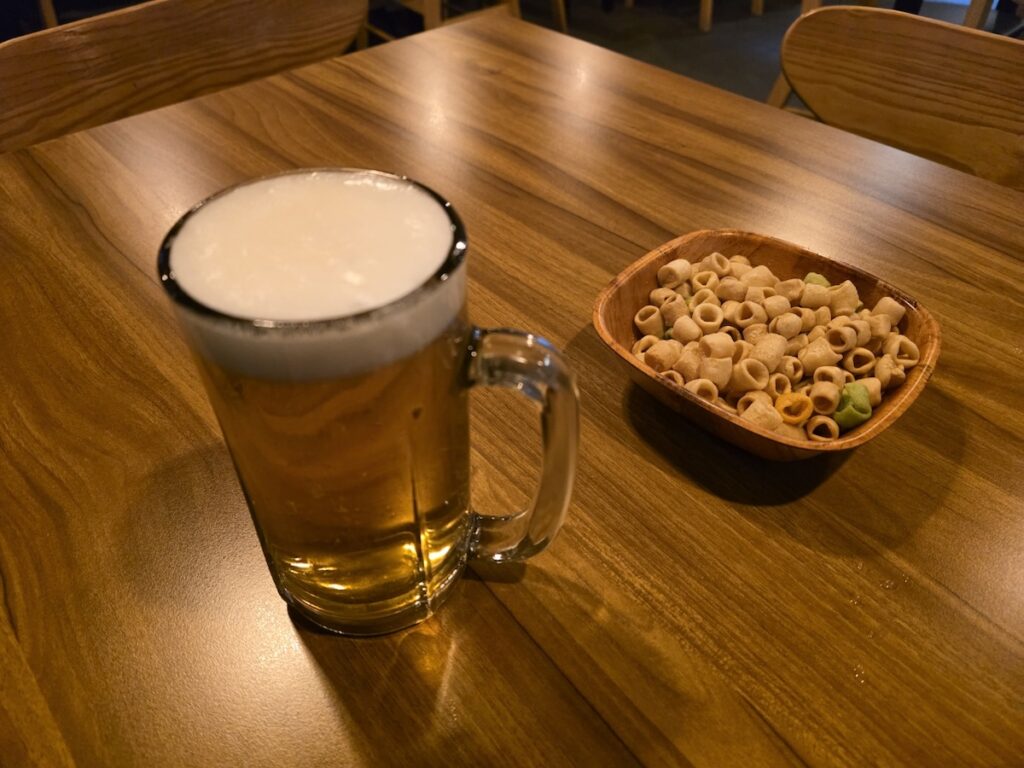
- Act 1: The “Service” Snack (Gang-naeng-i): Before you even see a menu, a bowl of colorful puffed corn (Gang-naeng-i) or crackers appears.
- The Unwritten Rule: These are free and, crucially, limitless. They are designed to keep your hands busy and your conversation flowing while the chicken is being fried to order (which typically takes 20 minutes).
- Act 2: The “500cc” Draft Beer: In Korea, you don’t just order “a beer.” You order a “O-baek” (500cc). It arrives ice-cold, often with condensation dripping down the glass, serving as the perfect palate cleanser for the hot oils to follow.
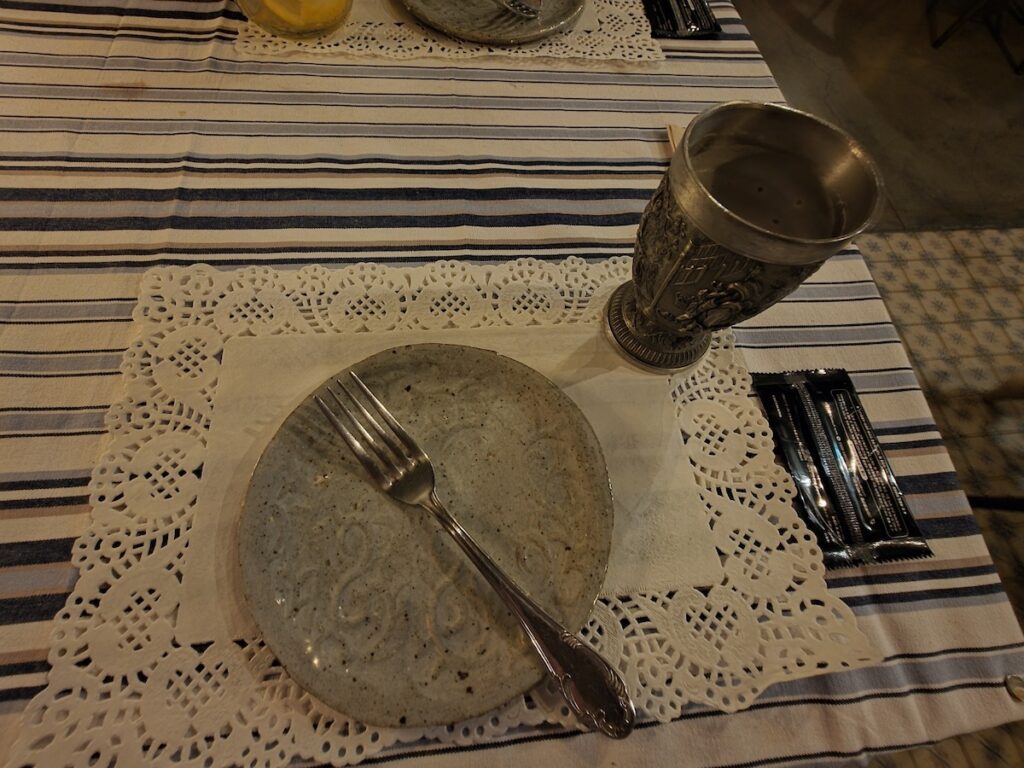
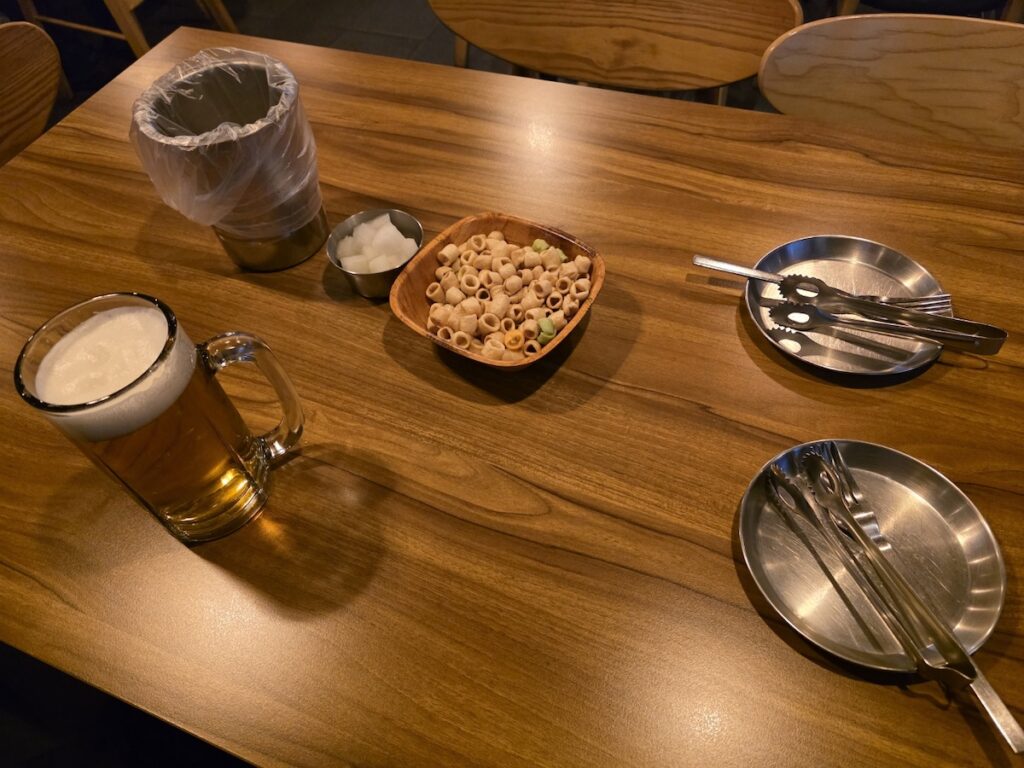
- Act 3: The Supporting Cast: The table is then set with Chicken-Mu (pickled radish), a small cabbage salad with ketchup and mayo, and the essential tools: two forks or a pair of mini-tongs (Jib-ge).
3. The Engineering of Eating: Why We Use Tongs and Forks
Foreigners are often surprised to see Koreans using small metal tongs and forks instead of their bare hands. There is a practical and social logic behind this “surgical” approach.
- The Hygiene of the Glass: Koreans take their beer seriously. Using hands creates grease marks on the “O-baek” glass, which is considered unappealing. Using tongs ensures your beer glass remains crystal clear throughout the meal.
- Heat Management: Authentic Korean chicken is served incredibly hot. The dual-fork or tong-and-fork method allows you to strip the meat from the bone without burning your fingertips.
- The “Clean Exit” Strategy: Many Koreans use the tongs to hold the piece and the fork to precisely remove the meat, allowing them to enjoy the meal while keeping their smartphone screens and napkins grease-free.
4. The Master Guide to Ordering and Etiquette in a Local Shop
To eat like a local, you must master the verbal and social cues of the neighborhood chicken joint (Dong-ne Hof).
- Refilling the Snacks: Do not hesitate to raise your hand and say “Sajang-nim, Gang-naeng-i deo juseyo!” (More snacks, please!). It is a sign that you are enjoying the atmosphere.
- The “Service” Culture: Sometimes, a generous owner might bring a small side of fried gizzards or extra fries “on the house.” This is called “Service” and is the ultimate sign of Korean hospitality.
- The Bone Disposal: Every table has a small metal bucket. This is specifically for bones. Keeping your table clean of debris is a mark of a sophisticated diner.
5. The Science of Crunch: Why Size and Coating Matter
Many expats are puzzled by the size of Korean chickens compared to the giant birds found in North America. There is a calculated reason for this, involving agricultural standards and the physics of frying.
- The “No. 10” Standard (The Golden Size): While American fryers often use 2-3kg birds, Korean fried chicken is primarily made using No. 10 chickens (approx. 1kg).
- Why it’s better: Smaller chickens have more tender muscle fibers and a higher skin-to-meat ratio. This allows the heat to penetrate to the bone quickly without burning the exterior, resulting in the signature “juicy inside, crispy outside” texture.
- The Secret of the Coating: Potato vs. Wheat: Unlike the thick, bread-like crust of Southern-style chicken, Korean chicken uses a thin, crackly skin.
- The Ingredients: Most top-tier shops use a blend of potato starch and corn starch rather than just wheat flour. This creates a “glass-like” crunch that stays crispy even when coated in heavy Yangnyeom sauce.
- Double-Frying Technology: To achieve the legendary crunch, Korean chicken is fried twice. The first fry cooks the meat and renders the fat; the second fry (at a higher temperature) shatters the water molecules in the skin, creating that rhythmic sound when you bite into it.
- Yangnyeom Nutrients: While it is “fried food,” the Yangnyeom sauce is often packed with garlic, ginger, and fermented red chili paste (Gochujang). These ingredients provide a kick of antioxidants and digestive aids that balance the heaviness of the oil.
🏛️ Useful Guides for Your Life in Korea
- 🏢 [Beyond Transit: A Guide to Seoul Subway Ads and Late-Night Survival]
- 🏛️ [K-pop Dance Locations in Korea: The 2026 Ultimate Guide]
- 📜 [Protecting Your Deposit in Korea: A Masterclass for Expats]