“When you travel in Korea, understanding the Seoul Subway Rules and Fines is the most important step to ensure a safe and smooth journey.” The Seoul subway is often cited as the best transit system in the world. Its secret lies not just in high-speed Wi-Fi or heated seats, but in a strict legal framework that ensures safety and order for millions. Whether you are a long-term expat or a first-time tourist, understanding the Seoul Subway Rules and Fines is essential to avoid unexpected legal trouble.
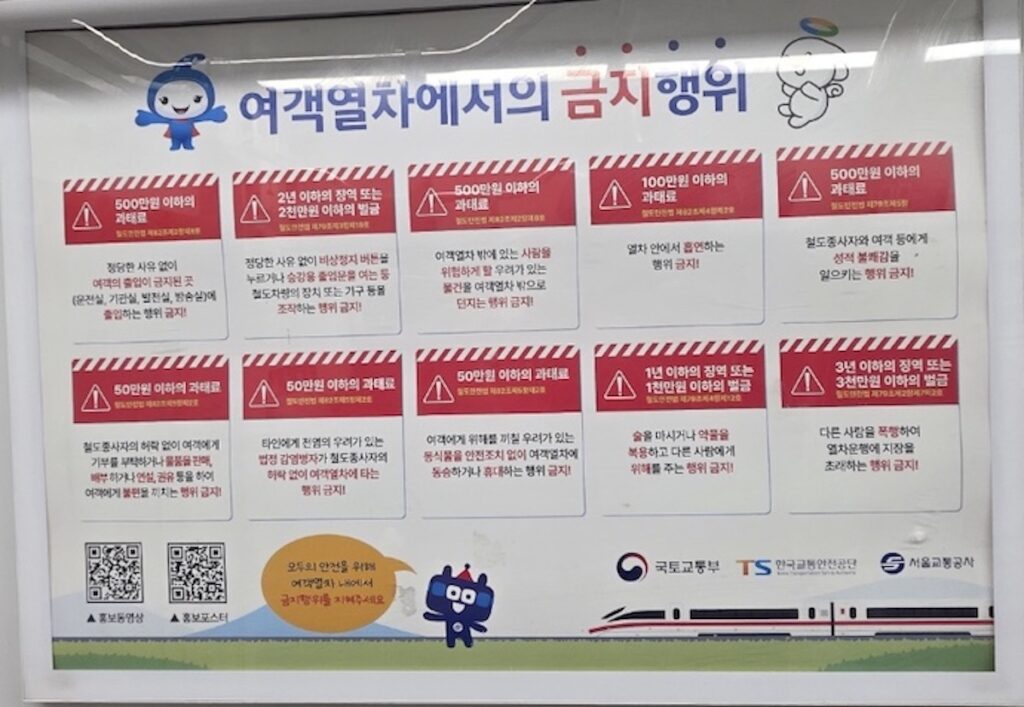
Based on the official “Prohibited Acts in Passenger Trains” guidelines, here is everything you need to know about navigating the Seoul underground legally and respectfully.
1. Safety Interference: The 10 Million Won Risk
Interfering with the operation of a train is treated as a serious crime in South Korea. The Railway Safety Act is designed to prevent any delay that could disrupt the city’s heartbeat.
- Prohibited Acts: Entering the driver’s cabin, tampering with the engine, or obstructing the movement of automatic doors.
- The Penalty: Violations can lead to criminal charges or administrative fines reaching up to 10 million KRW.
- Why it matters: Seoul’s subway runs on a split-second schedule. A single person holding a door can delay ten subsequent trains, affecting thousands of commuters.
2. Emergency Equipment: Critical Seoul Subway Rules and Fines for Safety
The red handles and evacuation ladders you see on trains are for life-threatening emergencies only.
- The Rule: Unauthorized use of emergency door release handles or evacuation equipment is strictly prohibited.
- The Penalty: Misusing these devices can lead to the most severe Seoul Subway Rules and Fines, including potential imprisonment or massive civil lawsuits for damages if a line is shut down.
- Real-world Advice: Unless you see smoke or an immediate threat to life, never touch the red handle. If you need help, use the emergency intercom button instead.
3. Dangerous Goods: Protecting the Underground Arteries
The subway is a confined space, making fire and chemical hazards the greatest fears of the transit authorities.
- The Ban: Carrying flammable liquids (gasoline, thinners), explosives, or hazardous chemicals is strictly forbidden.
- 2026 Context: With the increase in portable electronic devices, even large-capacity industrial batteries must be handled with care.
- The Consequence: If detected by security or railway police, you may be denied entry or face immediate detention for investigation.
4. Moral Conduct: Respecting the Shared Space
Seoul has a zero-tolerance policy for behaviors that infringe on the dignity or comfort of others.
- The Rule: Acts that cause sexual humiliation, indecent exposure, or any form of harassment are strictly prohibited.
- High Surveillance: Every Seoul subway car is equipped with high-definition CCTV and a silent reporting system via the “Seoul Subway” app.
- The Penalty: These acts are prosecuted under the Act on Special Cases Concerning the Punishment, etc. of Sexual Crimes, leading to heavy fines and potential deportation for non-citizens.
5. Hygiene and Public Environment: No Smoking or Alcohol
To maintain its pristine condition, the subway is a strictly controlled environment regarding substances.
- Smoking: Prohibited in all areas (platforms, trains, restrooms). Even “vaping” or e-cigarettes are treated the same. Fine: 100,000 KRW.
- Drinking: Consuming alcohol or creating a disturbance while intoxicated is banned.
- Hygiene: Leaving trash behind or creating foul odors that distress other passengers can result in removal from the station.
6. Public Order: Unauthorized Sales and Proselytizing
One of the most noticeable features of the Seoul Subway Rules and Fines is the absence of solicitors and preachers.
- Unauthorized Sales: Selling goods (from multi-tools to socks) inside the train is illegal.
- Religious Acts: Loud proselytizing or “preaching” is prohibited as it disturbs the peace.
- The Penalty: Railway police actively patrol for these activities, and violators face fines and confiscation of goods.
7. Visual Nuisance: Unauthorized Filming and Flyers
Respecting the privacy and visual space of commuters is a growing priority in Korea.
- The Ban: Distributing flyers or filming for commercial purposes without prior authorization is prohibited.
- Privacy Matters: Filming other passengers without consent can lead to disputes and legal action under Korea’s strict privacy laws.
8. The Unwritten Rules: Priority Seating Etiquette
While not always enforced by fines, these “social laws” are just as important for a smooth experience.
- The Silver Seats: Reserved for the elderly, disabled, and injured. Even if the train is empty, it is local etiquette to leave these seats vacant.
- The Pink Seats: Reserved for pregnant women. In 2026, the “Pink Light” sensor system in some cars reminds passengers to yield to expectant mothers.
Summary of Common Seoul Subway Fines
| Violation | Penalty (Approx.) |
| Smoking in the Station | 100,000 KRW |
| Unauthorized Sales/Proselytizing | Fine & Removal |
| Obstruction of Train Operation | Up to 10,000,000 KRW |
| Indecent Exposure/Harassment | Criminal Prosecution |
| Tampering with Emergency Handles | Heavy Fines/Imprisonment |
Ready to Explore the Brighter Side of Seoul?
Now that you know how to stay safe and follow the rules, it’s time to enjoy the vibrant culture that makes the Seoul subway truly special. Check out our other guides:
- 🚉 [Experience the Modern Seoul Subway: A Visual Journey for Expats] – See the stunning 4K digital guides, high-tech amenities, and the “soul” of the stations we discussed.
- 🍗 [The Secret Logic of Half-and-Half: Why Koreans Eat Chicken Differently] – After a long subway ride, you’ll be hungry. Master the art of Korea’s famous “Ban-Ban” chicken culture.
- 🕺 [K-pop Dance Locations in Korea: 2026 Seoul Busking Guide] – Use your new subway skills to find the hottest K-pop performance spots in Hongdae and Gangnam.