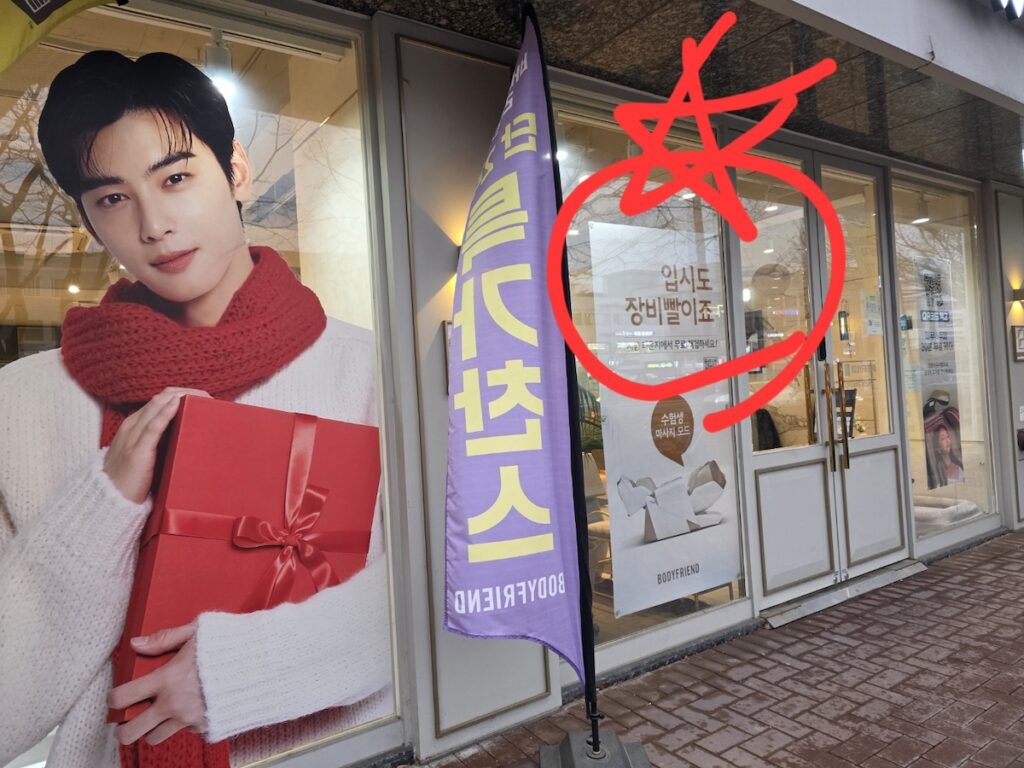
The Korean Massage Chairs found in elite households are perhaps the most vivid physical manifestation of South Korea’s academic intensity, as seen in SKY Castle and with global icons like BTS. Walking through the neon-lit streets of Seoul last night, I passed a sleek showroom where a banner proclaimed a message that would baffle most Westerners: “Invest in Your Future: A Premium Massage Chair for Your High School Senior”. In a society where the “Su-heom-saeng” (high school senior) is the ultimate priority, a $10,000 chair is not a luxury, but a strategic throne for academic victory.
1. The Unexpected Throne: A Glimpse into Seoul’s Education Obsession
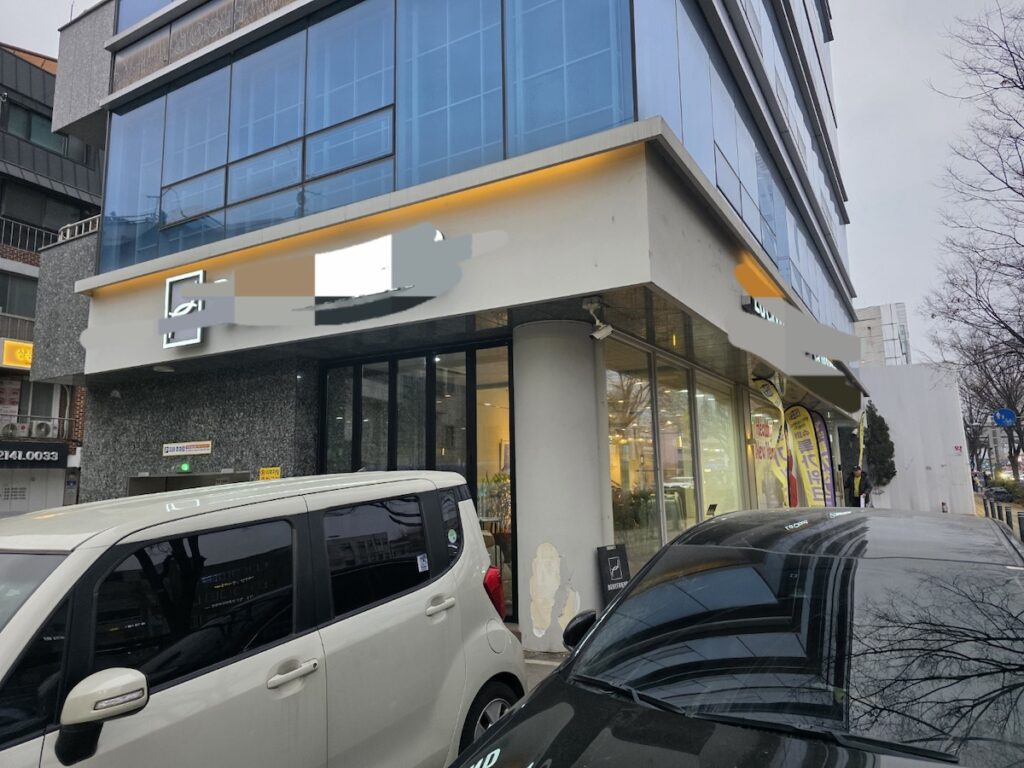
The Korean Massage Chair Culture is perhaps the most vivid physical manifestation of South Korea’s academic intensity and parental sacrifice. Walking through the neon-lit streets of Seoul last night, I passed a sleek, modern showroom that stopped me in my tracks
Walking through the neon-lit streets of Seoul last night, I passed a sleek, modern showroom that stopped me in my tracks. Amidst the glowing displays of luxurious recliners, a large banner proclaimed something that would baffle most Westerners: “Invest in Your Future: A Premium Massage Chair for Your High School Senior.”
In almost every other culture, a state-of-the-art, multi-thousand-dollar massage chair is a gift reserved for aging parents, a symbol of filial piety and well-deserved relaxation after decades of hard work. But here, in the heart of South Korea’s hyper-competitive education system, the “High School Senior” (Su-heom-saeng) is not just a student; they are the ultimate king or queen of the household, and their academic success is the family’s most critical project.
This observation isn’t just a quirky cultural note; it’s a window into the profound Korean Massage Chair Culture driven by an unparalleled academic fervor.
[The “SKY” Ambition and the Medical School Gold Rush]
To understand why a massage chair is treated like a royal throne, one must look at the peak of the mountain these students are trying to climb: the SKY universities. In South Korea, the acronym SKY—comprising Seoul National University (SNU), Yonsei University, and Korea University—represents the ultimate pinnacle of social and professional success.
Admission to these institutions, particularly located in the heart of the Seoul metropolitan area, is viewed as a “golden ticket” to high-ranking government positions, elite corporate roles at Samsung or Hyundai, and lifelong social prestige.
However, in 2026, even the prestige of a SKY diploma is being rivaled by an even more intense phenomenon: the Medical School (Ui-dae) boom. Currently, the competition to enter medical programs has reached a fever pitch, often eclipsing the desire for traditional elite engineering or humanities tracks at Seoul National University.
This “Medical School fever” is driven by a societal craving for the ultimate job security and the high social status that comes with being a doctor in an aging society. It is not uncommon for top-tier students who have already been accepted into prestigious science programs at Yonsei or Korea University to forfeit their spots and spend another year in grueling study just for a chance at a medical seat.
This desperate “All-in” strategy for SKY or a medical license explains why the household atmosphere becomes so suffocatingly tense. For a Korean parent, buying a $5,000 massage chair is a small price to pay if it provides even a 1% edge in getting their child into the halls of Seoul National University or a top-tier medical school.
2. Understanding the “Su-heom-saeng” Phenomenon: A Family’s Central Orbit
To grasp why a family would invest in a premium massage chair for a teenager, one must first understand the “Su-heom-saeng” phenomenon. This term refers specifically to students preparing for the College Scholastic Ability Test (CSAT), or “Suneung” as it’s known in Korea—a single, grueling eight-hour examination that largely determines their university, career, and even social standing.
The pressure on these students is immense, often involving 14-16 hour study days, strict diets, and enormous financial and emotional investment from their parents. The entire household’s rhythm often revolves around the Su-heom-saeng’s schedule and well-being. Parents forgo their own comforts, quiet their homes, and spare no expense to ensure their child is in optimal condition. This absolute prioritization forms the bedrock of why Premium Massage Chairs for Students have become a peculiar, yet integral, part of Korean homes.
[The Cultural Clash: K-Drama Sacrifice vs. Western Independence]
If you have watched popular K-Dramas on Netflix, you might have been baffled by the extreme lengths Korean parents go to for their children’s success. In the global hit SKY Castle, actresses like Yum Jung-ah portray the “Tiger Mom” archetype with chilling precision, showing parents who spend millions on private coordinators to ensure their children reach the top.
This fierce parental involvement is also a recurring theme in dramas like The Glory, where Song Hye-kyo’s narrative highlights the deep scars and immense pressures within the family structure when academic and social standings are at stake.
To a Western observer, where the culture often emphasizes early independence and self-reliance from a young age, this intense level of “care” can seem overwhelming or even invasive. While Western parents might encourage their children to work part-time jobs and find their own path, Korean parents view their child’s struggle as their own.
This “sacrifice culture” means the mother and father take on the role of a support crew, managing everything from nutrition to physical recovery—which is exactly why buying a luxury massage chair is seen as a noble act of parental love rather than mere extravagance. For a Korean parent, their child’s success at Seoul National University is the ultimate reward for their lifetime of sacrifice.
3. The High-End Investment: More Than Just a Chair, It’s a Strategic Asset
A massage chair in Korea is not merely a piece of furniture; for a Su-heom-saeng, it’s a strategic asset in the relentless battle for academic victory. These chairs, often costing upwards of $3,000 to $10,000, offer advanced features designed not just for physical relief but also for mental clarity and stress reduction.
- Physical Alleviation: Prolonged sitting leads to severe back, neck, and shoulder pain. A sophisticated chair provides targeted relief, improving circulation and reducing muscle stiffness, vital for maintaining focus.
- Mental Recharge: Many premium models include ‘brain massage’ functions, which utilize gentle head and neck massages coupled with soothing sounds or even light therapy. This is specifically marketed to enhance concentration and reduce anxiety—key factors for effective Study Stress Relief Korea.
- Time Efficiency: For students whose every minute is precious, a massage chair offers immediate, on-demand relief without the need to leave the house or schedule an appointment, fitting perfectly into a demanding study routine. This high-end investment reflects a parent’s unwavering belief that every possible advantage, even a luxurious one, is necessary for their child’s future.
[The Global Status of Bodyfriend: From Seoul to Hollywood]
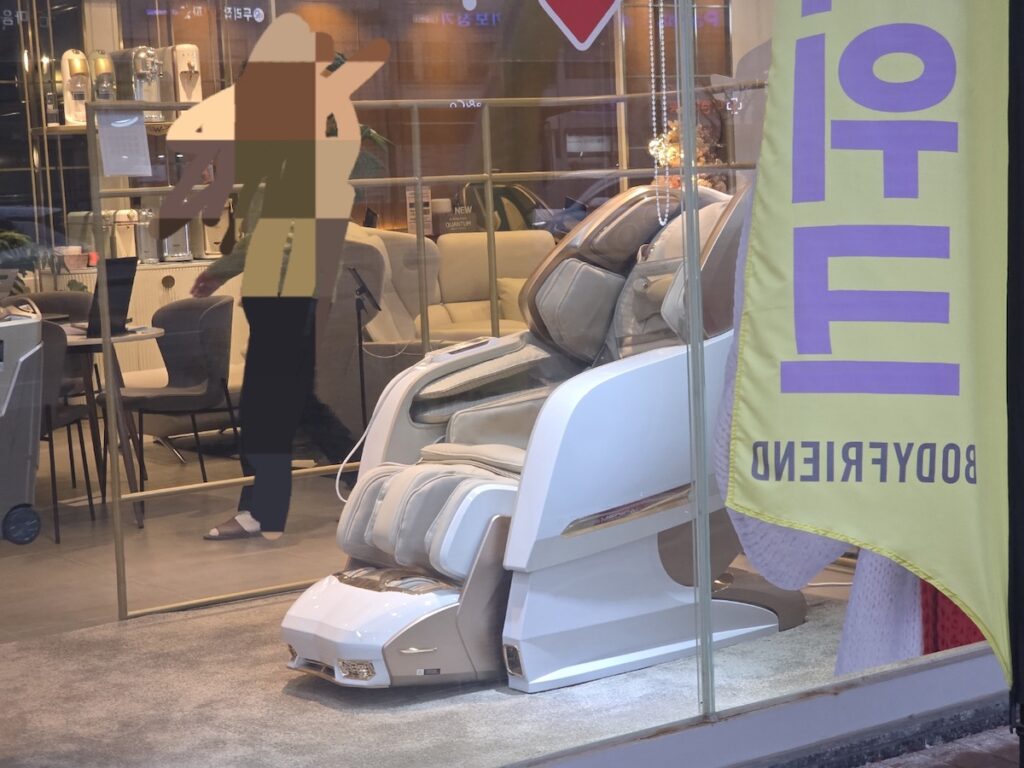
When discussing premium investment, Bodyfriend stands as the undisputed leader of Korean Massage Chair Culture. The price of these high-end units—often ranging from $5,000 to over $12,000—is justified not just by technology, but by their elite global reputation. It is not just Korean students who seek sanctuary in these chairs; some of the world’s most famous icons have integrated them into their wellness routines.
The global phenomenon BTS (Bangtan Boys) has famously been associated with the brand, showcasing how the world’s top performers use these chairs for recovery. Furthermore, Hollywood stars like Gwyneth Paltrow, known for her meticulous health and wellness standards, have been reported as fans of the brand’s sophisticated design and medical-grade features.
Even legendary figures like Pharrell Williams have been linked to the brand’s artistic collaborations. When a Korean parent buys a Bodyfriend chair for their child, they aren’t just buying a seat; they are acquiring a piece of elite technology trusted by global superstars to ensure their child has the same “VIP recovery” environment as a world-class artist.
4. Korean Massage Chair Culture: Innovation Driven by Academic Needs
The Korean market for massage chairs is remarkably advanced and highly competitive, largely due to this unique demand for academic support. Brands like Bodyfriend, Cozyma, and Human Touch (popular globally, but adapted here) don’t just sell relaxation; they sell performance enhancement.
- Specialized Programs: Many chairs feature specific “Student Modes” or “Concentration Programs” that target areas like the cervical spine (neck) and lumbar region (lower back), critical for students hunched over books.
- Smart Features: Integration with apps, customizable massage routines, and even AI-powered body scanning to optimize massage pressure are common. This technological sophistication caters directly to the modern Korean consumer who expects high-tech solutions for everyday problems, including Study Stress Relief Korea. The advertising reflects this, often showing students diligently studying, then seamlessly transitioning to the massage chair for a quick, restorative session, framed as an essential part of their study cycle.
5. Global Perspectives: A Cross-Cultural Look at Parental Investment
For an international observer, especially from countries like Israel or Singapore where academic excellence is also highly valued, the sight of a teenager receiving such a lavish gift for studying might seem extravagant. However, the core principle—parents investing heavily in their children’s future—is universal.
The difference lies in the form of that investment. In some cultures, it might be private tutors, elite boarding schools, or extensive extracurriculars. In Korea, the Korean Massage Chair Culture illustrates a unique manifestation of this global parental drive, blending technology with deep-seated cultural values. It prompts us to consider how different societies choose to physically support their offspring through periods of intense pressure.
6. How to Experience Premium Massage Chairs in Korea
While buying a $5,000 chair for a short visit might be impractical, tourists and foreign residents can still experience this unique facet of Korean Massage Chair Culture:
- Showrooms: Visit major department stores or brand-specific showrooms (e.g., Bodyfriend) to try out the latest models. Staff are usually keen to demonstrate features.
- Public Facilities: Some high-end spas, airports (though less common for full chairs), or even PC bangs (internet cafes) might offer coin-operated massage chairs.
- Luxury Accommodations: Boutique hotels or serviced apartments occasionally include premium massage chairs as an amenity. This allows a first-hand understanding of why these chairs are considered so vital for Study Stress Relief Korea.
Related Guides: Mastering the Korean Lifestyle
If you found the intricacies of Korean high-tech relaxation fascinating, you will certainly appreciate these essential guides to navigating other unique aspects of life in Korea in 2026.
- Beyond Cold: 7 Secrets of the Kimchi Refrigerator & Why You Need One in 2026
- Discover the sophisticated fermentation technology behind Korea’s most iconic kitchen appliance. It’s not just a fridge; it’s a time machine for flavor that every modern home in Seoul utilizes to maintain the perfect probiotic balance.
- How to Find a Day-Use Room in Korea: A Survival Guide for Travel Emergencies (Short-stay & Daisil)
- Whether you are dealing with a missed flight or a sudden need for a private workspace, understanding the “Daisil” system is a travel game-changer. Learn how to secure a high-quality, short-stay room for a few hours with total ease.
- Amazing Korean Four Cuts Photo Booth Guide: Why You Should Rent This 24-hour Private Space
- More than just a photo op, these 24-hour private booths offer a cinematic sanctuary for creating memories. Find out why these neon-lit spaces have become a cultural phenomenon for both locals and digital nomads alike.
7. Conclusion: The Soft Power of Korean Education
The phenomenon of the premium massage chair for the Su-heom-saeng is a powerful symbol. It speaks to the intense pressure within Korea’s education system, the deep love and sacrifices of parents, and the innovative ways Korean manufacturers adapt to unique cultural demands.
It’s a vivid demonstration of how deeply integrated academic aspirations are into the fabric of Korean family life, offering Study Stress Relief Korea in the most luxurious and technologically advanced form possible. For any foreign visitor, observing this Korean Massage Chair Culture offers a profound insight into the nation’s priorities and the meticulous efforts behind every success story.