You may notice it on your first morning in Korea.
It is 7:30 AM. You walk past a small soup restaurant near a subway station, and it is already busy. Office workers are eating quietly before work. Older men are sitting over hot bowls of soup and rice. Someone is finishing a plate of kimchi and side dishes before heading to the bus stop.
For many visitors, this feels surprising. In some countries, breakfast outside the home means coffee, toast, or a pastry. In Korea, breakfast can still mean a full meal.
That small morning scene explains a lot about Korean eating culture. Food in Korea is not only about taste. It is connected to routine, energy, family habits, work culture, late-night social life, and the idea of eating “properly.”
This guide explains how Korean eating culture works in daily life: when Koreans usually eat, what breakfast looks like, why 24-hour restaurants are so common, how convenience stores fit into real meals, and what travelers should know before eating in Korea.
Quick Answer: What Should Travelers Know About Korean Eating Culture?
Korean eating culture is built around regular meals, shared dishes, and flexible eating hours. Many Koreans still think of a “real meal” as rice, soup, and side dishes, although younger people often eat lighter breakfasts or buy food from cafes and convenience stores. Lunch is usually quick and practical, while dinner is often more social and shared with family, friends, or coworkers. For travelers, the easiest way to adapt is to understand Korean meal times, learn a few basic dining habits, and know that Korea has many early-morning, late-night, and 24-hour food options.
Three Meals a Day in Korea
Koreans traditionally eat three meals a day: breakfast, lunch, and dinner.
This sounds simple, but the feeling around each meal can be different from what many foreigners expect. In Korea, a meal is often expected to feel complete. For older generations especially, that usually means rice, soup or stew, kimchi, and a few side dishes.
Younger Koreans are more flexible now. Many office workers skip breakfast, grab coffee, or eat something small from a bakery or convenience store. But the older idea of a proper meal is still visible everywhere.
You can see it in the number of restaurants that open early. You can see it in office lunch culture. You can see it when someone says, “Did you eat?” as a casual way to check on another person.
In Korea, eating is not just a private routine. It is often a small sign of care.
Common Korean Meal Times
Meal times in Korea are not fixed for everyone, but there is a general rhythm.
| Meal | Common Time | What It Often Looks Like |
|---|---|---|
| Breakfast | 7–9 AM | Rice and soup, toast, coffee, kimbap, convenience store food |
| Lunch | 12–1 PM | Office lunch, school lunch, set menus, noodles, rice bowls |
| Dinner | 6–8 PM | Family meals, restaurant meals, BBQ, chicken, stews, shared dishes |
| Late-night food | 9 PM–after midnight | Fried chicken, BBQ, pojangmacha food, ramen, convenience store meals |
For travelers, lunch and dinner times matter most. Around 12 PM, restaurants near offices can become very crowded. Around 6–8 PM, popular restaurants in busy areas may have waits, especially in places like Hongdae, Myeongdong, Gangnam, Seongsu, or Jongno.
If you want a quieter meal, try eating slightly before or after the local rush.
Korean Breakfast: More Than Coffee and Toast
One of the most interesting parts of Korean eating culture is breakfast.
In many Korean homes, especially in older generations, breakfast used to look similar to dinner: rice, soup, kimchi, and side dishes. A bowl of seaweed soup, soybean paste soup, or leftover stew could be part of the morning meal.
This may feel heavy to some visitors. But in Korea, soup and rice in the morning can feel warm, steady, and practical. It gives energy before work, school, or a long commute.
Today, breakfast habits are changing.
Many younger Koreans eat faster and lighter. Some buy coffee and bread. Some skip breakfast completely. Some stop at a convenience store for triangle kimbap, a boiled egg, or a sandwich. Office workers may simply drink an iced Americano on the way to work.
Still, if you walk into a gukbap restaurant early in the morning, you will understand the older rhythm of Korean breakfast. The restaurant may not look trendy, but it is part of everyday Korea.
Where to Eat Breakfast in Korea
Travelers often ask whether Korea has breakfast restaurants. The answer is yes, but they may not always look like “breakfast places” in a Western sense.
Kimbap Shops
Kimbap shops are one of the easiest morning options. They usually serve kimbap, ramen, dumplings, rice dishes, soups, and simple noodles. They are fast, affordable, and practical.
Some shops open early, especially near subway stations, schools, hospitals, and office areas. They are useful when you want a simple meal before sightseeing.
Soup Restaurants
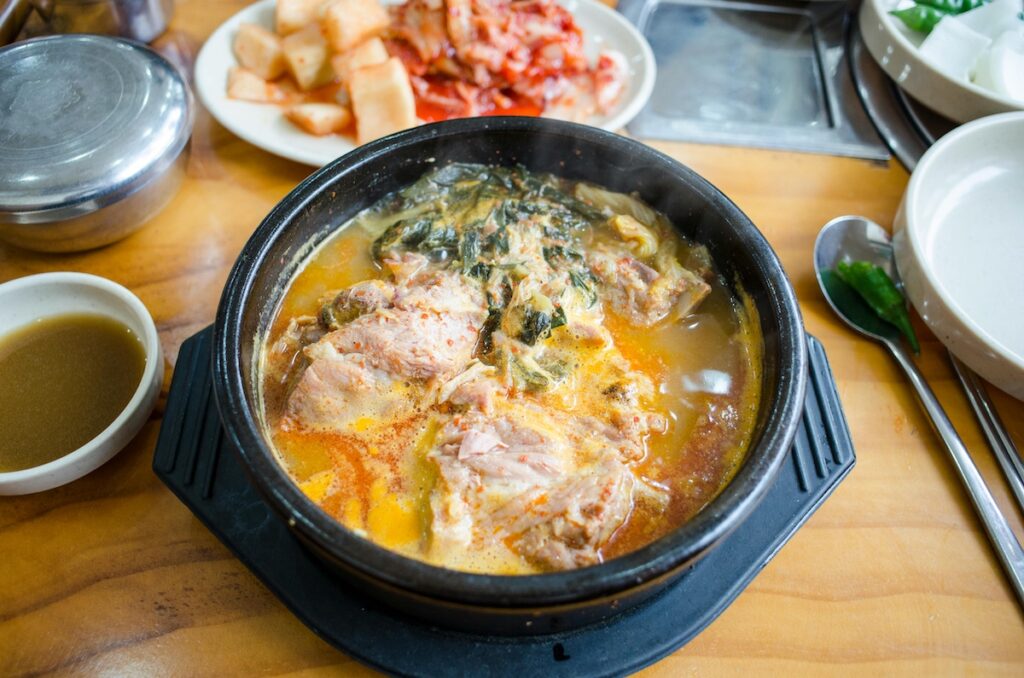
Soup restaurants are very Korean morning spaces. Look for places serving seolleongtang, haejangguk, sundae-guk, or gukbap.
These meals are hot, filling, and usually served quickly. They are especially common among older Koreans, taxi drivers, delivery workers, and office workers who want a solid meal before the day starts.
For a traveler, trying gukbap for breakfast can feel like entering a very ordinary but meaningful part of Korean life.
Convenience Stores
Convenience stores are everywhere in Korea. For visitors, they are not only places to buy drinks and snacks. They can also be simple meal stops.
You can buy triangle kimbap, lunch boxes, sandwiches, instant noodles, boiled eggs, yogurt, milk, coffee, and small desserts. Many stores have microwaves and hot water machines. Some have small seating areas.
For more details on how locals actually use them, read [Korean convenience store food guide].
Lunch in Korea: Fast, Practical, and Filling
Lunch in Korea often follows the rhythm of work and school.
At noon, office workers move quickly. In business districts, restaurants fill up almost at the same time. Menus are designed for speed: rice bowls, noodles, stews, soups, pork cutlet, bibimbap, and set meals.
Many restaurants have lunch specials. These are usually faster and cheaper than dinner menus. If you are traveling in Seoul, eating lunch near office areas can be a good way to try ordinary Korean food at a reasonable price.
But there is one thing to remember. During lunch rush, restaurants may expect customers to order quickly, eat, and leave. This does not mean they are being rude. It is just the rhythm of a busy lunch hour.
If you are unsure about water, side dishes, or paying at the counter, read [Korean restaurant etiquette for foreigners] before your first local meal.
Dinner in Korea: The Most Social Meal
Dinner is usually the most social meal of the day in Korea.
Families may eat together at home. Friends meet for Korean BBQ, fried chicken, hot pot, or seafood pancakes. Coworkers may go out after work. In many cases, dinner is not only about food. It is also about spending time together.
This is why many Korean dinner foods are designed for sharing. Grilled meat, stews, jeon, jokbal, bossam, and hot pots are placed in the center of the table. People take food from shared plates, refill each other’s glasses, and talk while eating.
For some foreigners, this can feel warm. For others, it can feel confusing at first. Who orders? Who pays? Should you pour drinks for others? Is it okay to eat first?
These small details matter because meals in Korea often carry social meaning.
If your dinner includes alcohol, read [Korean drinking etiquette] before joining Korean friends or coworkers. If you are eating grilled meat, [Korean BBQ etiquette] can also help you avoid awkward moments.
Late-Night Food in Korea
Korea is very convenient when you are hungry late at night.
In Seoul, Busan, Daegu, Incheon, and other large cities, you can often find food after 10 PM. Some areas stay active until much later, especially near universities, nightlife districts, markets, and office zones.
Common late-night foods include:
- fried chicken
- Korean BBQ
- ramen
- tteokbokki
- odeng
- jokbal
- bossam
- spicy stews
- convenience store meals
- pojangmacha snacks
Late-night eating is connected to work schedules, drinking culture, delivery apps, and Korea’s dense city life. After a long workday, many people do not see 9 or 10 PM as “too late” for dinner.
For travelers, this is comforting. Even if your flight arrives late, or you return from sightseeing at night, you can usually find something to eat.
Late-night eating in Korea is often connected to drinking, shared plates, and sitting close to other people in casual spaces. In warmer months, this can move outside to plastic tables, pojangmacha tents, and street-side drinking areas. For a deeper look at this side of Seoul nightlife, read our guide to [Korean outdoor drinking culture].
24-Hour Restaurants and Convenience Stores
One reason Korea feels easy for travelers is the number of places that stay open very late or all night.
Not every restaurant is 24 hours, and opening hours can change. But compared with many countries, Korea offers many late-night options.
You may find 24-hour kimbap shops, soup restaurants, hangover soup places, fast-food chains, and convenience stores. Near stations, hospitals, bus terminals, nightlife streets, and busy roads, late-night food is especially common.
Convenience stores are the backup plan that almost always works. Even when restaurants are closed, you can still buy instant noodles, kimbap, lunch boxes, snacks, and drinks.
One note about alcohol: beer and soju are easy to buy at convenience stores, but do not assume you can drink inside the store. Some branches discourage or prohibit alcohol consumption in seating areas. It is safer to drink at home, at your accommodation, or in a proper restaurant or bar.
For travelers, convenience stores are not just snack stops. They can become a real breakfast, late-night meal, or emergency food option when restaurants are closed. If you want to understand what to buy, how to heat ramen, and how locals actually use these spaces, read this [Korean convenience store food guide].
Eating Alone in Korea
Foreign travelers sometimes worry about eating alone in Korea.
The good news is that solo dining is normal in many places. Convenience stores, kimbap shops, noodle restaurants, soup restaurants, cafes, and food courts are easy for one person.
Some BBQ restaurants or shared hot pot places may prefer groups, especially during busy dinner hours. But Korea has become much more solo-dining friendly over the years. You will see students, office workers, and travelers eating alone without any problem.
For simple solo meals, look for:
- kimbap shops
- gukbap restaurants
- ramen shops
- pork cutlet restaurants
- department store food courts
- convenience stores
- casual noodle restaurants
If a restaurant seems very group-focused, just choose another one. In Korea, there is almost always another food option nearby.
Sharing Food and Paying the Bill
Korean meals often involve sharing.
Side dishes are shared. Stews may be shared. Grilled meat is shared. Large dishes like pajeon, bossam, and dakgalbi are usually placed in the center.
This can be different from cultures where everyone orders one personal plate. In Korea, sharing creates a feeling of togetherness, but it can also create confusion for foreigners.
Paying can also feel different. Among friends, people may split the bill, take turns paying, or have one person pay first and settle later through a banking app. Among older and younger people, the older person or senior may offer to pay. Among coworkers, the situation depends on the company and relationship.
This is why the question “Should we split the bill?” can feel more complicated than it looks.
For a deeper explanation, read [why Koreans don’t always split the bill].
Practical Dining Tips for Travelers
Here are simple tips that will make Korean meals easier.
First, do not panic if side dishes arrive without being ordered. In many Korean restaurants, banchan comes with the meal. Some places refill them for free, but not every restaurant does.
Second, water is often self-service. Look for a water dispenser, cups, or a bottle on the table.
Third, many casual restaurants ask you to pay at the counter after eating. In cafes and fast-food places, you usually pay first.
Fourth, lunch rush can be intense. If you want a slower meal, avoid 12–1 PM in office districts.
Fifth, use Naver Map or Kakao Map as well as Google. In Korea, local map apps often show more accurate restaurant information, menus, and opening hours.
Sixth, do not worry too much about chopsticks. Koreans are used to seeing foreigners learn. Just eat politely and enjoy the food.
A Note for Vegetarian Travelers in Korea
Vegetarian travelers should be a little careful with Korean soups, stews, and side dishes. A dish may look vegetable-based, but the broth can still include anchovy, seafood, beef bone, or pork. This does not mean vegetarian travel in Korea is impossible. It just means you need to ask more specific questions than “Is this vegetarian?” For practical phrases and hidden ingredients to watch for, read this guide for [vegetarians in Korea].
Why Korean Eating Culture Feels So Convenient
Many travelers say Korea feels easy because food is always nearby.
This is partly because Korean cities are dense. Subway stations, apartment areas, office buildings, universities, and shopping streets all create steady food demand. Restaurants do not exist only for tourists. They serve local daily life.
That is why you can find a full meal in the morning, a quick lunch at noon, fried chicken at night, and instant noodles at a convenience store after midnight.
Korean eating culture is not just about famous dishes like kimchi, bulgogi, or bibimbap. It is also about access. It is about being able to eat when your schedule changes. It is about the comfort of knowing there is probably a warm meal somewhere nearby.
Korean food is often built around a full table setting of rice, soup, kimchi, and side dishes, which is why even a simple local meal can feel more complete than visitors expect. For a broader official overview of Korean food and table culture, you can also refer to VisitKorea’s guide to Korean food.
Final Thoughts
Korean eating culture is a mix of tradition and modern speed.
Older habits still matter. Rice, soup, kimchi, and side dishes remain powerful symbols of a proper meal. At the same time, younger Koreans are changing the rhythm with coffee breakfasts, convenience store meals, delivery food, solo dining, and flexible schedules.
For travelers, this is good news. You do not need to understand everything immediately. Start with the basics: meal times, shared dishes, breakfast options, late-night food, and simple restaurant manners.
Once you notice these patterns, eating in Korea becomes much less confusing. A soup restaurant in the morning, a busy lunch spot at noon, a shared dinner table at night, and a convenience store ramen stop after midnight all begin to make sense.
And in many ways, that is the best way to understand Korea.
Not only through famous landmarks, but through ordinary meals.
Further Reading
For official travel information about Korean food, regional dishes, seasonal ingredients, and traditional drinks, you can visit VisitKorea’s Korean food section.