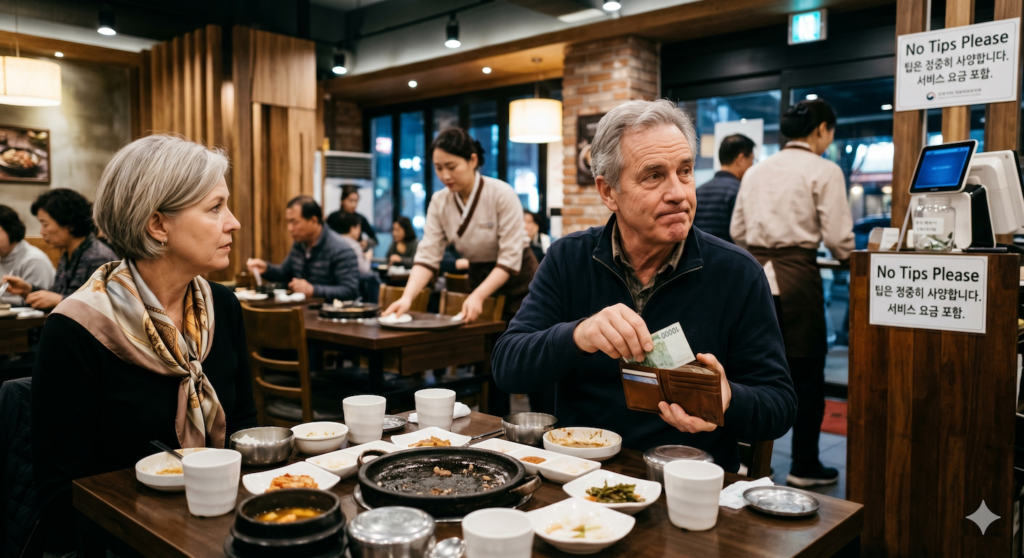
Seoul Smoking Laws for Travelers. In South Korea, the legal principle of Territoriality (속지주의) means that every individual, regardless of nationality, is subject to the same local laws and fines. For visitors in crowded districts like Konkuk University (Kondae), this isn’t a mere suggestion—it’s a financial reality. Ignorance of the law will not prevent a 100,000 KRW ($75) fine from hitting your travel budget.
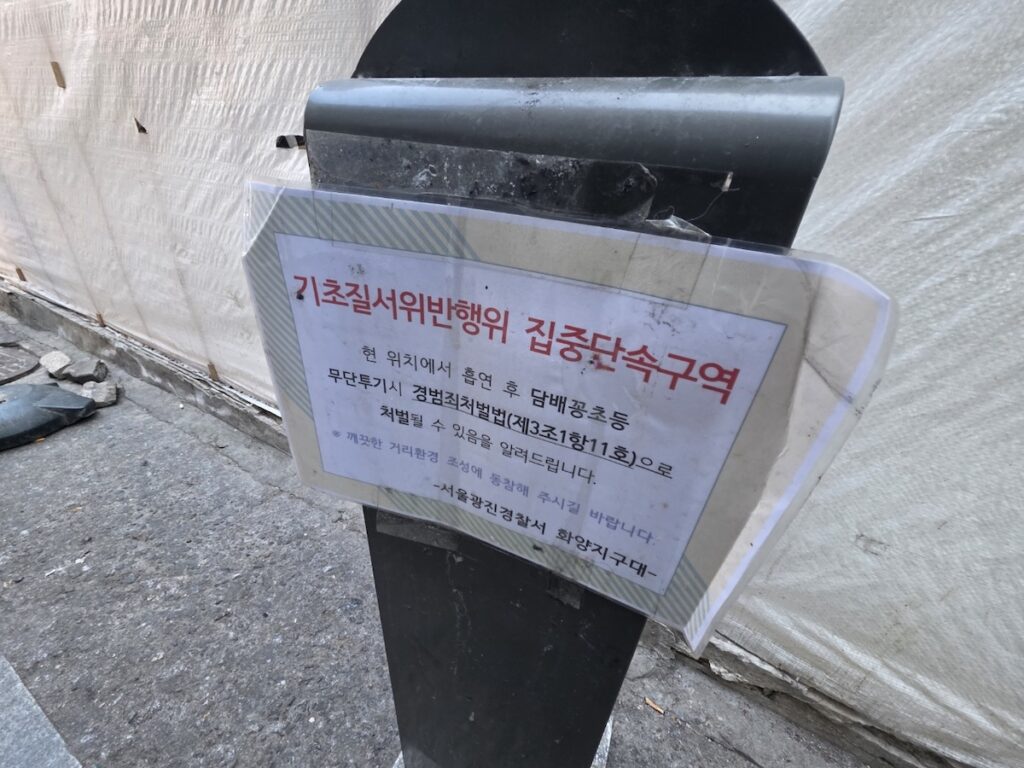
1. The Surveillance Reality: “Someone is Watching You”
Look closely at the yellow warning sign in our field photo. It explicitly states that the area is a “Concentrated Enforcement Zone” (집중단속지역) and that CCTV cameras are actively monitoring the site.
- The Strategic Warning: Many tourists think they can smoke in hidden alleys or behind brick walls like the one shown here. However, Seoul’s enforcement officers (Gu-cheong) frequently use camera footage and undercover patrols to issue fines on the spot.
- The Financial Save: Seeing this yellow sign is your final warning. Stepping away from this wall immediately saves you $75—the equivalent of seven premium Bibimbap meals.
2. Territoriality Means No Exceptions for Foreigners
The concept of Territoriality (속지주의) is strictly applied in South Korea.
- The Myth: “I’m a tourist; they’ll just give me a warning.”
- The Reality: Enforcement officers are required to treat everyone equally. They will ask for your passport or ID and issue a formal fine. Unpaid fines are linked to your passport number and can cause significant delays or denials during future visa applications or re-entry into the country.
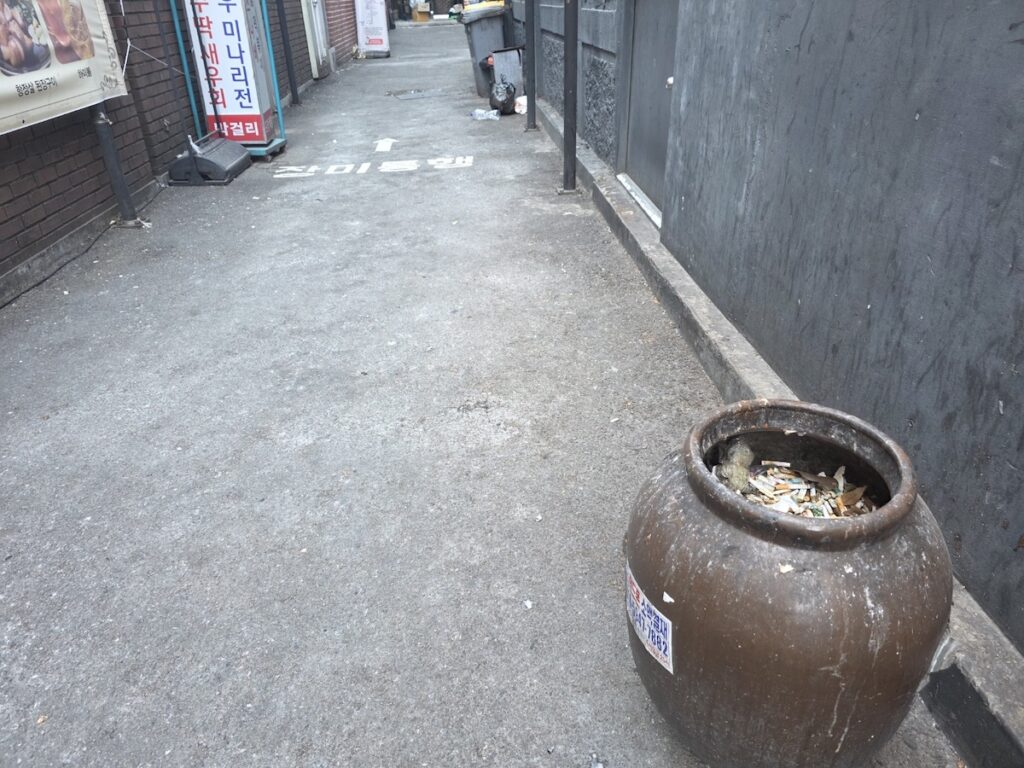
3. The Double Penalty: Littering and Smoking
As shown on the official signage, the penalty isn’t just for lighting a cigarette; it also covers “Illegal Littering” (무단투기) of cigarette butts.
- The Protocol: Even if you smoke in a permitted area, flicking your butt onto the street can trigger a separate fine. Always carry a portable ashtray or locate the designated bins provided by the district.
4. Beyond the Fine: Free Public Support at “Bogeon-so”
South Korea’s public system is designed for support as much as enforcement. This is a high-value secret for long-term travelers.
- The Systemic Benefit: Local Public Health Centers (Bogeon-so) offer free smoking cessation services. Even as a foreigner, you can often access consultations and free nicotine patches. This showcases the sophisticated nature of Korea’s public health infrastructure—they don’t just want your money; they want a smoke-free society.
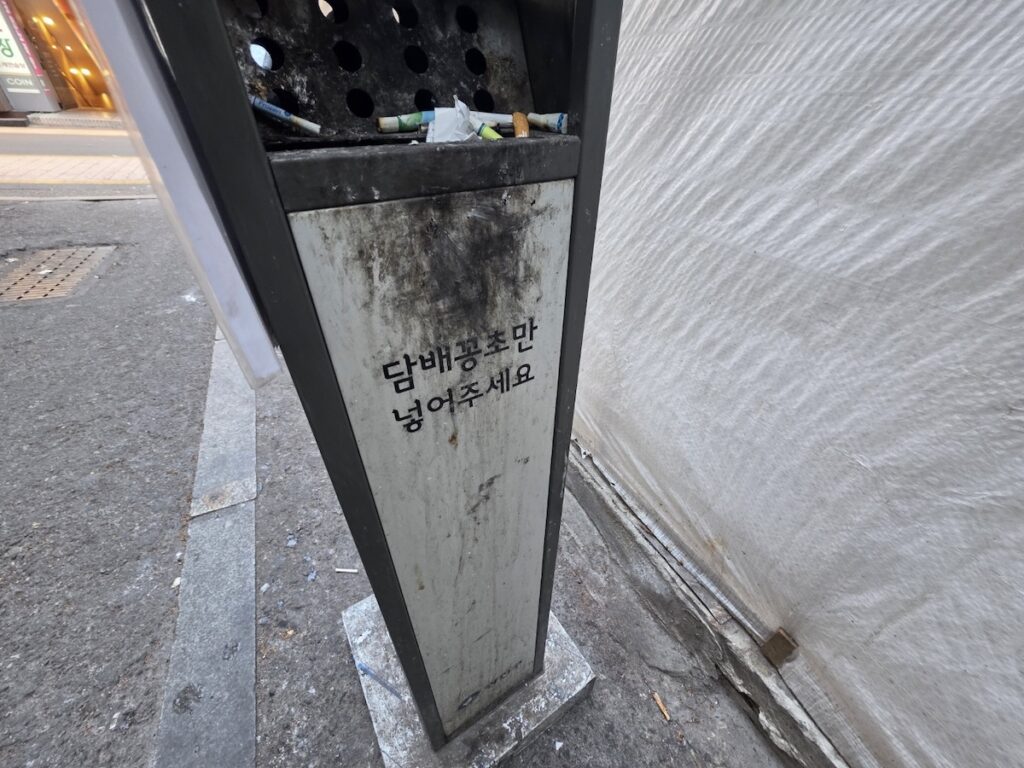
5. The “Kondae Protocol”: Follow the Local Crowd
For a foreigner, distinguishing between a “No Smoking Zone” and a “Safe Zone” in Seoul can be a nightmare. Markers are often faded or written in complex Korean. When in doubt, apply the Local Observation Protocol.
- The Observation: If you see a group of Koreans gathered in a specific corner or behind a certain building with cigarette butts already on the ground, that is likely a “Socially Accepted” zone. Koreans hate fines just as much as you do.
- The Ritual: By joining a group of locals, you are essentially leveraging their collective knowledge of the district’s enforcement patterns. If they aren’t worried about the CCTV cameras shown in our photo, you likely don’t need to be either.
6. High-Enforcement Zones: The “Bibimbap” Comparison
The 100,000 KRW ($75) fine isn’t applied everywhere with the same intensity. However, Seoul’s most iconic districts are High-Enforcement Strongholds where officers are on high alert.
- Target Areas: Gangnam Station, Gwanghwamun, Myeongdong, and Konkuk University (Kondae). These are the frontline of Seoul’s “Territorial Principle” enforcement.
- The Cost-Benefit Analysis: Think of it this way: one cigarette in these zones costs the same as 7 premium bowls of Bibimbap or a one-way domestic flight to Jeju Island. In these areas, the risk-to-reward ratio is disastrous. Always wait until you find a designated smoking booth (Smoking Room) or a spot clearly away from the main thoroughfare.
Action Plan: Your Legal Safety Checklist
- Spot the Yellow: Whenever you see yellow signage on brick walls or fences, assume it is a high-surveillance no-smoking zone.
- Look Down: Check for blue or red pavement stickers near subway exits—these are the “invisible barriers” of the law.
- Search for Booths: Use the “Safe Zones” or official smoking booths, which are the only places where your $75 is safe.
Related Guides
- 🚇 Seoul Subway Kiosk Guide: 5 Strategic Rules to Save Money
- 7 Tactical Rules for the Korean Dining Experience: From Refill Rights to Legal Safety
“We understand. You hate the fine, and frankly, so do we locals. But in a city as sophisticated and strictly managed as Seoul, your best defense is observation. Look for the yellow signs, but more importantly, look for where the locals are standing. Your $75 belongs in your stomach (buying more Bibimbap!), not in the district office’s treasury.”