Korean Restaurant Bathrooms are often a surprising highlight for many international travelers visiting Seoul or Jeonju for the first time.
Travel Korea on a Budget is not just about saving coins; it is about discovering a high-quality infrastructure that supports your survival, even in your most vulnerable moments. For a traveler, nothing signals “vulnerability” more than a night of heavy drinking in Seoul followed by the desperate search for a hangover cure the next morning. It is in these moments—between the neon lights of Kondae and the quiet soup houses of Jeonju—that you will discover the true soul of Korean hospitality: the impeccable state of Korean Restaurant Bathrooms.
Korean Restaurant Bathrooms in Kondae: The High-Tech Nightlife Standard
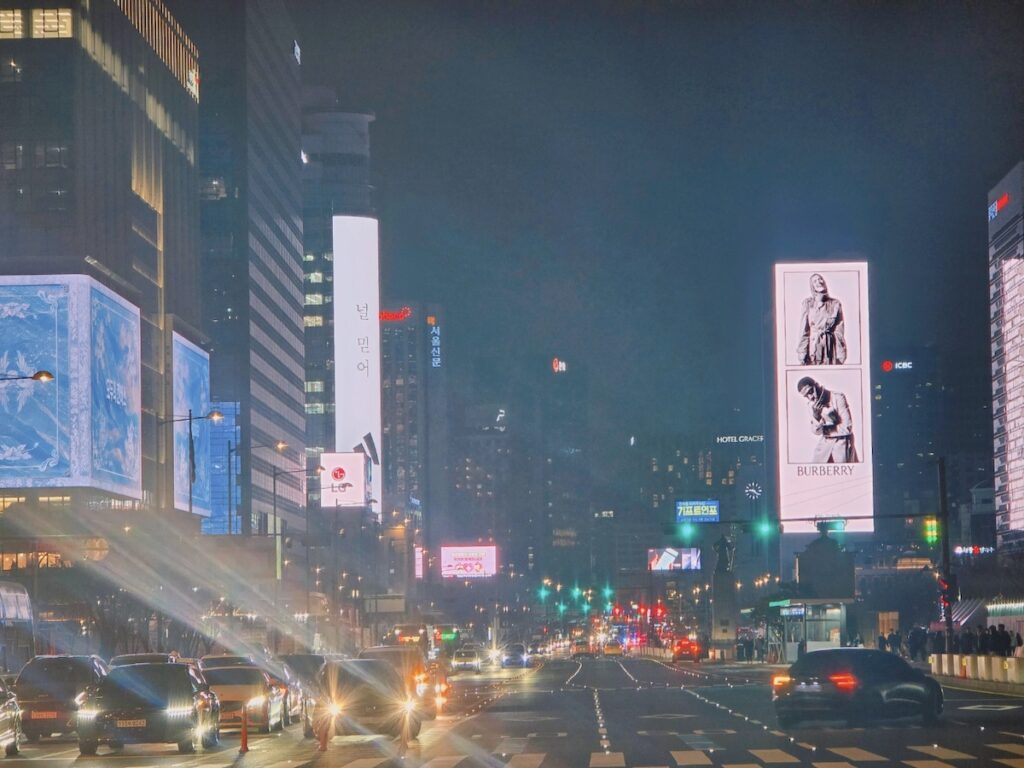
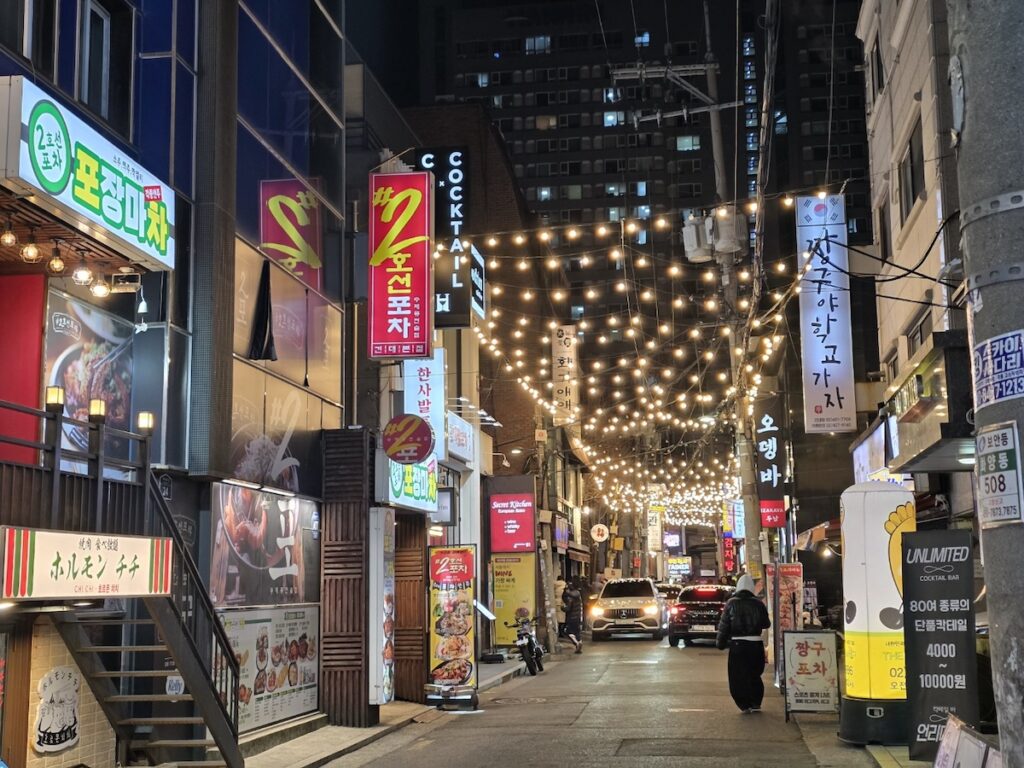
My journey began in the vibrant back alleys of Kondae. As a district fueled by university energy and local nostalgia, the “Unlimited Refill” culture here inevitably leads to a high frequency of bathroom visits. Amidst the clinking of Soju glasses and the sizzle of pork belly, I found myself navigating the narrow corridors of a local pub.
In many global party hubs, a pub bathroom is a place of dread—wet floors, missing tissue, and a lack of soap. However, Kondae offers a different reality. The first thing you’ll notice is the “Door Lock Ritual.” Because these bars are in high-traffic areas, the bathrooms are often locked to prevent non-customers from entering. You’ll see a 4-digit code scrawled on a post-it note near the exit or printed at the bottom of your receipt. Entering this code feels like unlocking a secret sanctuary.
Once inside, the contrast is startling. While the bar outside is a chaotic symphony of K-pop and laughter, the bathroom is a sterile, high-tech haven. Even in a basement bar that has been around for decades, you are met with a blast of warm air from a high-speed automatic hand dryer and a bottle of scented hand wash—usually a foam type that ensures you leave the grime of the grill behind. The presence of a bidet, with its heated seat and adjustable spray, is a common “budget luxury” that often shocks first-time visitors. It is this hidden efficiency—a private, secure, and fully-stocked space in the middle of a wild night—that defines the Kondae experience.
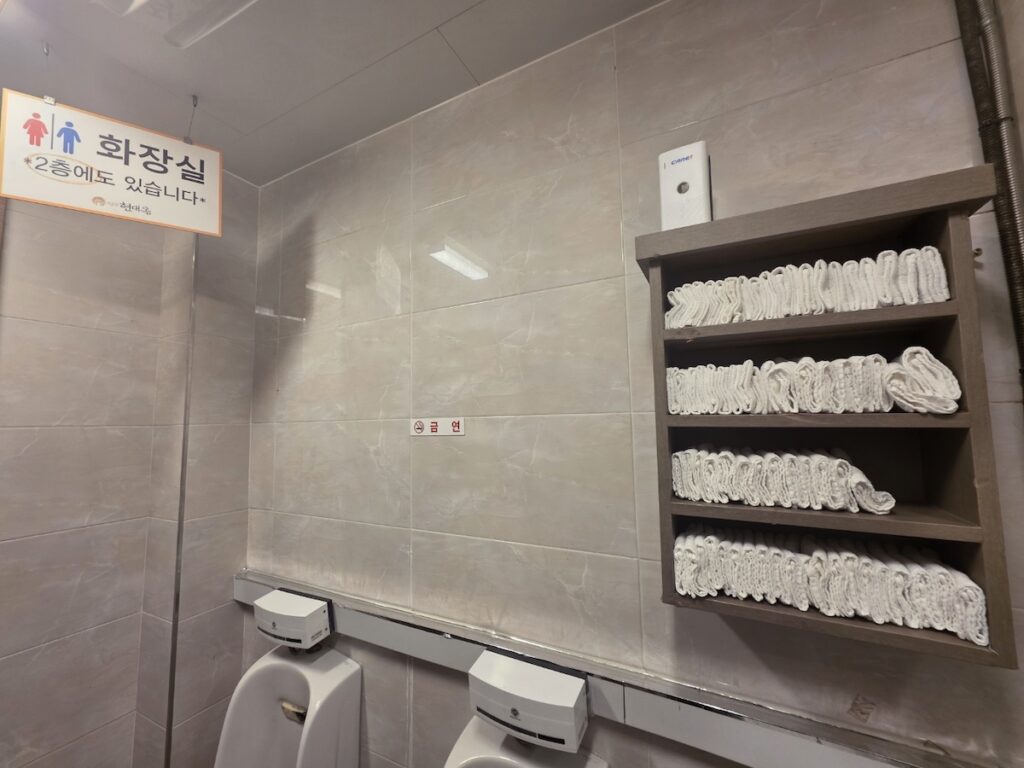
Traditional Jeonju Eateries: The Hospitality of Individual Hand Towels
The next morning, the hangover led me south to Jeonju for Kongnamul-gukbap (Bean Sprout Soup). I stumbled into the restroom of a local eatery, and instead of a basic facility, I found the peak of Korean hygiene culture.
The sink was a polished stone basin, but the real shock was the rack of individual, white cotton towels, neatly rolled like a five-star hotel service. This level of care in a simple soup house is what defines the “Jeong” (affection) in Korean Restaurant Bathrooms. It proves that hygiene in Korea is not just about cleanliness, but about respect for the guest.
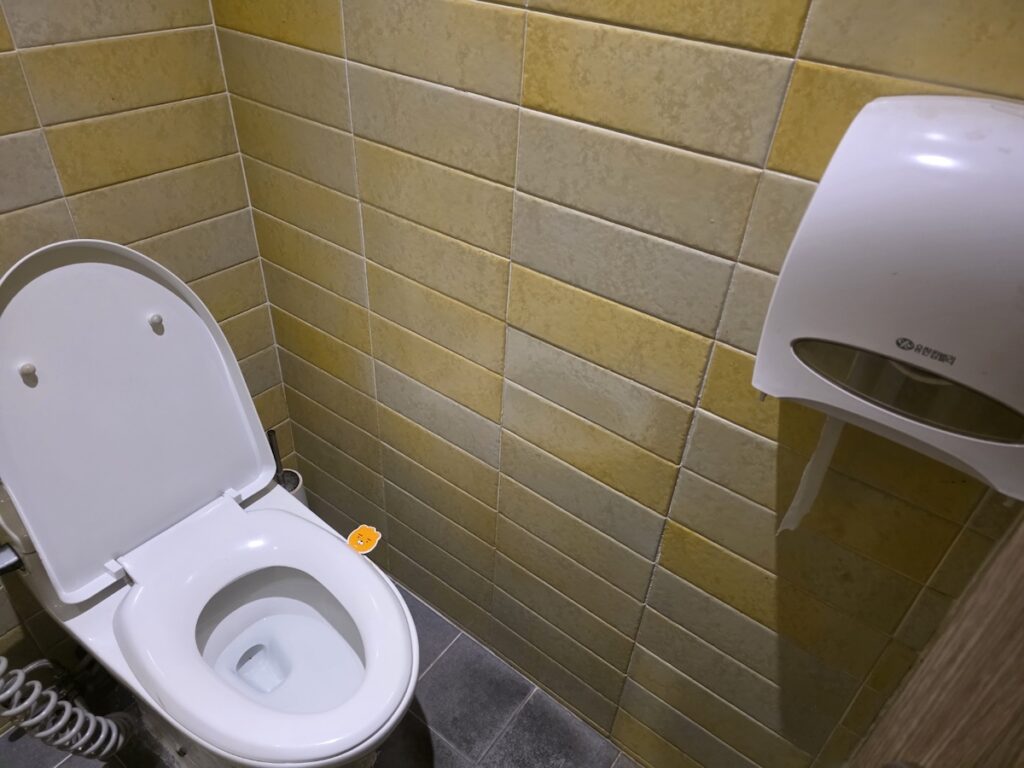
The Psychology of Clean: Why You Can’t Be a Messy Guest in Korea
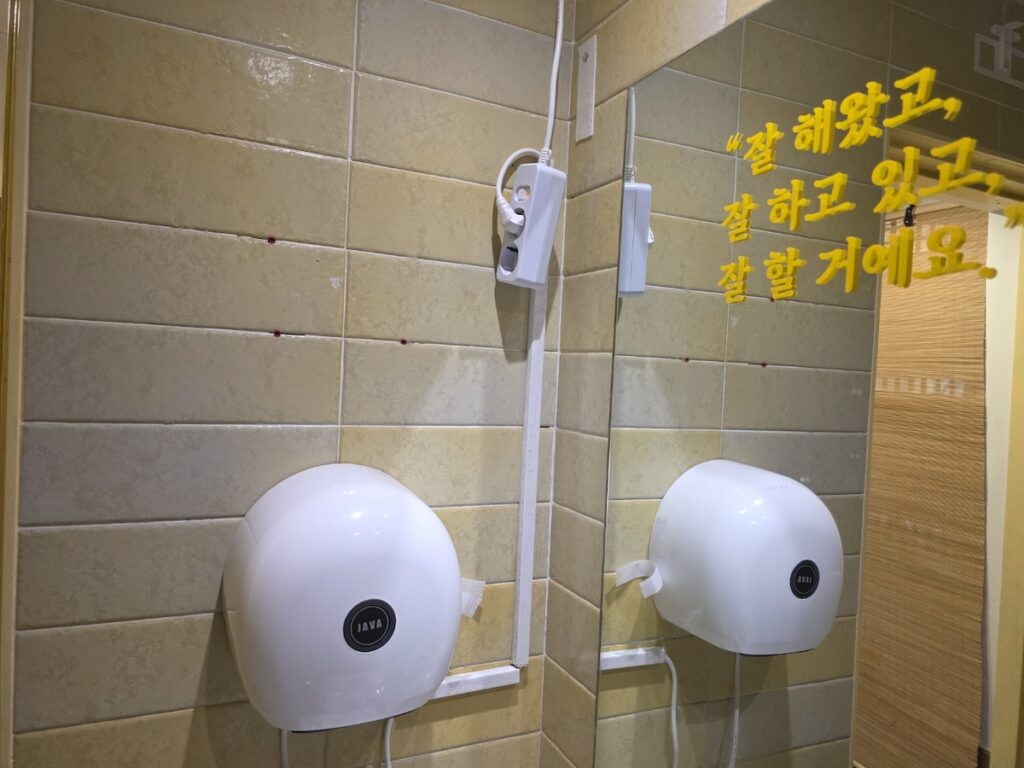
This is where the psychological shift happens. In my hungover state, I felt a sudden sense of responsibility. When a space is curated with such dignity, it is impossible to behave without it. Looking at the perfectly rolled towels and the encouraging message on the mirror—“You’ve done well, you’re doing great”—I found myself straightening my posture. In a place where even the trash bin is meticulously lined and every corner is scrubbed, the environment dictates your behavior. The high standard of Korean Restaurant Bathrooms naturally encourages visitors to maintain that cleanliness, creating a self-sustaining cycle of hygiene.
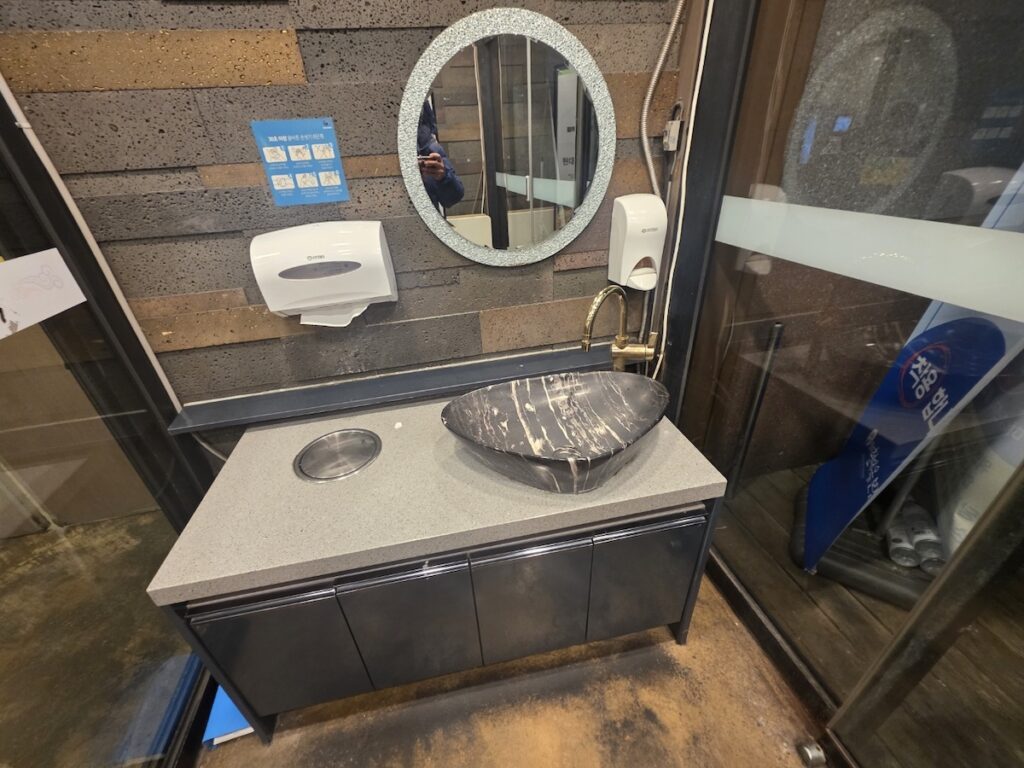
The “Hand Wash Everywhere” Policy: Post-Pandemic Standards 2026
Since 2020, high-quality hand wash and automated sanitization have become the absolute standard. Whether you are in a high-tech bar in Kondae or a traditional house in Jeonju, the presence of soap and sanitizer is a non-negotiable part of the Travel Korea on a Budget experience. You never have to carry your own hygiene kit; the infrastructure has you covered.
| Feature | Typical Pub Bathroom (Kondae) | Traditional Eatery (Jeonju) |
| Drying Method | High-speed Automatic Hand Dryer | Individual Cotton Hand Towels |
| Soap Type | Liquid Hand Wash (Bergamot/Floral) | Premium Foam Hand Wash |
| Access Control | Digital Door Lock / Key | Open but highly monitored |
| Vibe | Modern, Efficient, Neon | Warm, Caring, “Jeong” (Affection) |
Action Plan: Navigating Korean Bathrooms
- Memorize the Code: In Kondae, look for a 4-digit number on your receipt before heading to the bathroom.
- The “Key” Search: If there’s no keypad, look for a key hanging by the door, often attached to a large wooden block or a plastic bottle to prevent loss.
- Trust the Hand Wash: You don’t need to carry soap. Every Korean Restaurant Bathroom will have it.
- Recycle the Towel: If you see individual towels, place the used one in the designated basket (often labeled ‘Used Towels’).
Related Guides
- [Travel Korea on a Budget: The “MU” System and the Soul of Kondae]
- [Eating on the Floor in Korea: What Foreigners Need to Know in 2025]
- [Korean Fermented Foods 2025: Gut-Healthy Superfoods for Digestion]