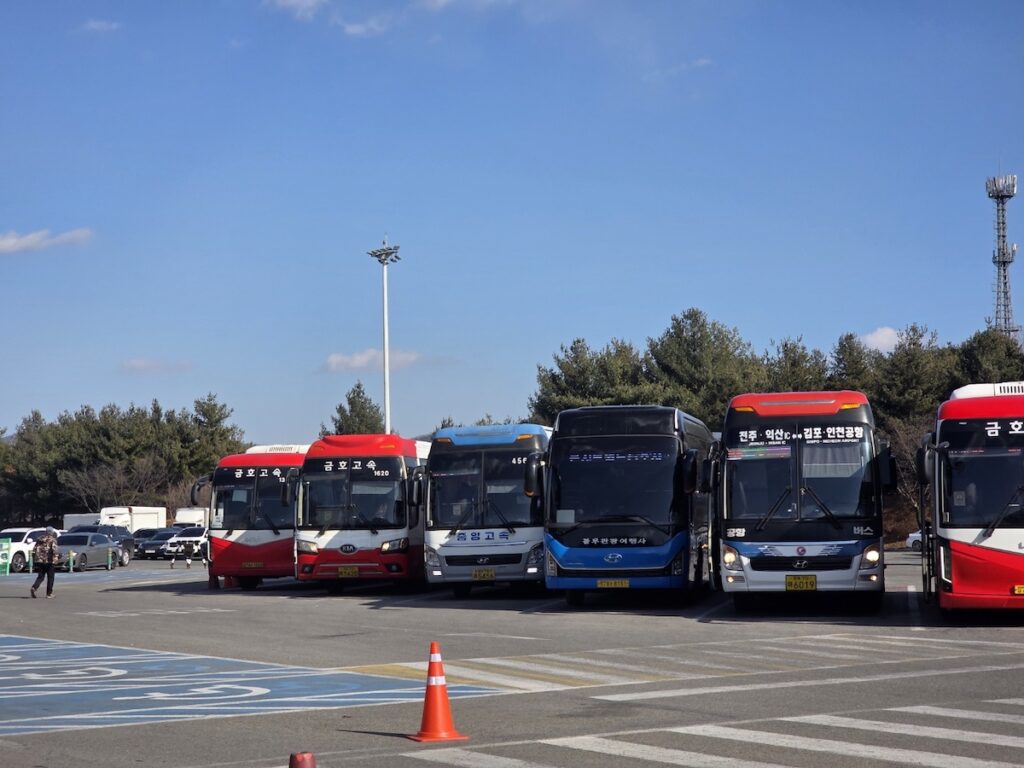
Years ago, while traveling through the heart of Korea, I witnessed a moment of pure traveler’s panic. A group of foreigners stood frozen in the middle of a massive rest area parking lot, surrounded by dozens of identical-looking buses. They had lost their ride. My friend and I stepped in, spending ten frantic minutes searching the rows until we finally reunited them with their driver just seconds before departure.
On my recent trip to Jeonju, I saw that same familiar scene: hundreds of people rushing with singular purpose, all trying to accomplish their goals within a strict window. This is the reality of the Korean Highway Rest Area. For a foreigner, the system is efficient but unforgiving. I am writing this guide because, in that 15-minute window, being an outsider is a distinct disadvantage.
1. The 15-Minute Prison: A Test of Survival
When your express bus pulls into a rest area, the driver will usually announce a 15-minute break. This is your “15-minute prison.” You are free to roam, but the clock is ticking against a highly synchronized national transport schedule.
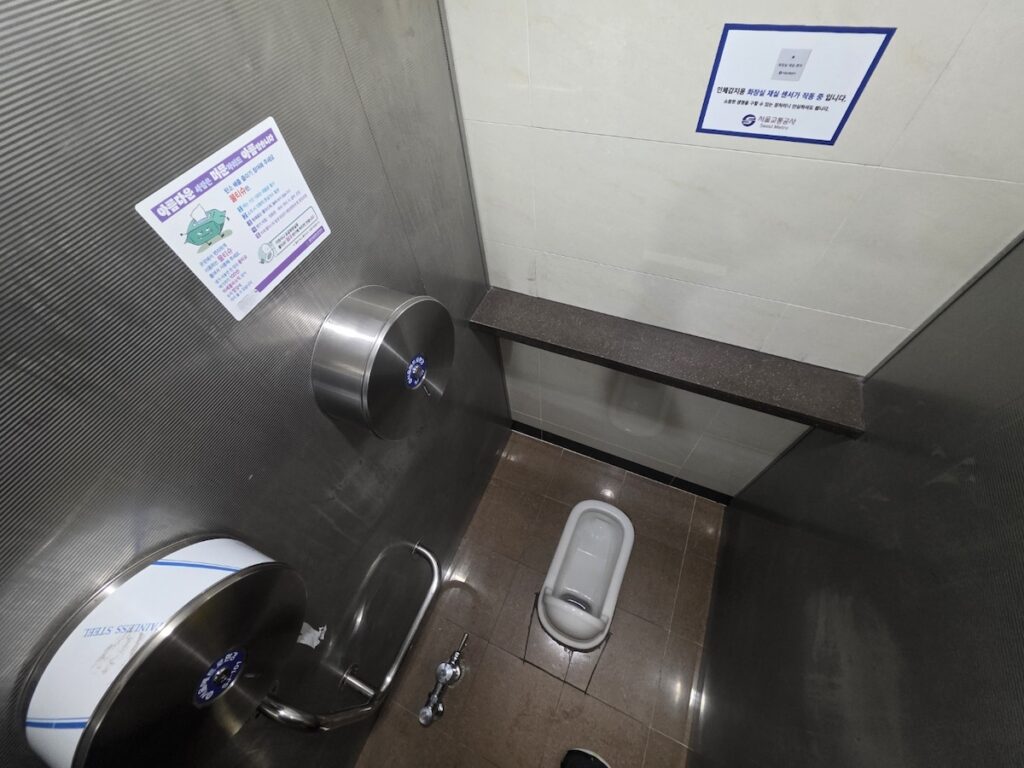
The most critical mission is the Restroom. Do not waste time looking for signs; simply follow the largest flow of people. Korean rest areas are famous for their massive, world-class toilet facilities, designed to handle hundreds of passengers at once. If you find yourself in a maze of shops, look for the crowds. The restroom is almost always the destination of the primary human current.
2. The Strategy: Don’t Lose Your Life (Or Your Bus)
The most terrifying experience is watching your bus pull away while you are holding a bag of walnut cakes. To avoid being the subject of a “Missing Passenger” announcement—which you will occasionally hear echoing over the loudspeakers—follow these rules:
- Identity Your Vehicle: Before you step off, take a photo of the bus. You need three things: the Bus Company Name, the License Plate Number, and the Exact Parking Spot.
- Memorize the Departure: Double-check the departure time on the driver’s monitor. In Korea, 15 minutes means 15:00, not 15:01.
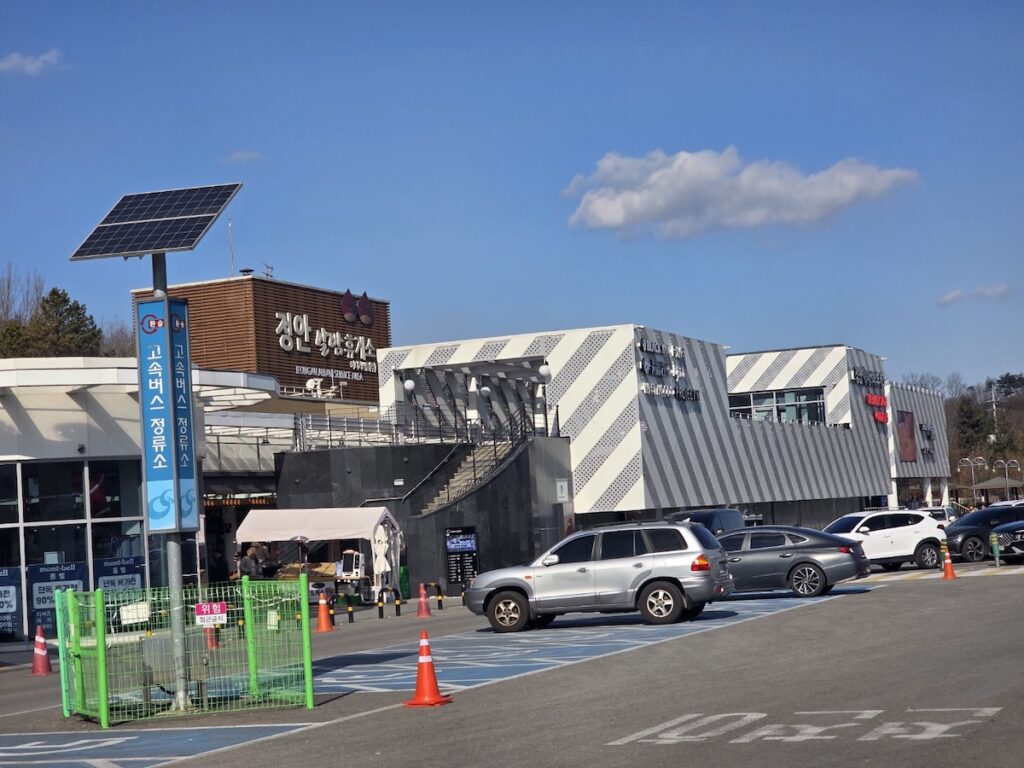
- Transfer Hub Knowledge: If you are at Jeongan Rest Area (Honam Line), be aware that this is a major transfer hub. People are not just resting; they are switching buses to reach different cities in the Jeolla region.
3. Snacking Protocol: The Reward for Speed
Once your biological mission is complete, you are rewarded with the true highlight of any Korean Highway Rest Area: the street food culture. To maximize your 15-minute window, you must know what to look for. Here are the most searched and iconic snacks you should try:
- Sotteok-Sotteok (Sausage and Rice Cake Skewers): Made famous worldwide by Korean variety shows, this skewer alternates between chewy rice cakes and savory sausages, brushed with a sweet and spicy glaze.
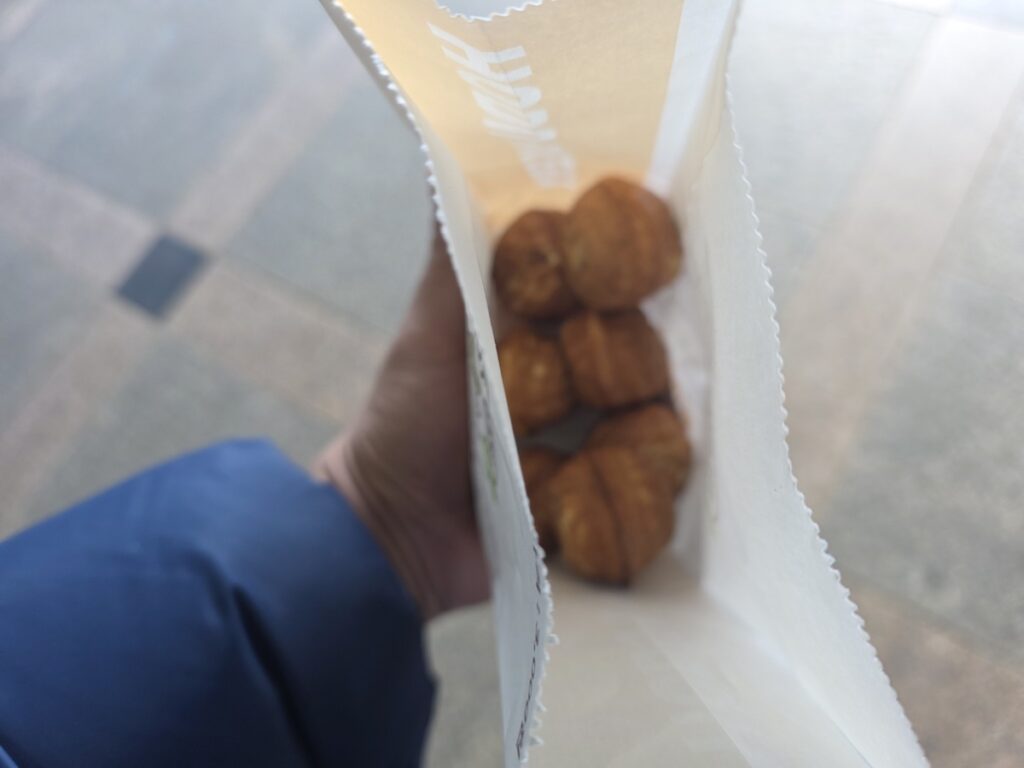
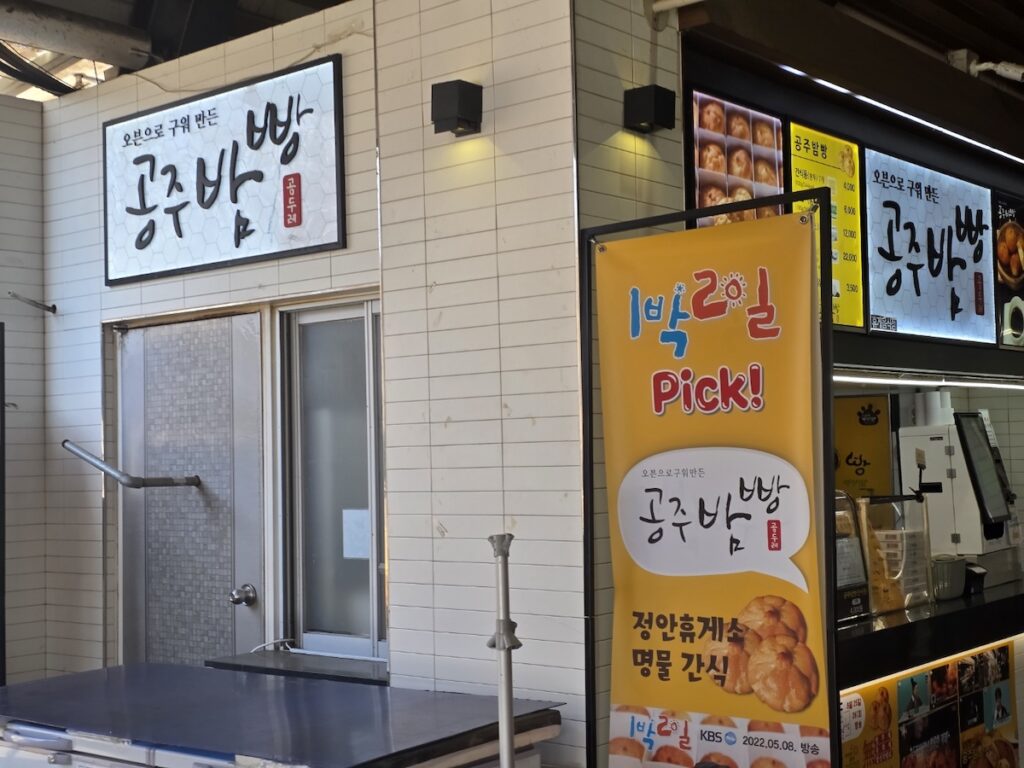
- Hodu-gwaja (Walnut Cakes): The quintessential rest area snack. These are small, walnut-shaped cakes filled with sweet red bean paste and a chunk of real walnut. They are usually served hot in a paper bag.
- Al-gamja (Butter Roasted Potatoes): Small, round whole potatoes slow-roasted in butter and lightly sprinkled with salt or sugar. It is the ultimate comfort food for a long bus journey.
- Eomuk-bar (Fried Fish Cake Bar): A variety of deep-fried fish cake bars on a stick, often stuffed with ingredients like perilla leaves, peppers, or squid.
- Tteok-bokki and Sundae: If you have an extra 5 minutes, you can grab a cup of spicy rice cakes or Korean blood sausage, though these are harder to eat quickly on the move.
The Kiosk System & Modern Etiquette: In 2026, efficiency is the rule. Most snack zones require you to order via a self-service kiosk before approaching the stall. Furthermore, modern Korean bus etiquette suggests being mindful of strong odors. While it is tempting to bring a box of fried chicken or a burger onto the bus, most locals prefer scent-neutral snacks or finish their hot food before re-boarding. If you want to be a respectful traveler, choose Hodu-gwaja or a dry Eomuk-bar—they are delicious, easy to handle, and won’t disturb your seatmates.
Action Plan (Internal Linking & Steps)
- Related Guide: “Before you hit the highway, make sure you’ve mastered the [Seoul Express Bus Terminal Guide] to start your journey without stress.”
- Survival Step: “Always take a photo of your bus license plate and its parking location immediately upon exiting. With dozens of identical buses, this is your only way back to your 15-minute prison.”