Korea Subway Escalator journeys are more than just a mechanical ascent; they are a silent stage where Seoul’s complex social DNA and the relentless “Palli-Palli” culture collide 83 meters underground. You might be lost in a romantic conversation during a date, standing side-by-side, until you feel that unmistakable, cold glare from a commuter behind you. Why is standing on the left considered a social minefield in this vertical city?
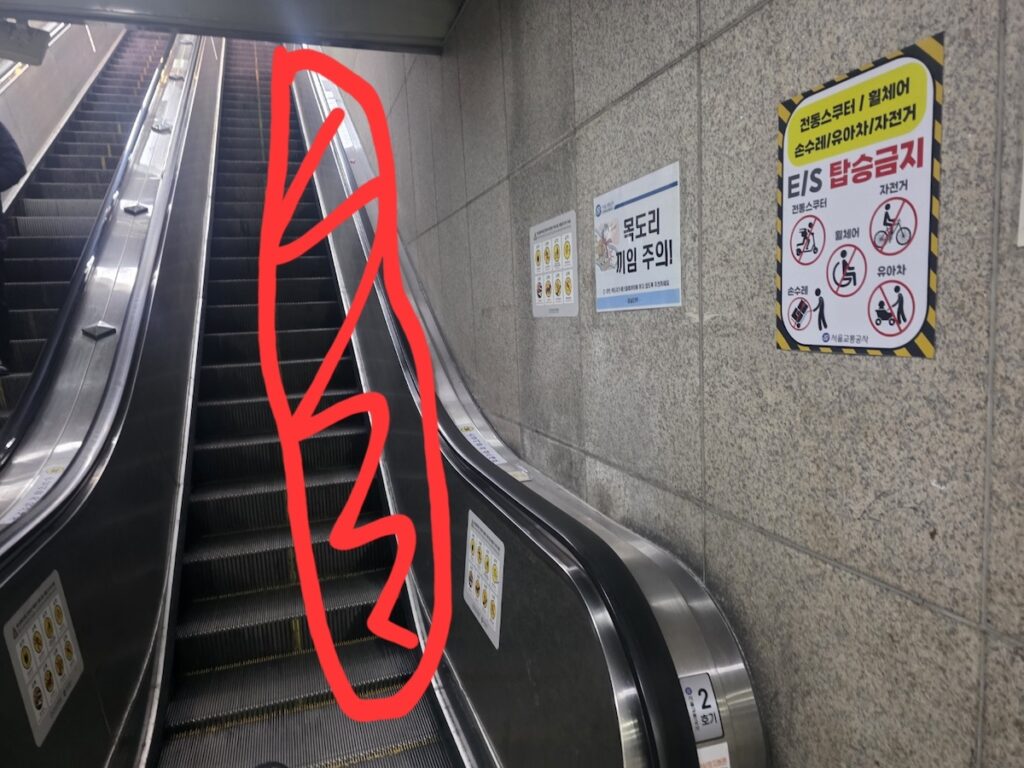
1. The Great Divide: Why Everyone Stands on the Right
If you enter any major station like Gangnam or Hongdae, you’ll notice a surreal sight: a long, single-file line on the right, and a completely empty lane on the left.
- The Social Contract: Technically, the official safety guidelines recommend “Standing in two rows” to balance the mechanical load on the Korea Subway Escalator. However, the “Palli-Palli” (Hurry, Hurry) DNA of Seoulites has overruled the manual. The left lane is the “Passing Lane” for the exhausted office worker or the student late for a midterm.
- The Dating Dilemma: Imagine you are on a date. You stand side-by-side with your partner, lost in conversation. Suddenly, you feel it—the shadow of a person behind you, huffing with impatience. Should you hold your ground and lecture them about the “safety of standing still”? Tactically, the answer is no. To avoid a scene and keep the mood romantic, simply step to the right. In Korea, avoiding “Min-hye” (disturbing others) is the ultimate form of manners.
2. Descending into the Abyss: Seoul’s 5 Deepest Sanctuaries
The Korea Subway Escalator journey isn’t just a ride; in some stations, it’s a full-blown expedition. Because Seoul is hilly and the Han River is wide, some stations have to dive incredibly deep.
| Station (Line) | Depth | The Tactical Experience |
| Gimpo Airport (Sohae) | 83m | The deepest in Korea. You could fit a 20-story building here. |
| Mandeok (Line 3) | 65m | A fortress of depth. Expect a 3-4 minute ride to the surface. |
| Yeouinaru (Line 5) | 42.5m | You are literally below the Han River. Feel the atmospheric shift. |
| Singil (Line 5) | Gradient | Famous for its “endless” transfer escalator that tests your patience. |
| Namsan (Line 4) | Incline | A steep vertical climb that mirrors the mountains above. |
3. Under the Water: Crossing the Han River Below Ground
Most travelers love the view from the Dangsan Railway Bridge (Line 2), but the real engineering marvel happens in total darkness. The Line 5 tunnel between Yeouinaru and Mapo dives deep beneath the Han River bed. When you are on that Korea Subway Escalator at Yeouinaru, remember: millions of tons of river water are pressing down just meters above the tunnel ceiling. It is a cinematic, slightly claustrophobic reminder of Seoul’s relentless engineering spirit.
4. The Vertical Pinnacle: From the Abyss to Lotte World Tower
The vertical obsession of Korea doesn’t stop at the subway. Once you emerge from the depths of Jamsil Station, you face the Lotte World Tower. After a high-speed elevator blast to the 117th floor, you encounter another Korea Subway Escalator style ride—this time, ascending even further into the clouds. It is the ultimate “Vertical Loop”: from the 83m depth of the subway to the 555m height of the tower.
5. The Invisible Hygiene: Why Seoul’s Handrails Sparkle
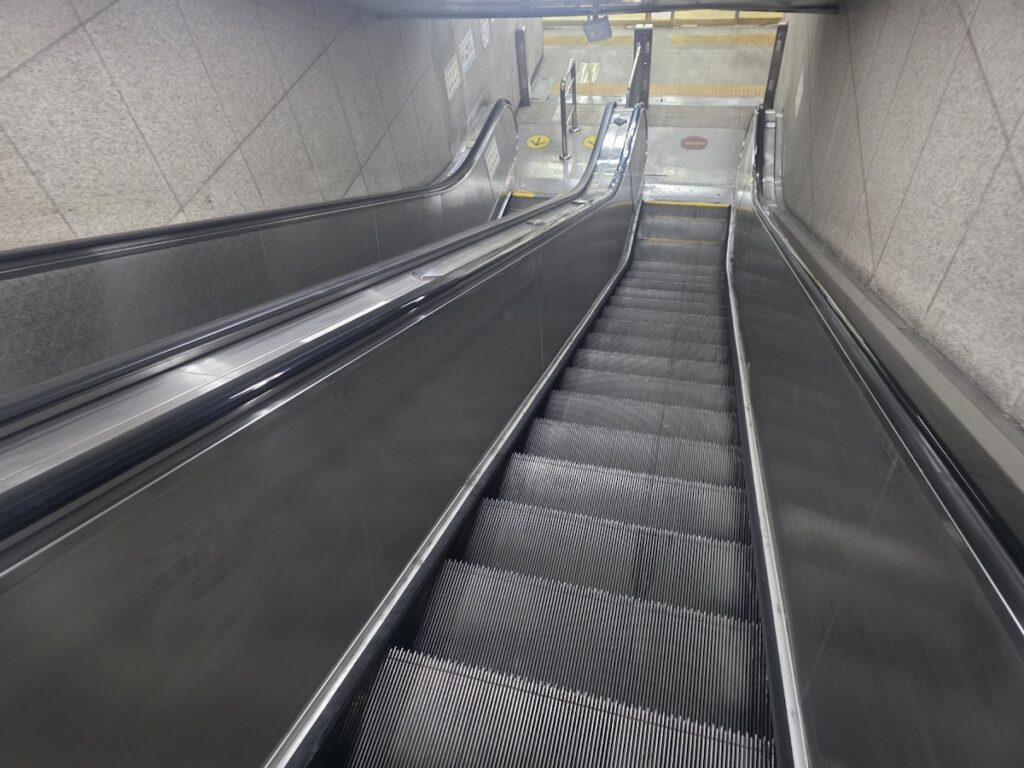
Have you ever noticed that the handrails on a Korea Subway Escalator are rarely sticky? This is due to an army of dedicated maintenance staff who clean them multiple times a day. In the post-2024 era, many escalators have also been equipped with UV-C sanitizers that constantly kill bacteria as the belt rotates. This level of hygiene is why Seoul remains the gold standard for public transportation.
Tactical Action Plan: How to Survive the Escalator Politics
- Stick to the Right: Unless you are walking up/down, stay on the right side. This is the easiest way to avoid being a “common mistake” in Korea.
- Mind the “Space”: Don’t stand too close to the person in front. Respecting personal space is a growing trend in 2026 Seoul.
- Hold the Rail (Gently): While you might want to avoid germs, the steepness of stations like Yeouinaru makes holding the rail a tactical safety necessity.
- The Silent Exit: When you reach the top, don’t stop immediately to check your phone. Keep moving to prevent a human pile-up behind you.
Related Guides for Seoul Survivors
- 7 Tactical Rules for the Korean Dining Experience: From Refill Rights to Legal Safety
- Need a Bathroom in Korea? Head to the Subway — A Foreigner’s Guide to Korea’s Cleanest Public Toilets
## Why the Left Side is for Runners: The Social Minefield Decoded
“In the DNA of Seoul’s speed, the left lane is the ‘Fast Lane.’ Even if you are exhausted, standing side-by-side on a Korea Subway Escalator (as seen in the photo above) can create invisible tension. Tactically, to avoid the ‘silent glare’ from commuters, you must keep to the right. This is not just about etiquette; it is about respecting the flow of a city that lives 83 meters underground.”