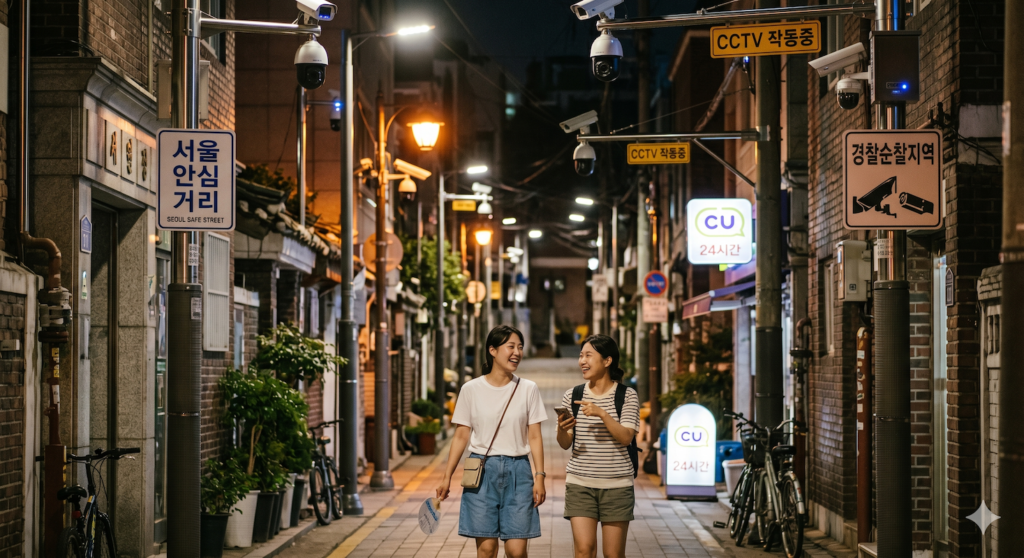
On a recent Saturday night, I found myself back in Sillim-dong with an old friend. We used to live here, amidst the dense, studious atmosphere where aspiring lawyers and Seoul National University students once spent their nights dreaming of the future. Sillim-dong is a place of memory and survival; its low cost of living and the sheer density of young residents create a unique “Budget Ritual” that remains unchanged.
As we shared a meal surrounded by the next generation, we spoke about the undeniable truth of the Study in Seoul University Guide: university districts are the last bastions of affordability in this rapidly rising city. Even with inflation, the price of a bowl of rice or a drink here feels like a gift from the past.
Feeling a spark of nostalgic rebellion, we hopped into a taxi toward Hongdae. As we crossed the Han River, our conversation turned to the vast map of institutions covered in any Study in Seoul University Guide. From the prestigious hills of SNU to the artistic alleys of Hongik, these areas are where Seoul stays forever young—and surprisingly cheap.
In Hongdae, the ritual shifted. We lost ourselves in the crowd, felt the bass of a live rock show vibrate in our chests, and eventually walked all the way to the front of Yonsei University. A late-night coffee cleared our heads before we parted ways on Line 2. It was a “Cost-Effective Ritual” of friendship, and it is the same energy that awaits anyone following this Study in Seoul University Guide.
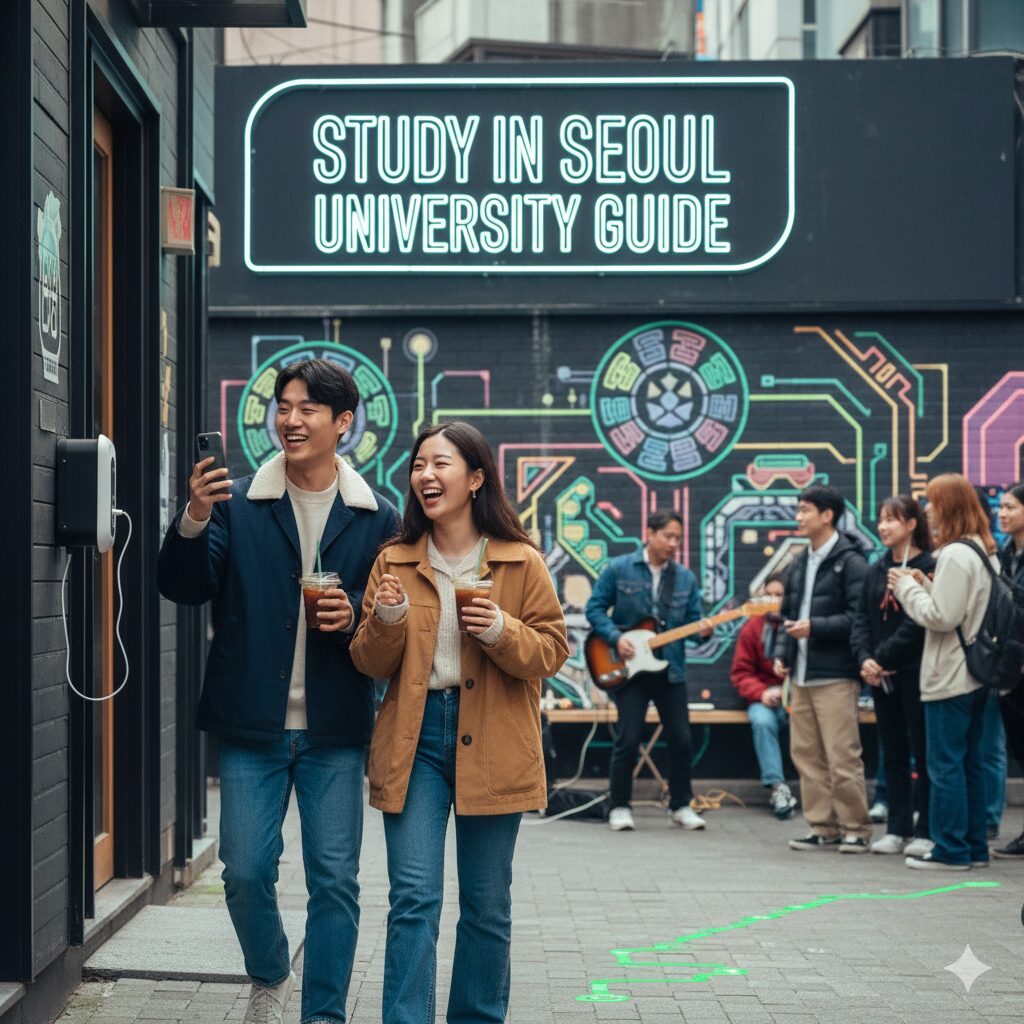
The Subway Protocol: Mapping Every Campus in the Study in Seoul University Guide
Seoul is a city defined by its academic geography. To truly navigate the Study in Seoul University Guide, one must master the subway lines that connect these hubs of knowledge and energy.
Line 1: The Historic Academic Corridor
- Kyung Hee University (Hoegi Station): A gothic-style architectural ritual that feels like a European cathedral.
- Hankuk University of Foreign Studies (HUFS Station): The global language protocol of Korea.
- University of Seoul (Hoegi Station): A public ritual of academic excellence funded by the city.
- Kwangwoon University (Kwangwoon Univ. Station): The engine room for IT and engineering.
- Sungkonghoe University (Onsu Station): Focusing on the rituals of human rights and peace.
Line 2: The Circle of Youth and Vitality
- Seoul National University (SNU Station): The pinnacle of the Study in Seoul University Guide prestige.
- Yonsei University (Sinchon Station): A ritual of tradition and elite academic prowess.
- Ewha Womans University (Ewha Womans Univ. Station): The historic sanctuary for women’s leadership.
- Sogang University (Sinchon Station): A compact ritual of academic rigor.
- Hongik University (Hongik Univ. Station): The creative epicenter where art and street culture meet.
- Hanyang University (Hanyang Univ. Station): The industrial ritual of engineering and innovation.
- Konkuk University (Konkuk Univ. Station): A lakeside campus ritual in the heart of the city.
Line 3 & Line 4: The Central Academic Axis
- Dongguk University (Dongguk Univ. Station): A fusion of Buddhist tradition and artistic ritual.
- Sungkyunkwan University (Hyehwa Station): The 600-year-old Joseon academic ritual.
- Sookmyung Women’s University (Sookmyung Univ. Station): A tradition of sophisticated female leadership.
- Sungshin Women’s University (Sungshin Women’s Univ. Station): A vibrant community ritual in Northern Seoul.
- Kookmin University (Gileum Station link): A hub for design and automotive rituals.
- Hansung University (Hansung Univ. Station): Nestled against the historic fortress wall ritual.
Line 6 & Line 7: The Strategic Knowledge Grid
- Korea University (Anam Station): A ritual of fierce loyalty and historic tiger pride.
- Chung-Ang University (Sangdo/Heukseok Station): The center for media and cinematic rituals.
- Soongsil University (Soongsil Univ. Station): Korea’s first modern academic ritual.
- Sejong University (Children’s Grand Park Station): Specialists in hotel management and animation rituals.
- Seoul Tech (Gongneung Station): A ritual of convergence between science and practical tech.
- Seoul Women’s University (Hwarangdae Station): An eco-campus ritual for future leaders.
The Tourism Ritual: Destination Hubs in the Study in Seoul University Guide
For the “Academic Nomad” visiting Seoul, the university is more than a place of study; it is a gateway to the city’s most vibrant cultural rituals. This Study in Seoul University Guide tactical breakdown focuses on the best campus districts for exploration, food, and photography.
The Creative Rebellion Ritual: Hongik University (Hongdae)
Hongik University is the undisputed heart of Seoul’s independent spirit. Unlike other campuses, the “Hongdae Ritual” spills into the streets, where buskers and indie musicians perform until dawn. For visitors, the attraction is the “Generosity of Art”—free galleries and street murals that prove the Study in Seoul University Guide isn’t just about books.
- The Ritual: Visit the “Free Market” on Saturdays for handmade crafts, then head to a basement rock club to feel the city’s pulse.
The Golden Triangle Ritual: Yonsei, Ewha, and Sogang
This district in western Seoul offers the most concentrated “Campus Ritual” in the world. You can walk from the ivy-covered stone walls of Yonsei University to the architectural masterpiece of the Ewha Womans University Campus Center (ECC) in under 20 minutes.
- Yonsei University: Famous for its “Forest Ritual,” the path to Underwood Hall is a sanctuary for photographers.
- Ewha Womans University: Known for the “Valley Ritual,” a futuristic glass structure built into the earth that serves as a high-tech “Global Zone” for international visitors.
- Sogang University: A compact, steep-climb ritual that offers quiet contemplation amidst the surrounding chaos of the Sinchon nightlife.
The Old World Wisdom Ritual: Sungkyunkwan University
Nestled in the historic center, this is where the Study in Seoul University Guide meets the Joseon Dynasty. Here, 600-year-old Gingko trees stand as silent witnesses to centuries of scholarly ritual.
- The Ritual: Walk through the Munmyo shrine—a designated National Treasure—and experience the silence of old Seoul before stepping back into the neon-lit energy of the Daehangno theater district.
Related Guides: Mastering the Seoul Lifestyle Ritual
If you found the Study in Seoul University Guide helpful, explore these tactical masterclasses to further refine your journey through the IT powerhouse of Korea.
Korea Travel Adapter Guide: 5 Secrets to Your 220V Seoul Ritual (2026) Don’t let a dead battery interrupt your campus tour. Master the 220V protocol and learn the best places to secure high-quality charging gear from my mother’s own tactical checklist.
K-pop Global Icons: 5 Shocking Ways Foreign Members are Redefining the Industry (2026) Understand the cultural bridge built by icons like Lisa and Hanni. Discover how these foreign members are changing the national pride ritual and bringing global perspectives to the Seoul music scene.
K-pop Idol Actor Transformation: 7 Mind-Blowing Icons Beyond the Stage (2026) From the lecture halls of Seoul’s top universities to the cinematic screens of Netflix. Explore the high-stakes ritual of idols like Jang Da-ah as they transition into world-class acting powerhouses.
Conclusion: The Eternal Pulse of Seoul’s Academic Ritual
This cinematic journey through Seoul’s academic landscape—from the humble, studious alleys of Sillim-dong to the neon-lit rebellion of Hongdae—proves that the city’s heart beats loudest where its students gather. By following this Study in Seoul University Guide, you aren’t just visiting schools; you are participating in a multi-generational ritual of survival, creativity, and “Academic Generosity.”
Seoul remains a city that stays forever young because its university districts offer a sanctuary where prestige meets affordability, and where every subway stop opens a new chapter of cultural discovery. Whether you are a “Noble Traveler” seeking history or an “Academic Nomad” looking for the next rock show, these campuses are the open gates to the true Seoul.