Last weekend I went to meet a younger friend from my army days staying at a Toyoko Inn in Seoul, and the first thing I overheard in the lobby was a Korea travel adapter problem — a couple of Japanese guests having a long, slightly stressed conversation with the front desk about how to charge their phones. My friend and I just looked at each other: couldn’t they just go to Daiso?
That’s the whole thing about power here. A Korea travel adapter feels like a problem before you arrive, and stops being one about five minutes after you land. Here’s what you actually need to know.
South Korea uses 220V at 60Hz, with Type C and Type F round-pin plugs. If you’re coming from the US, UK, Canada, Australia, or Japan, your plugs won’t fit the wall, so you need one. If you’re coming from continental Europe, your plugs already fit.
Do you need an adapter, a converter, or both?
These are two different things and people mix them up:
- A plug adapter changes the shape of your plug so it fits the socket. It does not change the electricity.
- A voltage converter changes 220V down to 110V so a device built for lower voltage doesn’t fry.
How to know which you need: look at the small print on your charger or power brick.
- If it says “INPUT: 100–240V, 50/60Hz” → your device is dual-voltage. You only need a plug adapter. This covers almost every phone, laptop, tablet, and camera charger made in the last decade.
- If it says “INPUT: 120V” only (single voltage) → you need a voltage converter, not just an adapter. Plugging it into 220V with a plain adapter can destroy it.
The devices that actually get destroyed
Phones and laptops are fine — they’re all dual-voltage. The things travelers burn out in Korea are almost always the same short list:
- Hair dryers
- Hair straighteners / curling irons
- Some electric shavers
- Older or cheap single-voltage appliances
These are frequently 110V-only, and a plain plug adapter will push 220V straight into them. Result: a pop, a burning smell, and a dead device — sometimes a tripped outlet.
Practical advice: don’t bring your hair dryer. Every hotel, most guesthouses, and even many hostels in Korea provide one. If you rely on a specific styling tool, either buy a dual-voltage travel version before your trip, or buy a cheap 220V one in Korea (Daiso or Olive Young) and leave it behind.
Type C vs Type F — and why cheap adapters fail
Korea’s two socket types:
- Type C — two round pins, ungrounded, common in older buildings.
- Type F — two round pins plus two grounding clips on the sides, common in newer buildings and hotels.
They’re cross-compatible: a Type C plug fits a Type F socket. So a basic “Europe” round-two-pin adapter works.
One real warning that most guides skip: very cheap adapters can have undersized pins. Korean Type F sockets are built for 4.8mm pins, and bargain adapters sometimes use thinner ones. That causes a loose fit, which causes arcing and heat. If an adapter feels wobbly in the socket or gets warm, stop using it. Spend a couple of extra dollars on a decent one rather than the cheapest on the shelf.
Where to buy one in Seoul (if you forgot)
You do not need to panic if you land without an adapter. Options, cheapest first:
- Daiso — around 5,000 KRW for a multi-plug adapter, in the travel section. There are Daiso stores all over the city; find the nearest one on Naver Map. This is the best value.
- Olive Young / convenience stores (CU, GS25, 7-Eleven) — travel adapters and charging cables, slightly pricier, but open late or 24/7 for a 3 a.m. emergency.
- Incheon Airport — convenience stores and electronics counters sell them the moment you land, at the highest markup. Fine as a last resort.
If you use USB-C, honestly the simplest move is a small 220V USB wall charger with multiple ports bought locally — it covers your phone, earbuds, and more without carrying several adapters.
Charging on the move: a small gotcha
- Cafes: Seoul cafes are unusually generous with outlets — most have accessible sockets, and many premium chains have wireless charging pads in the tables. Working from a cafe on your own power is completely normal.
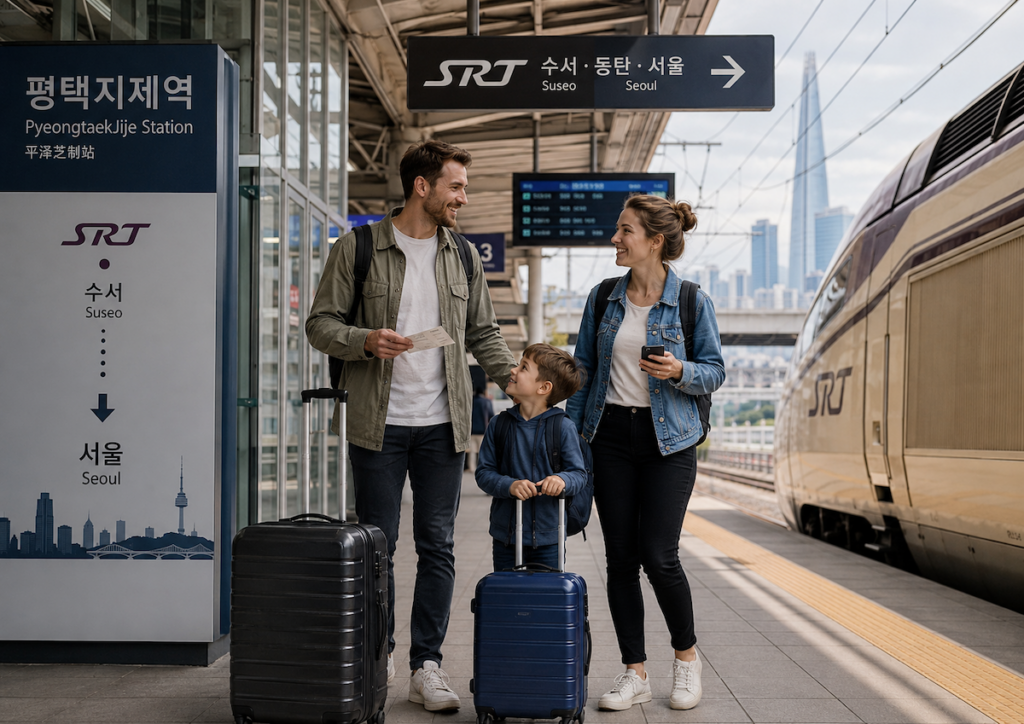
- KTX / SRT high-speed trains: full 220V outlets under or between the seats. Bring your normal charger.
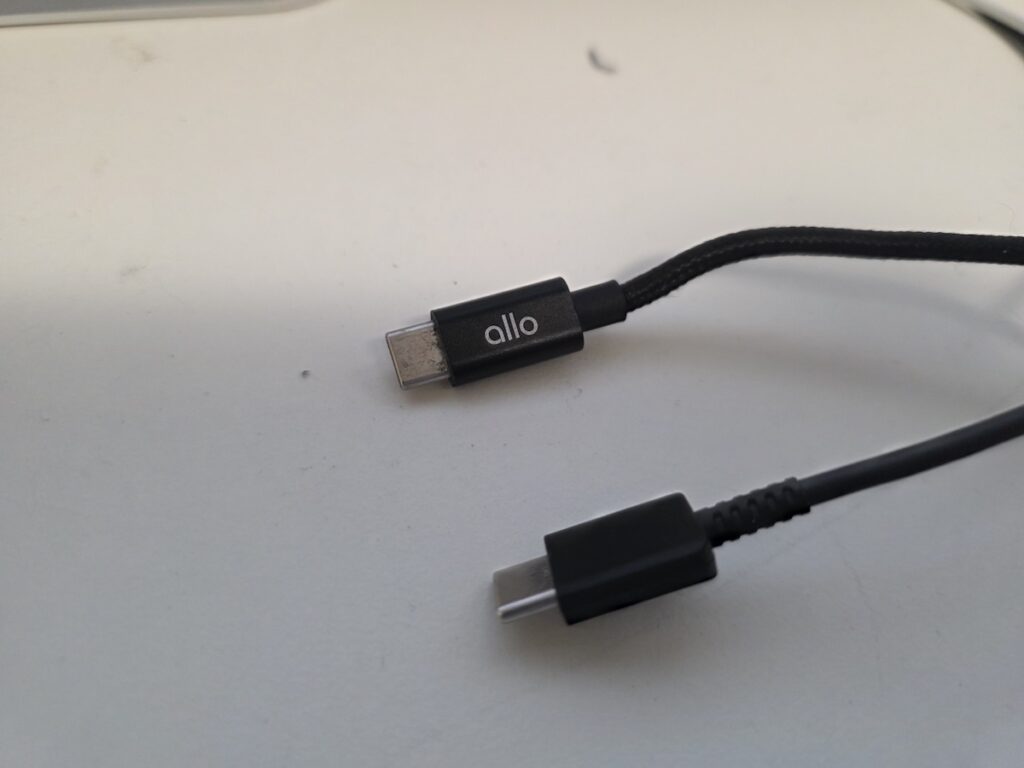
- Express/intercity buses: often only USB-A ports, not 220V sockets. If you only carry a USB-C-to-C cable, you won’t be able to plug in. Carry one USB-A-to-USB-C cable as backup — this is the single most common charging annoyance travelers hit here.
The 30-second checklist
- Check every charger for “100–240V.” Dual-voltage = adapter only.
- Leave single-voltage hair tools at home; hotels provide dryers.
- Pack one decent Type C/F adapter (not the flimsiest one).
- Throw in a USB-A-to-C cable for buses.
- Forgot everything? Daiso, ~5,000 KRW.
That’s the entire Korea travel adapter problem, solved.
Prices and store availability are current as of 2026 and can change — Daiso’s adapter price in particular is a reference point, not a guarantee. Check your own device labels before you travel; that’s the step that actually protects your gear.