Korean body scrub at home may be the better first step before you try lying naked on a scrub table in a Korean bathhouse.
Foreign visitors often talk about Korean bathhouse scrubs like they are a strange travel achievement. They went to a jjimjilbang or local bathhouse, soaked in hot water, lay down on a vinyl-covered table, and let a Korean scrubber remove layers of dead skin with an Italy towel. The story usually starts with embarrassment. Then it moves into surprise. Then, strangely, it often ends with joy.
They talk about feeling exposed. They talk about not knowing where to look. They talk about being the only foreigner in the room, feeling conscious of their body shape, skin color, hair, tattoos, or simply the fact that they do not know the rules. But after the scrub, many people say the same thing: their skin felt completely different.
Cleaner. Lighter. Almost new.
That feeling is real. But I do not think every foreign visitor needs to begin with the strongest version of the experience.
Sometimes the gentler Korean way is to buy an Italy towel, take a warm shower or bath at home, and start with your calves, ankles, knees, and feet.
Especially in summer.
Quick Answer: Can You Try a Korean Body Scrub at Home First?
Yes, you can try a Korean body scrub at home before visiting a Korean bathhouse. Use a Korean Italy towel after a warm shower or bath, when your skin has softened. Start gently on areas like your legs, ankles, feet, arms, and back. Avoid your face, do not scrub every day, and stop if your skin feels sore or hot. After drying your body, apply body cream or aloe gel to calm and moisturize the skin. It is a private, beginner-friendly way to understand the Korean scrubbing habit without the pressure of a public bathhouse.
Why Korean Bathhouse Scrubs Feel So Intense
A Korean bathhouse scrub is not just skincare. It is a full-body cultural experience.
In Korea, the professional body scrub is often called seshin. You soak first. Then you lie on a table while a scrubber uses a rough towel to remove dead skin. The scrubber may move quickly, turn your arm, lift your leg, scrub your back, and clean areas you would never ask a stranger to touch in many Western countries.
For Koreans who grew up with bathhouse culture, this may feel normal. Strong, yes. A little painful sometimes, yes. But not shocking.
For many foreign visitors, the hardest part is not the towel. It is the setting.
Everyone is naked. There are other people nearby. The lighting is not romantic. The atmosphere is practical. Bodies are not hidden the way they are often hidden in Western spas. Nobody is pretending the human body is mysterious. People wash, soak, scrub, rinse, and leave.
That directness can be refreshing. It can also be uncomfortable.
The Small Signals You Do Not Know Yet
One thing foreign visitors may not expect is how little explanation happens.
In a Korean bathhouse, the scrubber may not speak much English. Even Korean customers do not always receive a soft spa-style explanation. There are practical signals instead.
For example, the scrubber may tap your body or slap their palm lightly against the table or your skin. That can mean, “Turn over.” Or, “Move this way.” Or, “Lift your arm.”
If you do not know the rhythm, it can feel confusing.
You are already naked. You are already nervous. You are trying not to look awkward. Then suddenly there is a quick sound, a gesture, a movement, and you realize your body is supposed to flip like a pancake.
It is funny later.
In the moment, it can be a lot.
Privacy Is a Real Issue, Not a Weakness
Some travel writing makes bathhouse discomfort sound like something you must overcome to be brave.
I do not agree.
Privacy matters. Cultural comfort matters. Your body belongs to you. If lying naked in front of strangers while someone scrubs your skin feels too much, that does not mean you failed to experience Korea properly.
You can still understand the culture in a smaller way.
That is where the home version makes sense.
A Korean Italy towel at home gives you control. You choose the water temperature. You choose which part of your body to scrub. You choose how much pressure to use. You can stop any time. You can start with just one area, like your lower legs, instead of turning your whole body over for a stranger.
This is not the same as a professional bathhouse scrub. But for many first-time visitors, it may be the better beginning.
What Is an Italy Towel?
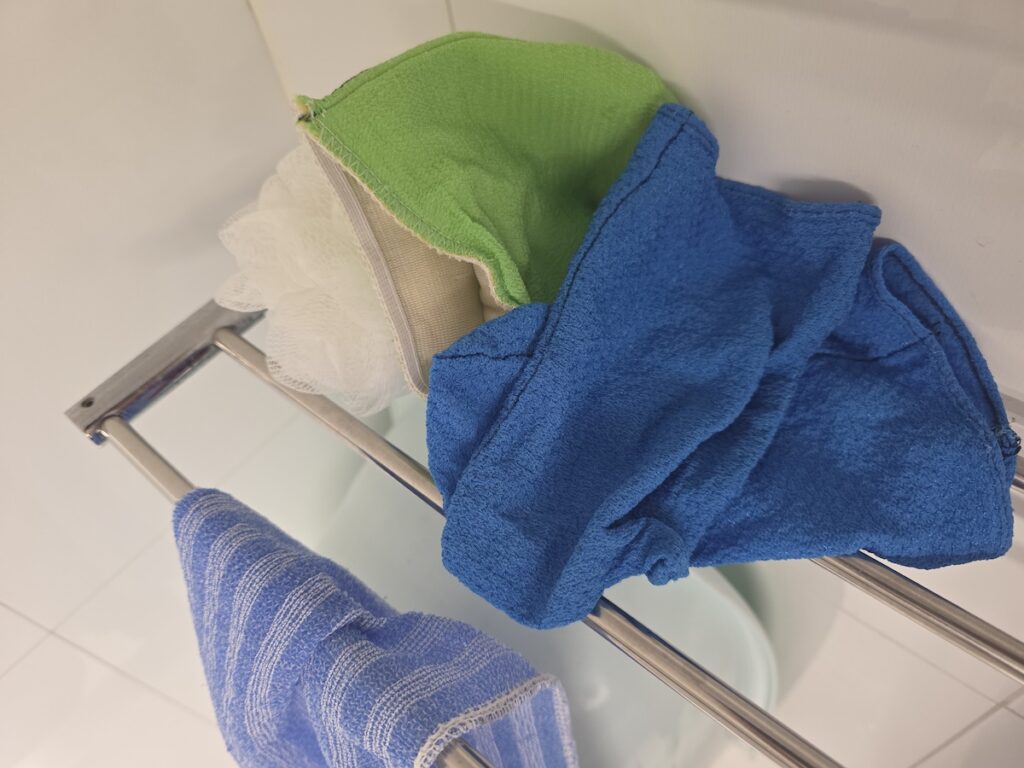
An Italy towel is the famous rough Korean exfoliating cloth used to remove dead skin.
In Korean, people often call it 이태리 타월, which means Italy towel, or 때타월, which means scrub towel. The name sounds funny because most people do not strongly connect Italy with Korean bathhouses. But in Korea, the name is completely familiar.
You can find these towels in places like Daiso, supermarkets, traditional markets, bathhouse shops, and sometimes Olive Young or other beauty stores. They are usually cheap, small, and simple. The classic one is a rectangular mitt-like cloth that fits over your hand.
It does not look fancy.
That is part of its charm.
It is not a luxury skincare tool with gold packaging. It is a practical Korean bathroom object. Rough, direct, and surprisingly effective when used correctly.
The Famous Gray Rolls
The thing that surprises people is what comes off the skin.
After soaking or showering, when the skin is softened, rubbing with an Italy towel may create grayish rolls of dead skin. Koreans call this 때. Seeing it for the first time can be strange and satisfying at the same time.
Some foreign visitors think they were dirty. That is not exactly the point.
Your skin naturally sheds dead cells. The Italy towel simply removes them in a very visible way. It makes the process feel almost dramatic because you can see the result immediately.
That visible result is part of why people become obsessed with it.
But it also creates a danger: people scrub too hard because they want more to come out.
Do not do that.
The Italy towel is not a competition.
Korean Bathhouse Scrub vs Korean Body Scrub at Home
The home version and bathhouse version are related, but they are not the same experience.
| Experience | Korean Bathhouse Scrub | Korean Body Scrub at Home |
|---|---|---|
| Privacy | Low, public bathhouse setting | High, private bathroom |
| Intensity | Usually stronger | You control the pressure |
| Skill needed | Professional does it | You learn slowly |
| Comfort for beginners | Can feel intimidating | Easier first step |
| Best area | Full body | Legs, arms, feet, back |
| Cost | Higher, depends on bathhouse | Low, just towel and skincare |
| Cultural feeling | Deep bathhouse experience | Everyday Korean self-care |
If you are curious and confident, the bathhouse version can be memorable. But if you are nervous, the home version is not a compromise. It is a realistic way to start.
Many Koreans use Italy towels at home too. Not every scrub has to happen in a bathhouse. Sometimes it is just part of a long shower, a weekend reset, or a summer body-care habit.
Why Summer Is the Perfect Time to Try It
Summer changes how the body feels.
In Korea, summer is humid. You sweat walking to the subway. Your feet get dusty in sandals. Your ankles and calves are exposed. You may skip socks, wear slides, walk around markets, climb subway stairs, and spend the day with sunscreen, sweat, and city dust on your skin.
That is when a Korean scrub towel starts to make emotional sense.
You do not need to scrub your whole body. Start below the knees.
Feet. Ankles. Shins. Knees. Calves.
These areas carry the day. They collect sweat, sunscreen, dust, sandal marks, and that slightly sticky feeling that summer leaves on your skin. After a warm shower, using an Italy towel lightly on your lower legs can feel surprisingly satisfying.
It is not glamorous. But it feels clean in a very physical way.
You rinse, dry your body, and suddenly your legs feel lighter.
This is the kind of small Korean habit that does not look like much from the outside, but once you try it, you understand why people keep doing it.
How I Use It After a Shower
My own way is simple.
I do not use the Italy towel on dry skin. I wait until my skin has softened with warm water. A bath is nice if you have one, but a warm shower also works. Then I use the towel gently, usually starting with places like my legs, arms, or feet.
I do not try to scrub until my skin turns red.
That is important.
The clean feeling should not come from hurting your skin. It should come from removing what is already ready to come off.
After rinsing, I dry my body with a towel. Then I usually apply body cream or aloe gel. This last step matters to me. The skin feels fresh after scrubbing, but also a little sensitive. Aloe especially feels good in summer because it is light, cooling, and calming.
It feels like telling the skin, “Okay, the hard part is over. Now relax.”
Body Cream or Aloe Makes the Experience Better
Many people focus only on the scrubbing part. But the aftercare is what makes the habit feel complete.
After using an Italy towel, your skin may feel smoother and more awake. But if you leave it alone, it can also feel dry or tight later. Body cream helps bring back moisture. Aloe gel gives a calming, cooling feeling, especially after a hot day.
This is especially useful for summer legs and feet. If you wear sandals often, your feet and ankles may feel rough faster than you expect. A light scrub followed by aloe can make them feel cared for without turning it into a complicated beauty routine.
Keep it simple.
Warm water. Gentle scrub. Rinse. Dry. Aloe or body cream.
That is enough.
What Not to Do With an Italy Towel
The biggest mistake is using too much force.
An Italy towel already has texture. You do not need to attack your skin. If your skin becomes bright red, painful, or hot, stop. If you feel burning, stop. If you have sensitive skin, eczema, sunburn, cuts, or irritation, skip it or be very careful.
Do not use it on your face. Facial skin is more delicate, and this towel is too rough for most people’s faces.
Do not use it every day. Many people only use it once every one or two weeks, or when their skin feels like it needs it. Some use it more often on rough areas, but daily full-body scrubbing is usually too much.
Do not share the towel with other people. It is a personal item.
And do not assume stronger means better. Korean scrubbing culture can look intense, but good body care still requires common sense.
| Do | Don’t |
|---|---|
| Soften skin with warm water first | Use it on dry skin |
| Start with light pressure | Scrub until it hurts |
| Use it on legs, arms, feet, back | Use it on your face |
| Moisturize afterward | Leave skin dry and tight |
| Keep your towel personal | Share the same towel |
| Try once in a while | Use it aggressively every day |
The goal is not pain. The goal is that clean, smooth, strangely refreshed feeling.
The Question of Shared Towels at Bathhouses
There is one small thing many nervous visitors do not think about until later.
At a professional bathhouse scrub, you may assume the scrub towel used on you is new or only for you. Some places may use fresh or properly managed scrub materials, but as a nervous foreign visitor, you may not have the language or confidence to check. You are already trying to understand the room, the rules, the gestures, and the fact that you are naked.
You may not ask questions.
You may simply lie down and hope everything is fine.
This is another reason I like the home version as a first step. When you buy your own Italy towel, you know it is yours. You wash it, dry it, replace it when needed, and use it only on your body.
That sense of control makes the experience more comfortable.
Later, if you decide to try a bathhouse scrub, you will understand the feeling of the towel already. You will know what kind of pressure is normal for you. You will know what your skin can handle.
You will be less shocked.
Why It Can Be a Surprisingly Good Gift
An Italy towel is not an obvious romantic gift.
It is rough. It is cheap. It looks practical. It does not have the soft mood of perfume, candles, flowers, or expensive lotion.
But if I were giving it to someone I loved, I would not give only the towel.
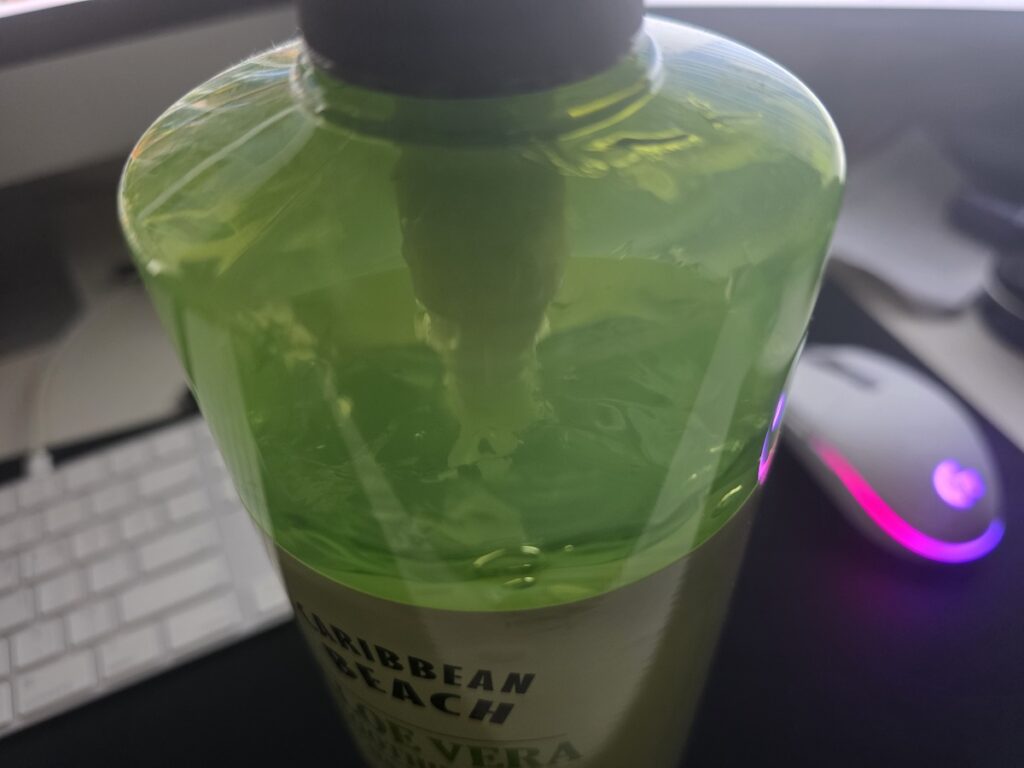
I would give it with aloe gel.
The towel says, “Try this Korean body scrub.”
The aloe says, “And calm your skin afterward.”
That combination feels more thoughtful than it looks. It understands both sides of the experience: the strange satisfaction of scrubbing away dead skin, and the need to be gentle afterward.
For a partner, it can become a quiet kind of care. Not dramatic. Not expensive. But personal.
Especially in summer, it makes sense. People wear sandals, skip socks, travel more, sweat more, and expose their feet and calves more often. A small Korean scrub towel with aloe becomes a simple summer care set.
Scrub lightly. Rinse. Dry. Calm the skin.
If the Italy towel is the Korean part of the gift, the aloe is the kindness after it.
Who Would Appreciate It?
This kind of gift works best for someone who enjoys small cultural objects, skincare, bath items, or practical souvenirs. It could be nice for a partner, a close friend, or even parents who like trying useful things from other countries.
It is also easy to explain.
“This is a Korean Italy towel. People use it after soaking or showering to remove dead skin. But use it gently, and apply aloe afterward.”
That explanation turns a cheap object into a story.
And good travel gifts often need a story.
Where to Buy One in Korea
You do not need to search very hard.
Daiso is probably the easiest place for many visitors. It is cheap, simple, and branches are everywhere in Seoul. You may also find Italy towels in supermarkets, household goods stores, local markets, and bathhouse counters.
Some beauty stores may sell more polished exfoliating products, but the classic Korean Italy towel is usually very basic. That is fine. You do not need the most expensive version.
If you are buying it as a gift, you can make it feel nicer by pairing it with aloe gel, body lotion, or a simple Korean body-care product. The towel alone may look too ordinary. The set feels intentional.
For yourself, buy more than one if you plan to use it regularly. They are small, light, and easy to pack.
Just remember to dry it well after use. Like any bath item, it should not stay damp in a dark corner forever.
A Gentle First Routine for Beginners
If you want to try it tonight, keep the routine easy.
Take a warm shower for several minutes. Let your skin soften. Do not use the towel immediately on cold, dry skin. Then wet the Italy towel and choose one area, such as your lower legs.
Use light pressure at first. Move in small strokes. See how your skin reacts. You may see dead skin rolling off, or you may not see much the first time. That is okay. Do not chase the result.
Rinse well.
Dry your body.
Apply aloe gel or body cream.
Then wait and see how your skin feels the next day. If it feels smooth and comfortable, you found the right level. If it feels sore or irritated, you scrubbed too hard or your skin may not like this method.
Korean body scrub culture can be intense, but your home version does not need to be.
Why This Small Habit Explains Korea Well
I like this topic because it shows something about Korean daily life.
Korea often has two versions of the same experience.
There is the public, intense, cultural version: the bathhouse, the professional scrub, the steam, the naked room, the strong towel, the quick signals.
Then there is the quiet home version: a shower, an Italy towel, your legs, your feet, aloe gel afterward.
Both are real Korea.
Foreign travelers often feel pressure to experience the dramatic version. They want the jjimjilbang story. They want to say they tried the famous Korean scrub. And that can be great.
But sometimes understanding Korea begins with a small object in your bathroom.
A green or pink scrub towel hanging near the shower. A bottle of aloe nearby. The feeling of smoother legs after a humid Seoul day. The realization that this rough little cloth explains a lot about Korean ideas of cleanliness, body care, and practicality.
Not luxurious. Not complicated. Just effective.
Conclusion: You Do Not Have to Start on the Bathhouse Table
A Korean bathhouse scrub can be unforgettable, but it does not have to be your first step.
If the public nudity, body exposure, language barrier, or intensity makes you nervous, start smaller. Try a Korean body scrub at home after a warm shower. Begin with your feet, ankles, calves, or arms. Use gentle pressure. Avoid your face. Do not overdo it. And after you dry your body, use body cream or aloe gel to calm your skin.
That simple routine gives you the best part of the experience without the pressure.
Later, maybe you will feel ready for the bathhouse. Maybe you will not. Either is fine.
The point is not to prove you can survive a Korean scrub table. The point is to understand a small but very real part of Korean body culture in a way that feels comfortable for you.
And if you are looking for a small summer gift from Korea, an Italy towel with aloe may be more romantic than it sounds.
It says: try this strange Korean thing.
But also: take care of your skin afterward.