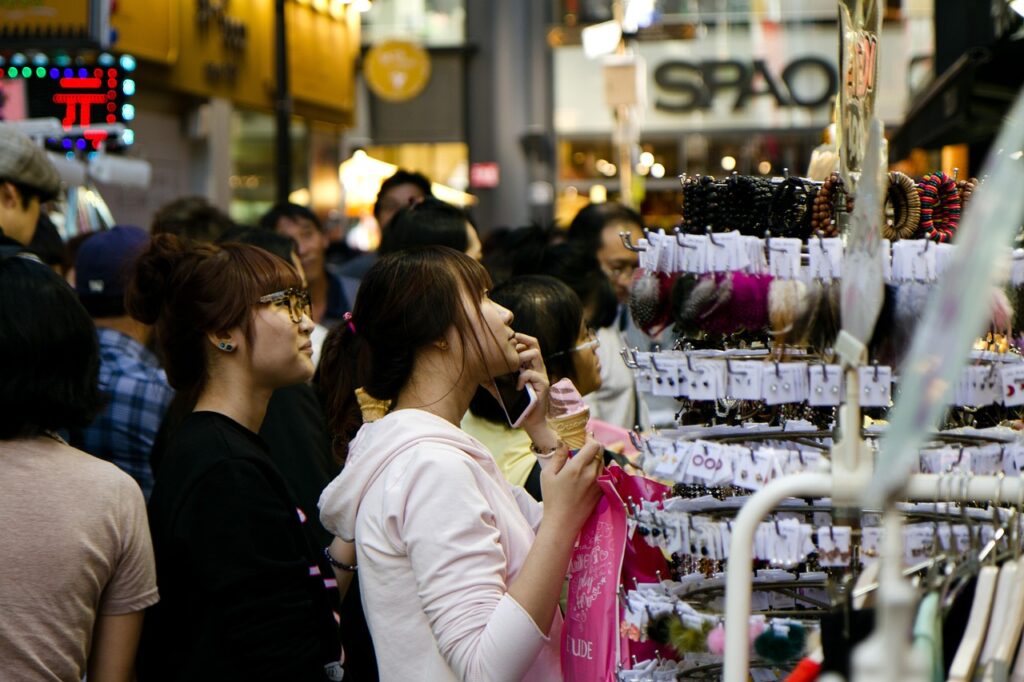
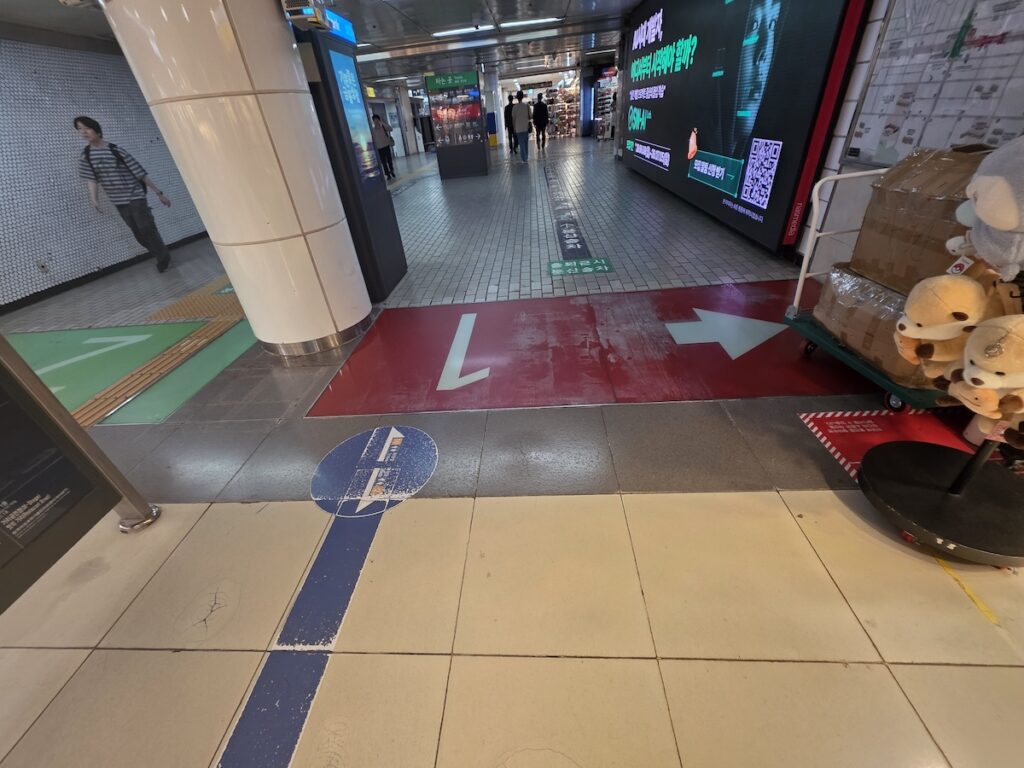
My eight-year-old niece stopped walking in the middle of the Gangnam Station underground arcade. She had been pulling me through the neon for twenty minutes. Then she froze in front of a small stall full of clicking plastic squares, and would not leave until I bought her one.
The Korean keycap keyring is what stopped her — a tiny custom keychain built from real mechanical keyboard switches and caps, the kind that click when you press them.
I have lived in Seoul more than ten years, and I had walked past these stalls a hundred times without registering them. It took an eight-year-old to make me actually look. What I noticed, once I did, is that half the bags in this city now have one dangling from a strap.
Quick Answer: A Korean keycap keyring is a small custom keychain assembled from a working mechanical keyboard switch and one or more decorative keycaps. Locals call the customization trend “cap-kku” — from “keycap” plus the Korean word for decorating. You build it yourself at counters in Gangnam underground, Hongdae, or Dongdaemun, choosing the base, the switch (which controls sound and feel), and the keycaps. Expect to pay around 3,000 to 6,000 KRW for a single-key version, and 15,000 to 20,000 KRW for a multi-letter custom one. It works as a fidget toy, a bag charm, and a personalized souvenir from Seoul.
What a Korean keycap keyring actually is
The first time you see one, it looks like someone broke off a piece of a computer keyboard. That is more or less right.
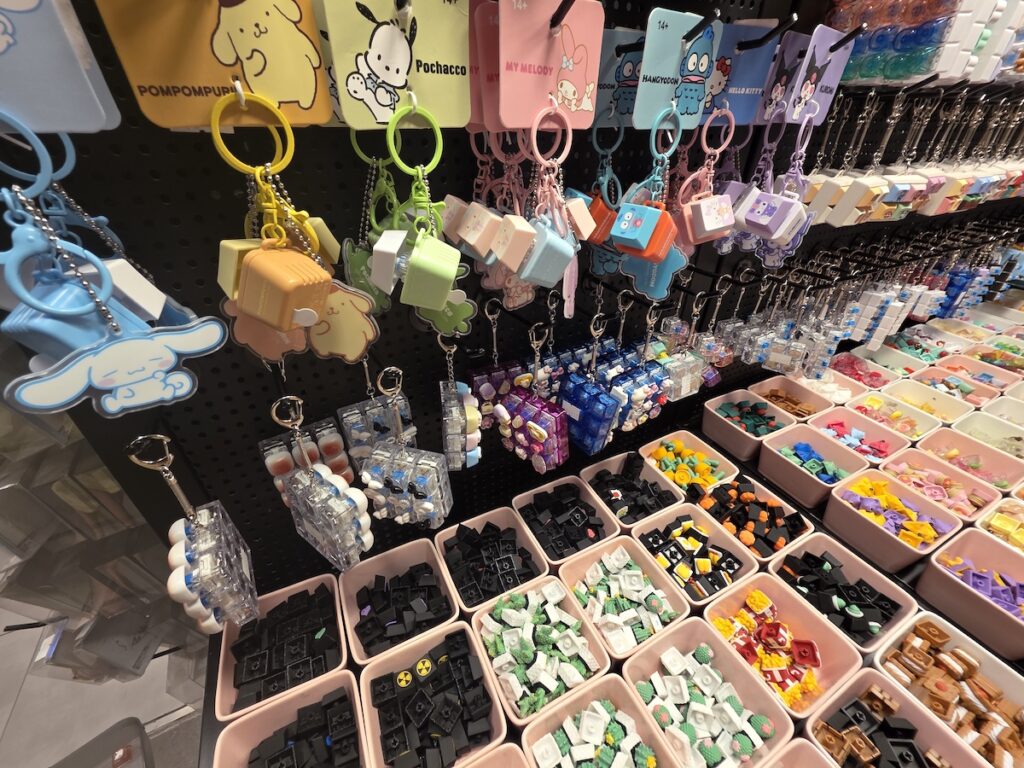
A keycap keyring uses the same components that go into a real mechanical keyboard: a base plate, one or more switches (the part that gives the click), and the keycaps that sit on top. The whole thing is shrunk down to a single key or a short row, attached to a ring, and meant to hang off a bag, an AirPods case, or a phone strap. Press it and it clicks, the same way a keyboard does.
The Korean name for the practice is cap-kku — “cap” from keycap, “kku” shortened from kkumigi, the Korean word for decorating or styling. It belongs to a broader family of customization trends, all built around the same suffix. Bol-kku is decorating pens. Geo-kku is decorating mirrors. Bit-kku is combs. The pattern is that everyday objects get personal, and the personalizing itself is the fun part.
What makes the keycap version stand out is the sound. Pens and mirrors are silent. A keycap keyring clicks. That click is a feature, not a side effect — and once you understand that, the appeal of the whole thing snaps into place. This is not just an ornament. It is a small, portable piece of a larger sensory hobby, and Korea took to it faster than most places because the underlying culture — late nights in PC bangs, mechanical keyboards on every gamer’s desk — was already there.
A foreign couple were assembling one next to my niece that afternoon. They were debating English letters, deciding to build a pair using each other’s initials. Then the boyfriend kept going. He pulled out his phone to confirm the spelling of his girlfriend’s mother’s name, and started a third keyring as a gift to take home. His girlfriend looked at him sideways and said, quietly, how thoughtful that was. It was the moment I stopped thinking of these as a kid’s accessory.
Why Seoul fell for cap-kku in the first place
Walk past any Seoul middle school at dismissal and you will see something specific: every bag is covered in something. Plush dolls, ribbons, photo cards, beads, and lately, keycap keyrings. The umbrella term is baek-kku — bag decorating — and it has been the dominant accessory trend among Korean students for a few years now.
The wider context is the Korean bag-charm wave that took over global fashion press recently. After Labubu figurines went viral and then sold out everywhere, the demand for character charms exploded into adjacent categories. Cosmetic brands started releasing lip tints shaped like keyrings. Plush charms became a serious revenue line. The Korea Herald reported that more than 90 percent of bag-charm customers at trendy Seoul shops are women in their twenties, and that celebrities’ social media posts of dangling handbag dolls helped turn the look into a national fashion trend. The bag itself has become a small canvas.
Keycap keyrings are the tech-leaning corner of that wave. They appeal to the same instinct — personalize the bag, signal something specific — but with a different aesthetic. Where a Labubu reads as cute, a keycap reads as a hobby. People who like good keyboards, good headphones, and a clean desk setup wear them as a quiet signal to other people who care about the same things. They also work for people who do not care about any of that and just like the click.
The other reason the trend stuck is that the cap-kku stalls turned shopping into making. You do not buy a finished object off a rack. You stand at a counter for ten or fifteen minutes choosing parts. That participation makes the keyring feel like yours in a way that a mass-produced souvenir cannot. It also makes it slightly addictive — most people I have watched do not buy one keyring. They build one for themselves, decide their friend would love it, and start a second.
How much a Korean keycap keyring really costs
This is the part I wish someone had explained to me before I let my niece start picking pieces. The pricing is modular, which makes it engaging and slightly sneaky at the same time.
You are not paying a flat fee for one item. You are paying for each component, and the total stacks up as you go.
| Component | What it does | Typical price |
|---|---|---|
| Base plate | The frame that holds everything together. Single-key or multi-key (for names, words) | 1,000–4,000 KRW |
| Mechanical switch | The clicking mechanism. Choice of clicky, tactile, or linear feel | 1,000–3,000 KRW each |
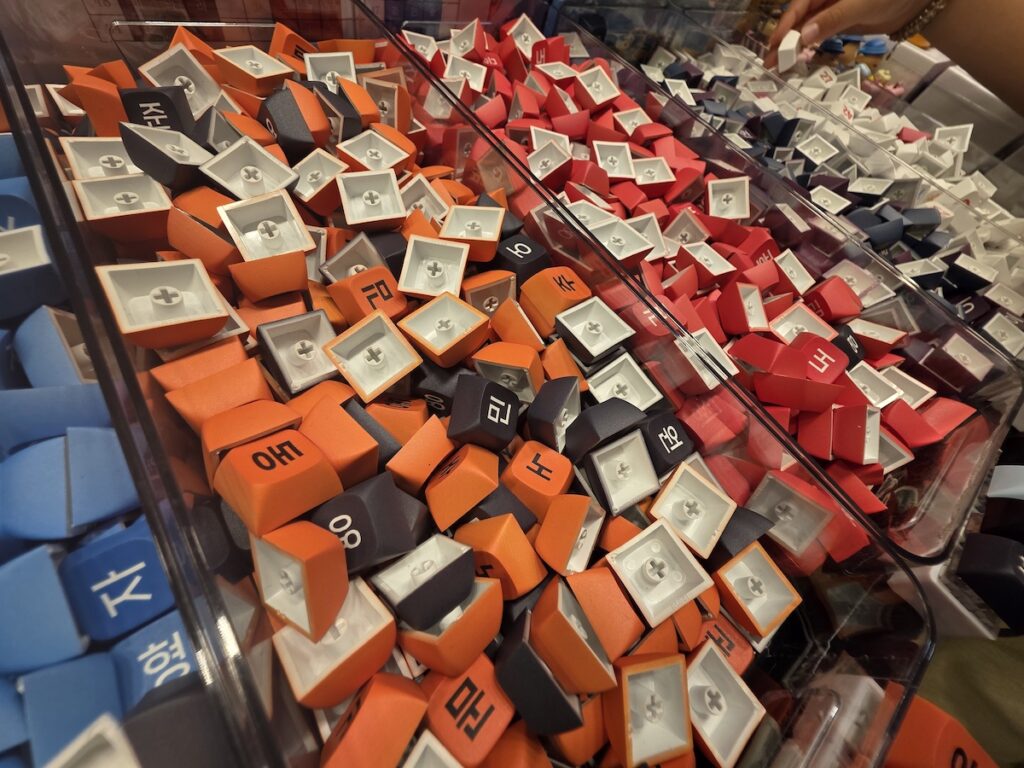
| Standard keycap | A regular letter or color cap on top | 500–1,500 KRW each |
| Premium keycap | Character, food, or artisan shapes | 2,000–6,000 KRW each |
| LED upgrade | A small light that flashes when you press | 1,000–2,000 KRW extra |
A simple single-key keyring with one switch, one standard cap, and a basic base typically lands somewhere between 3,000 and 6,000 KRW. That is the “buy one for a coworker” budget. Add an LED or pick a character cap and you are closer to 8,000.
A four-letter name keyring with premium caps and a longer base is a different category. My niece picked a longer base, four switches, and decorative caps. The total at the counter was 18,800 KRW. That felt like a lot for a single keyring until I considered how long she had spent customizing it, and that the result was actually unique to her. Compared to a 12,000 KRW pre-made character keychain from a Myeong-dong tourist shop, the keycap version comes out ahead on both personalization and per-component honesty.
A practical tip: decide the budget before you start, not during. The stalls do not pressure you, but the choices compound. If you are buying gifts for a group, set a per-person cap of 5,000 to 6,000 KRW and stick to single-letter initials. You get the personalized feel without spiraling into the 20,000 zone for each one.
Where to find a Korean keycap keyring in Seoul
The stalls are not hidden, but they are not where most tourist guides send you, either. Here is the working map after a few months of paying attention.
Gangnam Station underground arcade (Line 2). This is where I bought my niece’s keyring. The underground shopping passage that connects Gangnam Station to its exits is a maze of accessory stalls catering to commuters and students, and several of them are dedicated cap-kku counters. The variety is good, the prices are middle-of-the-road, and the foot traffic means staff are used to first-time buyers, including foreigners.
Dongdaemun Shopping Complex, 5th floor. This has quietly become the serious destination. The fifth-floor materials section is where Korean DIY creators source their parts, and it has recently become a hotspot for the customization trend, drawing international visitors looking for affordable DIY items. Prices per component are lower than at Gangnam, the selection is wider, and the trade-off is that the floor feels more like a wholesale market than a polished retail experience. Worth it if you plan to build several keyrings or want unusual parts.
Hongdae. The pedestrian streets around Hongik University Station hold a steady rotation of pop-up accessory shops, character stores, and small independent stalls that sell keycap keyrings. The selection skews more character-driven and youth-oriented. If you are already in the neighborhood for the buskers or shopping, this is the convenient option. (Just know what you are walking into — I have written about whether Hongdae is actually too crowded, and the side streets are easier than the main strip if you want time to browse.)
Seongsu-dong. The independent and design-led version. Smaller batches, more designer keycaps, higher prices. The right call if you want a keyring that looks less like a stall purchase and more like a curated object.
AK Plaza, The Hyundai, and major department stores. Some of these now carry curated cap-kku displays. THE HYUNDAI PRESENT carries c.e.dot Korean Beauty Dancheong Keyboard Keycaps featuring traditional Korean dancheong patterns, which won an award at the 2024 Korean Tourism Organization Souvenir Contest. Those are at the polished, gift-ready end of the spectrum, and the prices reflect it.
For a broader picture of what to bring home from this city, the best Korean souvenirs in Seoul covers categories beyond keyrings.
Choosing the right switch (this matters more than you think)
The switch is the part most first-time buyers ignore, and it is the single decision that determines whether the person you give the keyring to actually uses it or quietly tucks it into a drawer.
Mechanical switches are color-coded, and each color has a personality.
Blue switches. The loudest. A sharp, distinct click on every press. Fun in a bedroom, painful in a quiet office. Kids and teenagers love them. Choose this for a gift only if you know the recipient enjoys the noise — or works alone.
Brown switches. A tactile bump partway through the press, with a softer sound. The middle ground. Most adult buyers I have watched eventually settle on brown, because it gives the satisfaction of the click without the volume.
Red switches. Smooth and quiet. No bump, no real click — just a soft press. The right choice for office workers, anyone with noise-sensitive housemates, or someone who wants the keyring as a visual accessory rather than a sensory one.
Silent or LED-only variants. Some stalls carry near-silent switches or switches that have been swapped for an LED-only version that lights up without the noise. These are common at the premium end and useful for gift situations where you have no idea how the recipient feels about clicking.
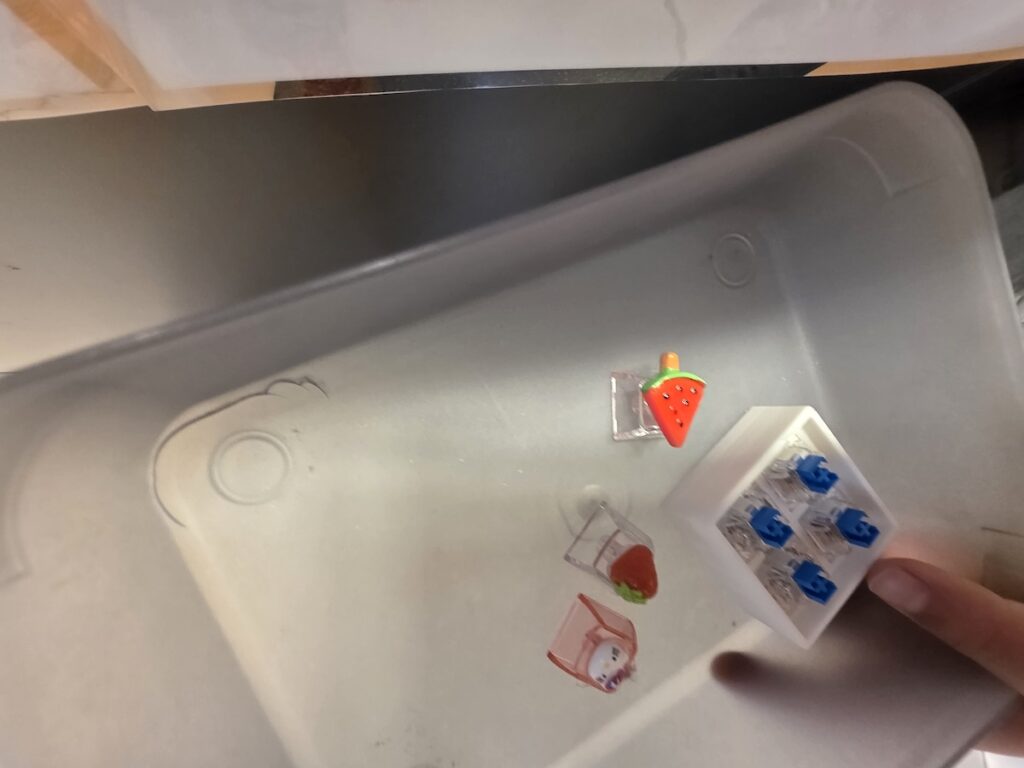
The single best move you can make at the counter is to ask to test the samples. Every stall has display switches you can press. Press all three colors before you commit. The difference between a blue and a red is significant, and the staff will assume you know what you want unless you say otherwise.
Why it works as a souvenir
Most souvenirs from Korea fall into a few tired categories. Seaweed packs. Olive Young face masks. Generic K-pop merchandise. Painted folding fans from Insadong. All fine, none personal.
A custom keycap keyring sits in a different category because the person you give it to can see that you made specific choices. The letter is their initial. The switch is the quiet one because they work in an office. The colour is the one they wear. None of that is visible on a face mask.
The trend also translates surprisingly well across cultures, which I did not expect. Mechanical keyboards and desk-setup culture have had a serious resurgence in the West over the past few years, and a keycap keyring lands neatly inside that subculture. A friend who codes in San Francisco understood exactly what mine was the second she saw it. A friend who does not code in London thought it was just cute. Both reactions worked.
There is also the simple practical case: it weighs almost nothing, packs flat, costs less than most edible souvenirs, and survives a checked bag without thought. For travelers running tight on luggage space, that matters more than the trend justification.
The foreign couple I watched in Gangnam ended up walking away with three keyrings — his, hers, and the one with her mother’s name. The mother was getting it as a gift from a country she had never been to, built by a stranger she had never met. That is more thought than most souvenirs carry.
A few real caveats before you buy
The trend is fun, and the keyrings are real fun. The story also has a few catches worth knowing before you spend.
The price escalates faster than the menu suggests. The per-component pricing is transparent in the moment but cumulative across the build, and people routinely end up paying more than they planned. Set a number before you start.
Quality varies between stalls. Bigger, established counters in Gangnam underground and Dongdaemun use real mechanical switches that will keep clicking for years. Some smaller pop-up stalls in heavy tourist areas use cheaper imitation switches that lose their snap after a few weeks. Press a few samples before you decide where to buy. If the click feels mushy on the display, it will feel mushier in your bag.
The blue switch is louder than you think. I have watched buyers regret a blue choice within a week. If you are giving the keyring to someone who works in a quiet environment, default to brown or red unless you know otherwise.
The keycaps can pop off. The same modularity that makes the keyring fun to build means caps can come loose, especially the larger character ones. Most stalls will sell you a tiny tube of clear adhesive for a few hundred won. Use it on anything you are not planning to swap out.
And the bag-charm trend, like all fashion trends, will eventually move. The keycap version has more staying power than most because it overlaps with a real hobby — mechanical keyboards are not going anywhere — but the specific look of clipping one to a school backpack will probably feel dated in a few years. That does not make the keyring worse. It just means the cultural moment you are buying into is the current moment, not a permanent one.
A small click, a personal souvenir
What started as a confused purchase for an eight-year-old turned into one of the more useful lessons in Seoul retail I have learned recently. The city has a real talent for taking objects from one corner of life — gaming, software, professional gear — and turning them into something small enough to clip to a bag and personal enough to mean something.
A Korean keycap keyring is not the most expensive thing you can bring home from this trip. It is not the most traditional, either. It is something narrower and more interesting: a tiny, clicking record of a specific moment in Seoul’s accessory culture, made by you, at a counter, with a stranger watching to make sure you put the right cap on the right switch.
The next time someone asks me what to buy in Seoul, I have an answer that is not seaweed. The eight-year-old was right. I just needed her to slow down long enough to notice.
EXTERNAL LINKS USED IN BODY
- Korea Herald on Korean bag charm trend: https://www.koreaherald.com/article/3244711
- VisitKorea on Korea’s customization trend: https://english.visitkorea.or.kr/svc/contents/contentsView.do?menuSn=929&dataSetId=120&vcontsId=1588983