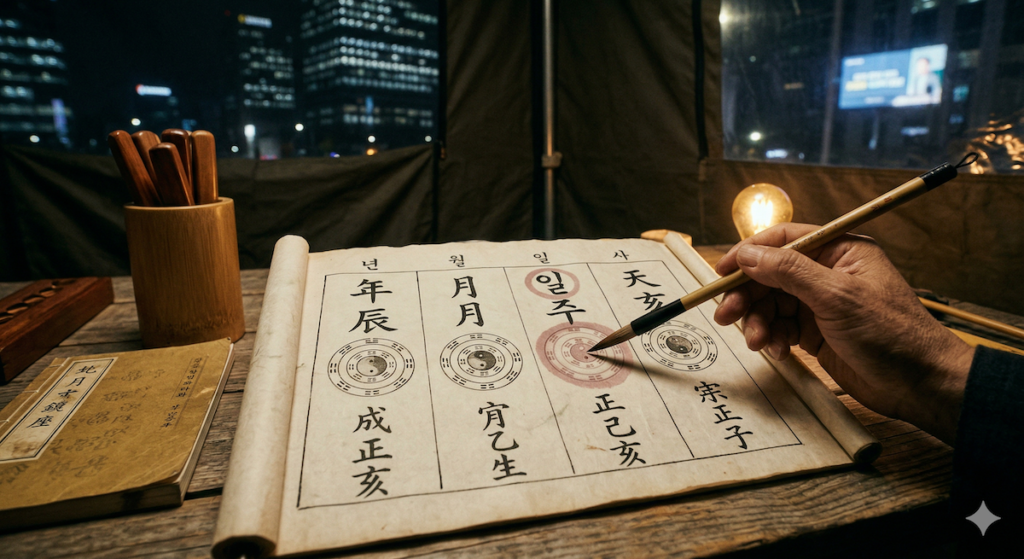
The Korea Travel: KTX Standing Ticket Ritual is the ultimate testament to a traveler’s resilience. When the high-speed rails to Mokpo or Busan are sold out two weeks in advance, the “Refresh Ritual” on your smartphone becomes your only hope. Successfully grabbing a standing ticket isn’t a defeat; it’s an invitation to experience the cinematic movement of Korea from a unique perspective.
1. The Desperate Refresh: A 400km Family Mission
Traveling 400km to Mokpo from Suseo (SRT) or Yongsan (KTX) is a mission that usually requires booking 14 days ahead. However, when a family emergency strikes, the shared breath of the city turns into a digital battle. By relentlessly hitting the refresh button, we managed to secure seats for three family members while I stepped into the role of the “Standing Warrior.”
2. Decoding the Ritual: Standing vs. Seated vs. Combined
Most travelers are confused by the ticket categories. To master the Korea Travel: KTX Standing Ticket Ritual, you must understand exactly what you are buying:
- Seated Ticket (General/First Class): The standard ritual of a reserved seat.
- Standing-only Ticket (Ip-seok): This ticket provides no assigned seat but allows you to board the train at a 15% discount. You are a nomad of the corridors.
- Combined Ticket (Seated + Standing): A sophisticated option where you might sit from Seoul to Daejeon, then stand from Daejeon to Busan. The 15% discount applies only to the standing segment of your journey.
- Unassigned Seat (Freedom): Mostly found on the ITX-Cheongchun, this allows you to take any empty seat in a designated car on a first-come, first-served basis.
3. The Jump Seat Ritual: How to Win the Silent Battle
If you board at a starting station like Suseo, Yongsan, or Seoul Station, your goal is the “Jump Seat.”
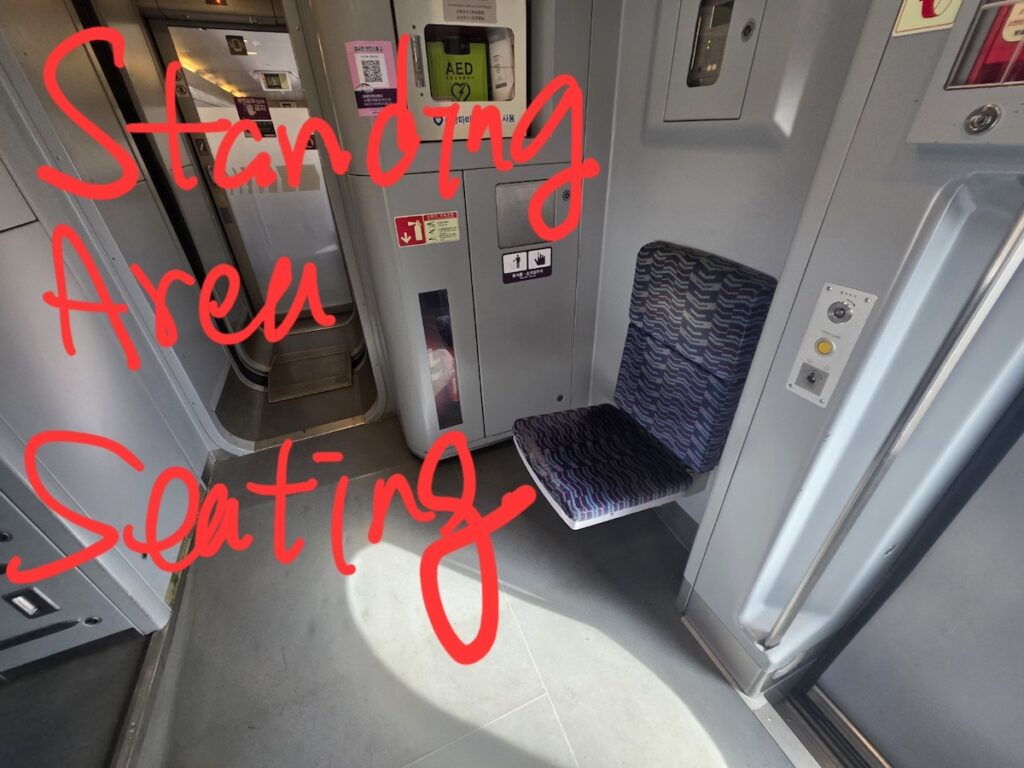
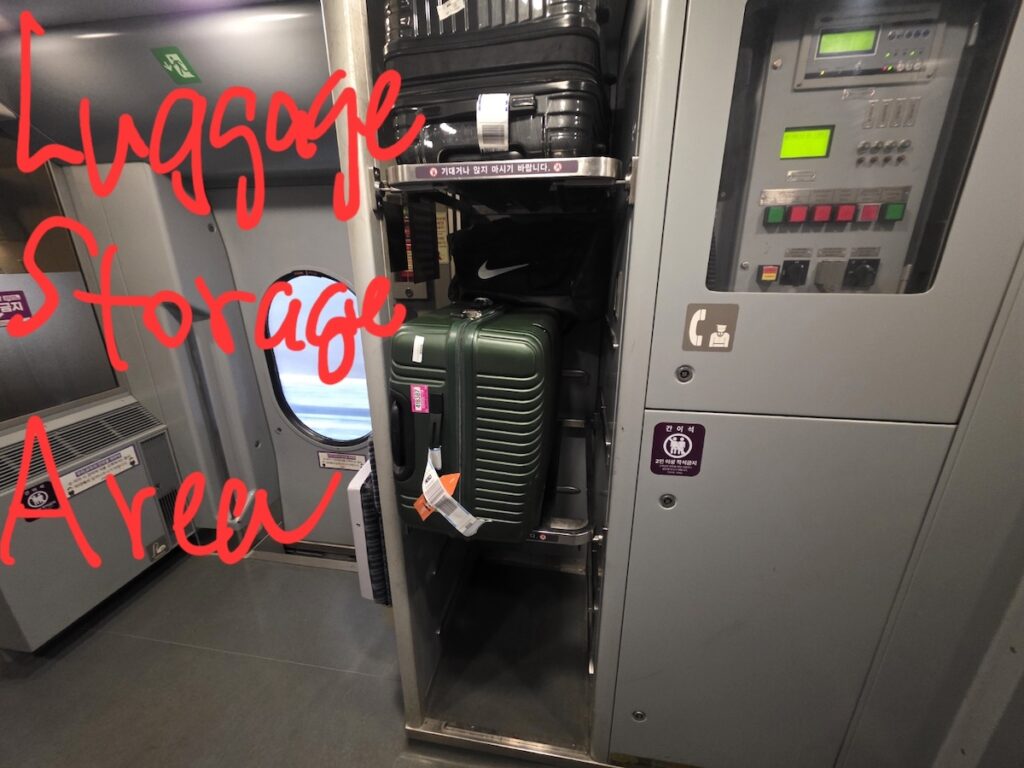
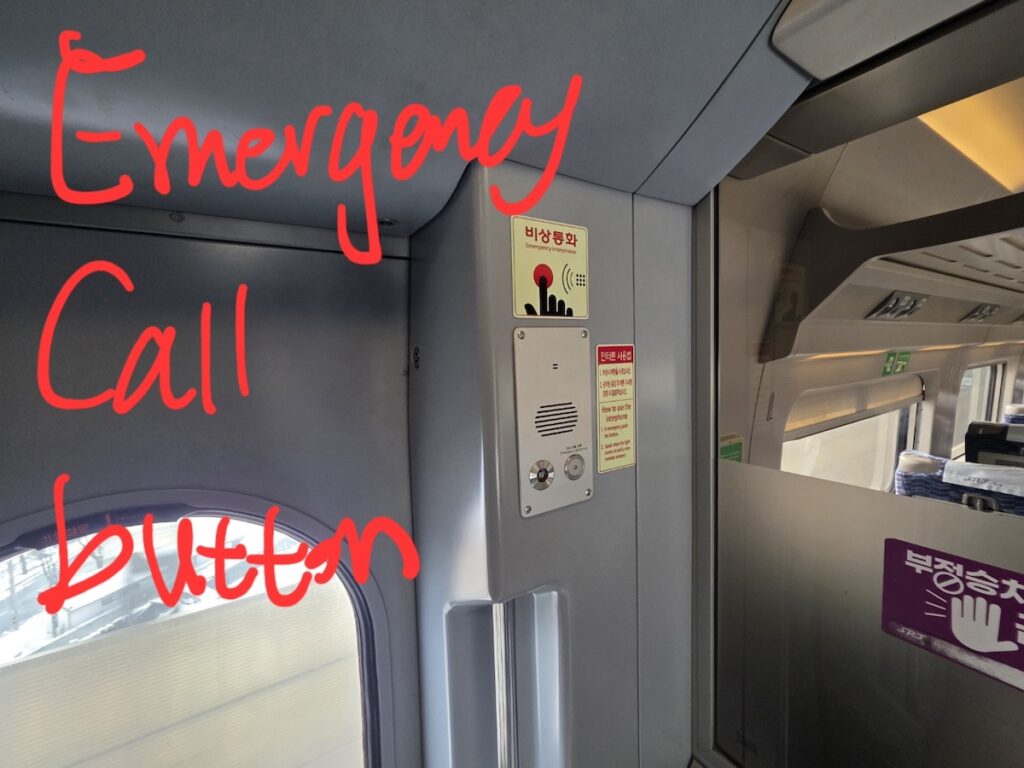
- The Target: Located in the vestibules between cars, near the restrooms and luggage racks, are foldable “Jump Seats.”
- The Timing: You must be the first to enter the platform as soon as the train arrives to claim these hidden gems.
- The Resilience: While harder than a standard seat, it provides a stable base for the 2.5 to 3-hour journey across the peninsula.
4. The Door Protocol: Navigating the Stops to Busan and Mokpo
Standing in the corridor requires a high level of situational awareness. Whether you are heading to the port city of Busan or the historical docks of Mokpo, you must respect the “Door Protocol.”
- Busan (Gyeongbu Line) Ritual: A typical KTX to Busan stops at major hubs like Daejeon, Daegu (Dongdaegu), and Ulsan. If you are sitting on a jump seat, be prepared to stand up at these 4-5 major stops to let the “Seated” passengers exit smoothly.
- Mokpo (Honam Line) Ritual: For the 400km run to Mokpo, you’ll encounter stops at Gwangmyeong, Osong, Iksan, and Gwangju-Songjeong.
- Directional Awareness: Pay close attention to the announcements; the doors may open on the left or right side. If you are on the opening side, you must step out onto the platform briefly to clear the way for others—this is the peak of Korean transit etiquette.
- Quiet Reflection: Surprisingly, the noise levels in these connecting spaces are low, making it a perfect spot for a cinematic observation of the Korean countryside passing by.
5. The Scale of the Ritual: Train Configuration
- SRT / KTX-Sancheon: Usually operates with 8 to 10 cars. During peak demand, two units are coupled to form a 16 to 20-car “Jung-ryeon” (double-unit) train.
- KTX (Original): A massive 20-car configuration, offering more vestibules and consequently more jump seats for the savvy standing traveler.
6. Conclusion: The Zen of the Standing Warrior
The Korea Travel: KTX Standing Ticket Ritual taught me that in a nation defined by “Bali-Bali” (hurry-hurry) speed, even a failure to secure a seat can lead to a unique ritual of observation. While the ideal journey begins with a successful reservation two weeks in advance, the reality of life often demands a more resilient approach. To travel like a local is to embrace the standing ticket not as a last resort, but as a strategic entry into the cinematic flow of the peninsula.
One critical secret of this ritual is that Standing-only Tickets are strictly limited in number. Korail and SRT do not oversell these tickets to the point of chaos; because the supply is finite, the “Shared Breath” in the corridors remains manageable. This limitation ensures that once you win the battle for a jump seat, you actually have a surprising amount of personal space to inhale the 400km journey to Mokpo or the high-speed run to Busan.
Whether you are saving 15% on your fare or simply ensuring your family travels in comfort, the Korea Travel: KTX Standing Ticket Ritual proves that even without a numbered seat, you can still find your place in the fast-moving heart of Korea. Next time the “Sold Out” sign appears, don’t retreat—refresh, reclaim, and take your stand.
🛡️ Action Plan: Standing Warrior Checklist
- Phone Charge: Ensure your phone is at 100%; you’ll need it for the “Refresh Ritual.”
- Platform Position: Stand at the front of the queue to secure your jump seat immediately.
- Light Luggage: Use the overhead racks or the luggage area near your jump seat to keep the corridor clear.