How to use coin noraebang in Korea is not difficult, but understanding why it feels different from old-style Korean karaoke makes the experience much more interesting.
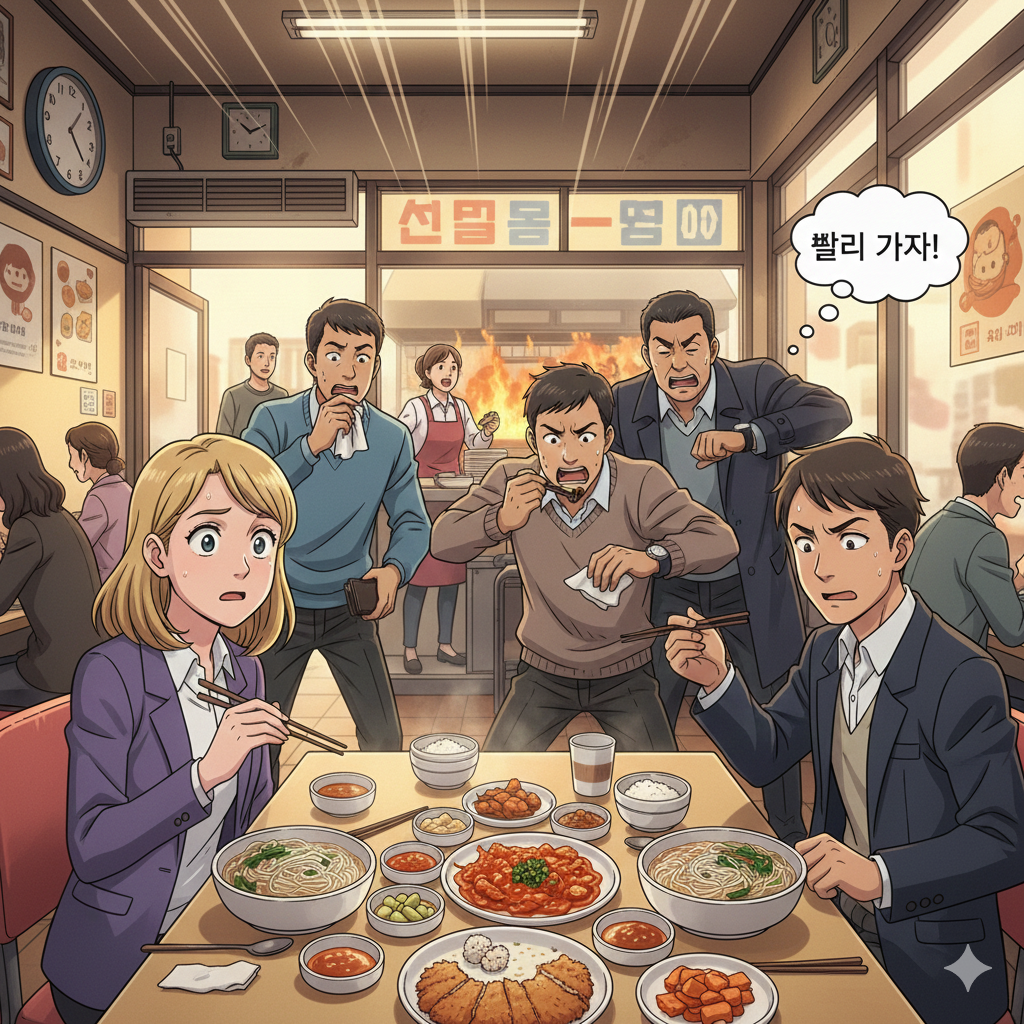
For many Koreans now in their 40s, noraebang was one of the classic places to go after school, after exams, or with friends on weekends. When they were in middle school or high school, regular noraebang rooms were everywhere. You paid for a room by time, not by song. That meant one thing: the clock was always running.
So people often sang only the first verse.
If a song had a long intro, someone might skip it. If the second verse felt too slow, someone might press the button and move to the next song. The goal was not always to sing one song beautifully from beginning to end. The goal was to fit as many songs as possible into the paid time.
That small detail tells you a lot about old Korean karaoke culture.
But younger students today often experience karaoke differently. Instead of booking a traditional noraebang room for an hour, they may walk into a coin noraebang, choose a small booth, pay for a few songs, and sing alone or with one friend. The room is smaller. The payment is simpler. The pressure is different.
And because they pay by song, not only by room time, they are more likely to sing the whole song.
In old-style noraebang, time was the pressure. In coin noraebang, the song itself becomes the unit.
That small payment difference changed how people sing.
Quick Answer: How Do You Use Coin Noraebang in Korea?
Coin noraebang in Korea is a small karaoke booth where you usually pay per song or for a short session instead of renting a large room by the hour. You enter an available booth, pay by coins, cash, card, or kiosk depending on the location, choose songs through a machine or remote control, and sing using the microphones inside.
It is normal to go alone, with one friend, or in a small group. Prices vary by location, but coin noraebang is usually cheaper and more casual than traditional noraebang, making it popular with students, young people, K-pop fans, and travelers who want a quick Korean karaoke experience.
What Is Coin Noraebang?
Coin noraebang is a smaller, cheaper, and more casual version of Korean karaoke.
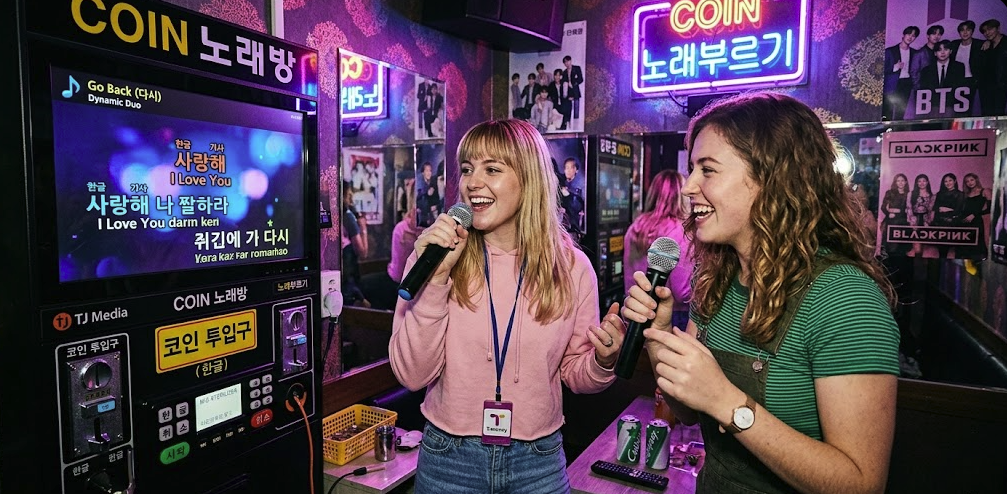
The word “noraebang” literally means “song room.” A traditional noraebang usually has a private room for groups, a sofa, a screen, microphones, colorful lights, and sometimes food or drinks. People usually pay by time, often for 30 minutes, one hour, or more.
Coin noraebang works differently.
The rooms are usually small booths. Some fit one person. Some fit two or three people. Some locations have slightly larger rooms, but the feeling is still more casual than a full noraebang. You do not need to plan a big night out. You can walk in after school, after dinner, during a shopping break, or even alone when you just want to sing one song.
This is why coin noraebang became part of everyday youth culture in Korea. It is not only a nightlife activity. It is also a quick emotional release, a K-pop practice space, a cheap date stop, a study break, and sometimes a private place to sing loudly without bothering anyone at home.
For foreigners, it is one of the easiest Korean cultural experiences to try because you do not need perfect Korean, a large group, or a complicated reservation.
Old Noraebang vs Coin Noraebang
The easiest way to understand coin noraebang is to compare it with old-style noraebang.
| Experience | Traditional noraebang | Coin noraebang |
|---|---|---|
| Payment style | Usually pay by room and time | Usually pay by song or short session |
| Room size | Larger private room | Small booth or compact room |
| Best for | Groups, parties, drinking nights | Solo singing, quick visits, students, K-pop practice |
| Singing style | People may skip after the first verse to save time | People may sing the full song because they paid for that song |
| Atmosphere | Social, loud, group-centered | Private, casual, sometimes quiet outside the booth |
| Foreigner difficulty | Booking and group payment can be confusing | Easier to try spontaneously |
| Typical visit | 1 hour or more | A few songs or a short session |
This difference may look small, but it changes the culture.
Traditional noraebang is about sharing time with people. Coin noraebang is often about choosing songs for yourself.
That is why solo coin noraebang does not feel strange in Korea. It can be completely normal to see someone go in alone, sing two or three songs, and leave.
Why Koreans Used to Sing Only the First Verse
If you go to karaoke with older Koreans, you may notice something interesting. Some people still skip after the first verse.
This habit comes partly from the old time-based noraebang culture.
When you rent a room for one hour and go with several friends, every minute matters. If five or six people are waiting to sing, a long ballad can feel too long. So people learn to sing the most emotional or famous part, then skip to the next song.
In that setting, skipping is not rude. It can be practical.
It also creates a different feeling. Noraebang becomes fast, playful, and social. People cheer, laugh, interrupt, add tambourine, choose the next song, and move quickly. The room is not always about perfect singing. It is about energy.
For foreigners, this can be surprising. In some countries, karaoke may mean performing a song from beginning to end in front of people. In Korea, especially in casual group noraebang, it may feel more like a shared game.
Why Young Koreans Sing Differently Now
Coin noraebang changes the rhythm.
If you pay for one song, that song feels like yours. There is less pressure from the group. There is less need to hurry through the first verse. If you are alone, nobody is waiting for the remote control. If you are with one close friend, you can sing slowly, repeat favorite K-pop songs, or practice difficult parts.
This is why coin noraebang fits younger culture.
It works for people who do not want a big social event. It works for students who have little money. It works for K-pop fans who want to sing idol songs seriously. It works for people who want to release stress without gathering a full group.
It also fits modern Korean city life. Seoul apartments are not good places for singing loudly. People live close to neighbors. Sound travels. A coin noraebang booth gives people a tiny private stage in a dense city.
That may be the real charm.
Coin noraebang is not only cheaper karaoke. It is a small soundproof room for people who need a moment.
How Much Does Coin Noraebang Cost?
Coin noraebang is popular partly because it is cheap, flexible, and easy to try without committing to a full hour.
As of 2026, a typical coin noraebang in Korea often costs around 500 won for 1 song or 1,000 won for 2 to 3 songs. In some student areas or busy nightlife neighborhoods, you may even find better deals, such as 4 songs for 1,000 won. Prices vary by neighborhood, machine type, room quality, time of day, and special promotions, so always check the sign, kiosk, or screen before paying.
Some coin noraebang locations also offer time-based options. These are useful if you want to sing many songs without thinking about each individual track. A common range can be around 4,000 to 5,000 won for 30 minutes or 7,000 to 9,000 won for 1 hour, which is usually cheaper than renting a traditional noraebang room.
| Payment type | Typical 2026 price range | Best for |
|---|---|---|
| Per-song payment | Around 500 won for 1 song | Trying one or two songs quickly |
| Coin bundle | Around 1,000 won for 2–3 songs | Casual short visits |
| Good-value student area deal | Sometimes 1,000 won for 4 songs | University areas or competitive locations |
| 30-minute session | Around 4,000–5,000 won | Singing several songs without counting |
| 1-hour session | Around 7,000–9,000 won | Longer solo practice or small-group singing |
| Promotion bundles | Example: 5,000 won for 10+ songs, sometimes with bonus songs | Longer visits or regular users |
Some shops give extra songs when you pay with larger bills or transfer a higher amount, such as 5,000 won or 10,000 won. You may see signs offering bonus songs like “10+2 songs” or other local promotions. These deals change by store, so do not assume every coin noraebang has the same system.
University districts, busy youth areas, and streets near schools or entertainment zones often have better value because many students use coin noraebang casually. Newer locations may also offer updated machines, cleaner booths, card payment, headphone rooms, or time-based packages.
One small local tip: some machines allow a pitch or vocal key test before singing. In some places, entering 888888 before starting can be used for a vocal pitch check, though this depends on the machine and location.
For most foreign visitors, the safest expectation is this: bring a little cash, expect around 500 to 1,000 won for a very short session, and check whether the shop uses coins, bills, card payment, kiosk payment, or prepaid time before entering the booth. Coin noraebang is meant to be low-pressure, so even a few thousand won can give you a quick and very Korean karaoke experience.
How to Use the Machine
The exact machine depends on the noraebang system, but the basic process is similar.
First, choose an empty booth or ask staff if you need help. Some places are self-service. Some have a reception desk. Some have kiosks where you choose a room or pay before entering.
Inside the room, you will usually see a screen, microphones, a song machine, and a remote control or touchscreen. You can search by song title, artist name, or song number. Many machines include Korean songs, K-pop, older Korean ballads, trot songs, Japanese songs, Chinese songs, and English pop songs.
If you want K-pop, search by artist or song title. Some Korean song titles may be easier to find in Korean, but popular songs often appear in English or romanized form too. If the search feels confusing, use your phone to find the Korean title of the song and type or copy that.
Basic controls usually include:
- song search
- reserve song
- start
- cancel
- key change
- tempo change
- volume
- echo
- skip intro or interlude
- score on/off
Do not worry if you do not understand every button. Most people only need search, reserve, start, and cancel.
Can Foreigners Go Alone?
Yes. You can go alone.
This is one of the most important things to know.
In some countries, karaoke is mainly a group activity. Going alone might feel strange. In Korea, solo coin noraebang is common enough that it has its own casual feeling. People may go alone to practice, release stress, sing without embarrassment, or enjoy a few songs privately.
This is especially useful for travelers.
You do not need Korean friends. You do not need to be good at singing. You do not need to drink. You do not need to make it a big event.
You can walk in, sing a few songs, laugh at yourself, and leave.
That makes coin noraebang one of the easiest Korean pop culture experiences for introverted travelers.
Basic Coin Noraebang Etiquette
Coin noraebang is casual, but there are still basic manners.
Use the room cleanly. Do not damage microphones, screens, chairs, or walls. Do not scream into the microphone in a way that damages the equipment. Keep food and drinks only if the place allows them. Some locations are stricter than others.
Do not occupy a room too long if people are waiting, especially in small locations near schools or busy nightlife districts. If your paid songs are finished, either pay again or leave.
Keep your belongings close. Coin noraebang feels private, but it is still a public business. Check your phone, wallet, bag, and jacket before leaving.
If you go with friends, be considerate with song choices. Do not reserve ten songs in a row for yourself unless everyone is clearly fine with it. Korean karaoke is often about sharing the room’s energy, even in a coin noraebang.
And one more thing: do not worry too much about singing badly.
That is part of the point.
Where to Find Coin Noraebang in Seoul
Coin noraebang is common in places with students, young people, nightlife, and shopping streets.
You are likely to find it around:
- Hongdae
- Sinchon
- Hyehwa
- Konkuk University area
- Gangnam Station
- Myeongdong
- Jamsil
- university neighborhoods
- busy subway station areas
- streets with arcades, PC bangs, and casual restaurants
Look for signs that say:
- 코인노래방
- 코노
- coin noraebang
- coin karaoke
- karaoke booth
“코노” is a common shortened form of 코인노래방. Young Koreans often say “코노 가자,” meaning “Let’s go to coin noraebang.”
If you see small rooms, music signs, microphones, or neon karaoke signage near a busy street, there is a good chance you found one.
Is Coin Noraebang Good for K-Pop Fans?
Yes, especially if you want to feel K-pop as something people actually sing, not only watch.
For many foreign visitors, K-pop is experienced through music videos, performances, social media, concerts, and fandom content. Coin noraebang gives it a different feeling. You stand in a small booth, hold a microphone, search for the song, and suddenly the polished performance becomes something you try with your own voice.
This can be funny, humbling, and surprisingly emotional.
You may realize how difficult idol songs are. The rap parts are fast. The high notes are unforgiving. The dance songs are harder to sing than they look. Ballads may be even more intense because Korean noraebang culture loves emotional singing.
But that is exactly why it is fun.
Coin noraebang is not an audition. It is a tiny room where a song can belong to you for a few minutes.
Common Mistakes Foreigners Make
The first mistake is thinking coin noraebang is only for groups. It is not. Solo visits are normal.
The second mistake is assuming every machine will be easy in English. Some are more foreigner-friendly than others. Popular English songs may be easy to find, but Korean songs can be easier to search with Korean titles.
The third mistake is entering without checking payment style. Some places still use coins or cash. Others use card, kiosk, or prepaid systems. Bring a small amount of cash just in case.
The fourth mistake is expecting traditional karaoke service. Coin noraebang is often more self-service. Staff may not guide you through everything.
The fifth mistake is feeling embarrassed. Korean people go to coin noraebang for many reasons: fun, stress relief, practice, boredom, dates, friendship, or a few minutes alone. You do not need to perform like a singer.
Final Thoughts
Learning how to use coin noraebang in Korea is easy, but the small cultural shift behind it is what makes the experience memorable.
Older Korean noraebang culture was shaped by time. You rented a room, watched the clock, sang the first verse, skipped quickly, and tried to fit everyone’s songs into the session.
Coin noraebang changed that rhythm. It made karaoke smaller, cheaper, more private, and more flexible. It allowed people to sing alone, practice K-pop, stop by after school, or release stress without planning a full night out.
For foreigners, coin noraebang is one of the simplest ways to step into everyday Korean pop culture. It is not a palace, museum, café, or famous landmark. It is a small booth, a microphone, a screen, and a song you probably know better than you think.
That is why it is worth trying.
Not because you need to sing well.
Because for a few minutes, inside a tiny room in Seoul, you can understand how Korea turns music into something ordinary, private, emotional, and strangely f